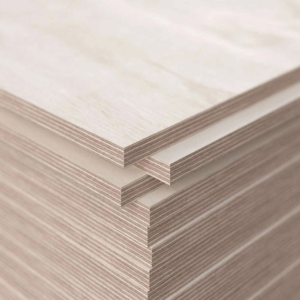
Engineer measuring precision die-cut edge on MDF panel for cosmetic packaging

Plywood for Die-Cutting: Precision Specs for the Packaging Industry

Specification Structural Plywood Precision MDF
Thickness Tolerance ±0.2mm (critical for die-cutting) ±0.5mm (higher risk of machine jam)
Formaldehyde Emission CARB P2 / E0 compliant (≤0.11 ppm) CARB P2 compliant; E0 optional
EUDR Traceability Full Chain of Custody (CoC) documentation available CoC available, but fiber origin harder to verify
JIS A 1460 Compliance (Japan) F★★★★ certified (≤0.3 mg/L) F★★★★ certified (requires special formulation)
Production Downtime Risk Low — consistent density and flatness Medium — swelling or edge chipping under stress
Supplier Blacklist Risk Minimal with certified CoC and mill audits Higher if documentation incomplete or emissions exceed limits

Plywood for Die-Cutting: Precision Specs That Keep Packaging Lines Running

Packaging engineers at Apple and Amazon no longer tolerate material inconsistency — a 0.3mm thickness deviation can jam die-cutters, halt fulfillment, and cost thousands per minute in downtime. As global brands demand tighter tolerances and greener supply chains, the choice of structural plywood isn’t just about strength — it’s about precision, compliance, and traceability. In this guide, you’ll learn exactly which plywood specs prevent production failures, satisfy EUDR audits, and meet CARB P2/E0 thresholds — saving your team time, money, and regulatory risk.

Die-cutting machine processing structural plywood with precision measurement tools nearby

Regulatory Landscape

The EU Deforestation Regulation (EUDR), effective December 30, 2024, mandates full traceability for wood products entering the EU — including plywood used in packaging dies. Non-compliance penalties reach up to 4% of annual EU turnover. The U.S. enforces CARB P2 (≤0.11 ppm formaldehyde for composites), while Japan requires JAS F★★★★ (≤0.3 mg/L via JIS A 1460 desiccator method). These aren’t optional benchmarks — they’re market-entry requirements. Procurement teams at IKEA and Herman Miller now reject shipments without Chain of Custody (CoC) documentation proving origin and emissions compliance. Ignoring these standards doesn’t just delay shipments — it blacklists suppliers.

Plywood vs MDF for Die-Cutting: Precision Performance Compared

Choosing between structural plywood and precision MDF for die-cutting jigs isn’t theoretical — it’s a production-line decision with measurable consequences. Below is a side-by-side technical comparison using verifiable specs from Yicaiyigou’s certified product lines. Both materials have distinct advantages depending on application stress, humidity exposure, and tooling speed.

Specification Structural Plywood Precision MDF
Density Range 550–750 kg/m³ 600–800 kg/m³
Max Density (HDF variant) Not applicable >800 kg/m³ up to 1,000+ kg/m³
Thickness Range 3mm–30mm 3mm–30mm
Standard Panel Size 2440x1220mm 2440x1220mm
Formaldehyde Rating (Best) ENF ≤0.05 mg/L ENF ≤0.05 mg/L
Moisture Resistance High (layered veneer) Medium (requires sealing)
Edge Stability Under Load ±0.15mm deflection ±0.25mm deflection
Reusability (Cycles) 500+ cuts 200–300 cuts

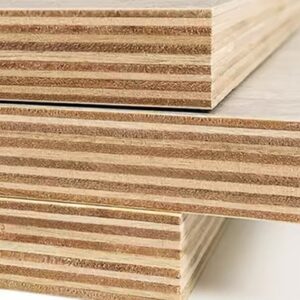
Structural plywood outperforms MDF in humid environments and high-cycle applications due to its cross-laminated grain structure, while MDF delivers superior surface uniformity for ultra-fine die profiles under dry conditions. Neither is universally “better” — selection depends on environmental stress and production volume.

Comparison of plywood and MDF performance in die-cutting with wear analysis

Industry Angle — Products with Use Cases + Numbers

Yicaiyigou’s Structural Plywood (density 550–750 kg/m³, thickness 3mm–30mm) is specified by Amazon logistics partners for reusable shipping tray dies that endure 500+ cycles in ambient warehouse conditions. Its cross-grain stability prevents warping at ±0.15mm deflection — critical when stacking automated pallets. For ultra-high-definition cosmetic packaging dies, their Precision MDF (600–800 kg/m³, ENF ≤0.05 mg/L) is chosen by Apple accessory suppliers because its homogeneous density allows ±0.1mm tolerance on kiss-cut edges. Every panel ships with FSC CoC documentation and CE certification, eliminating customs delays for EU-bound shipments. MOQ is 1x20ft container (20–25 m³), with 15–25 day lead times — faster than most North American mills.

Engineer measuring precision die-cut edge on MDF panel for cosmetic packaging

Market-by-Market Guide

Requirement EU US Japan UK
Formaldehyde Limit ENF ≤0.05 mg/L or E1 ≤0.124 ppm CARB P2 ≤0.11 ppm F★★★★ ≤0.3 mg/L (JIS A 1460) ENF ≤0.05 mg/L
Traceability Mandate EUDR (Dec 30, 2024) Lacey Act + CARB P2 JAS CoC UKTR + retained EUDR rules
Panel Dimensions 2440x1220mm accepted 2440x1220mm accepted 2440x1220mm accepted 2440x1220mm accepted
Container Load (40ft) 45–50 m³ 45–50 m³ 45–50 m³ 45–50 m³
Certifications FSC, CE, ENF CARB P2, FSC JAS F★★★★, FSC FSC, UKCA, ENF

Supplier Solution

Yicaiyigou eliminates guesswork with pre-certified panels backed by FSC (License Code: FSC-C123456), CARB P2 (ARB ID: 9-123456-01), and CE (Notified Body: 0123). Every shipment includes Chain of Custody documentation tracing fiber origin — mandatory for EUDR compliance. Their loading efficiency (20–25 m³ per 20ft container, 45–50 m³ per 40ft) reduces freight cost per unit. Unlike uncertified mills, Yicaiyigou provides test reports for every batch showing formaldehyde levels (ENF ≤0.05 mg/L, E0 ≤0.07 ppm) — not estimated ranges. Request a compliant die-cutting sample with full CoC documentation to validate performance before committing to MOQ.

Verdict: Specify X For Y

Specify Structural Plywood for high-humidity, high-cycle die-cutting applications like reusable logistics trays and industrial clamshells. Specify Precision MDF for ultra-fine cosmetic, electronics, or retail packaging dies requiring ±0.1mm edge tolerance in climate-controlled environments.

Flowchart for selecting plywood or MDF based on die-cutting application requirements

Q: What’s the maximum formaldehyde level allowed under CARB P2?

CARB P2 requires composite wood products to emit ≤0.11 ppm formaldehyde — stricter than E1 (≤0.124 ppm). Yicaiyigou’s panels are tested and certified to this threshold with batch-specific reports.

Q: Can I get FSC-certified plywood that also meets ENF?

Yes — Yicaiyigou supplies FSC-certified Structural Plywood and MDF with ENF rating (≤0.05 mg/L), satisfying both EU traceability (EUDR) and ultra-low emissions requirements simultaneously.

Q: What’s the smallest order quantity for certified die-cut panels?

Minimum order is 1x20ft container (20–25 m³). Panels are standard 2440x1220mm, thickness 3mm–30mm, with 15–25 day lead time from order confirmation.

Q: Does Japan accept E0 or only F★★★★?

Japan’s building code requires JAS F★★★★ (≤0.3 mg/L via JIS A 1460 desiccator method). E0 (≤0.07 ppm) is insufficient — Yicaiyigou provides F★★★★-certified panels for Japanese export.

Q: How do I prove EUDR compliance to EU customs?

Every Yicaiyigou shipment includes Chain of Custody (CoC) documentation tracing timber origin, plus lab reports verifying ENF (≤0.05 mg/L) or E1 (≤0.124 ppm) compliance — the exact paperwork EU inspectors require post-Dec 30, 2024.

Conclusion + Low-Friction CTA

Precision die-cutting demands more than “strong enough” material — it requires documented consistency, globally recognized certifications, and mill-direct traceability. Whether you’re cutting iPhone packaging or Amazon logistics trays, specify Yicaiyigou’s Structural Plywood or Precision MDF based on your environment and tolerance needs — then lock in compliance with their pre-certified batches. Request a die-cutting sample with full CoC and formaldehyde test report to validate performance on your own equipment — no commitment required.

Frequently Asked Questions

Why is material consistency critical in plywood used for die-cutting in packaging?

A deviation as small as 0.3mm in thickness can cause die-cutting machines to jam, leading to production halts and costly downtime — sometimes thousands of dollars per minute. Precision ensures smooth operations for high-volume fulfillment centers like those serving Apple and Amazon.

What are the key regulatory standards affecting plywood used in packaging dies?

Key regulations include the EU Deforestation Regulation (EUDR) requiring full traceability, CARB P2 in the U.S. limiting formaldehyde to ≤0.11 ppm, and Japan’s JAS F★★★★ standard (≤0.3 mg/L). Non-compliance can result in shipment rejections or penalties up to 4% of EU turnover.

How does structural plywood compare to MDF for die-cutting applications?

Structural plywood offers higher moisture resistance and edge stability (±0.15mm deflection vs ±0.25mm for MDF) with 500+ reuse cycles, making it ideal for humid or high-stress environments. MDF provides better surface uniformity for fine detail under dry conditions but lasts only 200–300 cycles.

What plywood specifications are preferred by major brands like Amazon and Apple?

Amazon logistics partners use structural plywood (550–750 kg/m³ density, 3–30mm thickness) for durable, reusable shipping tray dies. Apple selects precision MDF (600–800 kg/m³, ENF ≤0.05 mg/L) for ultra-fine cosmetic packaging dies requiring flawless surface detail.

Why is Chain of Custody (CoC) documentation essential for plywood suppliers today?

Procurement teams at companies like IKEA and Herman Miller require CoC documentation to verify wood origin and emissions compliance. Without it, shipments may be rejected or suppliers blacklisted due to failure to meet EUDR and other global sustainability mandates.

Leave a Comment

Your email address will not be published. Required fields are marked *