Understanding Plywood Grades: B/BB, BB/CC, and Commercial Overlays
In the international wood trade, “Plywood” is not just one product; it is a spectrum of quality. For a furniture manufacturer in Europe or a construction firm in the Middle East, understanding the grading system of Chinese plywood is the difference between a successful project and a costly rejection.
- The Face and Back: The “Face” of Quality
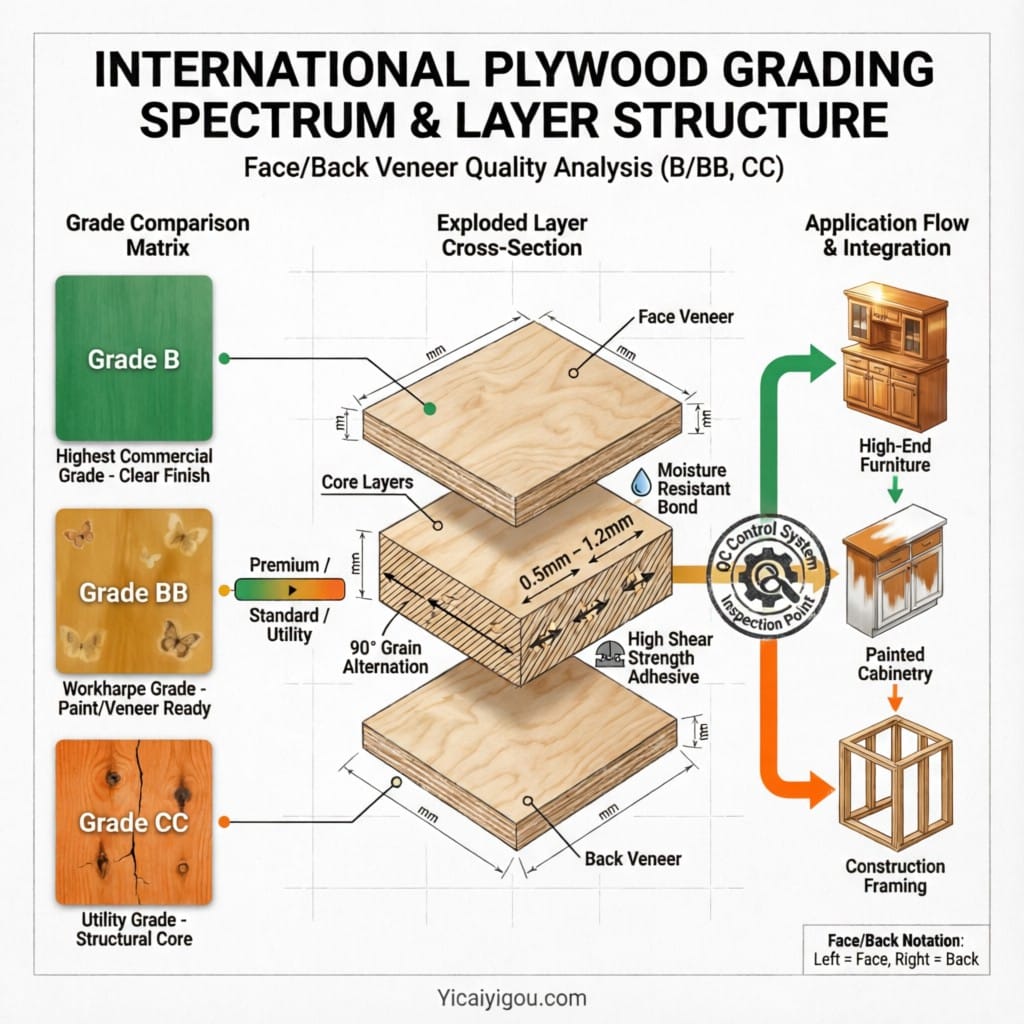
The grades you see (like B/BB) refer to the quality of the external veneers. The letter before the slash is the Face, and the letter after is the Back.
B Grade: The highest commercial grade. It is nearly clear of knots and discolorations. It is intended for natural finishes or light staining where the wood grain is the star.
BB Grade: Allows for small, color-matched “butterfly” patches. This is the “workhorse” grade for high-end cabinetry where the surface will be painted or veneered.
CC Grade: This is a utility grade. It allows for open knots and splits. It is perfect for structural components that will be hidden inside a sofa or a wall.
-
The Commercial Overlay (OVL)
You will often see the term “OVL” (Overlay) in Chinese export manifests. This usually refers to a thin, high-quality veneer applied over a lower-grade core. For lumberpanel.com customers, OVL provides the look of expensive hardwood (like Red Oak or Sapelli) while keeping the price competitive. -
Why Core Quality Matters
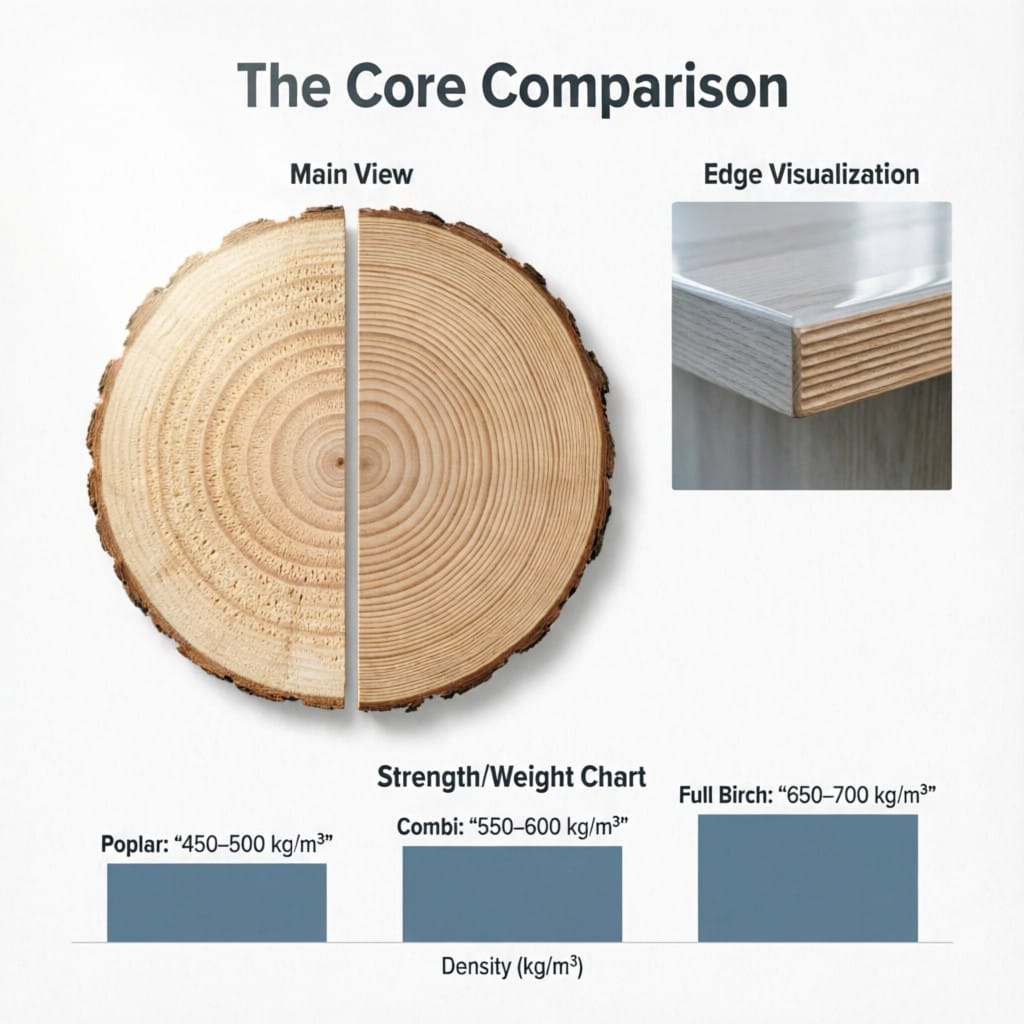
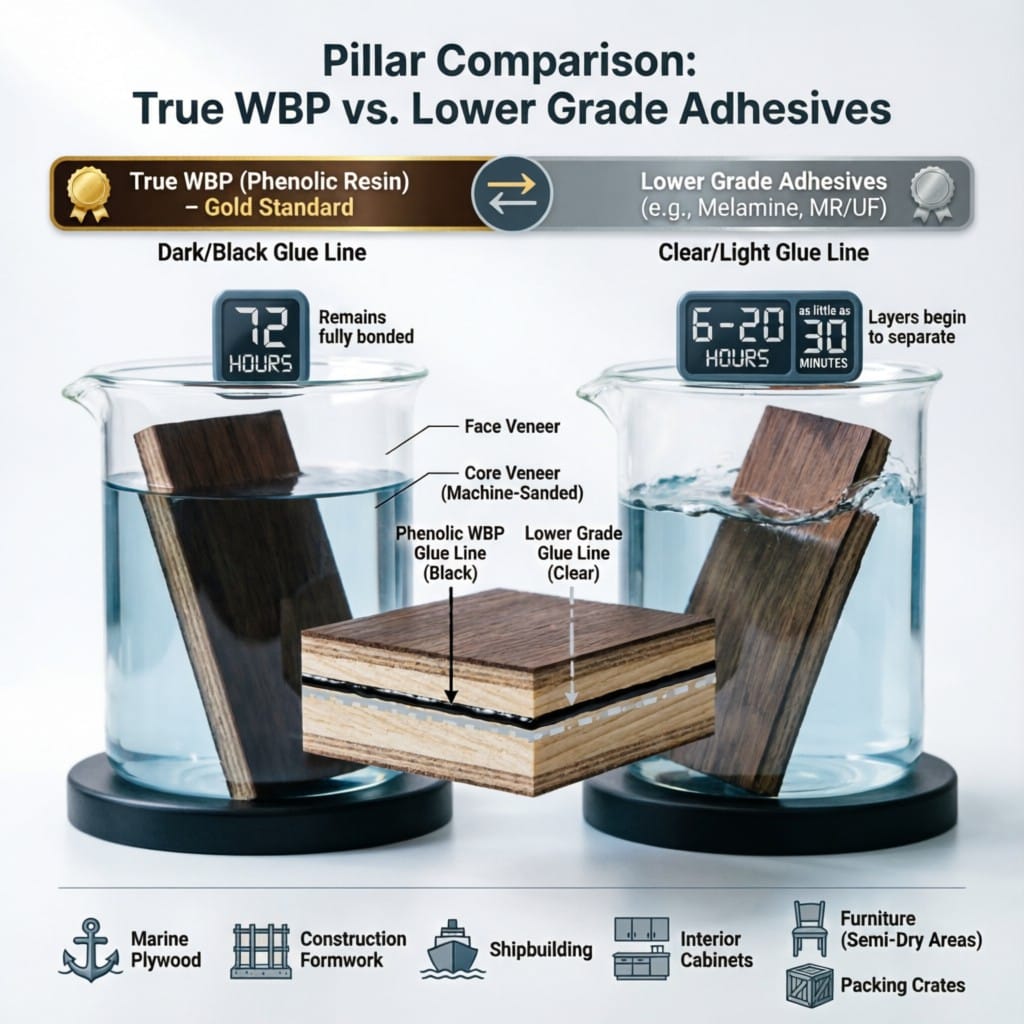
Grading isn’t just about the surface. A “Grade A” face on a “Grade C” core (with gaps or overlaps) will eventually fail. High-quality export plywood uses a Calibrated Core, meaning the inner layers are sanded to a uniform thickness before the face veneer is applied. This ensures that when you cut the board, there are no “voids” or holes in the edge. -
The Global Standard: Match the Grade to the Goal
Furniture Grade: Usually B/BB or BB/CC with a Poplar or Birch core.
Construction Grade: Usually C/D or CDX, focused on strength rather than beauty.
Packing Grade: The most economical, used for one-time crates and pallets.
Conclusion: By mastering these grades, you can optimize your sourcing costs. You don’t always need B/BB; sometimes a well-calibrated BB/CC is the more “resource-efficient” choice for your production line.
Image Attachment