| Property | Fire-Rated MDF | Traditional Gypsum Board |
|---|---|---|
| ASTM E84 Compliance | Class A (FSI ≤ 25, SDI ≤ 450) | Class A (FSI ≤ 25, SDI ≤ 450) |
| Aesthetic Capability | High (Accepts wood veneers, complex milling) | Low (Requires finishing/painting, limited texture) |
| Density | High (Precision-engineered substrate) | Moderate (Varies by type/weight) |
| Weight | Heavier than standard particleboard | Lightweight (Standard 1/2″ or 5/8″) |
| Fire-Resistance Rating | 1-hour rated for egress paths | Varies (Typically requires multiple layers for 1-hour) |
| Regulatory Compliance | CARB Phase 2, TSCA Title VI | Standard building code compliance |
| Risk Profile | Low (Reduces rework/liability exposure) | Moderate (If finish system fails ASTM E84) |
Specifying wood finishes that fail ASTM E84 Class A standards triggers costly rework and liability exposure in high-traffic commercial offices. This analysis compares fire-rated MDF against traditional gypsum board, detailing density, weight, and compliance data to resolve specification risks for architects and procurement managers.
The Hidden Cost of Non-Compliant Finishes in High-Traffic Offices
A common oversight in commercial office design is specifying aesthetic wood veneers without verifying the substrate’s fire performance under ASTM E84. When a finish fails to achieve a Flame Spread Index (FSI) ≤ 25 and Smoke Developed Index (SDI) ≤ 450, projects face immediate rejection during inspection, leading to delays that cost firms thousands per day in labor idle time. For global brands like Apple or Herman Miller, where brand integrity relies on seamless execution, such failures are not just logistical hurdles but reputational risks.
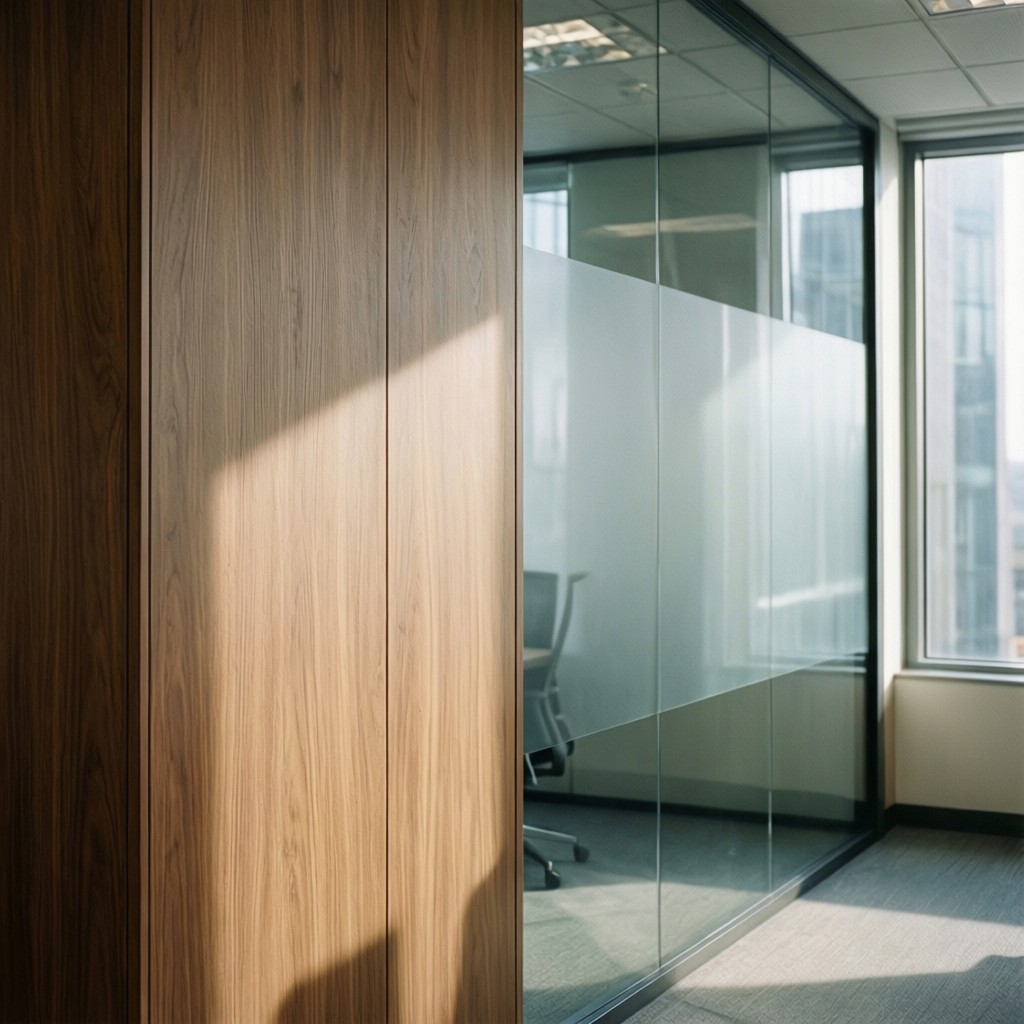
The pivot to fire-rated Medium Density Fiberboard (MDF) resolves this by offering a design-enabling substrate that meets strict 1-hour fire-resistance ratings for egress paths while maintaining the warmth of natural wood aesthetics. Unlike generic particleboard, precision-engineered fire-rated MDF allows architects to specify complex modular wall systems without compromising safety codes. This article provides the technical data needed to validate these materials against traditional gypsum solutions, ensuring your supply chain remains compliant with CARB Phase 2 and TSCA Title VI limits.
Technical Performance Benchmarks for Commercial Interiors
To meet architectural fire rated mdf standards, materials must undergo rigorous testing. The core requirement for commercial interiors is adherence to ASTM E84, where the material must demonstrate an FSI ≤ 25 and SDI ≤ 450. Beyond fire safety, structural integrity is critical for mounting heavy fixtures such as digital displays or acoustic dampening elements.
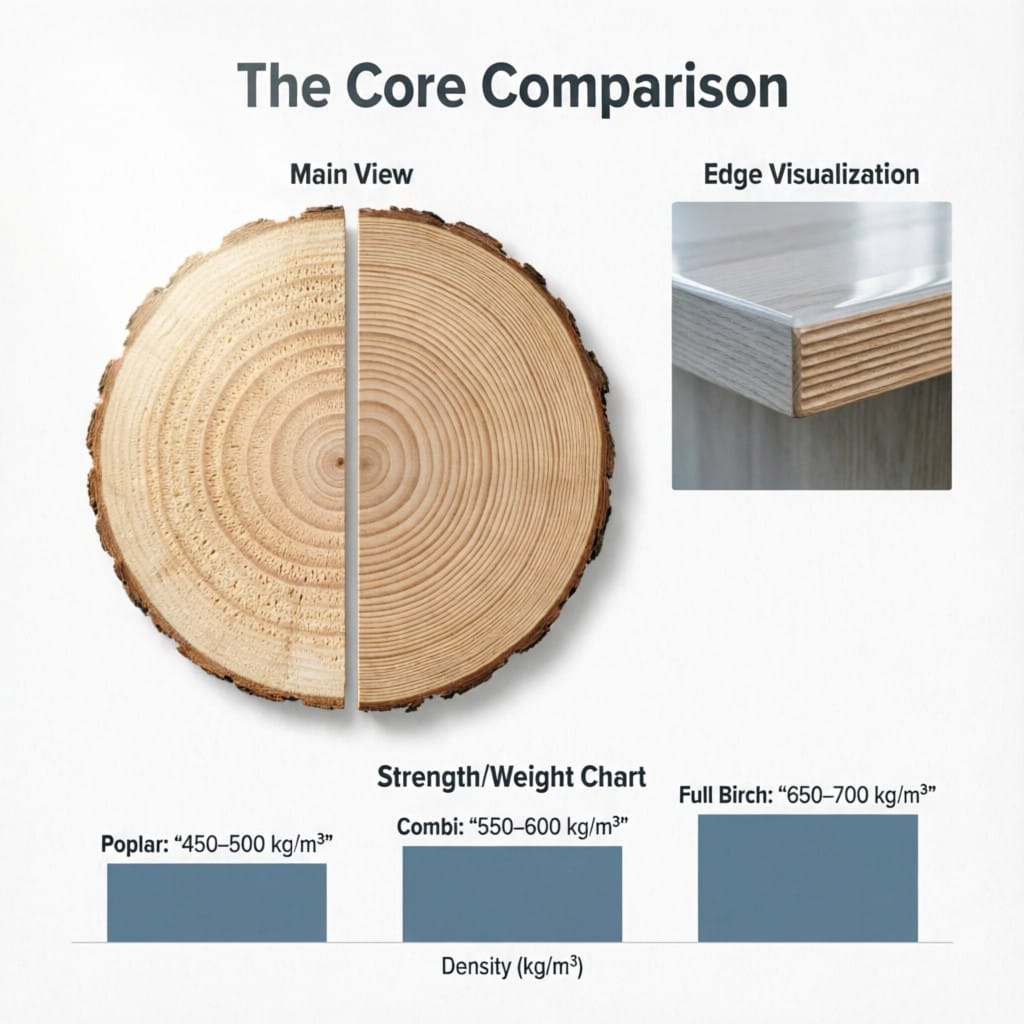
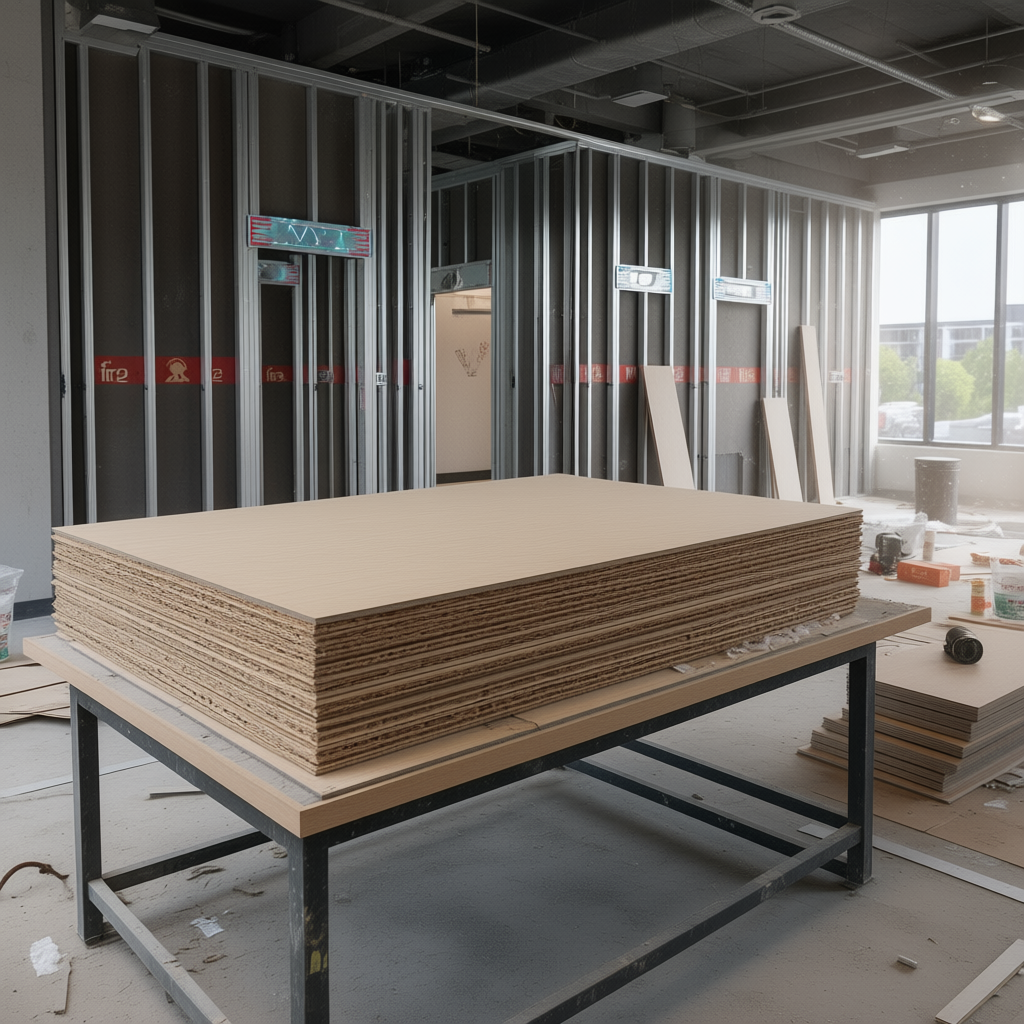
Core density typically ranges from 700-750 kg/m³ to ensure sufficient screw-holding capacity, a metric where standard low-density boards often fail. Furthermore, indoor air quality regulations mandate that formaldehyde emissions comply with CARB Phase 2 or TSCA Title VI limits, specifically staying below 0.05 ppm for ultra-low emitting variants. Standard panel sizes of 4×8 feet (2440x1220mm) with thicknesses between 12mm and 25mm are optimized for modular wall systems, balancing ease of installation with structural rigidity.
Fire-Rated MDF vs Traditional Gypsum Board: Data Comparison
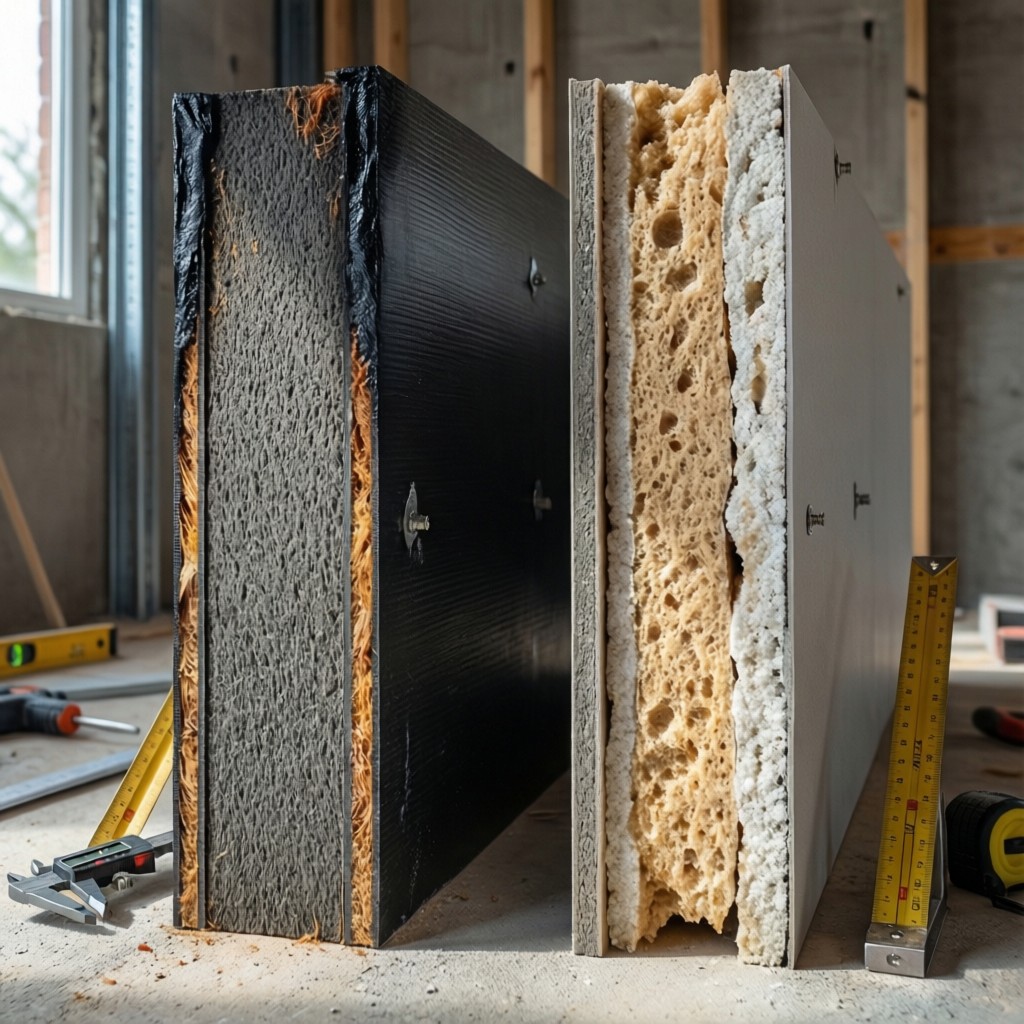
The following table compares fire-rated MDF against traditional gypsum board finishes, focusing on measurable engineering metrics relevant to commercial office construction.
| Metric | Fire-Rated MDF (Precision Engineered) | Traditional Gypsum Board Finish |
|---|---|---|
| Flame Spread Index (ASTM E84) | ≤ 25 (Class A) | ≤ 25 (Class A) |
| Smoke Developed Index (ASTM E84) | ≤ 450 | ≤ 450 |
| Core Density | 700-750 kg/m³ | ~600-800 kg/m³ (varies by type) |
| Weight per Panel (4×8 ft, 18mm) | ~32-35 kg | ~25-28 kg (with veneer) |
| Formaldehyde Emissions | ≤ 0.05 ppm (CARB P2/TSCA VI) | N/A (Non-composite core) |
| Screw-Holding Capacity | High (due to 700+ kg/m³ density) | Low (requires anchors/studs) |
| Surface Texture Consistency | Uniform (ideal for thin veneers) | Variable (requires skim coating) |
| Impact Resistance | High (resists denting) | Low (prone to cracking/denting) |
| Moisture Stability | Moderate (requires sealing) | Low (core degrades if wet) |
| Installation Speed (Modular) | Fast (pre-finished panels) | Slow (on-site finishing required) |
While gypsum board offers a lower initial material weight, fire-rated MDF provides superior screw-holding capacity and impact resistance, reducing long-term maintenance costs in high-traffic zones. The uniform surface texture of MDF also eliminates the need for extensive skim coating, accelerating project timelines.
Real-World Applications in Corporate Environments
For a tech headquarters similar to Amazon’s office designs, Yicaiyigou supplies Precision MDF with a density of 720 kg/m³, ensuring that heavy digital signage mounts remain secure without additional backing structures. These panels, sized at 2440x1220mm and 18mm thick, are pre-treated to meet ENF (≤0.05 mg/L) formaldehyde standards, crucial for enclosed meeting rooms where air quality impacts employee wellness.
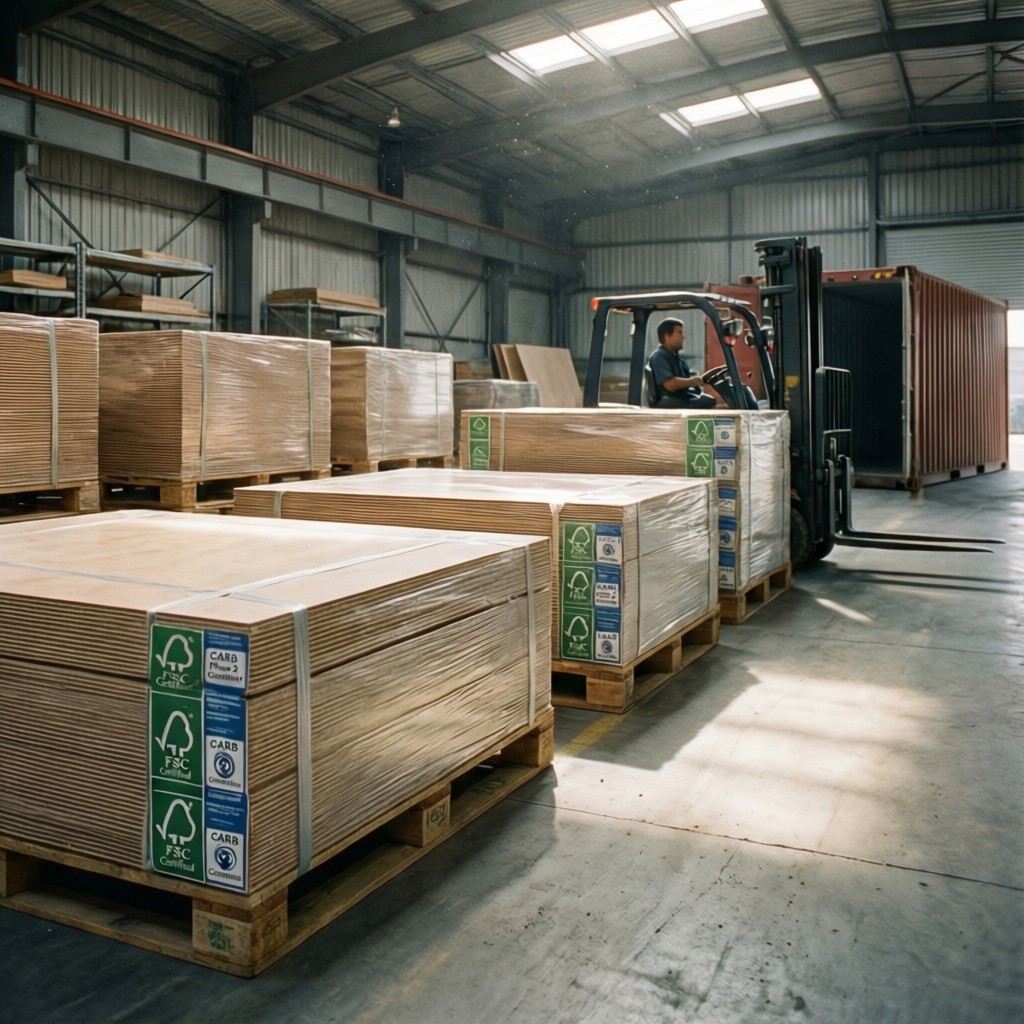
In another scenario, a furniture manufacturer supplying IKEA utilizes Yicaiyigou’s High-Density Particleboard for modular reception desks. With a density exceeding 750 kg/m³, these boards support heavy countertop loads while maintaining CARB P2 compliance (< 0.11 ppm). The use of standard 4×8 foot panels simplifies logistics, allowing a 20ft container to hold 20-25 m³ of material, optimizing shipping costs for large-scale rollouts.
Why Exporters Choose Yicaiyigou for Compliance-Ready Panels
Yicaiyigou distinguishes itself by providing full Chain of Custody (CoC) documentation alongside FSC and CARB P2 certifications. This traceability is vital for buyers navigating the EU Deforestation Regulation (EUDR), effective December 30, 2024, which requires proof of deforestation-free sourcing. Our ENF-certified panels (≤0.05 mg/L) and E0 options (≤0.07 ppm) exceed basic compliance, offering a safety margin for stringent international markets.
With a lead time of 15-25 days and a minimum order quantity (MOQ) of one 20ft container, Yicaiyigou supports scalable procurement strategies. Each batch undergoes rigorous testing to ensure consistent density between 600-800 kg/m³ for MDF, guaranteeing that every panel meets the specified screw-holding and fire-resistance requirements. Request a compliant material sample with full CoC documentation to verify these specifications before bulk ordering.
Which One To Choose
Specify Fire-Rated MDF for high-traffic office interiors, modular wall systems, and areas requiring heavy fixture mounting where aesthetic warmth and impact resistance are prioritized. Specify Traditional Gypsum Board for non-load-bearing partitions in low-impact zones where initial material cost is the primary constraint and surface finishing resources are abundant.
FAQ
What is the maximum thickness available for fire-rated MDF panels?
Yicaiyigou offers thicknesses ranging from 3mm to 30mm, with 12mm to 25mm being optimal for commercial office modular systems.
How does the weight of MDF affect structural load calculations?
With a density of 700-750 kg/m³, MDF is heavier than gypsum; engineers must account for an additional ~5-7 kg per panel in load-bearing assessments.
Does the intumescent coating affect paint adhesion?
High-quality fire-rated MDF from Yicaiyigou is engineered to maintain surface integrity, ensuring standard paints adhere without peeling, unlike some coated competitors.
What is the formaldehyde emission limit for CARB P2 compliance?
CARB Phase 2 requires formaldehyde emissions to be ≤ 0.11 ppm for composite wood products, a standard Yicaiyigou consistently meets.
How many panels fit in a 40ft container?
A 40ft container holds approximately 45-50 m³ of material, allowing for efficient bulk shipping of standard 2440x1220mm panels.
Summary & Next Steps
Architects and procurement managers must balance aesthetic desires with strict ASTM E84 and CARB P2 compliance to avoid project delays. Fire-rated MDF offers a superior alternative to gypsum for high-traffic areas, providing better impact resistance and screw-holding capacity while maintaining Class A fire ratings.
Request a compliant material sample with full CoC documentation from Yicaiyigou to verify density and emission standards for your next commercial office project.
Frequently Asked Questions
What are the specific ASTM E84 requirements for wood finishes to achieve Class A compliance in commercial offices?
To achieve ASTM E84 Class A compliance, materials must demonstrate a Flame Spread Index (FSI) of ≤ 25 and a Smoke Developed Index (SDI) of ≤ 450.
What are the financial and operational risks of specifying non-compliant wood finishes?
Non-compliant finishes can lead to immediate rejection during inspection, causing costly rework, project delays that cost thousands per day in idle labor, and reputational risks for brands relying on seamless execution.
How does fire-rated MDF compare to traditional gypsum board in terms of screw-holding capacity and impact resistance?
Fire-rated MDF offers high screw-holding capacity due to its core density of 700-750 kg/m³ and high impact resistance that resists denting, whereas gypsum board has low screw-holding capacity requiring anchors and is prone to cracking and denting.
What indoor air quality standards must fire-rated MDF meet regarding formaldehyde emissions?
Fire-rated MDF must comply with CARB Phase 2 and TSCA Title VI limits, specifically maintaining formaldehyde emissions at or below 0.05 ppm for ultra-low emitting variants.
Why might architects prefer fire-rated MDF over gypsum board for modular wall systems?
Architects may prefer fire-rated MDF because it allows for faster installation of pre-finished panels, provides uniform surface texture ideal for thin veneers, and maintains structural integrity for mounting heavy fixtures without compromising safety codes.