| Feature | Traditional Hardwood (e.g., Oak) | Engineered Bamboo Core Panels |
|---|---|---|
| Maturity Cycle | 20-30 years | 3-5 years |
| Supply Chain Stability | Volatile prices; unpredictable lead times | Stable costs; rapid renewability reduces bottlenecks |
| Material Cost Impact | Higher baseline cost | 30-40% reduction compared to mid-grade hardwoods |
| Density | Varies by species | 700-800 kg/m³ (High-density composite) |
| Regulatory Compliance (EUDR/CARB) | Requires rigorous deforestation-free proof | Streamlined compliance pathway; meets CARB Phase 2 |
| Structural Integrity | High | Matches hardwood performance via modern manufacturing |
Are you facing margin erosion due to volatile hardwood prices and unpredictable lead times that threaten your production schedules? Supply chain instability in traditional timber markets is forcing furniture manufacturers and procurement leaders to seek alternatives that do not compromise on structural integrity or ESG compliance. This article analyzes the technical viability of bamboo-core panels as a strategic hedge, detailing how high-density composites achieve hardwood-like performance while satisfying strict regulatory mandates like EUDR and CARB Phase 2.
The Strategic Shift from Solid Wood to Engineered Bamboo
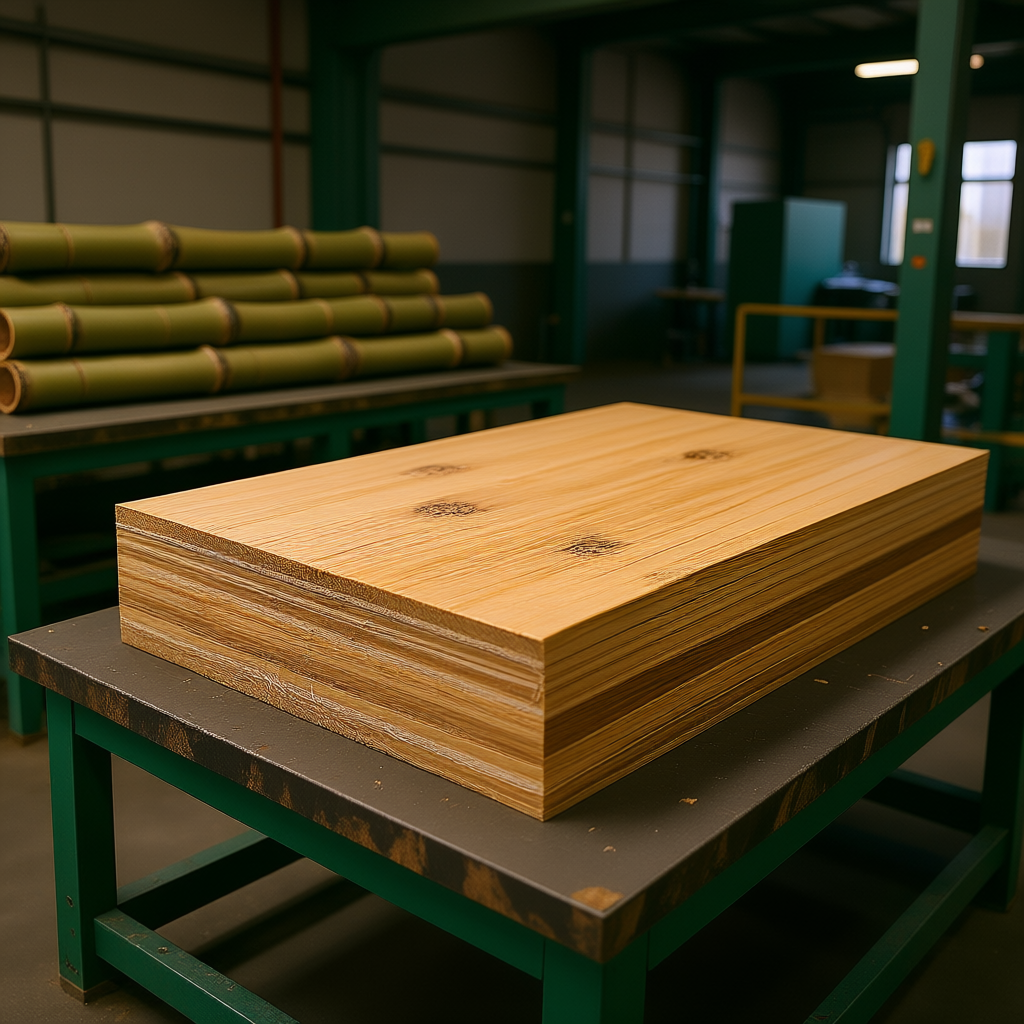
Procurement managers at major retailers like IKEA and Amazon are increasingly prioritizing materials that offer supply chain resilience without sacrificing aesthetic or mechanical quality. Traditional hardwoods such as oak require 20-30 years to mature, creating inherent scarcity and price volatility. In contrast, bamboo matures in just 3-5 years, offering a rapidly renewable resource that stabilizes raw material costs. However, the transition is not merely about sustainability; it is a financial imperative. By switching to engineered bamboo cores, manufacturers can reduce material costs by 30-40% compared to mid-grade hardwoods, directly protecting profit margins in competitive markets.
The stakes are higher than ever with the EU Deforestation Regulation (EUDR) effective December 30, 2024. Companies exporting to Europe must now provide rigorous proof that their wood-based products are deforestation-free. Bamboo, classified as a grass rather than a tree in many regulatory contexts, offers a streamlined compliance pathway. Yet, many buyers hesitate due to misconceptions about durability. Modern manufacturing techniques have evolved to produce high-density bamboo core panels with a density of 700-800 kg/m³, matching the structural performance of traditional wood composites while eliminating the risk of supply bottlenecks associated with slow-growing timber.
Technical Specifications and Performance Benchmarks
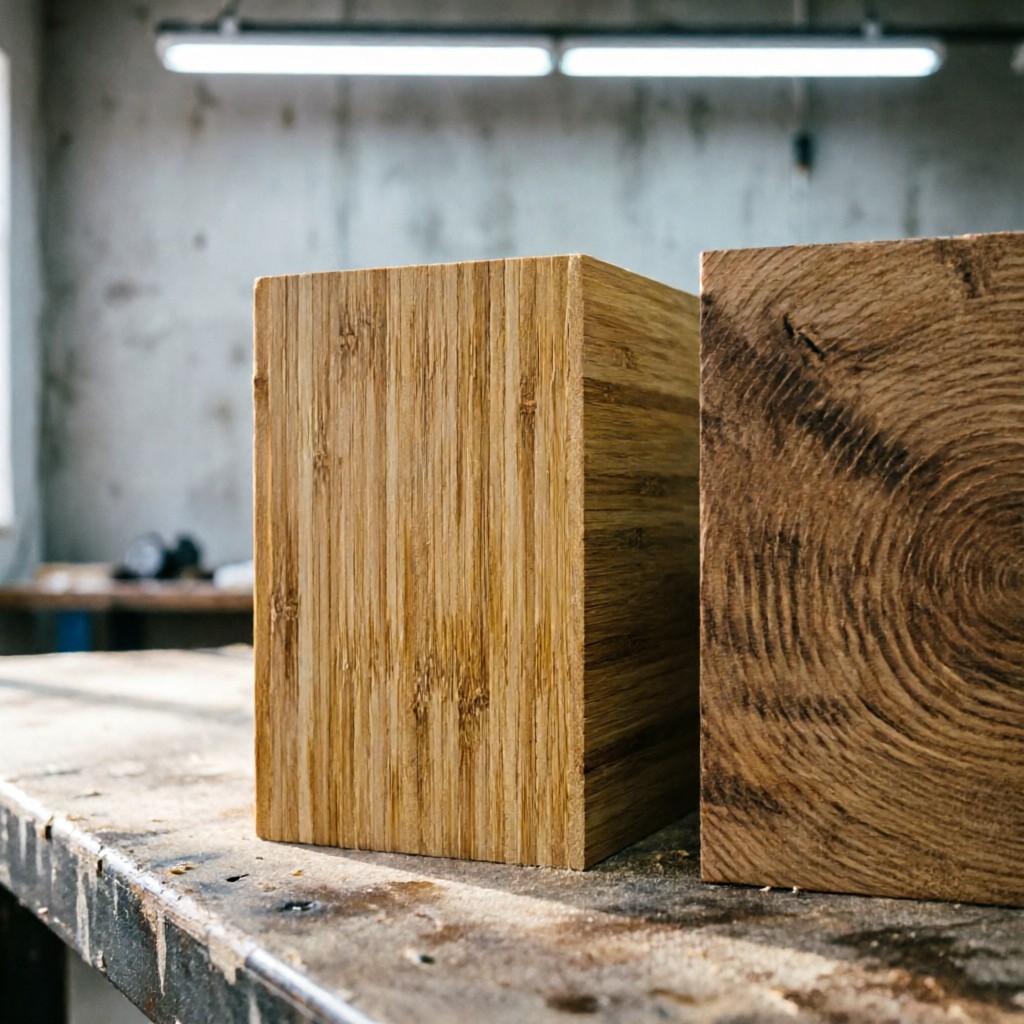
When evaluating bamboo-core panels against traditional plywood or MDF, engineers must look beyond surface aesthetics to core mechanical properties. The primary advantage of Yicaiyigou’s precision-engineered bamboo panels lies in their static bending strength, which exceeds 40 MPa. This metric is comparable to mid-grade hardwoods, making these panels suitable for load-bearing furniture components, cabinetry, and structural applications where standard particleboard would fail. Furthermore, the dimensional stability of bamboo composites is superior to many traditional woods, reducing the risk of warping in large-format cabinetry installations.
A critical differentiator in high-humidity export markets is the adhesive technology used during lamination. Competitors often overlook the specific resin formulations required to prevent delamination when panels are subjected to thermal cycling during ocean freight. Yicaiyigou utilizes advanced bonding agents that ensure formaldehyde emissions meet the stringent E0 standard (<0.5 mg/L) or CARB Phase 2 compliance levels. This ensures that the panels not only maintain structural integrity under stress but also meet the indoor air quality requirements of premium buyers in North America and Europe.
| Specification | High-Density Bamboo Core Panel | Standard Structural Plywood | Precision MDF (Yicaiyigou) |
|---|---|---|---|
| Density | 700-800 kg/m³ | 500-600 kg/m³ (varies by species) | 600-800 kg/m³ |
| Static Bending Strength | >40 MPa | 30-45 MPa (grade dependent) | 15-25 MPa |
| Maturation/Source Cycle | 3-5 years | 20-30 years (hardwoods) | N/A (Wood fiber) |
| Formaldehyde Emission | E0 (<0.5 mg/L) / CARB P2 | E1/E2 (variable) | ENF (≤0.05 mg/L) / E0 |
| Dimensional Stability | High (Low swelling coefficient) | Moderate (Prone to delamination) | High (Isotropic) |
| Moisture Resistance | High (with proper adhesive) | Low to Moderate | Low (unless treated) |
| Surface Finish Compatibility | Excellent for veneers/laminate | Good (requires filling) | Excellent (smooth surface) |
| Cost Volatility Risk | Low (Fast renewal cycle) | High (Long growth cycle) | Moderate |
The data above illustrates that while plywood offers traditional familiarity, bamboo core panels provide a superior balance of strength, stability, and regulatory compliance. For buyers requiring ultra-low emissions, Yicaiyigou’s Precision MDF achieves ENF levels (≤0.05 mg/L), surpassing even the strictest global standards.
Industry Applications and Real-World Specifications
In the production of high-end office furniture, such as desks and conference tables requested by brands like Herman Miller, the use of bamboo-core panels eliminates the “telegraphing” effect often seen with cheaper substrates. The uniform density of 700-800 kg/m³ ensures that surface veneers remain smooth and defect-free over time. For a furniture maker exporting to the EU, specifying FSC-certified bamboo panels with ENF ≤0.05 mg/L formaldehyde emissions removes compliance friction at customs, accelerating time-to-market.
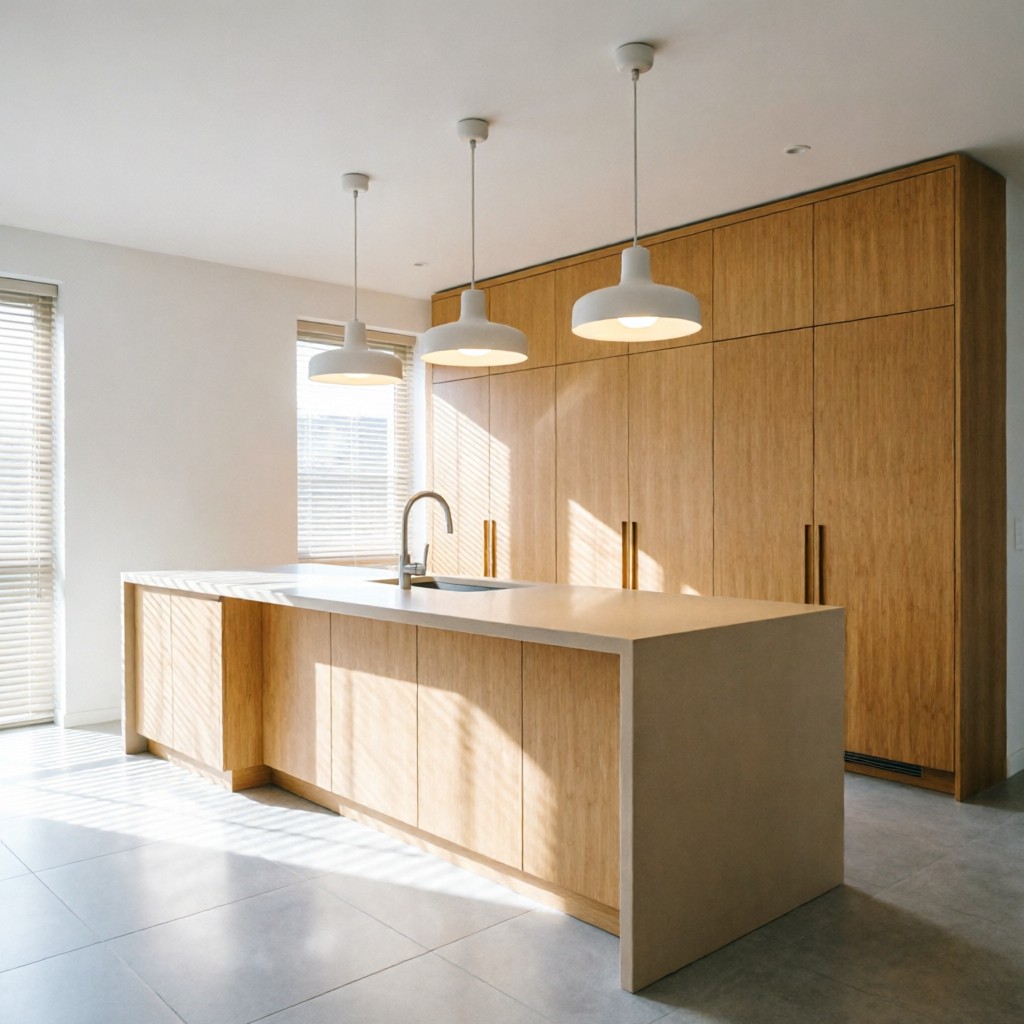
Another critical application is in modular housing and kitchen cabinetry, where dimensional stability is paramount. Unlike solid wood, which expands and contracts with humidity changes, bamboo composites maintain their shape within tight tolerances. Yicaiyigou supplies these panels in standard sizes of 2440x1220mm with thicknesses ranging from 3mm to 30mm. A 40ft container can hold 45-50 m³ of these materials, allowing for efficient logistics planning. With a lead time of just 15-25 days and a minimum order quantity (MOQ) of one 20ft container (20-25 m³), supply chain managers can maintain lean inventory levels without risking stockouts.
Why Exporters Choose Yicaiyigou for Compliance-Ready Panels
Yicaiyigou distinguishes itself through rigorous adherence to international certification standards, providing buyers with verifiable Chain of Custody (CoC) documentation. Our facilities are certified for FSC, CARB P2, CE, and ENF compliance, ensuring that every batch meets the specific regulatory requirements of target markets. For instance, our CARB P2 certification guarantees formaldehyde emissions ≤0.11 ppm for composites, while our ENF certification confirms levels ≤0.05 mg/L, catering to the most health-conscious consumers. This level of transparency is essential for suppliers serving clients like Apple or Tesla, who demand full traceability of their material inputs.
Beyond compliance, Yicaiyigou offers technical support for custom specifications, including high-density particleboard (550-750 kg/m³) and HDF (>800 kg/m³ up to 1,000+ kg/m³) for specialized applications. We understand that generic solutions do not fit all engineering needs. By requesting a compliant material sample with full CoC documentation, procurement teams can validate the physical properties and emission levels before committing to bulk orders. This proactive approach minimizes risk and builds trust in long-term supplier relationships.
Which One To Choose
Specify High-Density Bamboo Core Panels for load-bearing furniture, large-format cabinetry, and export projects requiring strict EUDR compliance and high dimensional stability. Specify Precision MDF (ENF ≤0.05 mg/L) for interior applications requiring ultra-smooth surface finishing, intricate machining, and the lowest possible formaldehyde emissions for sensitive indoor environments.
FAQ
What is the maximum loading capacity for a 40ft container of bamboo panels?
A 40ft container holds 45-50 m³ of panels, optimizing shipping costs for bulk international orders.
How does the formaldehyde emission of Yicaiyigou’s ENF board compare to Japan’s F★★★★ standard?
Yicaiyigou’s ENF board emits ≤0.05 mg/L, which is significantly lower than the Japan JAS F★★★★ limit of ≤0.3 mg/L (JIS A 1460).
Can bamboo core panels be used in high-humidity environments without delaminating?
Yes, when manufactured with specific moisture-resistant adhesives, these panels maintain integrity in high-humidity export markets, unlike standard plywood.
What is the lead time for a standard MOQ order?
The lead time for a minimum order of one 20ft container is typically 15-25 days, allowing for agile supply chain management.
Is FSC certification available for these bamboo products?
Yes, Yicaiyigou provides FSC-certified options with full Chain of Custody documentation to verify sustainable sourcing.
Summary & Next Steps
Bamboo-core panels represent a viable, cost-effective alternative to traditional hardwoods, offering superior dimensional stability, high bending strength (>40 MPa), and robust compliance with global environmental standards. By integrating these materials into your supply chain, you mitigate the risks of raw material volatility and regulatory non-compliance. Request a compliant material sample with full CoC documentation from Yicaiyigou to validate performance specs for your next production cycle.
Frequently Asked Questions
How do engineered bamboo core panels help manufacturers mitigate supply chain risks compared to traditional hardwoods?
Engineered bamboo offers a rapidly renewable resource that matures in just 3-5 years, compared to the 20-30 years required for hardwoods like oak. This shorter cycle reduces inherent scarcity and price volatility, stabilizing raw material costs and preventing supply bottlenecks.
What are the financial benefits of switching from mid-grade hardwoods to engineered bamboo cores?
Manufacturers can reduce material costs by 30-40% when switching to engineered bamboo cores compared to mid-grade hardwoods. This significant cost reduction helps protect profit margins in competitive markets facing volatile timber prices.
How does using bamboo assist with compliance regarding the EU Deforestation Regulation (EUDR)?
Bamboo is classified as a grass rather than a tree in many regulatory contexts, which offers a streamlined compliance pathway for the EUDR. This allows companies exporting to Europe to more easily provide proof that their products are deforestation-free compared to traditional wood-based products.
What are the key mechanical performance specifications of high-density bamboo core panels?
High-density bamboo core panels have a density of 700-800 kg/m³ and a static bending strength exceeding 40 MPa. These metrics match or exceed the structural performance of traditional wood composites and mid-grade hardwoods, making them suitable for load-bearing furniture and cabinetry.
How do these bamboo panels meet strict environmental and indoor air quality standards like CARB Phase 2?
The panels utilize advanced bonding agents during lamination that ensure formaldehyde emissions meet the stringent E0 standard (<0.5 mg/L) or CARB Phase 2 compliance levels. This ensures they satisfy indoor air quality requirements for premium buyers in North America and Europe while maintaining structural integrity.