The Hidden Engineering Inside Flat-Pack Success
Did you know that over 60% of the world’s ready-to-assemble (RTA) furniture relies on engineered cores rather than solid slabs? When a customer in Berlin or Boston unboxes a sleek bookshelf, they rarely consider the material science holding it together. Yet, the stability and cost-efficiency of that piece depend entirely on the core material. For global brands, particleboard has become the unsung hero of the furniture industry. However, sourcing this material requires more than just finding a factory; it requires understanding the intricate supply chain of lumber and engineered wood products that defines modern manufacturing. As demand for affordable, durable housing solutions grows, China has emerged as the epicenter for this production. But why? The answer lies in a combination of advanced engineering, supply chain velocity, and rigorous quality standards that Yicaiyigou helps navigate for international buyers.
The Hidden Engineering Inside Flat-Pack Success
Particleboard is often misunderstood as a “cheap” alternative, but in the context of RTA furniture, it is a precision-engineered solution. Unlike solid timber, which reacts unpredictably to humidity and temperature changes, particleboard offers isotropic stability. This means it expands and contracts uniformly, reducing the risk of warping that plagues solid hardwood in varying climates.
Density Profiles and Screw Holding Capacity
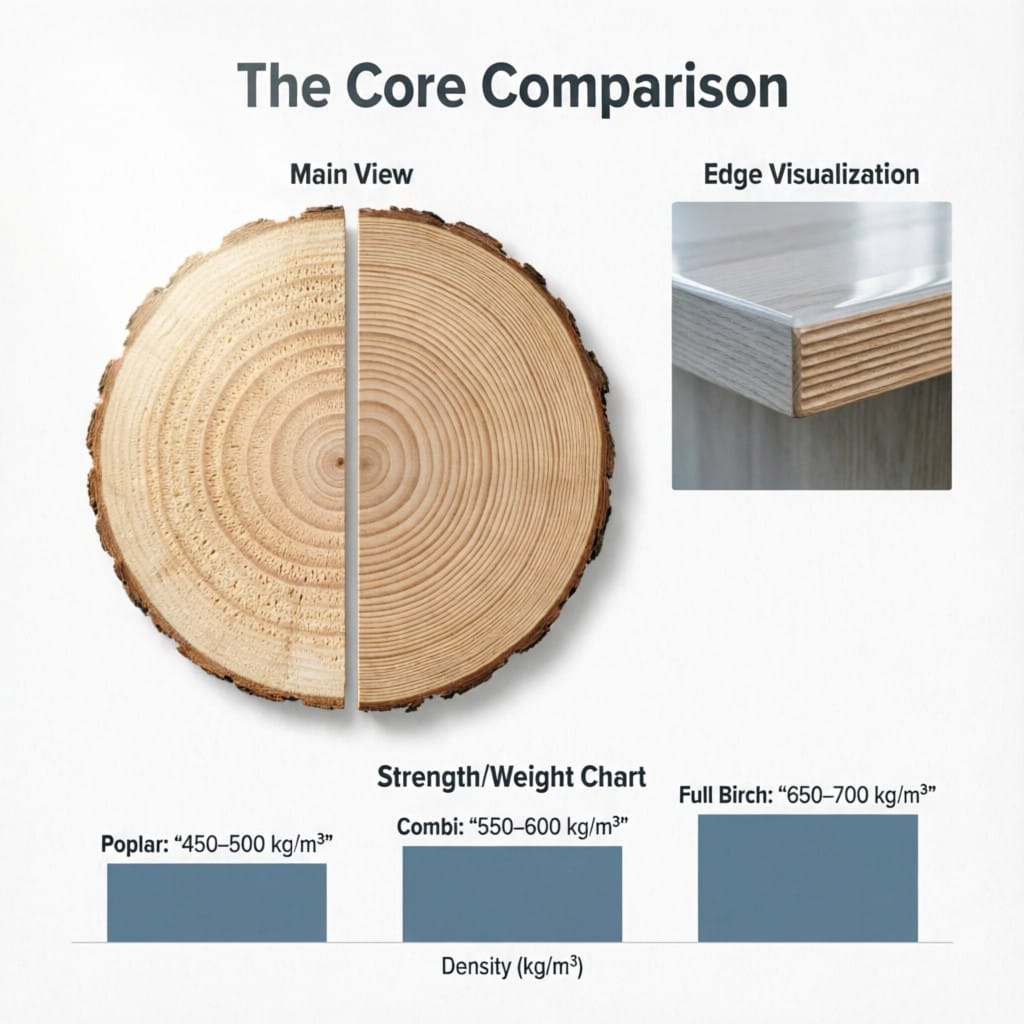
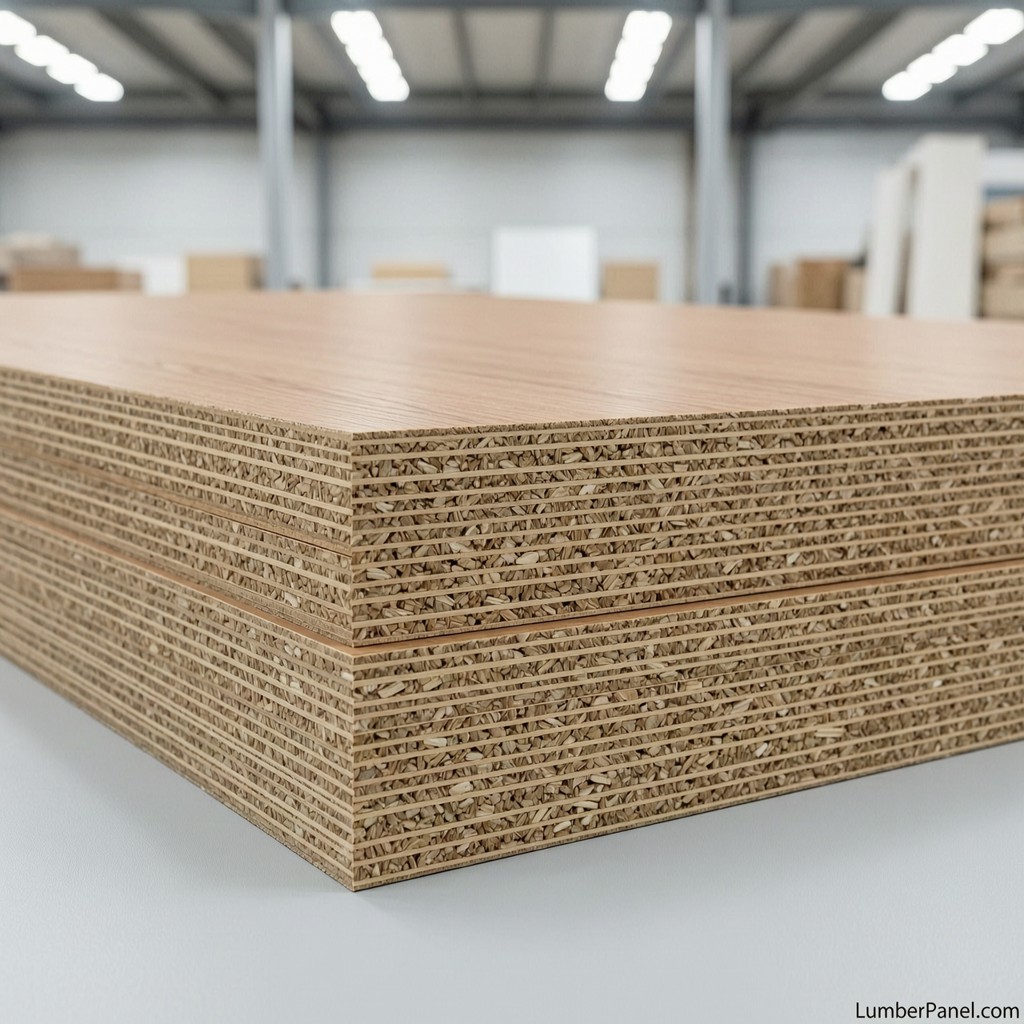
The technical superiority of high-grade particleboard lies in its density profile. Premium boards used for RTA furniture typically feature a three-layer structure: a coarse core sandwiched between two fine surface layers. The density usually ranges between 650 kg/m³ and 750 kg/m³. This gradient is crucial for hardware integration. When a consumer assemblies a cabinet, the cam locks and screws must grip tightly without stripping. Lower density boards fail here, leading to wobbly furniture and returns.
Furthermore, resin technology has evolved. Modern manufacturing utilizes low-formaldehyde adhesives, meeting E0 or CARB Phase 2 standards. This is not just about compliance; it is about brand reputation. Global brands cannot afford recalls due to air quality issues. Sourcing from established Chinese manufacturers ensures access to these advanced resin formulations, which are often more cost-effective due to the scale of chemical production within the region.
China’s Integrated Supply Chain for Engineered Panels
Why do global procurement officers fly to Shandong and Guangdong rather than sourcing locally? The answer is ecosystem integration. In China, the distance between the raw material source and the finishing factory is often measured in kilometers, not continents. This proximity reduces logistics costs and lead times significantly.
From Raw Timber to Finished Component
The journey begins with timber procurement. Chinese manufacturers have secured long-term contracts with plantation owners across Southeast Asia and domestically, ensuring a steady flow of raw fiber. This stability buffers against the volatile price swings seen in global lumber markets. Once the wood chips are processed into boards, they move immediately to lamination facilities.
This vertical integration allows for customizations that Western suppliers struggle to match. A brand can request specific moisture resistance levels, such as P5 grade for bathroom furniture, or specific fire-retardant treatments, and have them implemented within a single production run. For Yicaiyigou, this means we can coordinate the entire process, from the raw press to the edge banding, ensuring that the final wood products meet exact specifications without the communication lag typical of fragmented supply chains.
Strategic Material Selection: Particleboard vs. Solid Alternatives
While particleboard dominates the RTA sector, it is not a one-size-fits-all solution. Professional sourcing requires knowing when to specify particleboard versus other materials like plywood or solid hardwood. Understanding these distinctions is vital for cost management and product longevity.
When Hardwood and Plywood Make Sense
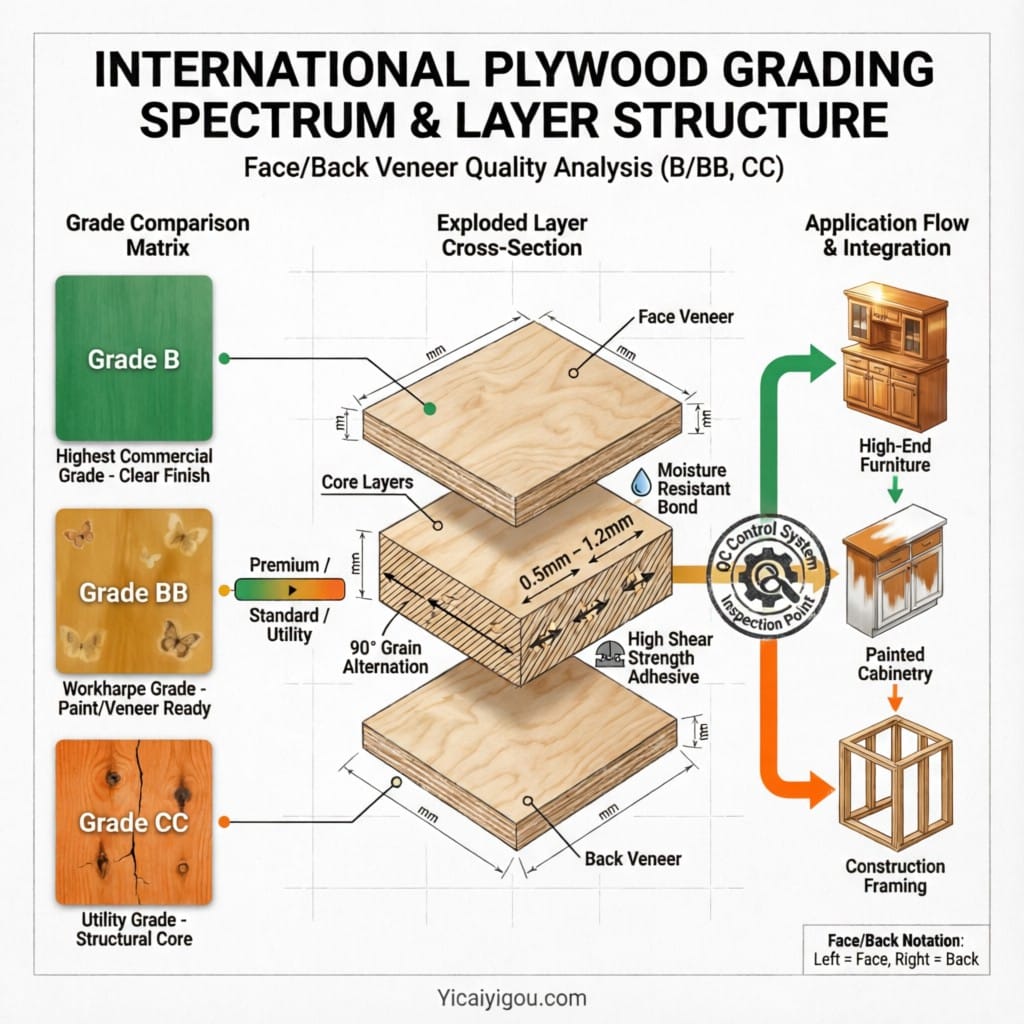
Particleboard is ideal for carcasses, shelves, and internal structures where surface aesthetics are handled by veneers or melamine. However, for structural components bearing heavy dynamic loads, plywood offers superior bending strength due to its cross-grain layering. Similarly, visible legs or frames often require solid hardwood for aesthetic appeal and durability.
The advantage of sourcing from China is the ability to hybridize these materials. A manufacturer can produce a unit with a particleboard body for cost efficiency and weight reduction, while integrating plywood backs for racking resistance and hardwood trim for visual appeal. This material optimization allows brands to hit specific price points without sacrificing critical structural integrity. Attempting to build an entire RTA unit from solid lumber would not only skyrocket the cost but also increase the weight, leading to prohibitive shipping fees and a higher carbon footprint.
Partnering with Yicaiyigou for Consistent Quality
Sourcing from China offers immense advantages, but it introduces risks regarding quality consistency. Without boots on the ground, specifications can drift. This is where Yicaiyigou adds critical value. We do not simply broker deals; we audit production lines. We verify moisture content, check density profiles, and ensure edge banding adhesion meets international standards.
For global brands, the goal is to minimize risk while maximizing margin. By leveraging China’s manufacturing dominance in engineered wood products, companies can scale rapidly. However, success depends on partnership. Whether you require moisture-resistant particleboard for kitchen units or standard grade for bedroom furniture, the expertise lies in matching the material to the application. With Yicaiyigou, you gain a partner who understands the nuances of timber sourcing, the technical requirements of RTA hardware, and the logistics of moving heavy lumber derivatives across oceans. The future of furniture is flat-pack, and the foundation of that future is built on reliable, engineered cores sourced from the world’s most efficient manufacturing hub.
Image Attachment
Frequently Asked Questions
Q1: Why do global RTA furniture brands prefer sourcing particleboard from China?
Global RTA (Ready-to-Assemble) furniture brands choose Chinese particleboard primarily for its cost efficiency, consistent quality, and scalability. China’s advanced manufacturing infrastructure allows for high-volume production at lower costs due to economies of scale, abundant raw materials (like fast-growing poplar and pine), and lower labor expenses. Additionally, Chinese mills often meet international standards (e.g., CARB P2, E0, or F☆☆☆☆) for low formaldehyde emissions, making them compliant with strict global regulations. The ability to customize thickness, density, and surface finishes (melamine, veneer, or foil) further supports the diverse design needs of brands like IKEA, Walmart, and Wayfair.
Q2: What quality certifications should I look for when sourcing particleboard from China for RTA furniture?
Key certifications include CARB (California Air Resources Board) Phase 2 or EPA TSCA Title VI for formaldehyde emissions in the U.S. market, E0 or F☆☆☆☆ (Japanese standard) for low-VOC requirements in Europe and Asia, and ISO 9001 for manufacturing quality management. For moisture resistance, look for P2 or P3 grade particleboard (per EN 312 standards). Many Chinese suppliers also offer FSC (Forest Stewardship Council) certification to ensure sustainable sourcing. Always request third-party test reports from labs like SGS or Intertek to verify compliance before placing bulk orders.
Q3: How does Chinese particleboard compare to domestic options in terms of durability and screw-holding strength for RTA furniture?
Chinese particleboard is engineered to meet global RTA furniture requirements, with typical densities ranging from 600–750 kg/m³ and screw-holding strength of 400–600 N (for 4mm screws) when using high-quality urea-formaldehyde or melamine-urea-formaldehyde resins. While domestic boards (e.g., in the U.S. or Europe) may offer slightly higher density or moisture resistance for niche applications, Chinese manufacturers have significantly improved their formulations over the past decade. For RTA furniture, which relies on cam locks, dowels, and screws, Chinese particleboard performs reliably when sourced from reputable mills that use fine wood chips and uniform resin distribution. Always test samples for internal bond strength and surface screw pull-out resistance.
Q4: What are the typical lead times and minimum order quantities (MOQs) for particleboard from Chinese suppliers?
Lead times for Chinese particleboard typically range from 15 to 30 days for standard orders (e.g., 8×4 ft sheets with melamine finish), depending on factory capacity and shipping logistics. MOQs vary widely: large mills may require a minimum of 50–100 cubic meters (roughly 1–2 containers) for custom thicknesses or colors, while smaller suppliers might accept 20–30 cubic meters for stock sizes. For RTA furniture brands, consolidating orders with a trading company or using a shared container (LCL) can reduce MOQs. Always factor in 2–4 weeks for sea freight from Chinese ports (e.g., Shanghai, Ningbo) to major destinations like the U.S. West Coast or Europe.
Q5: How can I mitigate risks like inconsistent quality or formaldehyde issues when sourcing particleboard from China?
To mitigate risks, implement a rigorous supplier vetting process: request factory audits (or hire a third-party inspection agency like Bureau Veritas), check for valid certifications (CARB, FSC, ISO), and ask for reference clients in the RTA furniture sector. Always require pre-shipment samples and conduct in-house testing for formaldehyde emissions (using the chamber method per EN 717-1 or ASTM E1333) and physical properties (density, moisture content, thickness tolerance). Use a detailed contract specifying penalties for non-compliance, and consider a quality assurance clause with a 10–20% retention payment until goods pass inspection at your warehouse. Building long-term relationships
| Specification | Standard Grade | Moisture Resistant (MR) | Fire Retardant (FR) |
|---|---|---|---|
| Density (kg/m³) | 650–720 | 680–750 | 700–780 |
| Thickness Tolerance (mm) | ±0.3 | ±0.2 | ±0.2 |
| Moisture Content (%) | 5–8 | 6–9 | 5–7 |
| Internal Bond Strength (MPa) | ≥0.40 | ≥0.45 | ≥0.50 |
| Formaldehyde Emission (E1, mg/m³) | ≤0.124 | ≤0.124 | ≤0.100 |