Global supply chains are shifting from cost-only models to compliance-first strategies. Major brands like IKEA and Apple now mandate strict Chain of Custody (CoC) documentation for all timber components, including flooring underlayment. Procurement managers face increased scrutiny under new deforestation laws, making material selection a critical risk management decision. Choosing the wrong substrate can delay customs clearance or trigger penalties.
This article provides a data-driven comparison between Structural Plywood and Oriented Strand Board (OSB) for flooring applications. We analyze formaldehyde emissions, density tolerances, and regulatory compliance to help you secure your supply chain. By understanding the technical thresholds, you can avoid compliance risks and ensure project continuity.
Regulatory Landscape
The regulatory environment for wood products has tightened significantly with the EU Deforestation Regulation (EUDR), effective December 30, 2024. This regulation supersedes the old EUTR and requires proof that products are deforestation-free. Non-compliance can result in penalties up to 4% of annual EU turnover. Buyers must verify geolocation data and compliance status for all lumber and wood products entering the EU market.
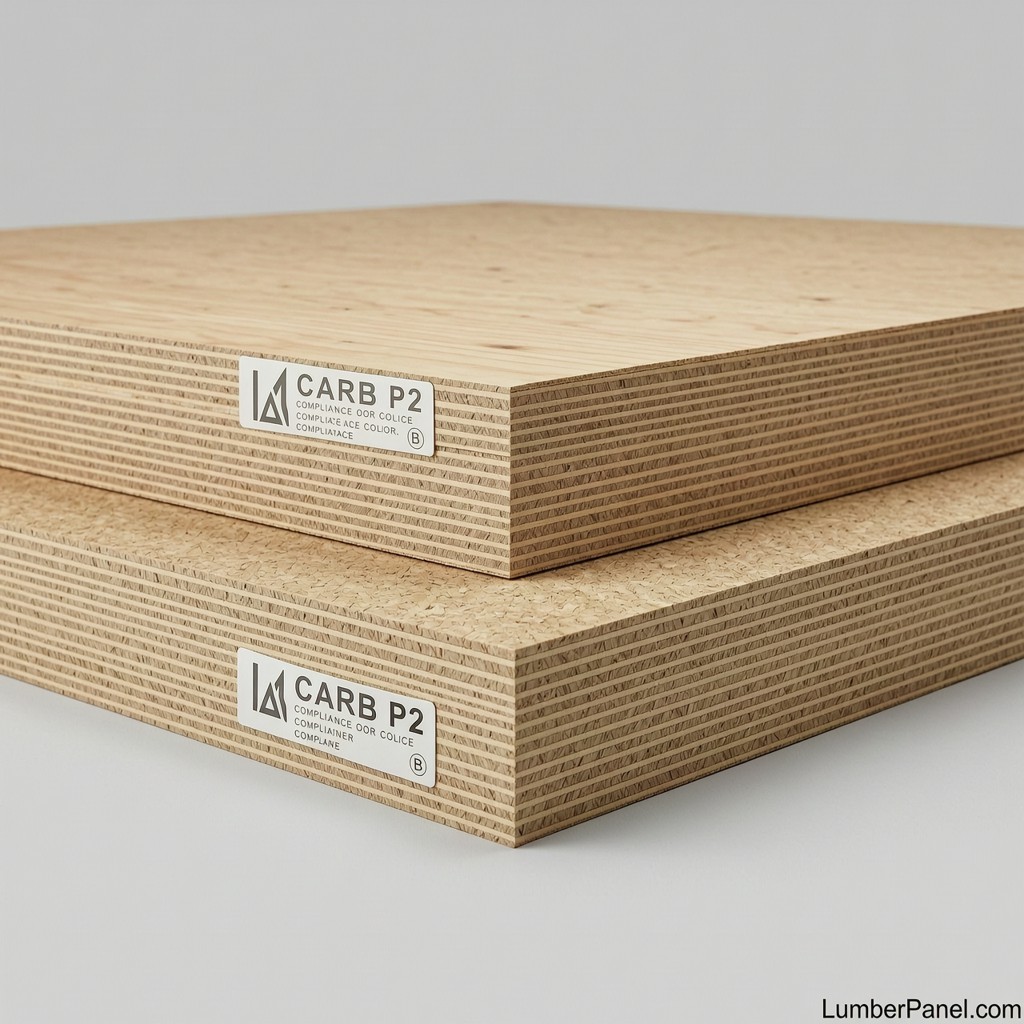
In North America, CARB P2 remains the de facto standard for composite wood panels. Compliance requires formaldehyde emissions to stay below ≤0.11 ppm for composites. Meanwhile, Asian markets often require Japan JAS F★★★★ certification, which mandates ≤0.3 mg/L using the JIS A 1460 desiccator method. Yicaiyigou ensures all shipments meet these overlapping standards to facilitate smooth customs clearance across multiple jurisdictions.
Comparison Table
Engineering decisions require measurable data, not marketing claims. The following table compares Yicaiyigou Structural Plywood against standard industry OSB specifications. Both materials have distinct strengths; Plywood offers higher dimensional stability, while OSB provides cost efficiency in dry conditions.
| Metric | Yicaiyigou Structural Plywood | Standard OSB |
|---|---|---|
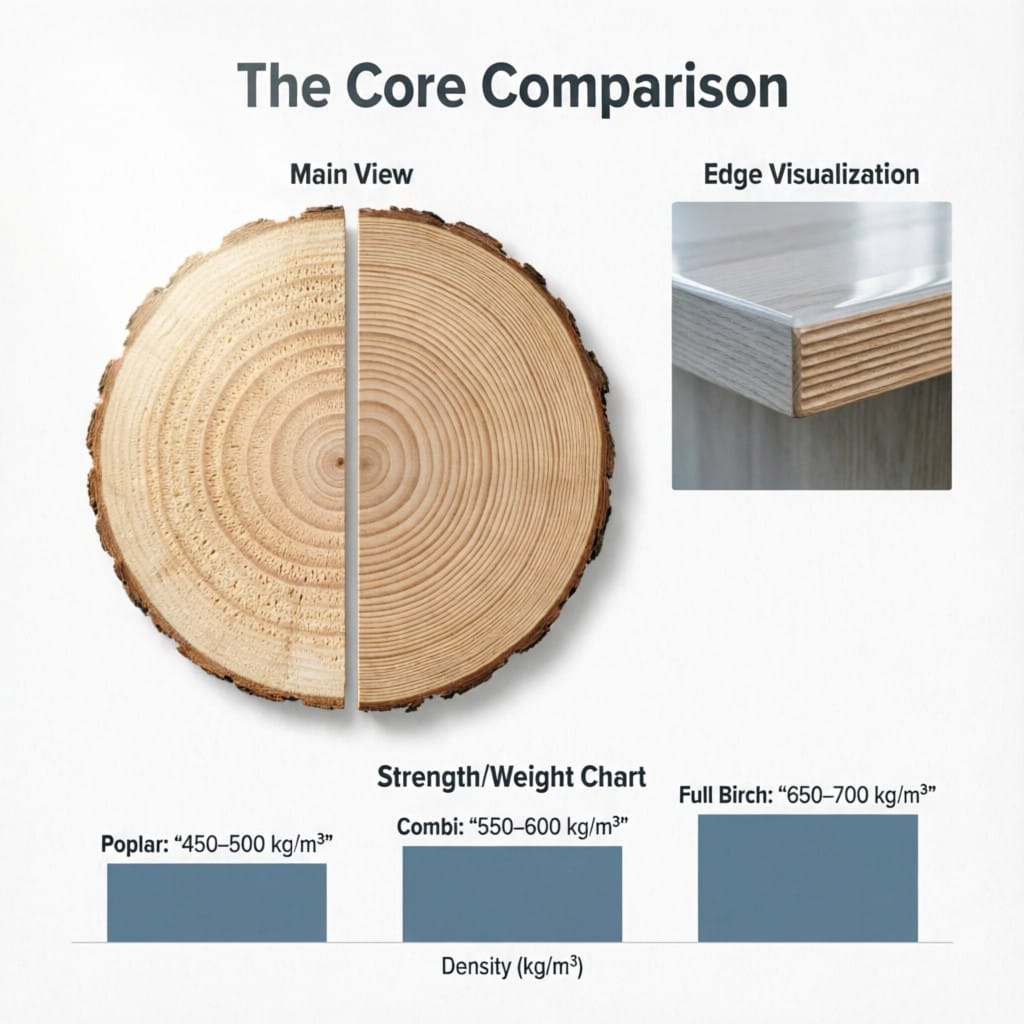
| Density Range | 600-800 kg/m³ (MDF/Core) | 590-650 kg/m³ |
| Thickness Tolerance | 3mm-30mm | 11mm-28mm |
| Formaldehyde E0 | ≤0.07 ppm | Not Typically Certified |
| Formaldehyde CARB P2 | ≤0.11 ppm | ≤0.11 ppm (if certified) |
| Formaldehyde ENF | ≤0.05 mg/L | Not Typically Certified |
| 20ft Container Load | 20-25 m³ | 20-25 m³ |
| 40ft Container Load | 45-50 m³ | 45-50 m³ |
| Production Lead Time | 15-25 days | 15-30 days |
The key takeaway is that Yicaiyigou Structural Plywood offers superior formaldehyde control with ENF ≤0.05 mg/L certification, which standard OSB often lacks. While both materials fit similar container loads, the Plywood option provides tighter thickness tolerances for precision flooring installations.
Industry Angle — Products with Use Cases + Numbers
Yicaiyigou manufactures Precision MDF and Structural Plywood designed for high-specification environments. For a furniture maker exporting to the EU, our FSC-certified MDF with ENF ≤0.05 mg/L eliminates compliance risk at customs. The density range of 600-800 kg/m³ ensures sufficient load-bearing capacity for commercial flooring underlayment without excessive weight.
For high-traffic areas, our High-Density Particleboard (HDF) with density >800 kg/m³ up to 1,000+ kg/m³ offers superior impact resistance. Standard size 2440x1220mm panels optimize cutting yields for large-scale projects. With an MOQ of 1x20ft container, we accommodate both pilot runs and full-scale procurement. These specifications align with the rigorous requirements of supply chain managers at companies like Amazon and Tesla.
Market-by-Market Guide
Compliance requirements vary significantly by region. Procurement teams must validate materials against local thresholds to avoid rejection at ports. The following table outlines the specific formaldehyde and regulatory standards for key markets.
| Requirement | EU | US | Japan | UK |
|---|---|---|---|---|
| Standard | E1 ≤0.124 ppm | CARB P2 ≤0.11 ppm | F★★★★ ≤0.3 mg/L | UKCA / E1 |
| Regulation | EUDR (Dec 30, 2024) | TSCA Title VI | JIS A 1460 | UK TR |
| Testing Method | Perforator | Chamber | Desiccator | Chamber |
| Documentation | CoC + Geo | EPA TSCA | JAS Mark | UK DoC |
Exporters must maintain separate documentation streams for each region. For example, Japan requires the JIS A 1460 desiccator method result of ≤0.3 mg/L, whereas the US focuses on chamber testing for CARB P2. Yicaiyigou provides region-specific test reports to ensure every shipment matches the destination’s regulatory framework.
Supplier Solution
Yicaiyigou positions itself as a compliance-first partner for global supply chains. We provide full Chain of Custody (CoC) documentation and FSC certification numbers with every shipment. Our facilities are CARB P2 and CE certified, ensuring materials meet both North American and European safety standards. We also support ENF (≤0.05 mg/L) and E0 (≤0.07 ppm) requirements for sensitive environments.
Traceability is central to our operation. Each batch includes thickness/density tables and container loading quantities verified against the bill of lading. Whether you order a 20ft container holding 20-25 m³ or a 40ft holding 45-50 m³, the documentation remains consistent. We invite procurement managers to request a compliant material sample with full CoC documentation to verify quality before committing to volume orders.
Verdict: Specify Structural Plywood for High-Compliance Zones. Specify OSB for Dry, Budget-Constrained Temporary Structures.
Specify Structural Plywood for high-compliance zones, luxury flooring, and export projects requiring ENF ≤0.05 mg/L. Specify OSB for dry, budget-constrained temporary structures where formaldehyde certification is not mandated by local code.
FAQ
Q: What is the formaldehyde limit for CARB P2 compliance?
CARB P2 requires composite wood products to emit ≤0.11 ppm. Yicaiyigou ensures all structural panels meet this threshold for US exports.
Q: What is the lead time for a 20ft container order?
The standard lead time is 15-25 days from order confirmation. This includes production and preparation of Chain of Custody documentation.
Q: What density range does Yicaiyigou MDF cover?
Our MDF density ranges from 600-800 kg/m³, while HDF exceeds 800 kg/m³ up to 1,000+ kg/m³ for high-wear applications.
Q: What is the Japan F★★★★ formaldehyde threshold?
Japan F★★★★ requires ≤0.3 mg/L using the JIS A 1460 desiccator method. This is stricter than many Western E1 standards.
Q: How much volume fits in a 40ft container?
A 40ft container holds 45-50 m³ of material. We optimize loading to maximize volume while preventing transit damage.
Conclusion + Low-Friction CTA
Selecting the right underlayment requires balancing technical specs with regulatory compliance. Yicaiyigou provides the data transparency needed to satisfy engineers and auditors alike. Our certified materials ensure your projects meet EUDR and CARB P2 standards without delay.
Request a compliant material sample with full CoC documentation from Yicaiyigou. This low-friction step allows you to verify density, thickness, and emission levels before placing your 1x20ft container MOQ.
Image Attachment