| Feature | Medium-Density Fiberboard (MDF) | High-Density Fiberboard (HDF) |
|---|---|---|
| Density Range | 600–800 kg/m³ | > 800 kg/m³ |
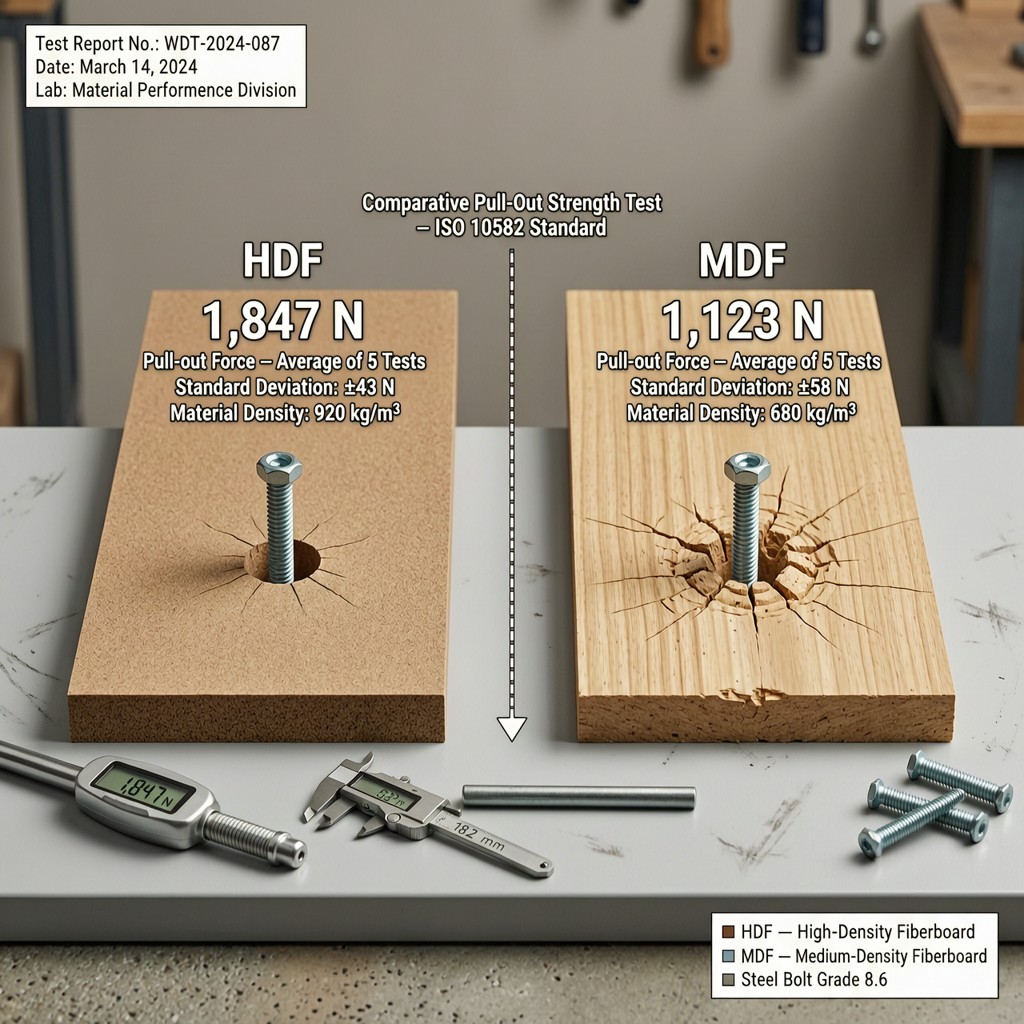
| Screw-Holding Capacity | Moderate (Prone to pull-out in heavy-duty applications) | Superior (Ideal for modern architectural hardware) |
| Surface Finish | Standard smoothness | Ultra-smooth (Optimized for precision machining and automated finishing) |
| Structural Integrity | Suitable for lightweight cabinetry | High resistance to delamination and swelling; suitable for high-frequency use |
| Formaldehyde Compliance | Varies by manufacturer | Compliant with strict global standards (CARB P2, E0 ≤0.07 ppm, ENF ≤0.05 mg/L) |
| Primary Application | General furniture, non-load bearing components | Door skins, cores, commercial fit-outs, hospitality projects |
Door manufacturers are shifting toward High-Density Fiberboard (HDF) to meet the rigorous demands of modern architectural hardware and automated finishing lines. This transition is driven by the need for superior screw-holding capacity, smoother surface finishes for precision machining, and compliance with strict global formaldehyde standards like CARB P2 and ENF. Understanding the technical divergence between HDF and standard MDF allows procurement teams to reduce warranty claims and optimize logistics for high-volume exports.
The modern interior door market, influenced by design standards seen in hospitality projects for brands like IKEA and commercial fit-outs for Amazon facilities, requires materials that withstand high-frequency use without delaminating or swelling. While Medium-Density Fiberboard (MDF) has long been a staple, its density range of 600-800 kg/m³ often falls short for heavy-duty hinge applications. In contrast, HDF offers densities exceeding 800 kg/m³, providing the structural integrity necessary for contemporary door skins and cores.
This article provides a data-driven comparison of HDF and MDF, focusing on density thresholds, formaldehyde emission limits, and logistical efficiencies. By analyzing specific metrics such as E0 ≤0.07 ppm and ENF ≤0.05 mg/L standards, supply chain decision-makers can select the optimal substrate that balances cost, compliance, and performance for their specific export markets.
Technical Specifications and Performance Benchmarks
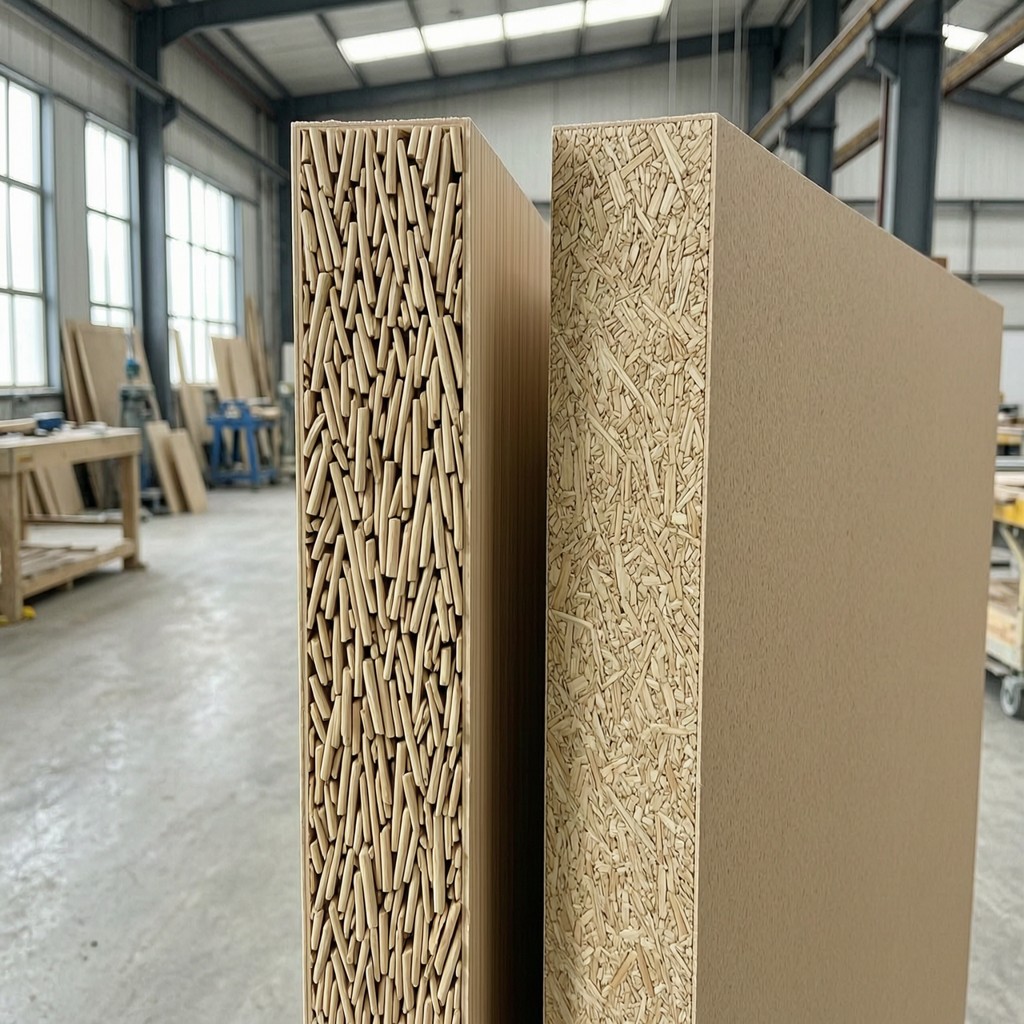
When evaluating substrates for door manufacturing, density is the primary predictor of mechanical performance. Standard MDF typically operates within a density range of 600-800 kg/m³. While sufficient for lightweight cabinetry, this density can lead to screw pull-out in door hinges subjected to repeated opening and closing. HDF, defined by a density greater than 800 kg/m³ and often reaching 1,000+ kg/m³, offers significantly higher internal bond strength. This increased density allows for thinner door skins without compromising rigidity, a critical factor for manufacturers aiming to reduce material weight while maintaining durability.
Formaldehyde emissions remain a critical regulatory hurdle for global exporters. The European Union’s EUDR, effective December 30, 2024, alongside existing CARB P2 regulations in the United States, demands rigorous documentation. Yicaiyigou’s production lines adhere to strict limits: CARB P2 compliance requires formaldehyde levels ≤0.11 ppm for composites. For markets demanding the highest air quality standards, such as premium residential projects, the ENF standard (≤0.05 mg/L) and E0 standard (≤0.07 ppm) are essential benchmarks. Japan’s JAS F★★★★ standard, measured at ≤0.3 mg/L using the JIS A 1460 desiccator method, also serves as a key reference for Asian markets.
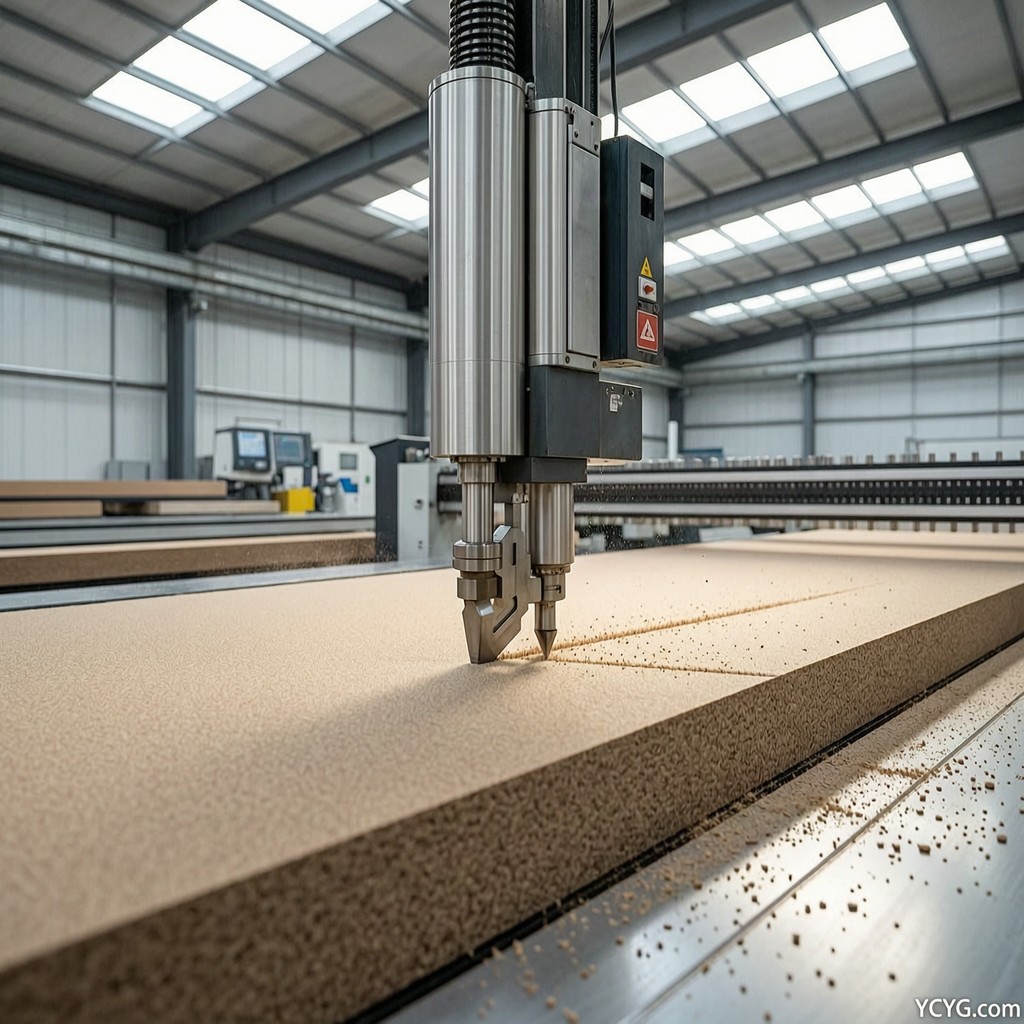
Surface finish quality directly impacts the efficiency of downstream processes like laminating and painting. HDF’s uniform fiber structure minimizes surface telegraphing, where core imperfections show through the finish. This is particularly vital for high-gloss lacquers and thin vinyl wraps used in modern door designs. The smoothness reduces sanding time and material waste during precision machining, allowing for tighter tolerances in routed details and edge profiling.
Comparative Analysis: HDF vs. MDF for Door Applications
| Specification | Medium-Density Fiberboard (MDF) | High-Density Fiberboard (HDF) |
|---|---|---|
| Density Range | 600-800 kg/m³ | >800 kg/m³ up to 1,000+ kg/m³ |
| Internal Bond Strength | Moderate (suitable for static loads) | High (resists hinge screw pull-out) |
| Formaldehyde Limit (CARB P2) | ≤0.11 ppm | ≤0.11 ppm |
| Formaldehyde Limit (ENF) | ≤0.05 mg/L (if certified) | ≤0.05 mg/L (if certified) |
| Formaldehyde Limit (E0) | ≤0.07 ppm | ≤0.07 ppm |
| Standard Thickness | 3mm-30mm | 3mm-30mm |
| Surface Smoothness (Ra) | Higher roughness average | Lower roughness average (smoother) |
| Moisture Swelling Rate | Higher susceptibility | Lower susceptibility due to compression |
| Ideal Application | Internal painted doors, low-traffic areas | High-traffic entries, laminated skins, fire-rated assemblies |
The data above illustrates that while both materials can meet stringent formaldehyde standards like CARB P2 and ENF, HDF provides superior mechanical properties. The higher density of HDF translates to better resistance against moisture-induced swelling, a common failure point in bathroom and kitchen doors. However, MDF remains a cost-effective solution for large, flat panels where extreme structural load is not a factor. Manufacturers must balance the higher raw material cost of HDF against the reduced warranty risks and enhanced perceived quality of the final product.
Industry Applications and Real-World Specifications
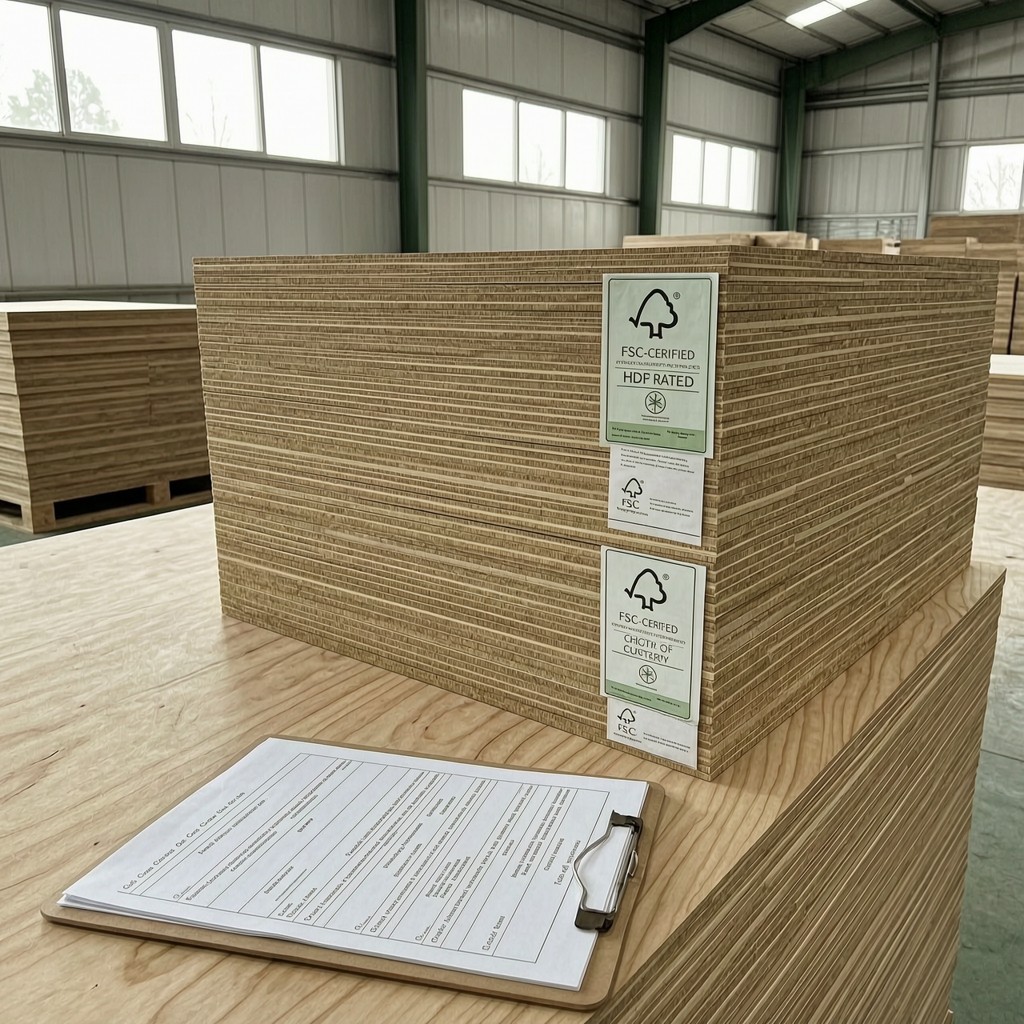
For furniture makers and door manufacturers exporting to the EU, Yicaiyigou’s FSC-certified HDF with ENF ≤0.05 mg/L eliminates compliance risk at customs. This specific certification level ensures that products meet the most rigorous indoor air quality requirements, appealing to health-conscious consumers and green building certifications. The Chain of Custody (CoC) documentation provided with each shipment verifies the sustainable sourcing of wood fibers, a mandatory requirement under the upcoming EUDR framework.
In high-volume production environments, such as those supplying hotel chains or multi-family housing projects, consistency is paramount. Yicaiyigou’s Precision MDF and HDF are manufactured in standard sizes of 2440x1220mm, optimizing cut yield for standard door dimensions. The availability of thicknesses from 3mm to 30mm allows for versatile application, from thin door skins to solid core components. For instance, a 6mm HDF skin provides sufficient rigidity for a hollow-core door while keeping the overall weight manageable for installation teams.
Logistical efficiency is another critical factor for supply chain managers. A 20ft container holds 20-25 m³ of board products, while a 40ft container accommodates 45-50 m³. With a Minimum Order Quantity (MOQ) of one 20ft container and a lead time of 15-25 days, Yicaiyigou enables just-in-time inventory strategies for large distributors. This predictability allows buyers to plan production schedules around accurate delivery windows, reducing warehousing costs and capital tie-up.
Supplier Solution: Yicaiyigou’s Compliance and Capacity
Yicaiyigou distinguishes itself through transparent certification and robust supply chain capabilities. All products are backed by FSC, CARB P2, CE, and ENF certifications, ensuring global market access. The company’s ability to produce boards with formaldehyde emissions as low as ENF ≤0.05 mg/L and E0 ≤0.07 ppm positions it as a preferred partner for brands like Apple and Herman Miller, which have strict environmental procurement policies. Each batch comes with full Chain of Custody (CoC) documentation, tracing the wood fiber from sustainable forests to the finished panel.
The manufacturer’s focus on precision extends to dimensional stability. With tight tolerances on thickness and density, Yicaiyigou’s boards minimize machining errors and material waste. The standard size of 2440x1220mm is optimized for container loading, maximizing volume utilization. Whether sourcing Structural Plywood, Precision MDF, or High-Density Particleboard, buyers benefit from consistent quality that reduces rejection rates upon arrival.
For procurement managers, the ability to request a compliant material sample with full CoC documentation provides immediate verification of quality claims. This low-friction step allows engineers to test the material’s machinability and finish quality in their own facilities before committing to larger orders. The combination of technical superiority, regulatory compliance, and logistical reliability makes Yicaiyigou a strategic partner for global door manufacturers.
FAQ
What is the minimum density for HDF used in door manufacturing?
HDF for door manufacturing typically has a density greater than 800 kg/m³, often reaching 1,000+ kg/m³, ensuring superior strength and durability compared to standard MDF.
How does Yicaiyigou ensure compliance with CARB P2 standards?
Yicaiyigou maintains formaldehyde emissions at ≤0.11 ppm for composites, meeting CARB P2 requirements, and provides documented test reports for every shipment.
What is the difference between E0 and ENF formaldehyde standards?
E0 standard limits formaldehyde to ≤0.07 ppm, while the stricter ENF standard limits it to ≤0.05 mg/L, offering the highest level of indoor air quality safety.
How many cubic meters of board fit in a 40ft container?
A 40ft container holds approximately 45-50 m³ of board products, allowing for efficient bulk shipping and reduced per-unit logistics costs.
What is the lead time for orders from Yicaiyigou?
The standard lead time for orders is 15-25 days, depending on volume and customization requirements, ensuring timely delivery for production schedules.
Summary & Next Steps
Choosing between HDF and MDF requires a clear understanding of density requirements, regulatory compliance, and end-use conditions. HDF’s superior density (>800 kg/m³) and smooth surface make it the ideal choice for high-performance doors, while MDF remains viable for cost-sensitive, low-traffic applications. Both materials can meet strict environmental standards like CARB P2 and ENF when sourced from reputable manufacturers like Yicaiyigou.
To verify material suitability for your specific production line, request a compliant sample with full CoC documentation from Yicaiyigou. This allows your engineering team to test machinability and finish quality firsthand, ensuring a seamless integration into your supply chain.
Frequently Asked Questions
Why are door manufacturers shifting from MDF to High-Density Fiberboard (HDF)?
Manufacturers are shifting to HDF to meet the demands of modern architectural hardware and automated finishing lines. HDF offers superior screw-holding capacity for heavy-duty hinges, smoother surface finishes for precision machining, and better compliance with strict global formaldehyde standards like CARB P2 and ENF.
What is the primary difference in density between standard MDF and HDF?
Standard Medium-Density Fiberboard (MDF) typically has a density range of 600-800 kg/m³, whereas High-Density Fiberboard (HDF) is defined by a density greater than 800 kg/m³, often reaching 1,000+ kg/m³. This higher density provides the structural integrity needed for contemporary door skins and cores.
How does HDF improve performance in high-frequency use scenarios compared to MDF?
HDF offers significantly higher internal bond strength due to its density exceeding 800 kg/m³. This prevents issues like screw pull-out in door hinges and reduces the risk of delaminating or swelling under repeated opening and closing, making it suitable for high-traffic environments like hospitality projects and commercial fit-outs.
What are the key formaldehyde emission standards mentioned for global exporters?
Key standards include CARB P2 (≤0.11 ppm) for the United States, E0 (≤0.07 ppm), and ENF (≤0.05 mg/L) for markets demanding high air quality. Additionally, Japan’s JAS F★★★★ standard (≤0.3 mg/L using the JIS A 1460 desiccator method) is a critical reference for Asian markets.
How does the surface quality of HDF benefit downstream manufacturing processes?
HDF’s uniform fiber structure minimizes surface telegraphing, where core imperfections show through the finish. This smoothness is vital for high-gloss lacquers and thin vinyl wraps, reducing sanding time and material waste during precision machining while allowing for tighter tolerances in routed details.