| Approval Method | Verification Capability | Risk Factors | Financial Impact | Regulatory Compliance (EUDR) |
|---|---|---|---|---|
| Digital-Only Approval (Photos/Specs) |
Limited to color and visible surface texture; fails to convey tactile grain, density, or internal structure. | Hidden internal voids, uneven stain absorption, moisture deviation leading to warping. | High risk of 15-20% budget overruns due to rework and shipment rejections. | Insufficient for rigorous traceability requirements effective Dec 30, 2024. |
| Physical Sample Approval (“Golden Samples”) |
Validates tactile quality, edge-binding, structural integrity, and precise moisture content. | Eliminates ambiguity regarding material consistency and physical defects before bulk manufacturing. | Secures supply chain stability; prevents financial loss from rejected containers. | Supports necessary physical verification for deforestation regulation compliance. |
Furniture manufacturers and construction firms risk 15-20% budget overruns due to costly rework and shipment rejections when mass-produced lumber deviates from initial quality expectations. This article details the technical necessity of sample approval before mass production, outlining how precise moisture control, grading compliance, and physical “golden samples” prevent financial loss. By validating prototypes before bulk manufacturing, procurement managers secure supply chain stability and ensure every container meets exacting specifications.
The Hidden Cost of Digital-Only Approvals
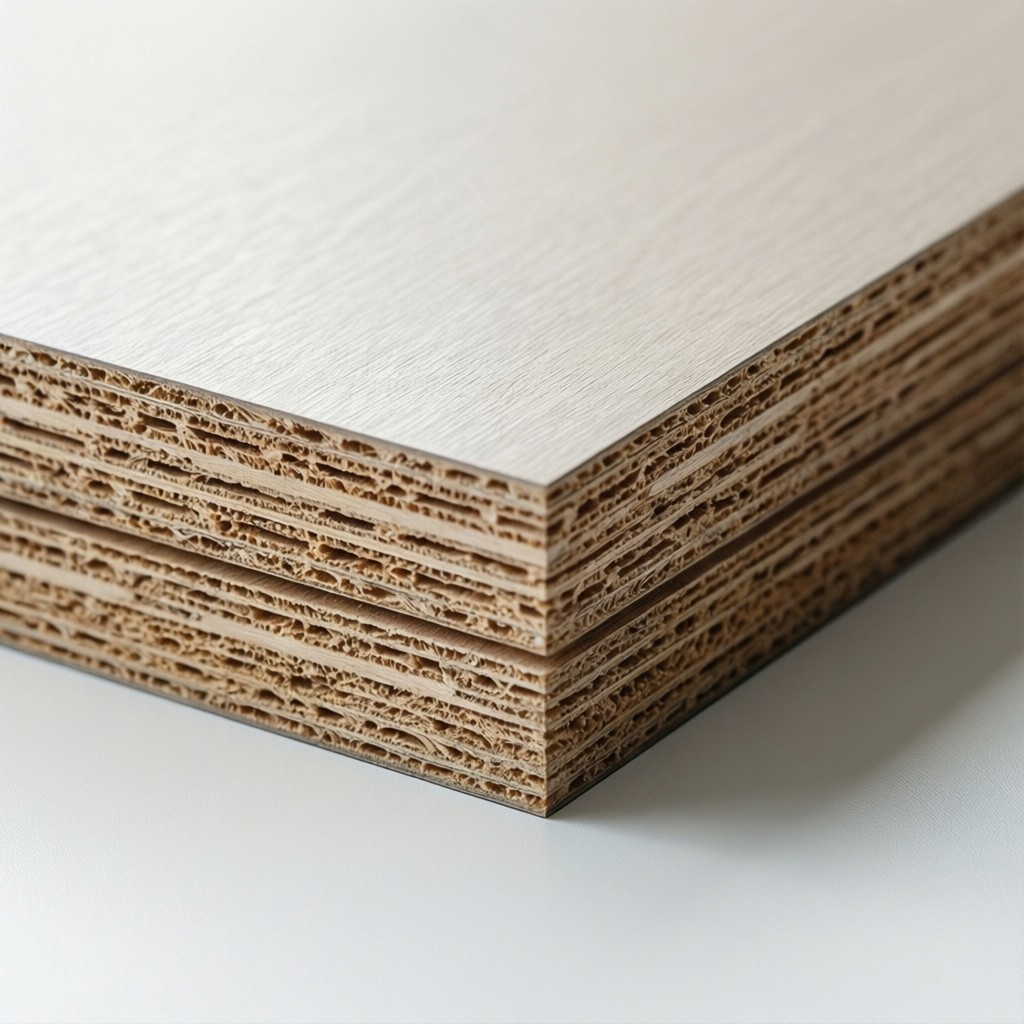
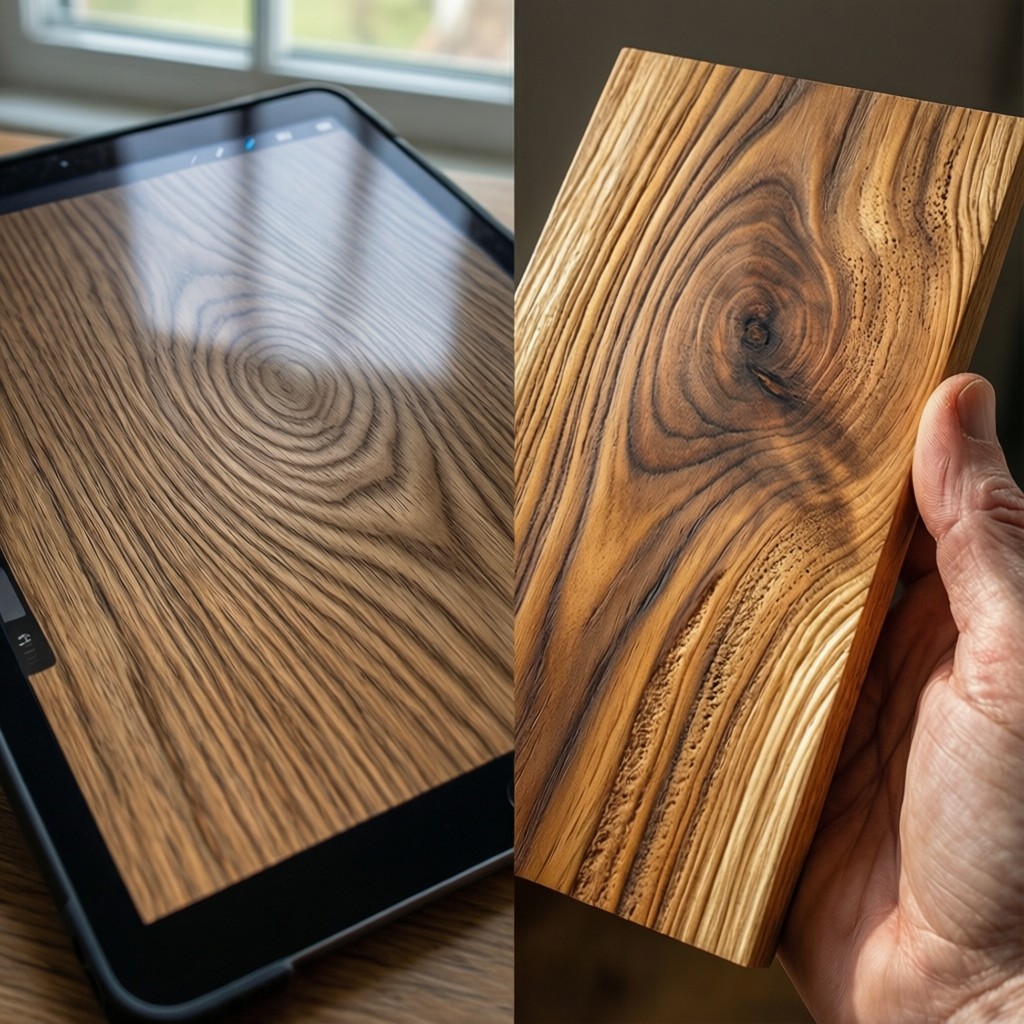
A single percentage point deviation in moisture content can trigger catastrophic warping in a 5,000-unit furniture run, yet many buyers rely solely on digital photos for final sign-off. Industry leaders like IKEA and Herman Miller do not leave surface texture or structural integrity to pixel-based interpretation; they mandate physical verification. When a supplier sends high-resolution images of Precision MDF or Structural Plywood, they capture color but fail to convey tactile grain, density variations, or edge-binding quality.
This reliance on digital proxies creates a dangerous gap between expectation and reality. A photo cannot reveal if a High-Density Particleboard panel has internal voids or if the surface finish will absorb stain unevenly. For supply chain decision-makers at companies like Apple or Amazon, where consistency is paramount, this gap translates directly into rejected shipments and delayed product launches. The urgency is compounded by the upcoming EUDR (EU Deforestation Regulation) effective December 30, 2024, which requires rigorous traceability that digital snapshots simply cannot provide.
The thesis is clear: sample approval before mass production is not a bureaucratic hurdle but a critical financial safeguard. By shifting from visual estimation to physical validation, buyers eliminate the ambiguity that leads to 15-20% budget overruns. This process ensures that the material arriving in your factory matches the material you tested in your lab, protecting both your margin and your brand reputation.
Technical Benchmarks for Pre-Production Validation
To validate prototypes before bulk manufacturing effectively, engineers must enforce strict quantitative thresholds during the sampling phase. Relying on general “good quality” descriptions is insufficient for industrial applications. Instead, the pre-production sample sign-off process must verify three critical data points that dictate long-term performance.
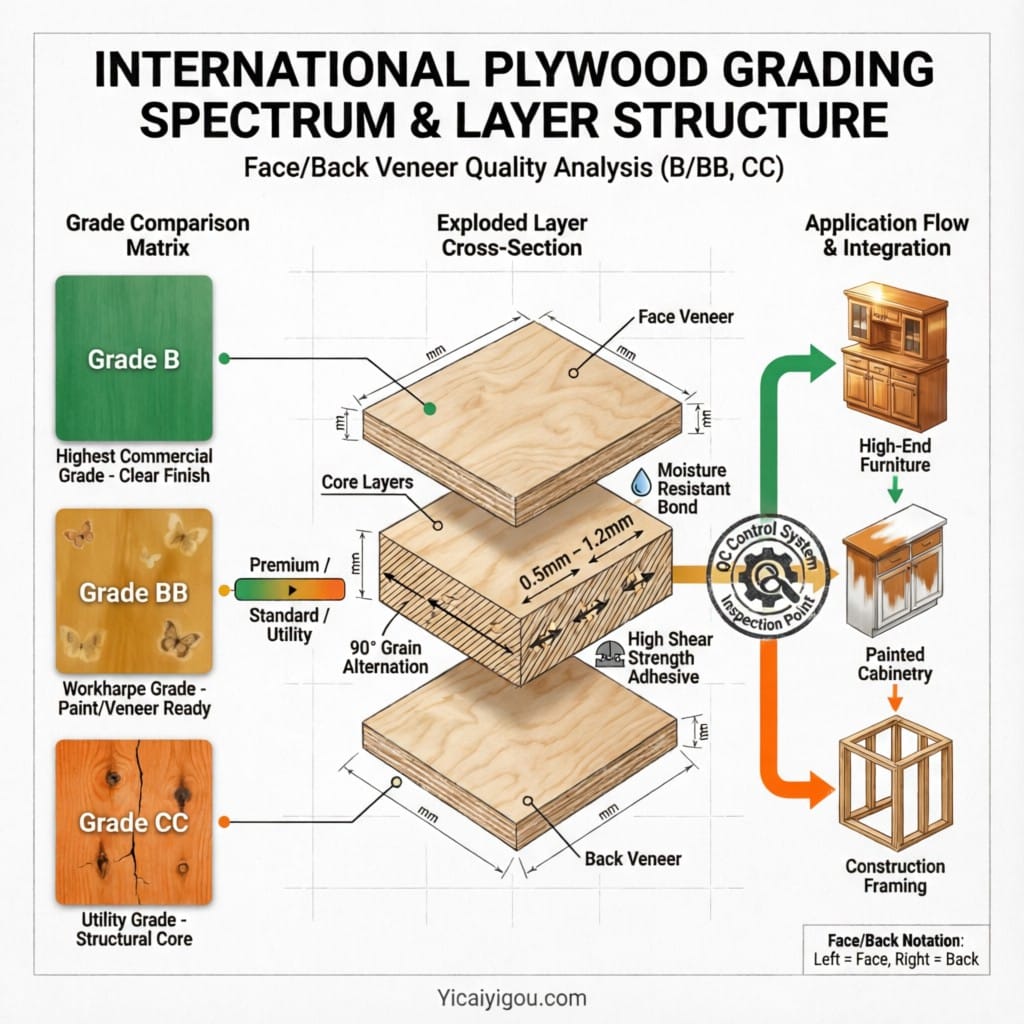
First, verify moisture content stability between 6-8% for indoor furniture applications to prevent post-delivery warping. This range is critical for maintaining dimensional stability in controlled environments. Second, confirm grading compliance with NHLA rules or specific JAS/KEF standards for structural integrity. These standards define acceptable defect levels, ensuring that structural plywood can bear intended loads without failure. Third, validate finish absorption rates on trial panels to ensure color consistency across 5,000+ unit runs. Inconsistent absorption leads to visible banding and customer returns, a risk that only physical testing can mitigate.
Most suppliers fail to specify tolerance limits for natural defects like knot size and frequency in the approval stage. Without these defined limits, a batch may technically meet “grade” requirements while still containing aesthetically unacceptable flaws for high-end furniture. Competitors often rely on digital photos rather than physical reference blocks, ignoring tactile grain and texture variations that affect both assembly and finish. By establishing these numeric benchmarks early, buyers create an objective framework for acceptance or rejection.
Comparative Analysis: Physical Golden Samples vs. Digital Reference
The following table contrasts the efficacy of physical golden samples against digital reference methods, highlighting why physical archives are superior for quality control.
| Metric | Physical Golden Sample | Digital Photo Reference |
|---|---|---|
| Moisture Content Verification | Direct measurement via pin meter (6-8%) | Impossible to verify remotely |
| Texture & Grain Assessment | Tactile confirmation of smoothness/roughness | Visual only, lacks depth perception |
| Defect Tolerance Definition | Physical marking of max knot size/frequency | Subjective interpretation of pixels |
| Color Consistency Check | Side-by-side comparison under standard light | Screen calibration dependent variables |
| Edge Binding Quality | Physical inspection of core density | Obscured by angle and lighting |
| Contractual Enforceability | Signed, archived physical benchmark | Ambiguous digital file metadata |
| Finish Absorption Test | Real-world stain application test | Simulated rendering only |
| Regulatory Traceability | Linked to specific Chain of Custody batch | No direct physical link to source |
The key takeaway is that physical golden samples provide measurable, enforceable data points that digital references cannot match. While digital tools are useful for initial screening, they lack the precision required for final sign-off on materials like Precision MDF and High-Density Particleboard.
Real-World Application: Yicaiyigou’s Precision Standards
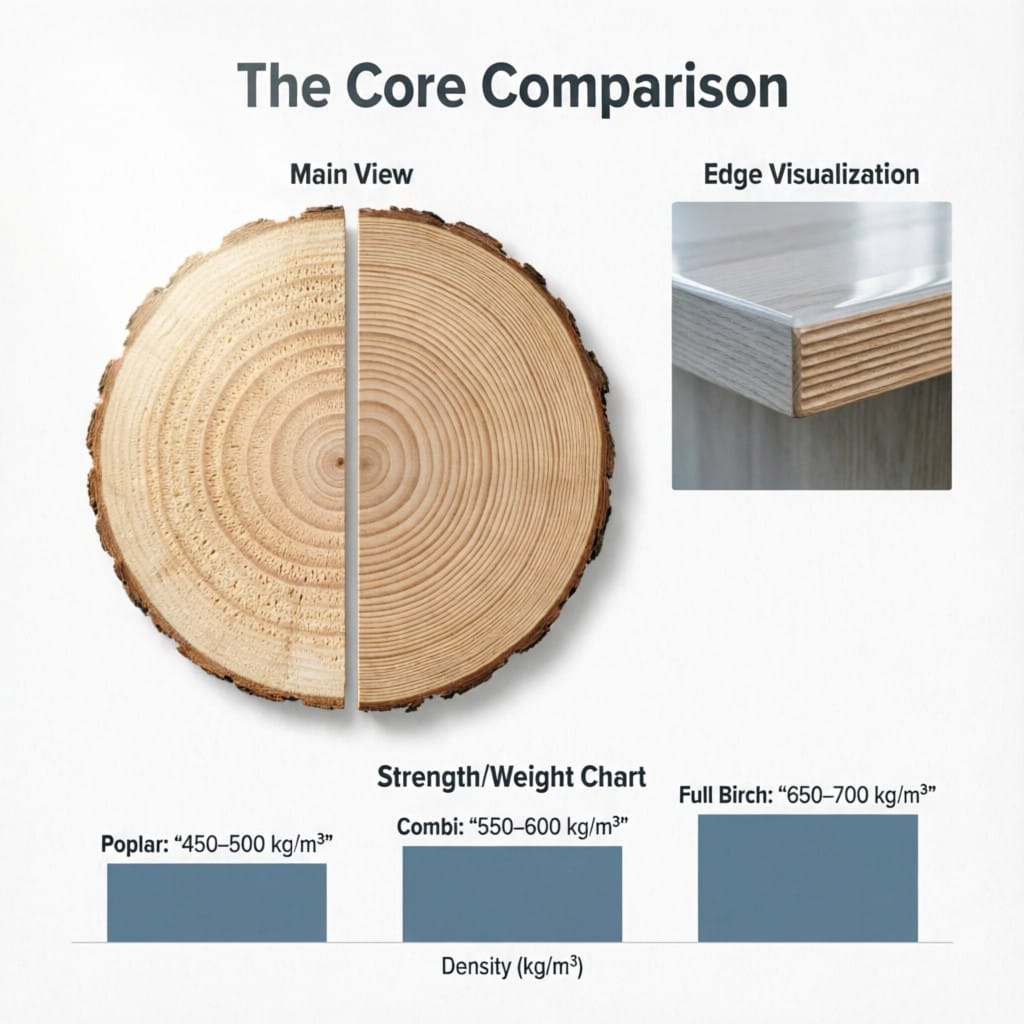
Yicaiyigou applies these rigorous standards to its core product lines, ensuring that every panel meets the demands of global exporters. For instance, their Precision MDF features a density of 600-800 kg/m³, providing the ideal balance of workability and strength for intricate CNC machining. When a furniture maker exports to the EU, using Yicaiyigou’s FSC-certified MDF with ENF ≤0.05 mg/L formaldehyde emissions eliminates compliance risk at customs, adhering to the strictest environmental standards.
For structural applications, Yicaiyigou’s Structural Plywood is graded to meet specific JAS/KEF standards, ensuring reliability in load-bearing scenarios. The company’s High-Density Particleboard, with a density >800 kg/m³ up to 1,000+ kg/m³, offers superior screw-holding capacity for heavy-duty fixtures. Each product is available in thicknesses from 3mm to 30mm and standard sizes of 2440x1220mm, optimized for efficient container loading. A 20ft container holds 20-25 m³, while a 40ft container holds 45-50 m³, allowing for scalable procurement with an MOQ of 1x20ft container.
Why Exporters Choose Yicaiyigou for Compliance-Ready Panels
Yicaiyigou positions itself as a technical partner by using signed, physically archived ‘golden samples’ as the binding contractual benchmark for all mass production QC inspections. This approach transforms the sample from a mere preview into a legal and technical guarantee. Every batch produced is compared against this archived sample, ensuring that the 15-25 day lead time results in material that matches the approved prototype exactly.
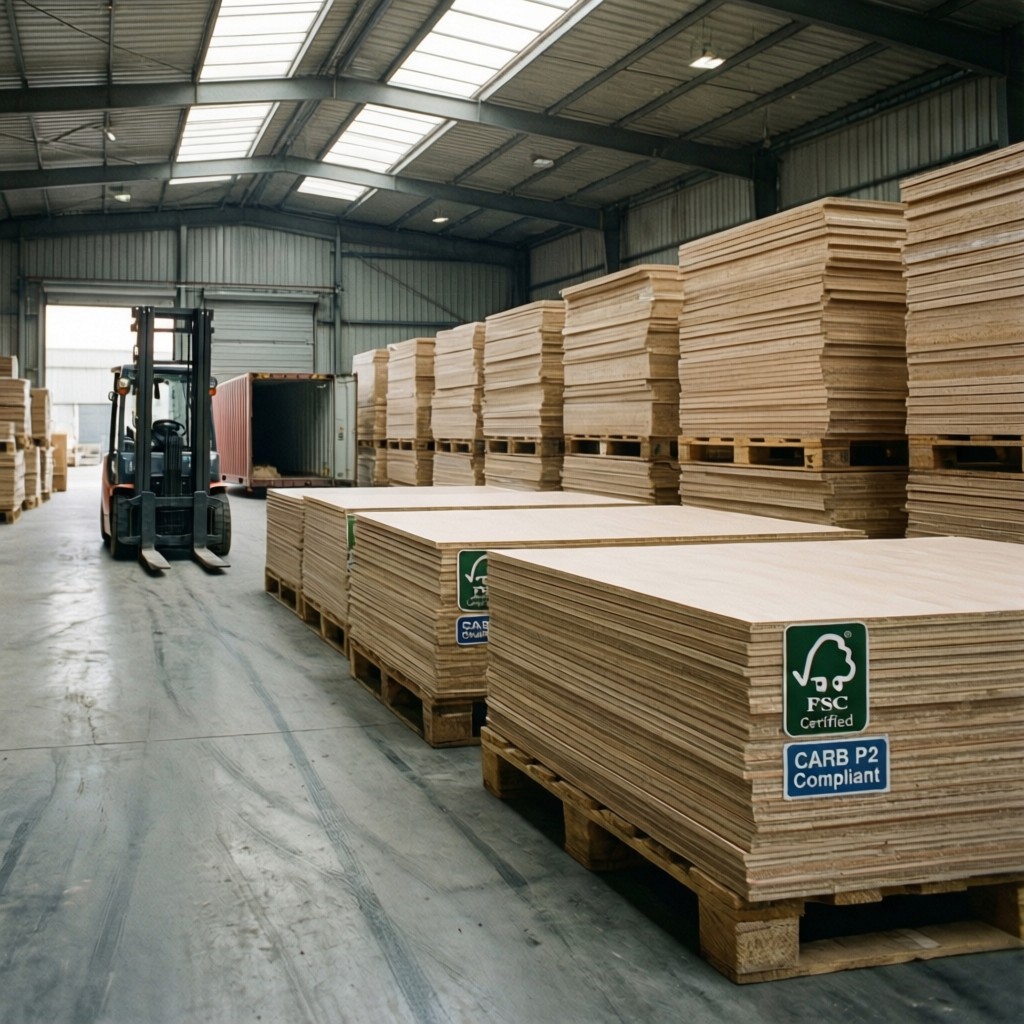
The company’s commitment to compliance is evidenced by its comprehensive certification portfolio, including FSC, CARB P2, CE, and ENF (≤0.05 mg/L). For buyers concerned with indoor air quality, Yicaiyigou’s E0 (≤0.07 ppm) and CARB P2 (≤0.11 ppm for composites) ratings provide peace of mind. Additionally, the Japan JAS F★★★★ rating (≤0.3 mg/L via JIS A 1460 desiccator method) opens doors to the stringent Japanese market. Full Chain of Custody (CoC) documentation accompanies every shipment, satisfying the traceability requirements of the EUDR and other global regulations.
FAQ
What is the formaldehyde emission limit for ENF certified boards?
ENF certified boards must have formaldehyde emissions ≤0.05 mg/L, representing the highest standard for indoor air quality.
How does moisture content affect MDF stability?
Maintaining moisture content between 6-8% prevents warping and ensures dimensional stability in indoor furniture applications.
What is the minimum order quantity for Yicaiyigou products?
The MOQ is 1x20ft container, which holds approximately 20-25 m³ of material depending on thickness.
Which grading standards does Yicaiyigou follow for structural plywood?
Yicaiyigou confirms grading compliance with NHLA rules or specific JAS/KEF standards to ensure structural integrity.
How long is the typical lead time for orders?
The standard lead time is 15-25 days from order confirmation to shipment readiness.
Summary & Next Steps
Sample approval before mass production is the definitive strategy for mitigating the 15-20% budget overrun risk associated with quality deviations. By enforcing strict moisture, grading, and absorption benchmarks, and by utilizing physical golden samples as contractual benchmarks, buyers secure both quality and compliance. Yicaiyigou’s integration of FSC, CARB P2, and ENF certifications with rigorous physical validation processes offers a reliable path for global supply chains.
Request a compliant material sample with full CoC documentation from Yicaiyigou to establish your golden sample benchmark today.
Frequently Asked Questions
What is the primary financial risk for furniture manufacturers and construction firms when skipping physical sample approval?
Manufacturers and construction firms risk 15-20% budget overruns due to costly rework and shipment rejections when mass-produced lumber deviates from initial quality expectations.
Why are digital photos considered insufficient for final sign-off on lumber products?
Digital photos fail to convey tactile grain, density variations, edge-binding quality, internal voids, or uneven stain absorption, creating a dangerous gap between expectation and reality that leads to rejected shipments.
What is the recommended moisture content range for indoor furniture applications to prevent warping?
The recommended moisture content stability is between 6-8% for indoor furniture applications to ensure dimensional stability in controlled environments and prevent post-delivery warping.
Which grading standards should be confirmed during the pre-production sample sign-off process?
Buyers should confirm grading compliance with NHLA rules or specific JAS/KEF standards to define acceptable defect levels and ensure structural integrity for intended loads.
How does the upcoming EU Deforestation Regulation (EUDR) impact the need for physical validation?
The EUDR, effective December 30, 2024, requires rigorous traceability that digital snapshots cannot provide, making physical verification essential for compliance and supply chain stability.