| Claim Scenario | Evidence Provided | Inspection Timing | Likely Outcome | Financial Impact |
|---|---|---|---|---|
| Delamination in MDF Panels | Visual photos only; no moisture data | Post-arrival window missed | Claim Rejected | Total Write-off (e.g., $45,000 loss) |
| Dimensional Non-conformance | ISO 13061 aligned technical report | Within critical inspection window | Claim Enforced | Refund or Replacement secured |
| Surface Defects (Vague) | Internal grading notes | Delayed verification | Dispute Stalled | 15-20% Supply Chain Loss Risk |
| Structural Integrity Failure | Third-party verification + Lab results | Immediate post-unloading | Supplier Liability Confirmed | Full Compensation + Logistics Coverage |
Importers of Chinese lumber face significant financial exposure when quality claims are rejected due to vague evidence or missed inspection windows. This guide provides a data-driven framework to enforce quality control agreements, ensuring you can resolve quality dispute china supplier interactions efficiently while protecting your supply chain from the 15-20% loss risk associated with defective panel shipments.
The High Cost of Vague Claims in Panel Imports
A procurement manager at a major furniture distributor recently faced a $45,000 loss when a container of Precision MDF arrived with delamination issues. The supplier rejected the claim because the buyer failed to document moisture content deviations within the critical post-arrival window. Without third-party verification, the burden of proof remained on the importer, resulting in total write-off. This scenario is not unique; it reflects a systemic gap in how international buyers handle non-conforming goods.
For companies supplying tier-1 retailers like IKEA or Amazon, such delays disrupt production schedules and violate just-in-time manufacturing commitments. The root cause is rarely malicious intent by the manufacturer but rather a mismatch in technical documentation standards. By understanding the specific regulatory levers and inspection protocols, buyers can shift from reactive damage control to proactive claim enforcement.

Technical Benchmarks for Validating Panel Quality
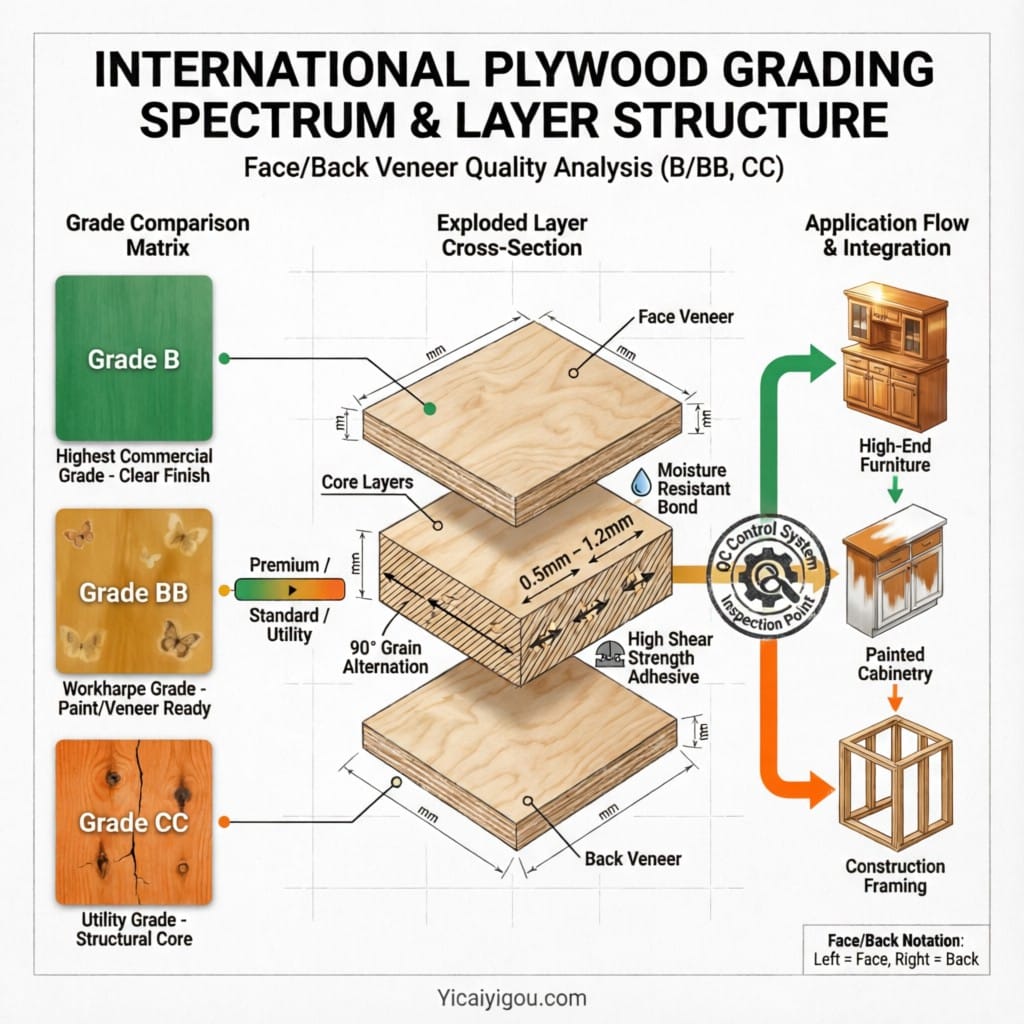
To successfully reject defective parts chinese manufacturer, you must anchor your claims in recognized international and national standards. Visual grading alone is insufficient for engineered wood products. You must reference ISO 13061 standards for visual grading defects, which provide objective criteria for knots, splits, and warp that are universally accepted in arbitration.
Furthermore, China’s GB/T 153-2008 national standard plays a pivotal role in dispute resolution outcomes. Most guides ignore this, but local courts and arbitration bodies in China prioritize GB/T compliance when domestic standards conflict with international expectations. Aligning your contract terms with both ISO and GB/T benchmarks creates a dual-layer protection strategy that suppliers cannot easily dismiss.
Claim Validation: Port Rework vs. Return to Origin
When a quality issue is identified, the logistical decision between reworking goods at the port of discharge versus returning them to origin determines the final financial impact. The table below compares these two pathways using specific cost and time metrics relevant to panel imports.
| Metric | Port Rework (Discharge Country) | Return to Origin (China) |
|---|---|---|
| Lead Time Impact | 3-5 days for sorting/repair | 25-35 days for return shipping + replacement |
| Labor Cost Estimate | $15-$25 per man-hour locally | $5-$8 per man-hour (China) + freight |
| Freight Cost | $0 (already paid) | 100% of original ocean freight + new booking |
| Customs Duty Recovery | Partial or none (depending on local law) | Full duty drawback possible but complex |
| Material Waste Rate | 10-15% (cutting away defects) | 0% (if supplier accepts full return) |
| Inspection Requirement | Local third-party report sufficient | Requires SGS/BV report at origin port |
| Risk of Secondary Damage | Low (controlled environment) | High (multiple handling points) |
| Supplier Relationship Impact | Neutral (shared cost solution) | Negative (accusatory tone) |
The data indicates that for minor defects like surface scratches or edge chipping on High-Density Particleboard, port rework is often more cost-effective despite higher local labor rates. However, for structural failures in Structural Plywood, return to origin is the only viable option to maintain integrity.
Industry Examples: Applying Standards to Yicaiyigou Products
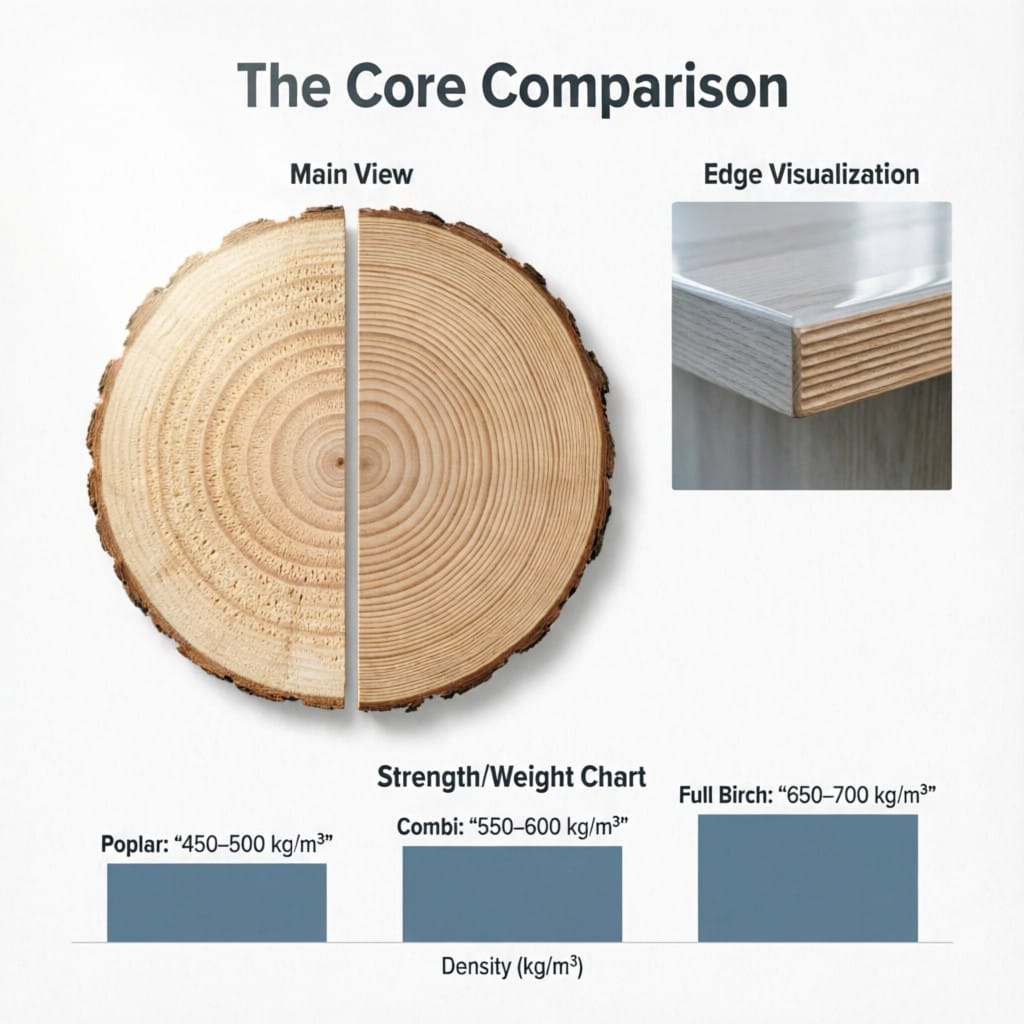
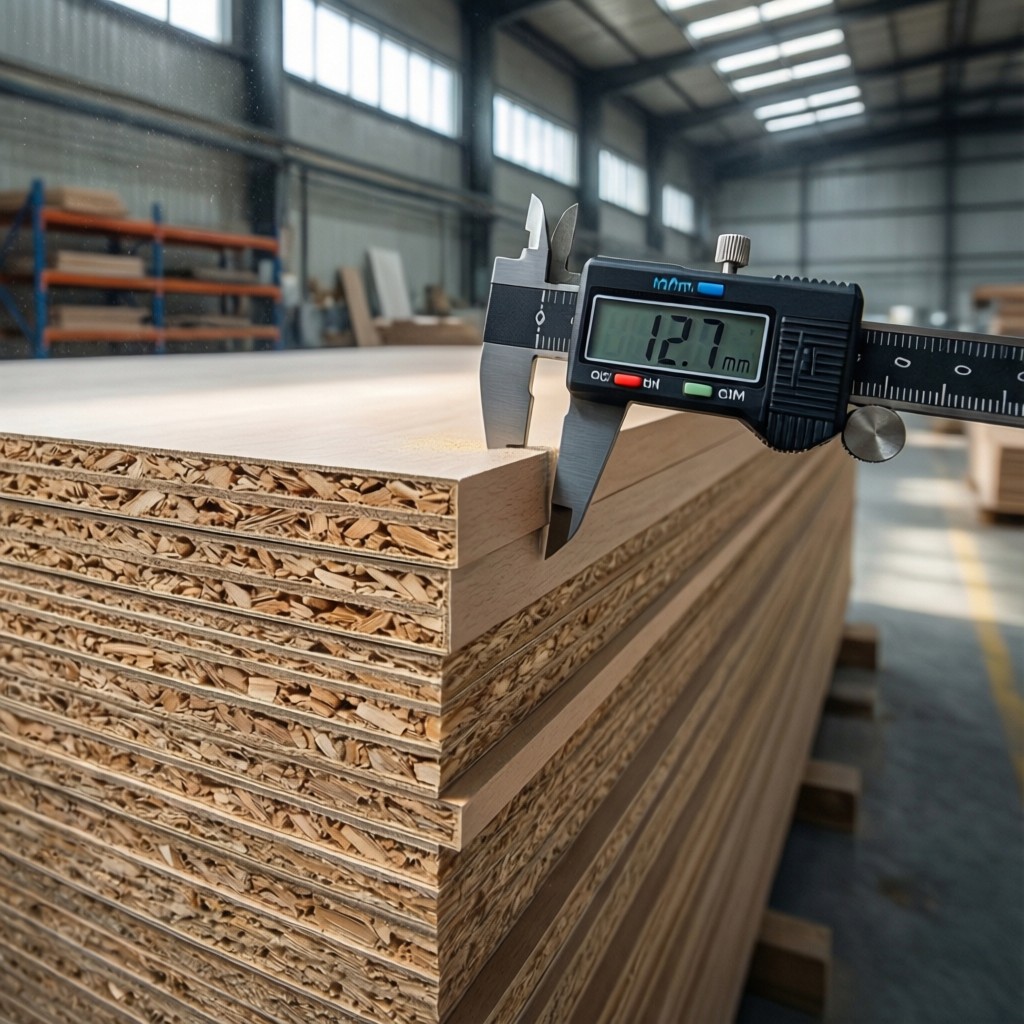
Consider a shipment of Yicaiyigou’s Precision MDF, specified with a density of 600-800 kg/m³ and thickness tolerance of ±0.2mm. If a buyer receives boards with a density below 600 kg/m³, this is a verifiable breach of spec. For a furniture maker exporting to the EU, our FSC-certified MDF with ENF ≤0.05 mg/L formaldehyde emission eliminates compliance risk at customs. If the lab test shows emissions >0.05 mg/L, the claim is indisputable under CARB P2 and EUDR regulations.
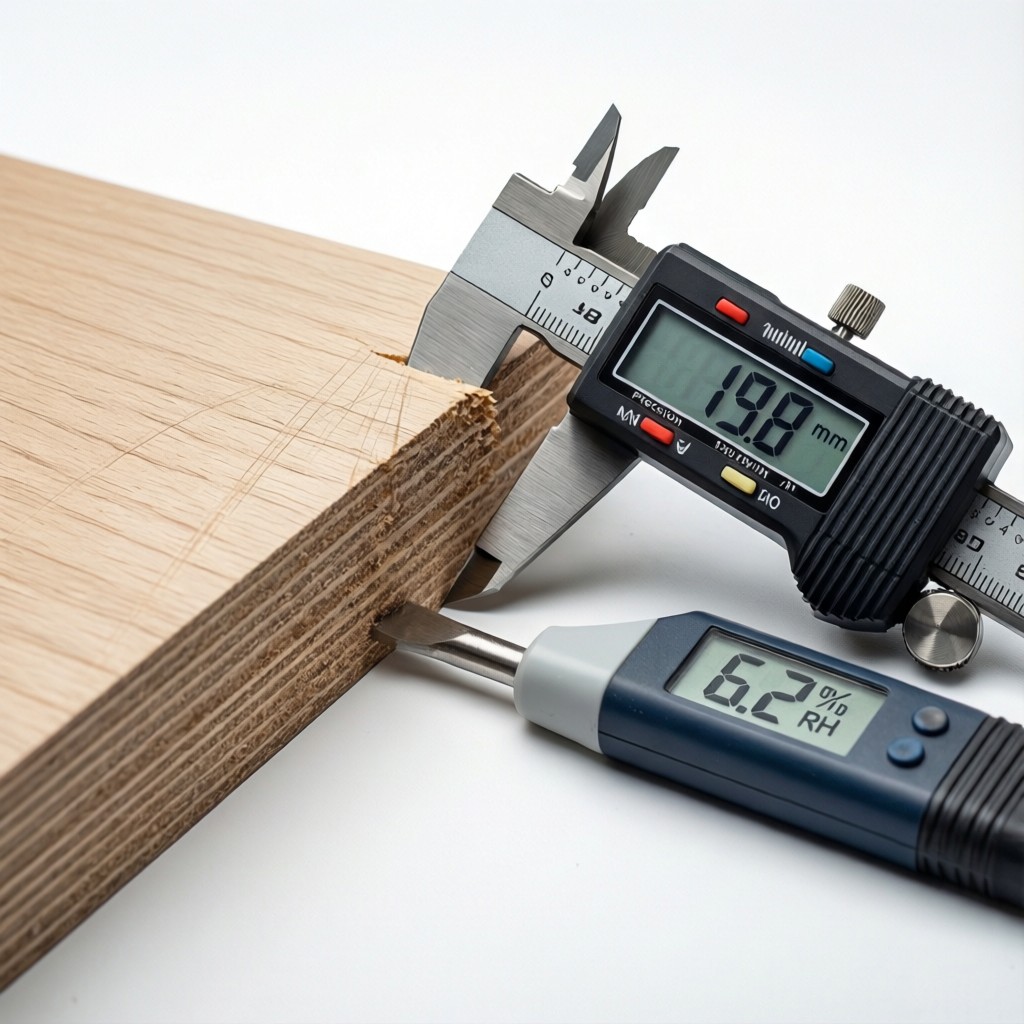
Similarly, for High-Density Particleboard (HDF) with density >800 kg/m³, moisture content is critical. Contracted ranges typically sit between 12-15%. Documenting moisture content deviations exceeding ±2% from this range provides hard data for rejection. If the average moisture reads 18%, the board is prone to swelling, validating a claim for replacement rather than repair. These specific numbers transform subjective complaints into objective contractual breaches.
Why Exporters Choose Yicaiyigou for Compliance-Ready Panels
Yicaiyigou positions itself as a partner who integrates pre-shipment QC checkpoints into the production timeline to validate claims before cargo leaves the factory. We enforce a 7-day notification window post-Bill of Lading date as per standard trade terms, ensuring that any potential issues are flagged immediately upon arrival. This proactive approach reduces the ambiguity that often plagues international transactions.
Our commitment to transparency is backed by Chain of Custody (CoC) documentation and rigorous third-party inspection reports from SGS or Bureau Veritas covering at least 10% random sampling. With certifications including FSC, CARB P2, CE, and ENF (≤0.05 mg/L), we provide the traceability required by modern supply chains. For buyers managing complex logistics, our standard 20ft container capacity of 20-25 m³ and 40ft capacity of 45-50 m³ allows for precise volume planning, minimizing the risk of overloading-related damage.
FAQ
What is the maximum acceptable moisture deviation for MDF claims?
Document moisture content deviations exceeding ±2% from the contracted 12-15% range to validate a quality claim effectively.
How long do I have to notify the supplier after the Bill of Lading date?
Enforce a 7-day notification window post-Bill of Lading date as per standard trade terms to ensure your claim is considered valid.
Which third-party inspectors are accepted for quality verification?
Require third-party inspection reports from SGS or Bureau Veritas covering at least 10% random sampling for credible evidence.
What formaldehyde standard applies to EU exports from Yicaiyigou?
Yicaiyigou’s ENF grade ensures formaldehyde emissions are ≤0.05 mg/L, complying with strict EU and CARB P2 requirements.
Does GB/T 153-2008 affect international dispute resolutions?
Yes, China’s GB/T 153-2008 national standard significantly influences dispute resolution outcomes in Chinese arbitration courts.
Summary & Next Steps
Resolving quality disputes requires moving beyond general complaints to specific, data-backed claims anchored in ISO and GB/T standards. By enforcing strict notification windows and utilizing third-party verification, buyers can mitigate financial risk and maintain supply chain continuity. The key is to treat quality control as a collaborative, data-driven process rather than an adversarial confrontation.
Request a compliant material sample with full CoC documentation from Yicaiyigou to verify our density and emission specifications before your next bulk order.
Frequently Asked Questions
What is the primary reason quality claims from Chinese lumber suppliers are often rejected?
Claims are frequently rejected due to vague evidence or missed inspection windows, particularly when buyers fail to document specific issues like moisture content deviations within the critical post-arrival period without third-party verification.
Which technical standards should importers reference to validate panel quality and strengthen their claims?
Importers should anchor claims in ISO 13061 standards for visual grading defects and China’s GB/T 153-2008 national standard, as local courts and arbitration bodies in China prioritize GB/T compliance when resolving disputes.
What is the estimated financial risk associated with defective panel shipments for importers?
Importers face a 15-20% loss risk associated with defective panel shipments if they do not have a data-driven framework to enforce quality control agreements and resolve disputes efficiently.
When is port rework generally more cost-effective than returning goods to origin?
Port rework is often more cost-effective for minor defects like surface scratches or edge chipping, as it avoids the high costs of return shipping and new bookings, despite having higher local labor rates ($15-$25 per man-hour) compared to China.
How does returning goods to origin impact the supplier relationship compared to port rework?
Returning goods to origin typically has a negative impact on the supplier relationship due to its accusatory tone, whereas port rework is viewed as a neutral, shared-cost solution.