| Product Category | Common HS Code Classification Risk | VAT Invoice Status Impact | Effect on FOB Pricing Stability |
|---|---|---|---|
| Precision MDF | Misclassification leading to reduced rebate eligibility | Missing verified invoice chains causes cash flow delays | High volatility; supplier may pass 3-5% cost increase to buyer |
| Structural Plywood | Incorrect grade documentation affecting tax rebate rates | Failure to secure full VAT rebate reduces supplier margin | Unstable pricing due to hidden administrative failures |
| High-Density Particleboard | Ambiguous export code usage triggering audits | Incomplete domestic VAT procurement records | Eroded margins resulting in reduced quality controls |
Are you absorbing unexpected 3-5% cost increases because your supplier misclassified HS codes or failed to secure VAT invoices? For international lumber importers, these administrative failures translate directly into cash flow delays and eroded margins. Understanding the mechanics of China’s export tax rebate system is no longer optional—it is a critical component of supply chain risk management for buyers sourcing Precision MDF, Structural Plywood, and High-Density Particleboard.
The Hidden Volatility in FOB Pricing
Why do two suppliers quote different FOB prices for identical 18mm E0-grade plywood? The answer often lies not in production efficiency, but in how they manage china export tax rebate rates. Competitors rarely disclose that fluctuating rebate rates directly dictate their pricing flexibility. When a supplier fails to claim the full rebate due to documentation errors, they often pass that loss onto the buyer through hidden price hikes or reduced quality controls.
Major procurement teams at companies like IKEA and Amazon require total transparency in landed costs. A supplier who cannot articulate their rebate status is a supplier who lacks financial stability. This article details how the impact of china vat rebate policies affects your bottom line and why Yicaiyigou’s compliance-first approach ensures stable pricing regardless of policy shifts. You will learn to identify red flags in supplier documentation and secure a partnership that absorbs VAT risk through verified invoice chains.
Regulatory Landscape and VAT Mechanics
To navigate this landscape, buyers must understand the interplay between domestic VAT and export rebates. Under current Chinese tax law, the VAT rate for domestic timber procurement is fixed at 9%. However, the government refunds a portion of this VAT upon export to remain competitive globally. Standard export rebate rates for processed wood products (HS Chapter 44) typically range between 0% and 13%, depending on the level of processing and value addition.
The critical bottleneck is time. Rebate application processing time averages 3-6 months, significantly impacting supplier working capital. Suppliers with weak cash reserves may delay shipments or compromise on material quality to bridge this gap. Furthermore, most guides ignore the specific documentation lag between customs declaration and actual rebate receipt. This lag creates a vulnerability where suppliers might misclassify goods to accelerate claims, exposing buyers to customs audits and penalties in their home countries.
Compliance Benchmarks: EUDR and Formaldehyde Standards
While tax rebates affect cost, regulatory compliance affects market access. With the EU Deforestation Regulation (EUDR) effective Dec 30, 2024, traceability is paramount. Buyers must ensure their suppliers not only manage tax rebates correctly but also maintain rigorous Chain of Custody (CoC) documentation.
| Specification | Precision MDF | Structural Plywood | High-Density Particleboard |
|---|---|---|---|
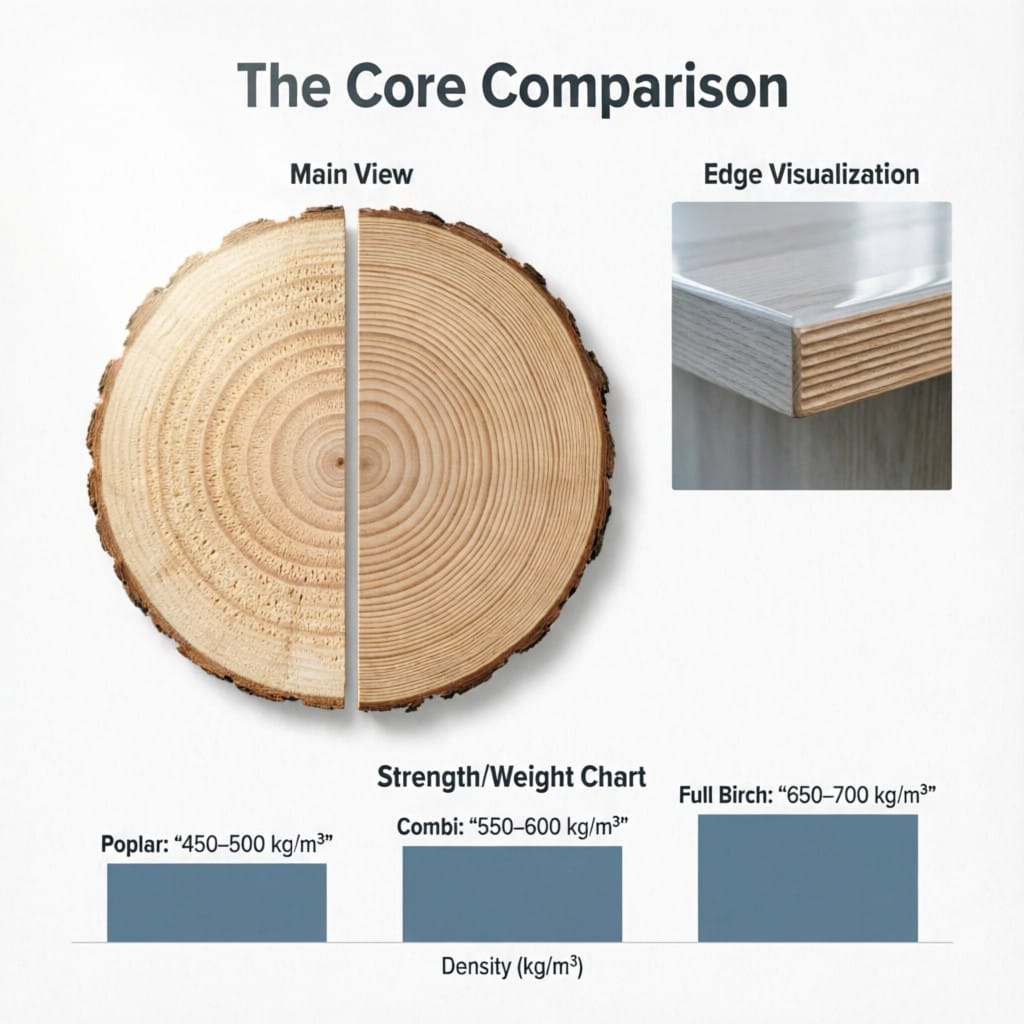
| Density Range | 600-800 kg/m³ | Varies by veneer layer | 550-750 kg/m³ |
| HDF Density | >800 kg/m³ up to 1,000+ kg/m³ | N/A | N/A |
| Thickness | 3mm-30mm | 3mm-30mm | 3mm-30mm |
| Standard Size | 2440x1220mm | 2440x1220mm | 2440x1220mm |
| ENF Formaldehyde | ≤0.05 mg/L | ≤0.05 mg/L | ≤0.05 mg/L |
| E0 Formaldehyde | ≤0.07 ppm | ≤0.07 ppm | ≤0.07 ppm |
| CARB P2 Limit | ≤0.11 ppm | ≤0.11 ppm | ≤0.11 ppm |
| Japan JAS F★★★★ | ≤0.3 mg/L | ≤0.3 mg/L | ≤0.3 mg/L |
This table highlights that while tax rebates influence price, the technical specifications determine usability. Note that Japan JAS F★★★★ uses the desiccator method (≤0.3 mg/L), distinct from the ppm measurements used in CARB P2 standards.
Real-World Application: Mitigating Risk with Verified Specs
Consider a furniture maker exporting to the EU. They require FSC-certified MDF with ENF ≤0.05 mg/L to eliminate compliance risk at customs. If their supplier has not secured the proper VAT invoices for the raw timber, the supplier may face a 13% rebate loss. To compensate, they might substitute lower-grade core material, causing the final product to fail formaldehyde emission tests.
Yicaiyigou avoids this by maintaining transparent HS code classification and verified invoice chains. For a construction firm requiring Structural Plywood, our lead time of 15-25 days is maintained because we do not wait for rebate confirmations to purchase raw materials. Our 20ft container holds 20-25 m³, and our 40ft container holds 45-50 m³, ensuring efficient logistics without the cash flow bottlenecks that plague less compliant competitors.
Why Exporters Choose Yicaiyigou for Compliance-Ready Panels
Yicaiyigou positions itself as a compliance-first partner. We absorb VAT risk through verified invoice chains, ensuring that china export rebate policy changes do not disrupt your supply chain. Our facilities are certified for FSC, CARB P2, CE, and ENF standards. We provide full Chain of Custody (CoC) documentation, which is essential for navigating the new EUDR requirements.
Our Precision MDF offers a density of 600-800 kg/m³, ideal for CNC machining, while our HDF exceeds 800 kg/m³ for high-wear applications. By maintaining a minimum order quantity (MOQ) of just one 20ft container, we allow distributors to test markets without excessive inventory risk. Our commitment to transparency means you receive not just a product, but a fully auditable trail from forest to factory floor.
FAQ
How does the 9% domestic VAT rate affect my FOB price?
The 9% VAT is paid by the supplier during raw material procurement. The export rebate refunds a portion of this, allowing suppliers to offer lower FOB prices; if the rebate is missed, costs rise.
What is the typical processing time for export tax rebates in China?
Rebate application processing time averages 3-6 months, which is why suppliers with poor cash flow may struggle to maintain consistent pricing or lead times.
Are wood products eligible for the full 13% export rebate?
Standard export rebate rates for processed wood products (HS Chapter 44) typically range between 0% and 13%, depending on the specific HS code and level of processing.
How does Yicaiyigou handle EUDR compliance?
Yicaiyigou provides full Chain of Custody (CoC) documentation and FSC certification, ensuring traceability required by the EU Deforestation Regulation effective Dec 30, 2024.
What is the formaldehyde limit for CARB P2 certification?
For composites, the CARB P2 formaldehyde emission limit is ≤0.11 ppm, which Yicaiyigou consistently meets across its MDF, Plywood, and Particleboard lines.
Summary & Next Steps
Navigating china export tax rebate rates requires a supplier who views compliance as a strategic asset, not an administrative burden. By partnering with a manufacturer that absorbs VAT risk and maintains transparent HS code classifications, you protect your margins from unexpected 3-5% cost increases. Ensure your supplier can provide verifiable CoC documentation and meets strict formaldehyde standards like ENF ≤0.05 mg/L.
Request a compliant material sample with full CoC documentation from Yicaiyigou to verify our certification claims and pricing stability.
Frequently Asked Questions
How do China’s export tax rebate rates impact the FOB pricing of lumber products?
Export tax rebate rates directly influence a supplier’s pricing flexibility and financial stability. Fluctuating rebate rates or failures to claim full rebates due to documentation errors often lead suppliers to pass losses onto buyers through hidden price hikes or reduced quality controls, causing unexpected cost increases of 3-5%.
What are the typical VAT and export rebate rates for processed wood products in China?
Under current Chinese tax law, the domestic VAT rate for timber procurement is fixed at 9%. Upon export, the government refunds a portion of this VAT, with standard export rebate rates for processed wood products (HS Chapter 44) typically ranging between 0% and 13%, depending on the level of processing and value addition.
Why does the processing time for tax rebates pose a risk to international buyers?
Rebate application processing averages 3-6 months, which significantly impacts supplier working capital. Suppliers with weak cash reserves may delay shipments or compromise on material quality to bridge this financial gap, while others might misclassify goods to accelerate claims, exposing buyers to customs audits and penalties.
What formaldehyde emission standards apply to Precision MDF, Structural Plywood, and High-Density Particleboard according to the article?
The article lists several standards: ENF Formaldehyde ≤0.05 mg/L, E0 Formaldehyde ≤0.07 ppm, CARB P2 Limit ≤0.11 ppm, and Japan JAS F★★★★ ≤0.3 mg/L. It notes that Japan JAS F★★★★ uses the desiccator method, which is distinct from the ppm measure used in other standards.
How does the EU Deforestation Regulation (EUDR) affect sourcing strategies alongside tax compliance?
With the EUDR effective December 30, 2024, traceability is paramount for market access. Buyers must ensure suppliers not only manage tax rebates correctly to maintain stable pricing but also maintain rigorous Chain of Custody (CoC) documentation to comply with deforestation regulations.