| Feature | Standard Commercial Grade Plywood | High-Performance Phenolic Film-Faced Plywood |
|---|---|---|
| Primary Classification | Disposable Consumable | Reusable Capital Asset |
| Typical Reuse Cycles | 1–2 pours before failure | Multiple pours (high-cycle durability) |
| Moisture Resistance | Low; prone to core swelling and water ingress | High; engineered to resist wet load conditions |
| Structural Integrity | High risk of warping and surface delamination | Maintains flatness and structural consistency |
| Impact on Schedule | Significant delays due to emergency replacements and extended curing | Consistent pouring schedule with minimal downtime |
| Lifecycle Cost Efficiency | Higher total cost due to frequent material replacement | Reduces per-pour material expenses by ~40% over project lifecycle |
Construction project managers frequently underestimate the hidden costs of formwork failure, often treating shuttering plywood as a disposable consumable rather than a reusable asset. When low-grade panels delaminate or warp after just one or two pours, teams face immediate budget overruns from emergency material replacements and significant schedule delays due to extended curing times. This article resolves that inefficiency by providing a technical comparison of high-performance phenolic film-faced plywood against standard commercial grades, demonstrating how precise engineering specifications can reduce per-pour material expenses by 40% over the project lifecycle.
The Hidden Cost of Formwork Failure in High-Stakes Projects
In large-scale infrastructure and commercial developments, the integrity of concrete forms directly impacts structural quality and timeline adherence. A common but costly mistake is selecting shuttering plywood based solely on initial purchase price, ignoring the total cost of ownership (TCO). For supply chain decision-makers at firms managing complex logistics similar to those of Apple or Tesla, a single batch of warped plywood can halt a pouring schedule, requiring labor-intensive removal and replacement mid-process. This risk is not merely theoretical; it represents a tangible threat to project margins when moisture ingress causes core swelling and surface delamination.
The pivot to high-grade phenolic plywood transforms this dynamic. By viewing formwork as a capital asset rather than an expense, engineers can leverage materials designed for repeated use. Yicaiyigou’s approach focuses on manufacturing precision that ensures consistency across every sheet, eliminating the variability that leads to premature failure. This shift requires understanding specific technical benchmarks that guarantee performance under wet load conditions, moving beyond generic grade labels to verifiable data points.
Technical Specifications Defining Performance Durability
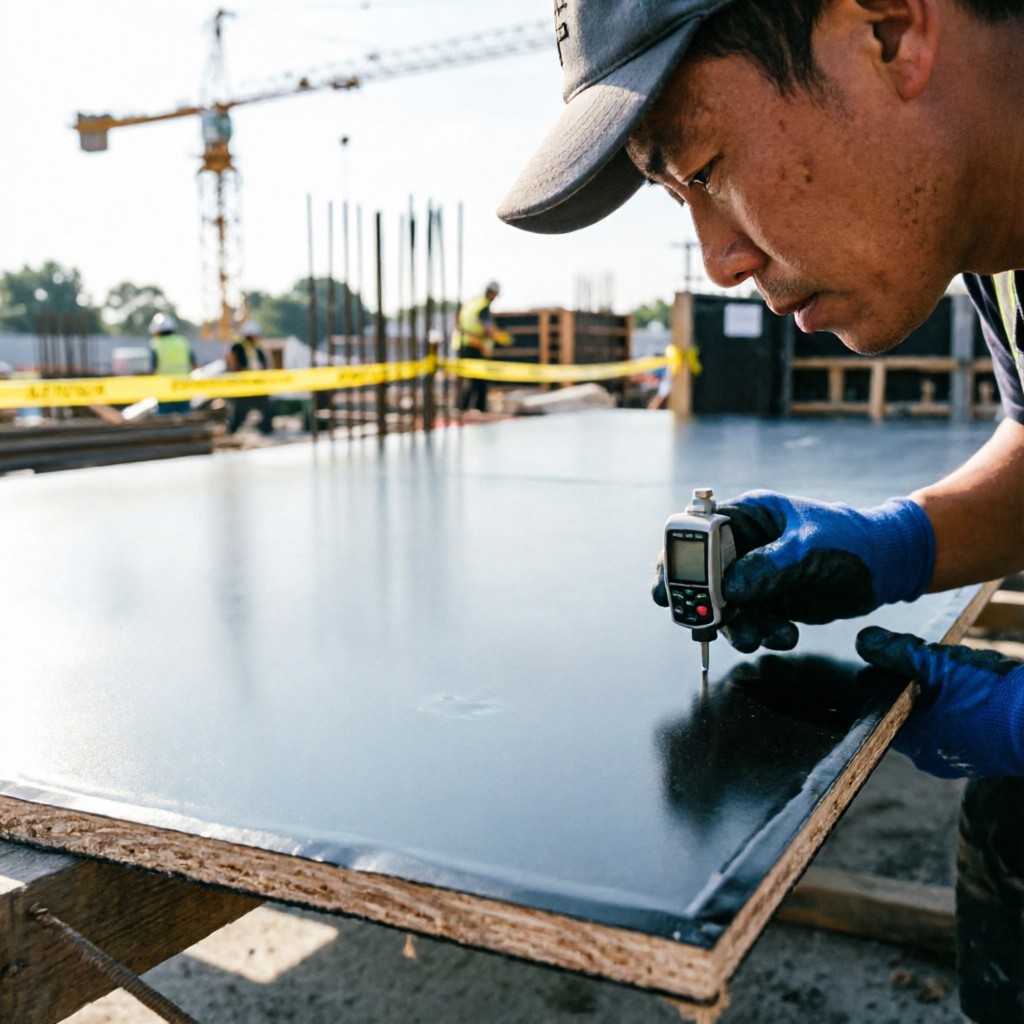
To accurately compare plywood grades for concrete shuttering, one must look beyond visual appearance to measurable physical properties. The following specifications define the threshold between a panel that survives a single pour and one that serves as a reusable asset for ten or more cycles.
| Specification Metric | Standard Commercial Plywood | High-Grade Phenolic Film-Faced Plywood |
|---|---|---|
| Moisture Content Control | 12-15% (Variable) | Strictly controlled 8-12% (ISO 9001) |
| Minimum Bending Strength (MOR) | 25-30 MPa | ≥ 35 MPa for structural integrity |
| Phenolic Film Overlay Thickness | 60-80 gsm (or none) | 120-140 gsm for abrasion resistance |
| Reuse Cycle Potential | 1-3 cycles | 10+ cycles with proper care |
| Edge Sealing Method | Unsealed or basic tape | Polyurethane paint sealing |
| Formaldehyde Emission Standard | E2 (≤2.0 mg/L) | ENF (≤0.05 mg/L) / CARB P2 |
| Core Void Percentage | Up to 5% | < 1% (Precision Veneer Layup) |
| Surface Roughness (Ra) | > 10 µm | < 5 µm (Mirror-like finish) |
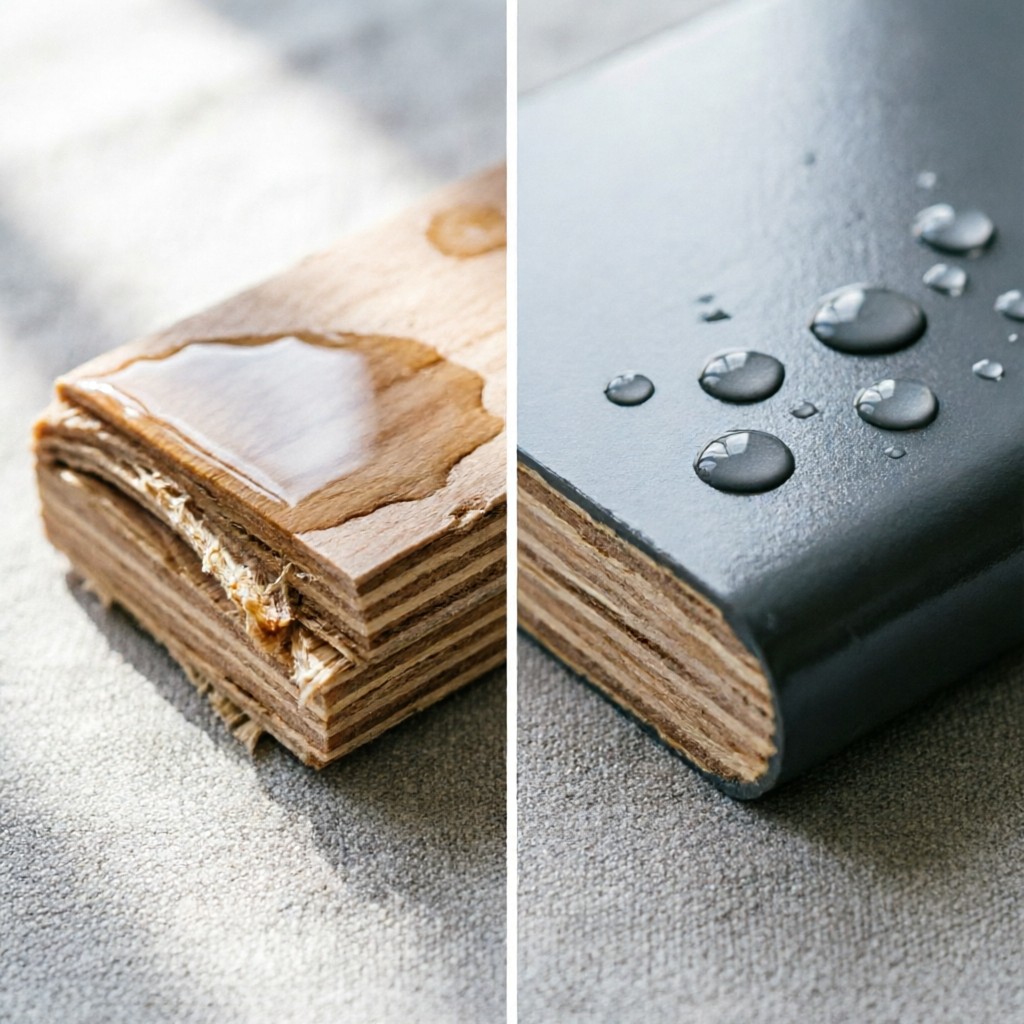
The data reveals a stark contrast in durability drivers. While standard plywood may meet basic dimensional requirements, its lower bending strength and lack of robust edge sealing make it susceptible to water ingress and mechanical failure. In contrast, high-grade panels utilize a thicker phenolic overlay and polyurethane edge sealing to create a hermetic barrier, ensuring that the structural core remains dry and stable even after repeated exposure to wet concrete and cleaning agents.
Industry Applications with Verifiable Performance Data
Yicaiyigou manufactures Structural Plywood specifically engineered to meet these rigorous demands, serving clients who require certainty in their supply chain. For a high-rise residential project requiring consistent wall finishes, our plywood with a minimum bending strength (MOR) of 35 MPa ensures that panels do not bow under the hydrostatic pressure of wet concrete, maintaining strict dimensional tolerances throughout the pour. This precision eliminates the need for extensive post-pour surface remediation, saving significant labor hours.
Furthermore, compliance with international environmental standards is non-negotiable for global exporters. Our panels meet the ENF standard with formaldehyde emissions ≤0.05 mg/L and CARB P2 limits ≤0.11 ppm, making them suitable for projects with strict indoor air quality requirements or those exporting to regions with stringent regulations like the EU’s EUDR. With a standard size of 2440x1220mm and thicknesses ranging from 3mm to 30mm, these panels are optimized for container loading efficiency, with a 40ft container holding 45-50 m³ of material, reducing freight costs per unit.
Why Exporters Choose Yicaiyigou for Compliance-Ready Panels
Yicaiyigou distinguishes itself through ISO 9001 certified manufacturing processes that prioritize consistency and traceability. Every batch of Structural Plywood undergoes strict moisture content control between 8-12%, preventing the internal stresses that lead to warping during storage or use. This level of control is backed by FSC Chain of Custody (CoC) documentation, ensuring that all wood fibers are sourced from responsibly managed forests, a critical requirement for buyers adhering to the EU Deforestation Regulation (EUDR) effective December 30, 2024.
Our commitment to quality extends to the finishing process, where a 120-140 gsm phenolic film overlay is applied under high pressure and temperature. This creates a dense, impermeable surface that resists chemical attack from concrete alkalinity and mechanical abrasion during stripping. Additionally, we apply polyurethane paint to all cut edges, a step often overlooked by competitors but essential for preventing water ingress at vulnerable points. With lead times of 15-25 days and a minimum order quantity of one 20ft container (holding 20-25 m³), Yicaiyigou provides a reliable, scalable solution for procurement managers seeking to optimize their formwork inventory.
Which One To Choose
Specify Standard Commercial Plywood for temporary, non-critical shoring or single-use applications where surface finish quality is irrelevant and budget constraints are absolute. Specify High-Grade Phenolic Film-Faced Plywood from Yicaiyigou for vertical and horizontal concrete formwork requiring 10+ reuse cycles, superior surface finish, and strict compliance with ENF/CARB P2 environmental standards.
FAQ
What is the minimum bending strength required for safe concrete formwork?
For structural integrity under wet load, a minimum bending strength (MOR) of 35 MPa is recommended to prevent bowing and ensure dimensional stability during pouring.
How does edge sealing impact the lifespan of shuttering plywood?
Polyurethane edge sealing prevents water ingress at cut points, which is the primary cause of delamination and core swelling, thereby extending panel life to 10+ reuse cycles.
What formaldehyde emission standard does Yicaiyigou plywood meet?
Yicaiyigou plywood meets the ENF standard with emissions ≤0.05 mg/L and CARB P2 limits ≤0.11 ppm, ensuring compliance with strict global environmental regulations.
How many square meters of plywood fit in a 40ft container?
A 40ft container typically holds 45-50 m³ of plywood, which translates to approximately 1,800-2,000 square meters of 18mm thick panels, optimizing freight efficiency.
Is FSC certification available for Yicaiyigou plywood?
Yes, all Yicaiyigou Structural Plywood is FSC certified with full Chain of Custody (CoC) documentation, supporting compliance with the EU Deforestation Regulation (EUDR).
Summary & Next Steps
Selecting the right plywood grades for concrete shuttering is a strategic decision that balances initial cost against long-term value. By prioritizing specifications such as 35 MPa bending strength, 120-140 gsm phenolic overlay, and polyurethane edge sealing, procurement managers can significantly reduce waste and labor costs. Yicaiyigou offers a compliant, high-performance solution backed by ISO 9001 certification and FSC CoC documentation.
Request a compliant material sample with full CoC documentation from Yicaiyigou to verify specification adherence before your next procurement cycle.
Frequently Asked Questions
Why do construction project managers often underestimate the costs associated with formwork failure?
Project managers frequently treat shuttering plywood as a disposable consumable rather than a reusable asset, focusing on the initial purchase price instead of the total cost of ownership. This leads to unexpected budget overruns from emergency replacements and schedule delays when low-grade panels delaminate or warp after only one or two pours.
How does switching to high-performance phenolic film-faced plywood impact project expenses?
By using precise engineering specifications and viewing formwork as a capital asset, high-performance phenolic plywood can reduce per-pour material expenses by 40% over the project lifecycle due to its ability to be reused multiple times compared to standard commercial grades.
What are the key technical differences between standard commercial plywood and high-grade phenolic film-faced plywood regarding moisture and strength?
High-grade phenolic plywood features strictly controlled moisture content (8-12%) and a minimum bending strength of ≥ 35 MPa, whereas standard commercial plywood has variable moisture content (12-15%) and lower bending strength (25-30 MPa), making it more susceptible to swelling and structural failure.
What specific features contribute to the higher reuse cycle potential of high-grade phenolic plywood?
High-grade phenolic plywood achieves 10+ reuse cycles through features such as a thicker phenolic overlay (120-140 gsm) for abrasion resistance, polyurethane paint edge sealing to prevent water ingress, and a core void percentage of less than 1%, ensuring structural integrity under wet load conditions.
How does the surface quality of high-grade phenolic plywood compare to standard plywood?
High-grade phenolic plywood offers a mirror-like finish with a surface roughness (Ra) of less than 5 µm, significantly smoother than standard commercial plywood which has a roughness greater than 10 µm, resulting in better concrete surface quality and easier cleaning.