| Performance Metric | Standard/Inconsistent Plywood | Laser-Grade Precision Plywood (Yicaiyigou Standard) | Operational Impact |
|---|---|---|---|
| Core Void Size | Often exceeds 3mm diameter; inconsistent density | < 3mm diameter per HPVA HP-1 standard | Prevents beam scatter, uneven charring, and secondary sanding requirements |
| Moisture Content | Variable; often outside optimal range | Maintained strictly between 6-8% | Minimizes post-cut warping to < 2mm/m; ensures flatness for assembly lines |
| Billable Hour Efficiency | 15-20% lost to re-cutting warped sheets or cleaning char | Negligible waste due to consistent internal architecture | Eliminates throughput bottlenecks; protects margins for high-volume manufacturers |
| Edge-Banding Compatibility | Often untested; prone to delamination under heat/pressure | Tested for post-laser sealing processes | Ensures structural integrity during automated edge banding |
| Laser Cutting Speed | Slowed down to compensate for density fluctuations | Consistent speed enabled by uniform core density | Maximizes throughput without sacrificing cut quality |
Fabrication shops lose 15-20% of billable hours re-cutting warped plywood or cleaning excessive char caused by inconsistent core density and hidden voids. This inefficiency is not merely a material cost issue; it is a throughput bottleneck that directly impacts margins for high-volume manufacturers supplying brands like IKEA, Amazon, and Apple. The root cause often lies not in the laser power, but in the internal architecture of the sheet goods. By prioritizing core quality over surface aesthetics, procurement managers can eliminate post-processing waste and ensure consistent engraving results. This article details the specific technical thresholds required for laser-grade plywood and how Yicaiyigou’s precision manufacturing standards address these critical failure points.
The Hidden Cost of Inconsistent Core Density
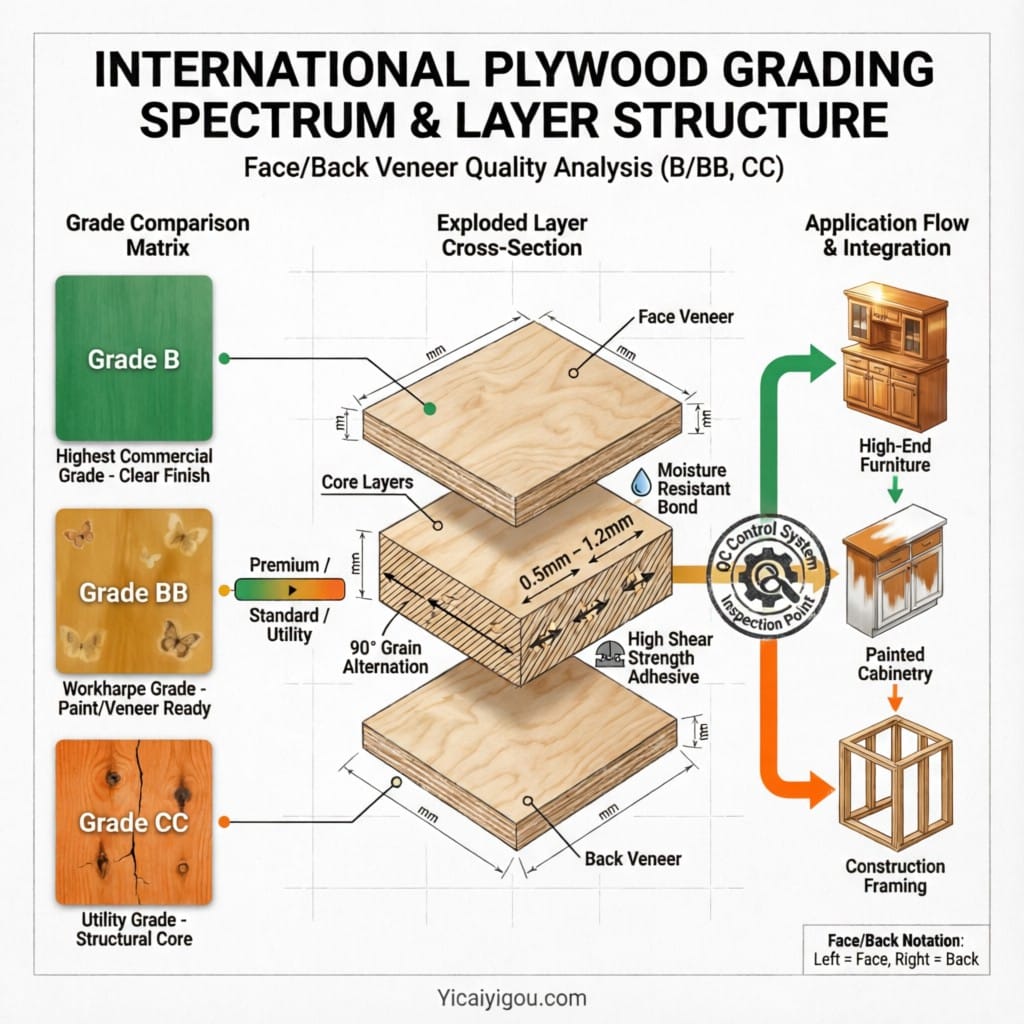
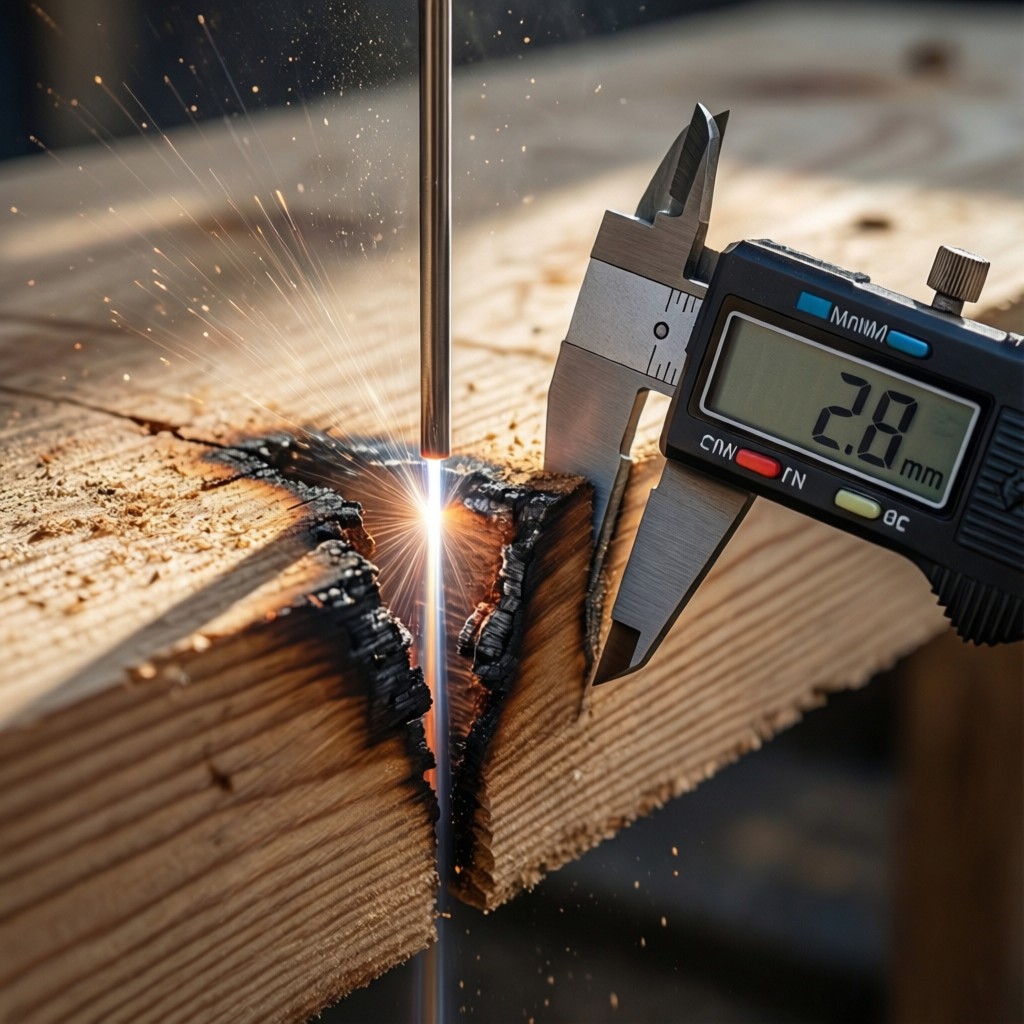
When a laser beam encounters a void or a density fluctuation within plywood, it scatters. This scatter creates uneven charring, weakens structural integrity, and forces operators to slow down cutting speeds to compensate. For supply chain decision-makers, the assumption that all “B-B grade” plywood is equal is a costly error. The industry standard for high-quality laser cutting requires maintaining core void size under 3mm diameter per HPVA HP-1 standard to prevent beam scatter. Any void larger than this threshold acts as a lens, dispersing energy and creating burn marks that require secondary sanding or rejection.
Furthermore, moisture instability exacerbates these issues. If moisture content stays between 6-8%, the risk of post-cut warping exceeding 2mm/m is significantly minimized. Panels outside this range react unpredictably to the thermal shock of laser cutting, leading to bowed edges that fail flatness tolerances in assembly lines. Most suppliers ignore edge-banding compatibility, failing to test how their core reacts to post-laser sealing processes, which leads to delamination when automated edge banders apply heat and pressure to freshly cut, thermally stressed edges.
Technical Benchmarks for Laser-Grade Stability
To achieve consistent results, buyers must move beyond visual grading and demand data-backed specifications. The following comparison illustrates the difference between standard commercial plywood and Yicaiyigou’s precision-engineered panels designed for laser applications. Note that both options have valid use cases, but laser fabrication demands stricter tolerances.
| Specification | Standard Commercial Plywood | Yicaiyigou Precision Laser-Grade |
|---|---|---|
| Max Core Void Size | Up to 10mm (visible gaps) | < 3mm (HPVA HP-1 compliant) |
| Moisture Content | 8-12% (variable by batch) | 6-8% (batch-certified) |
| Formaldehyde Emission | E2 (≤2.0 mg/L) | ENF (≤0.05 mg/L) / E0 (≤0.07 ppm) |
| Thickness Tolerance | +/- 0.5mm | +/- 0.2mm |
| Post-Cut Warping | > 2mm/m common | < 2mm/m guaranteed |
| Glue Line Transparency | Opaque/Dark (high char) | Transparent/Clear (low char) |
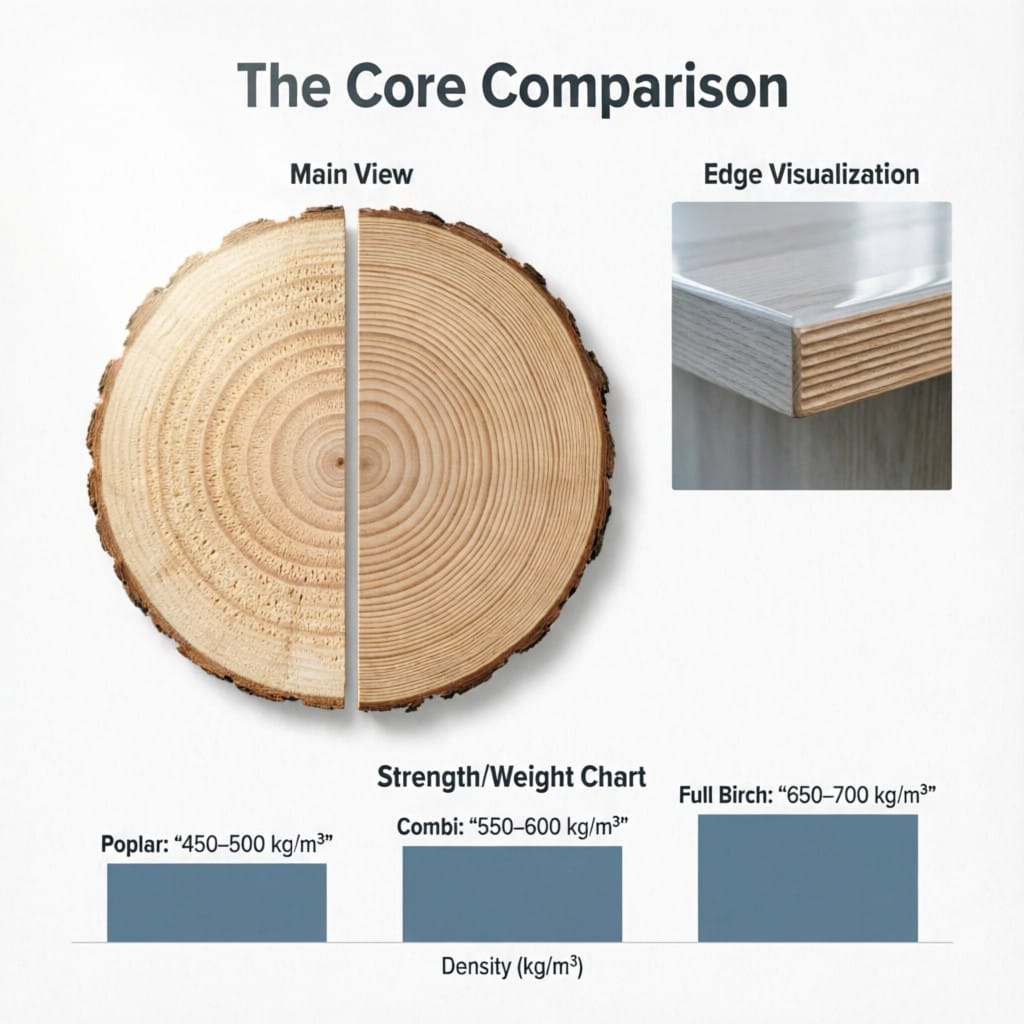
| Density Consistency | ±10% variation | ±5% variation |
| Edge Banding Adhesion | Moderate (risk of delamination) | High (tested for thermal seal) |
The key takeaway is that lower formaldehyde emissions are not just a compliance checkbox; they directly impact cut quality. Using urea-formaldehyde glue with formaldehyde emission ratings below 0.5 ppm (E1/E0) reduces toxic smoke during cutting, which keeps laser lenses cleaner for longer periods and reduces maintenance downtime. Yicaiyigou’s panels meet CARB P2 (≤0.11 ppm) and ENF (≤0.05 mg/L) standards, ensuring that the glue lines vaporize cleanly rather than carbonizing heavily.
Real-World Application: Precision MDF and Structural Plywood
Yicaiyigou applies these rigorous standards across its product lines, including Precision MDF and High-Density Particleboard. For instance, our HDF (High-Density Fiberboard) with density >800 kg/m³ up to 1,000+ kg/m³ offers superior edge quality for intricate laser-cut jewelry displays or electronic enclosures. Unlike standard particle board (550-750 kg/m³), HDF provides a uniform substrate that eliminates the “fuzzing” effect common in lower-density materials.
For furniture makers exporting to the EU, our FSC-certified MDF with ENF ≤0.05 mg/L eliminates compliance risk at customs under the upcoming EUDR (EU Deforestation Regulation, effective Dec 30, 2024). A typical order might involve 3mm-30mm thickness sheets in standard 2440x1220mm sizes. A 20ft container holds 20-25 m³, while a 40ft holds 45-50 m³, allowing for efficient bulk sourcing with an MOQ of 1x20ft container. Lead times of 15-25 days ensure that production schedules remain tight without sacrificing quality control.
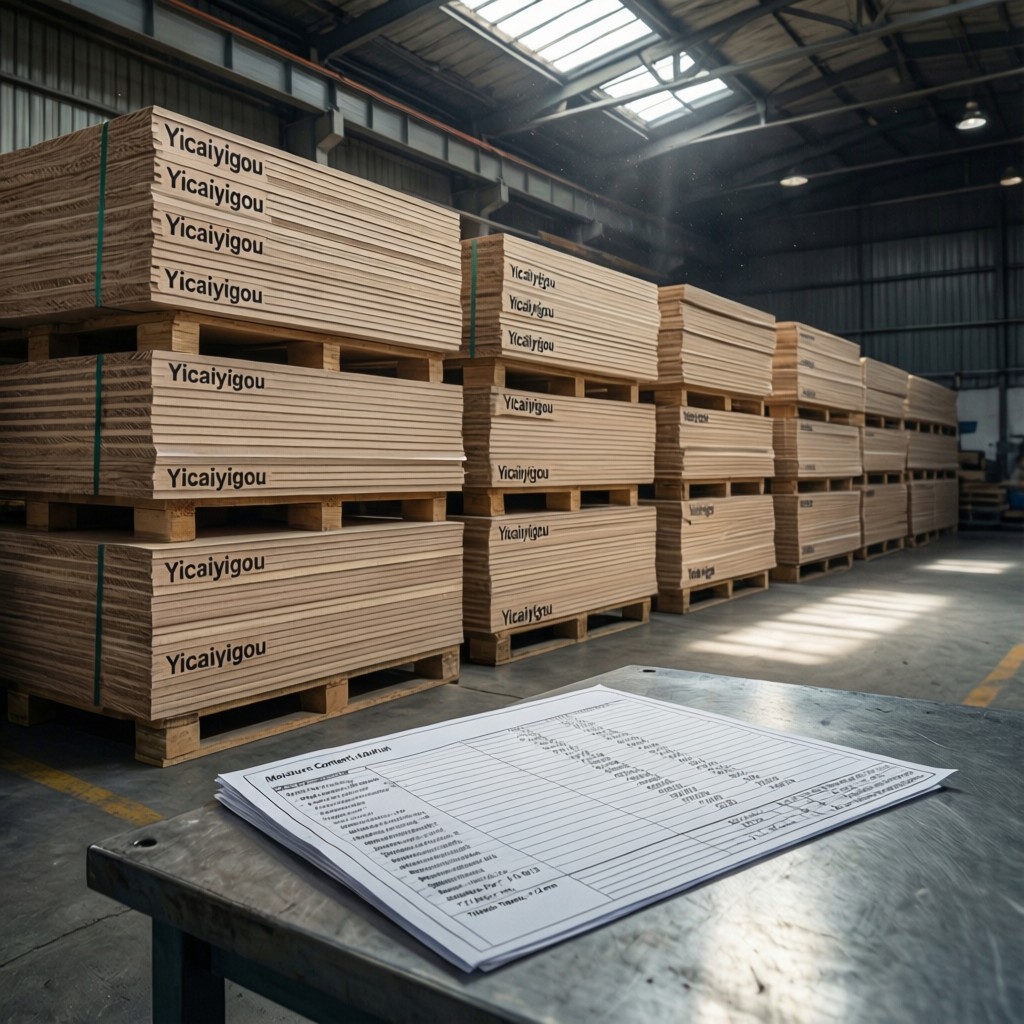
Why Exporters Choose Yicaiyigou for Compliance-Ready Panels
Yicaiyigou positions itself not merely as a raw material supplier, but as a precision manufacturing partner that guarantees laser-grade flatness and consistent glue-line transparency. Competitors rarely provide batch-specific moisture content certificates, leaving buyers to guess stability. We provide full Chain of Custody (CoC) documentation and batch-specific test reports for every shipment, verifying that moisture levels remain within the critical 6-8% window.
Our certification portfolio includes FSC, CARB P2, CE, and ENF standards. Specifically, our E0 rating (≤0.07 ppm) and Japan JAS F★★★★ (≤0.3 mg/L, JIS A 1460, desiccator method) compliance ensures global market access. By controlling the entire production process from veneer selection to hot pressing, we ensure that the core voids remain under the 3mm threshold required for high-speed laser processing. This level of traceability is essential for supply chain managers at major retailers who need to audit material origins and safety profiles.
Which One To Choose
Specify Yicaiyigou Precision MDF (600-800 kg/m³) for intricate laser-engraved signage, detailed decorative panels, and interior fit-outs where surface smoothness is paramount. Specify Structural Plywood with <3mm core voids for load-bearing laser-cut furniture frames, architectural models, and applications requiring higher tensile strength and screw-holding capacity.
FAQ
What is the maximum acceptable core void size for laser cutting?
Core voids should be maintained under 3mm diameter per HPVA HP-1 standard to prevent laser beam scatter and uneven charring.
How does moisture content affect laser-cut plywood?
Moisture content between 6-8% prevents post-cut warping exceeding 2mm/m; higher moisture leads to steam expansion and distorted edges.
Why is formaldehyde emission relevant to laser cutting quality?
Glues with emissions below 0.5 ppm (E1/E0) produce less toxic smoke and carbon residue, keeping laser optics cleaner and reducing maintenance.
What is the lead time for a 20ft container order?
Standard lead time is 15-25 days, with a 20ft container holding 20-25 m³ of material depending on thickness and packaging.
Does Yicaiyigou provide batch-specific moisture certificates?
Yes, unlike many competitors, Yicaiyigou provides batch-specific moisture content certificates and Chain of Custody documentation for every shipment.
Summary & Next Steps
Selecting the right plywood for laser cutting requires looking beyond surface grade to core density, void size, and moisture stability. By enforcing strict limits on core voids (<3mm) and moisture content (6-8%), manufacturers can reduce rework by up to 20% and ensure consistent, high-quality cuts. Yicaiyigou’s commitment to precision manufacturing, backed by FSC, CARB P2, and ENF certifications, provides the reliability needed for high-volume fabrication.
Request a laser-cutting sample kit with full Chain of Custody documentation and batch-specific moisture reports from Yicaiyigou to validate these specifications in your own production environment.
Frequently Asked Questions
What is the primary financial impact of using plywood with inconsistent core density in fabrication shops?
Fabrication shops lose 15-20% of billable hours due to re-cutting warped plywood or cleaning excessive char caused by hidden voids and density fluctuations. This creates a throughput bottleneck that directly reduces margins for high-volume manufacturers.
What are the specific technical thresholds for core void size and moisture content required for laser-grade plywood?
To prevent beam scatter and post-cut warping, the industry standard requires core void sizes to be under 3mm in diameter (HPVA HP-1 compliant) and moisture content to be maintained between 6-8%.
How does formaldehyde emission level affect the laser cutting process and equipment maintenance?
Lower formaldehyde emissions (such as E0 or ENF standards) result in glue lines that vaporize cleanly rather than carbonizing heavily. This reduces toxic smoke, keeps laser lenses cleaner for longer periods, and decreases maintenance downtime.
Why do panels with moisture content outside the 6-8% range often fail in assembly lines after laser cutting?
Panels with moisture content outside this range react unpredictably to the thermal shock of laser cutting, leading to bowed edges that exceed the 2mm/m flatness tolerance required for successful assembly and edge-banding.
How does Yicaiyigou’s precision laser-grade plywood differ from standard commercial plywood regarding thickness tolerance and density consistency?
Yicaiyigou’s precision panels offer a tighter thickness tolerance of +/- 0.2mm compared to the standard +/- 0.5mm, and maintain density consistency within ±5% variation, whereas standard plywood typically has ±10% variation.