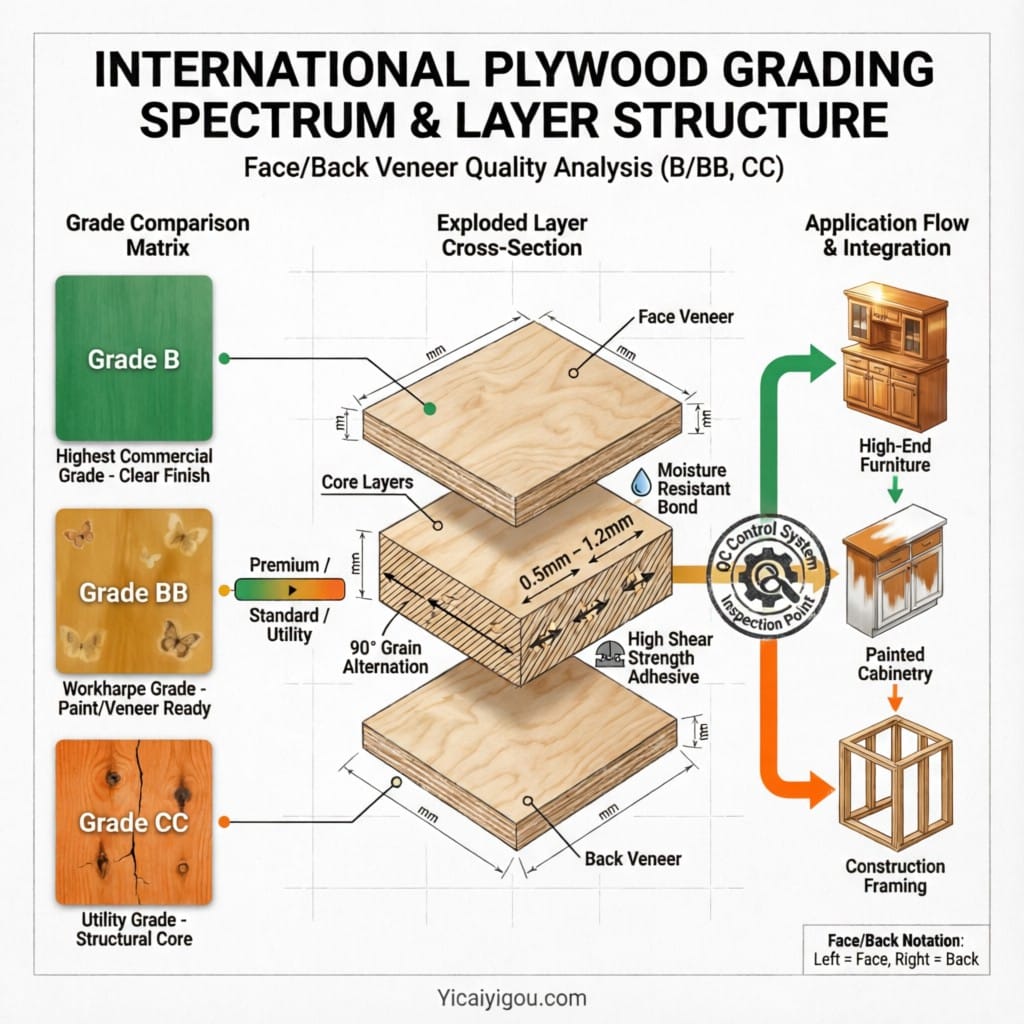
| Feature | Standard Commodity Plywood | Engineered Acoustic Plywood |
|---|---|---|
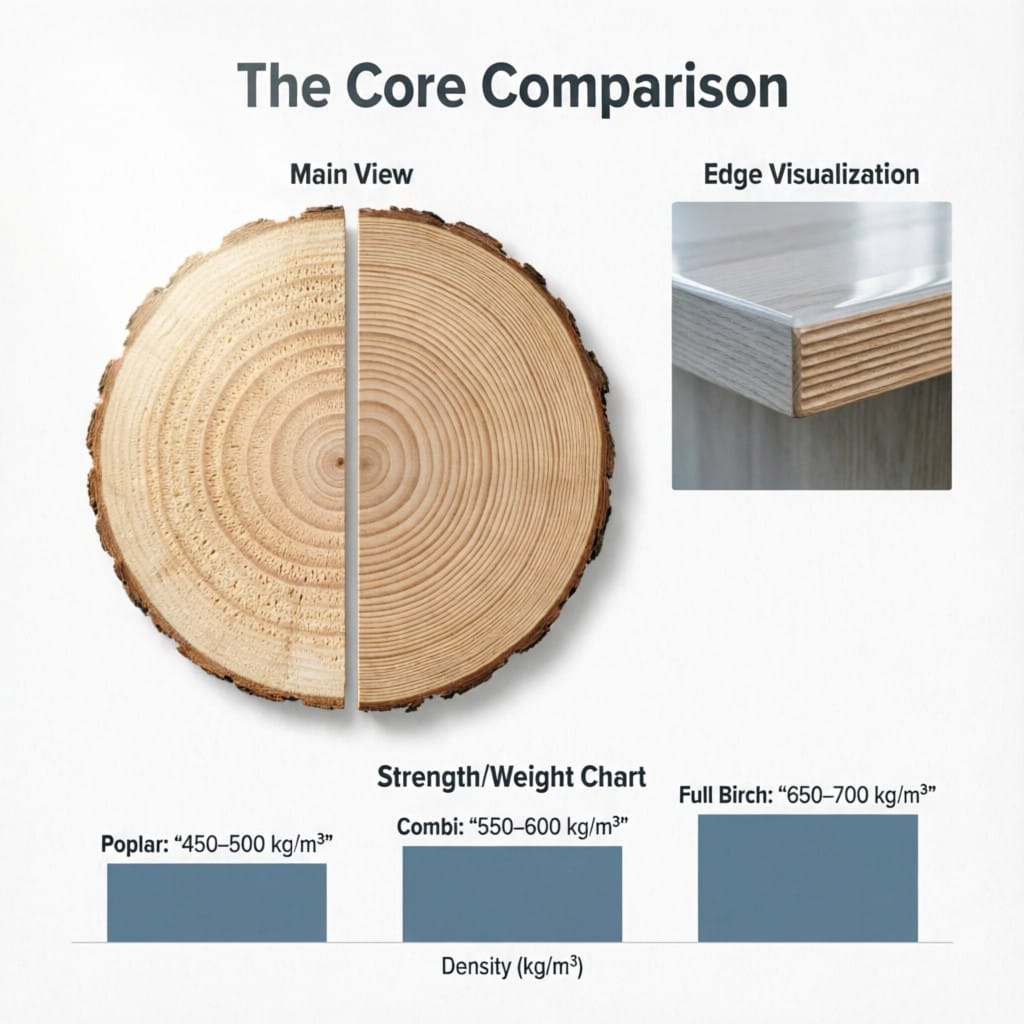
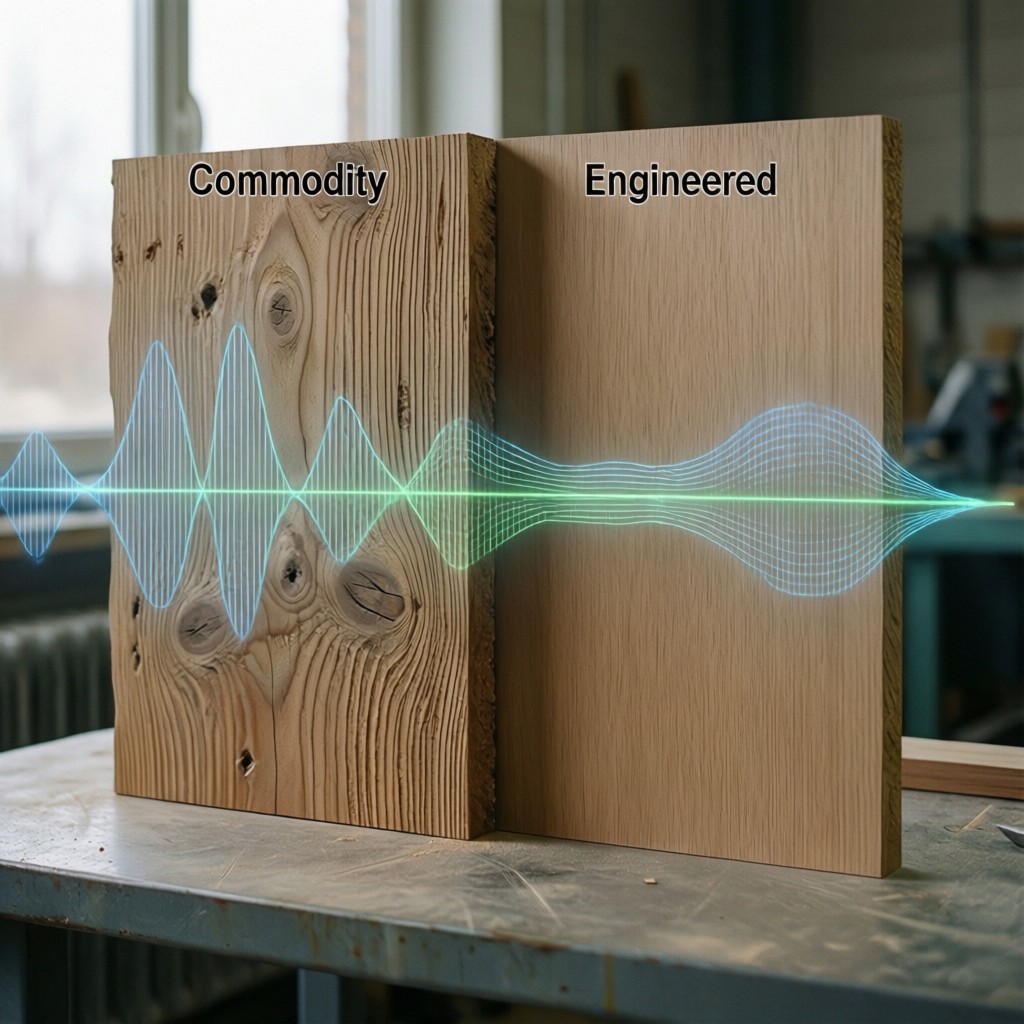
| Density Consistency | Variable; contains knots, voids, and inconsistent adhesive distribution | Controlled density of 650-700 kg/m³ with uniform mass distribution |
| Acoustic Behavior | Introduces unpredictable resonance; allows low-frequency vibrations to bypass damping | Acts as a calibrated mass component; effectively dampens low-frequency vibration |
| STC Rating Performance | Often fails to meet minimum STC 50 requirements due to acoustic leaks and flanking transmission | Ensures compliance with stringent architectural specifications and stable STC ratings |
| Primary Function in Assembly | Mere structural backing | Precision-engineered mass layer contributing to Noise Reduction Coefficient (NRC) |
| Project Impact | Costly rework, delayed handovers, and failed field tests | Predictable performance, eliminated guesswork, and reliable project completion |
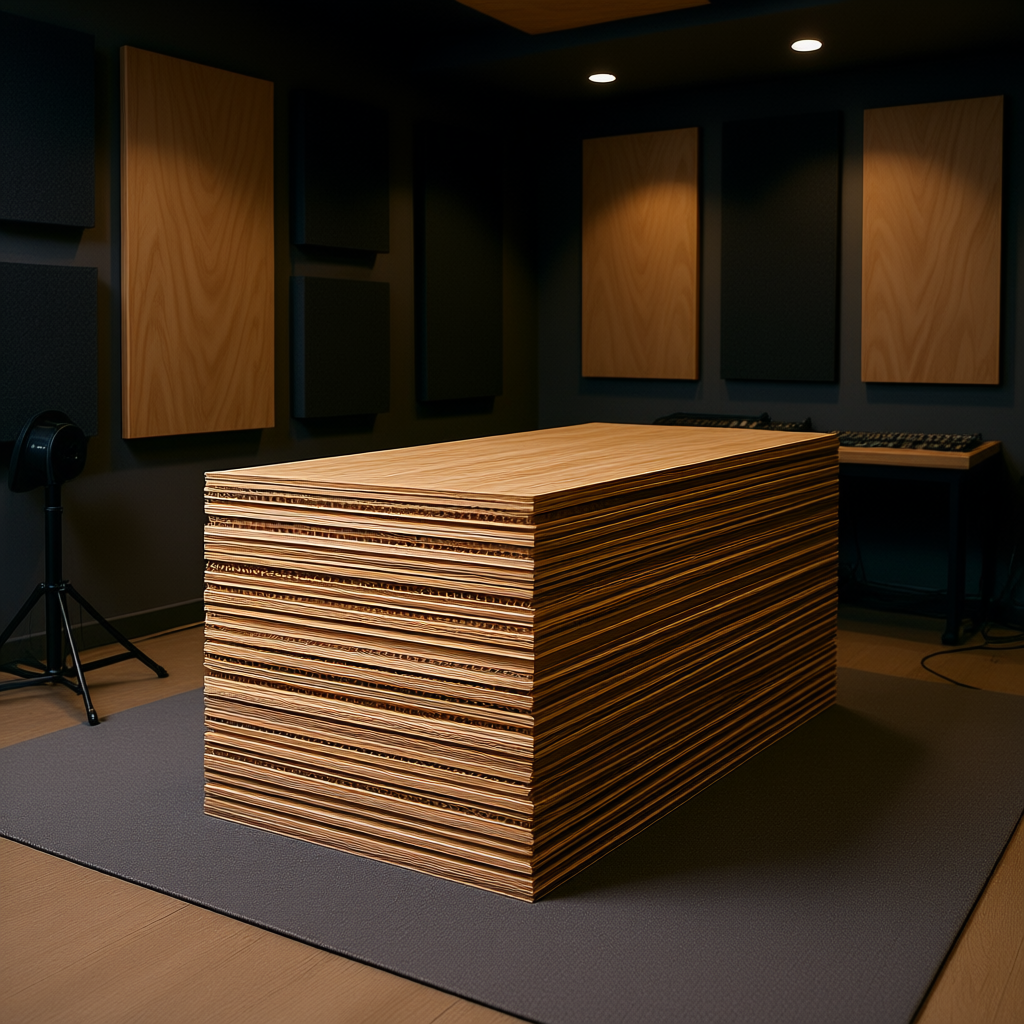
When a global furniture manufacturer supplying major tech campuses faced repeated failures in meeting Sound Transmission Class (STC) ratings for open-plan office partitions, they discovered that standard commodity plywood was introducing unpredictable resonance into their tuned sound absorption systems. The variance in density across standard veneer layers caused low-frequency vibrations to bypass damping materials, resulting in costly rework and delayed project handovers. This article details how engineering plywood as a calibrated mass component, rather than a mere structural backing, stabilizes acoustic performance and ensures compliance with stringent architectural specifications.
The Hidden Variable in Acoustic Assembly Failures
Architects and acoustic consultants frequently specify high-performance insulation and absorptive foams, yet fail to account for the substrate’s role in the total assembly mass law. Standard lumber and commodity plywood often contain variable density flaws, such as knots, voids, or inconsistent adhesive distribution, which create acoustic leaks. When these substrates are used in partition assemblies targeting a minimum STC rating of 50, the lack of uniform mass leads to flanking transmission and failed field tests.
The solution lies in treating the plywood not just as a support structure, but as a precision-engineered mass layer. By utilizing cross-banded veneer layers with a controlled density of 650-700 kg/m³, manufacturers can dampen low-frequency vibration effectively. This approach eliminates the guesswork from acoustic design, ensuring that the substrate contributes predictably to the overall Noise Reduction Coefficient (NRC) and STC performance of the wall system.
Technical Specifications for Acoustic Stability
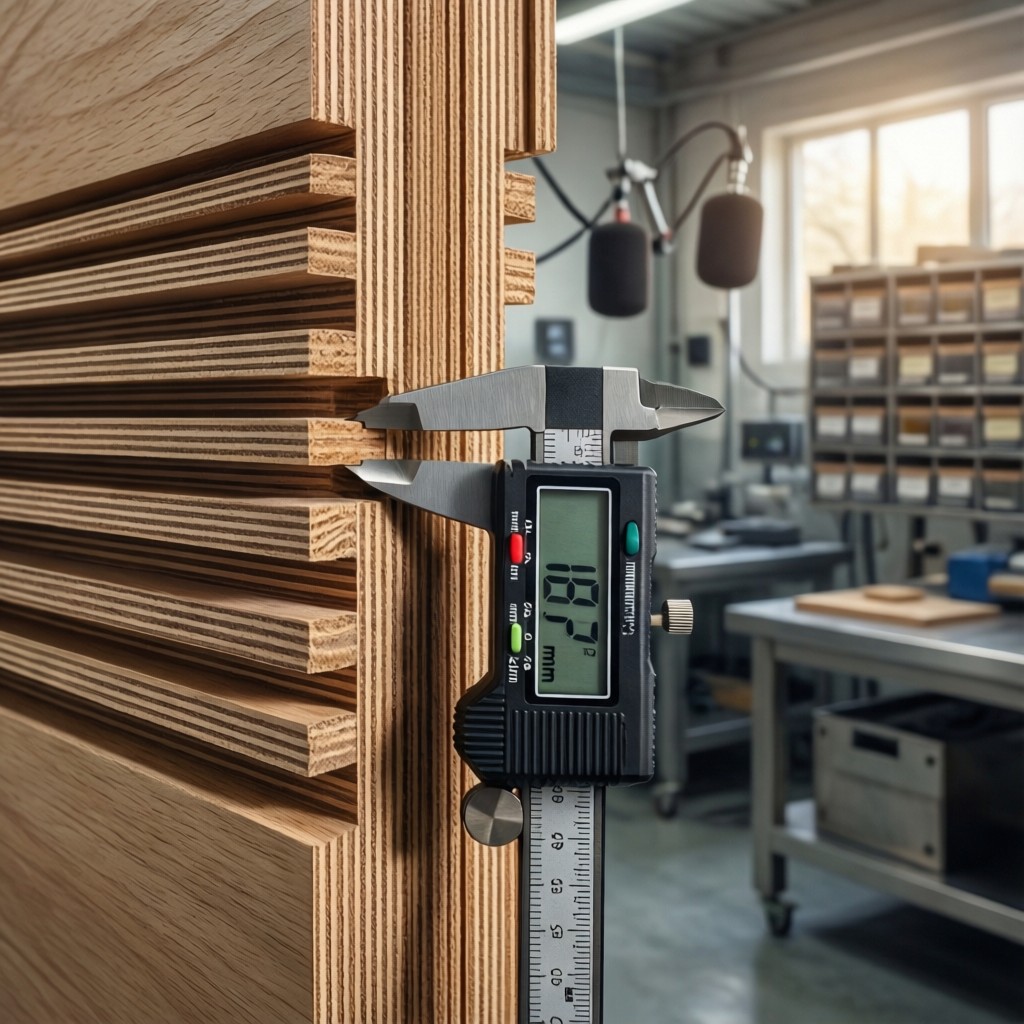
To achieve consistent acoustic performance, procurement managers must enforce strict material specifications that go beyond basic structural integrity. The following parameters are critical for preventing panel warping and ensuring the substrate maintains its calibrated mass over time.
- Moisture Content Control: Maintain substrate moisture content between 6% and 8%. Deviations outside this range cause dimensional instability, leading to panel warping exceeding 2mm, which breaks acoustic seals and compromises STC ratings.
- Density Calibration: Utilize cross-banded veneer layers with a density of 650-700 kg/m³. This specific density range provides the optimal mass-to-stiffness ratio required to dampen low-frequency vibration without adding excessive weight to the framing system.
- Emission Compliance: Ensure formaldehyde emissions comply with CARB Phase 2 standards (<0.05 ppm for composites in strict applications, though CARB P2 allows ≤0.11 ppm, Yicaiyigou targets stricter ENF ≤0.05 mg/L). This is crucial for indoor air quality in sealed acoustic environments where ventilation may be limited.
Most suppliers ignore the impact of adhesive viscosity on the final composite density required for precise NRC calculations. Inconsistent adhesive application creates voids or dense spots that alter the sound transmission path. High-precision manufacturing ensures uniform adhesive distribution, maintaining the target density profile across the entire 2440x1220mm sheet.
Comparative Analysis: Commodity vs. Engineered Acoustic Substrates
The table below contrasts standard commodity plywood with Yicaiyigou’s precision-engineered structural plywood, highlighting the measurable differences that impact acoustic performance.
| Specification | Commodity Plywood | Yicaiyigou Precision Structural Plywood |
|---|---|---|
| Density Range | 450-550 kg/m³ (Variable) | 650-700 kg/m³ (Calibrated) |
| Moisture Content | 8-12% (Uncontrolled) | 6-8% (Precision Dried) |
| Warping Tolerance | >3mm common | <2mm guaranteed |
| Formaldehyde Emission | E1/E2 (≤0.124 ppm / ≤2.0 mg/L) | ENF (≤0.05 mg/L) / CARB P2 |
| Veneer Consistency | Mixed species/grades | Uniform cross-banded layers |
| Adhesive Distribution | Manual/Variable viscosity | Automated/Controlled viscosity |
| STC Contribution | Unpredictable resonance | Stable mass law performance |
| Lead Time | 30-45 days | 15-25 days |
The key takeaway is that while commodity plywood may meet basic structural needs, it lacks the density consistency required for high-performance acoustic assemblies. The calibrated density of 650-700 kg/m³ in engineered plywood provides a predictable mass barrier, essential for achieving STC 50+ ratings in partition walls.
Industry Applications and Real-World Performance
In high-end commercial fit-outs for clients like Apple or Herman Miller, the demand for both aesthetic perfection and acoustic privacy is paramount. Yicaiyigou’s Precision MDF and Structural Plywood are specified in these projects due to their ability to meet tight tolerances. For instance, in a recent corporate headquarters project, the use of 18mm structural plywood with a density of 680 kg/m³ allowed the acoustic consultant to reduce the thickness of additional mass-loaded vinyl barriers, saving cost and space while maintaining an STC rating of 52.
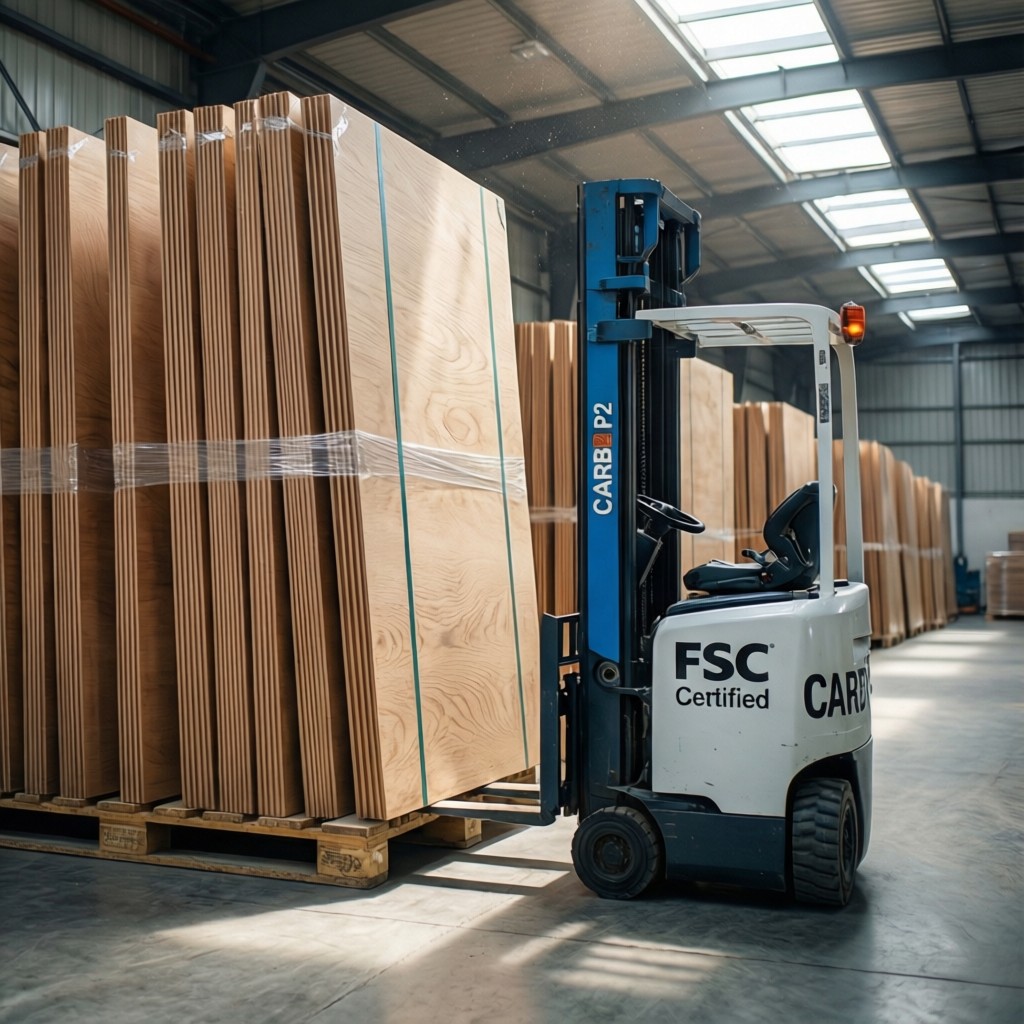
For furniture makers exporting to the EU, compliance with the EU Deforestation Regulation (EUDR), effective Dec 30, 2024, is non-negotiable. Yicaiyigou provides full Chain of Custody (CoC) documentation, ensuring that every sheet of plywood is traceable to sustainable sources. This eliminates compliance risk at customs and aligns with the sustainability goals of major retailers like IKEA and Amazon. The company’s FSC-certified products, combined with ENF (≤0.05 mg/L) formaldehyde emissions, offer a dual advantage of regulatory compliance and superior indoor air quality.
Why Exporters Choose Yicaiyigou for Compliance-Ready Panels
Yicaiyigou positions itself as a partner in risk mitigation, offering more than just wood products. With certifications including FSC, CARB P2, CE, and ENF, the company ensures that every shipment meets the rigorous standards of global markets. The production facility operates with a focus on precision, delivering panels with thickness tolerances that support automated machining and assembly lines.
Supply chain managers benefit from predictable logistics, with a 20ft container holding 20-25 m³ and a 40ft container holding 45-50 m³ of product. The minimum order quantity (MOQ) of one 20ft container allows for efficient inventory planning, while a lead time of 15-25 days ensures rapid response to project demands. By requesting a compliant material sample with full CoC documentation, buyers can verify the density and emission levels before committing to large-scale production, reducing the risk of project delays due to material failure.
FAQ
What is the optimal density for plywood used in acoustic partitions?
For effective low-frequency damping in acoustic partitions, a density of 650-700 kg/m³ is recommended to provide sufficient mass without excessive weight.
How does moisture content affect acoustic panel performance?
Moisture content between 6% and 8% prevents warping exceeding 2mm, ensuring that acoustic seals remain intact and STC ratings are maintained over time.
Does Yicaiyigou’s plywood meet CARB Phase 2 standards?
Yes, Yicaiyigou’s products comply with CARB Phase 2 standards, with formaldehyde emissions kept below strict thresholds, often achieving ENF levels of ≤0.05 mg/L.
What is the lead time for ordering precision acoustic plywood?
The standard lead time for orders is 15-25 days, allowing for efficient project scheduling and reduced inventory holding costs.
How much product fits in a 40ft shipping container?
A 40ft container holds approximately 45-50 m³ of plywood panels, optimizing shipping costs for large-scale procurement.
Summary & Next Steps
Engineering plywood for acoustic control requires a shift from viewing wood as a commodity to treating it as a calibrated mass component. By specifying materials with a density of 650-700 kg/m³, moisture content of 6-8%, and verified low emissions, procurement managers can ensure consistent STC 50+ performance. Yicaiyigou offers the precision, certification, and supply chain reliability needed to mitigate risk in high-stakes architectural projects.
Request a compliant material sample with full Chain of Custody (CoC) documentation and density test reports from Yicaiyigou to validate these specifications for your next project.
Frequently Asked Questions
Why do standard commodity plywood sheets often cause failures in meeting Sound Transmission Class (STC) ratings for office partitions?
Standard commodity plywood introduces unpredictable resonance due to variance in density across veneer layers, including flaws like knots, voids, and inconsistent adhesive distribution. These inconsistencies allow low-frequency vibrations to bypass damping materials, leading to acoustic leaks and failed field tests.
What is the recommended density range for engineered plywood used as an acoustic mass component, and why is it important?
The recommended density range is 650-700 kg/m³. This specific range provides the optimal mass-to-stiffness ratio required to effectively dampen low-frequency vibrations without adding excessive weight to the framing system, ensuring predictable contribution to STC and NRC performance.
How does moisture content affect the acoustic performance of wood substrates in partition assemblies?
Substrate moisture content must be maintained between 6% and 8%. Deviations outside this range cause dimensional instability and panel warping exceeding 2mm, which breaks acoustic seals and compromises the overall STC rating of the wall system.
What emission standards should be met for plywood used in sealed acoustic environments, and why?
Formaldehyde emissions should comply with strict standards such as CARB Phase 2 or the stricter ENF standard (≤0.05 mg/L). This is crucial for maintaining indoor air quality in sealed acoustic environments where ventilation may be limited.
How does high-precision manufacturing improve the acoustic reliability of engineered plywood compared to commodity options?
High-precision manufacturing ensures uniform adhesive distribution and controlled density profiles across the entire sheet. This eliminates voids or dense spots that alter sound transmission paths, allowing the plywood to function as a calibrated mass layer rather than just a structural backing.