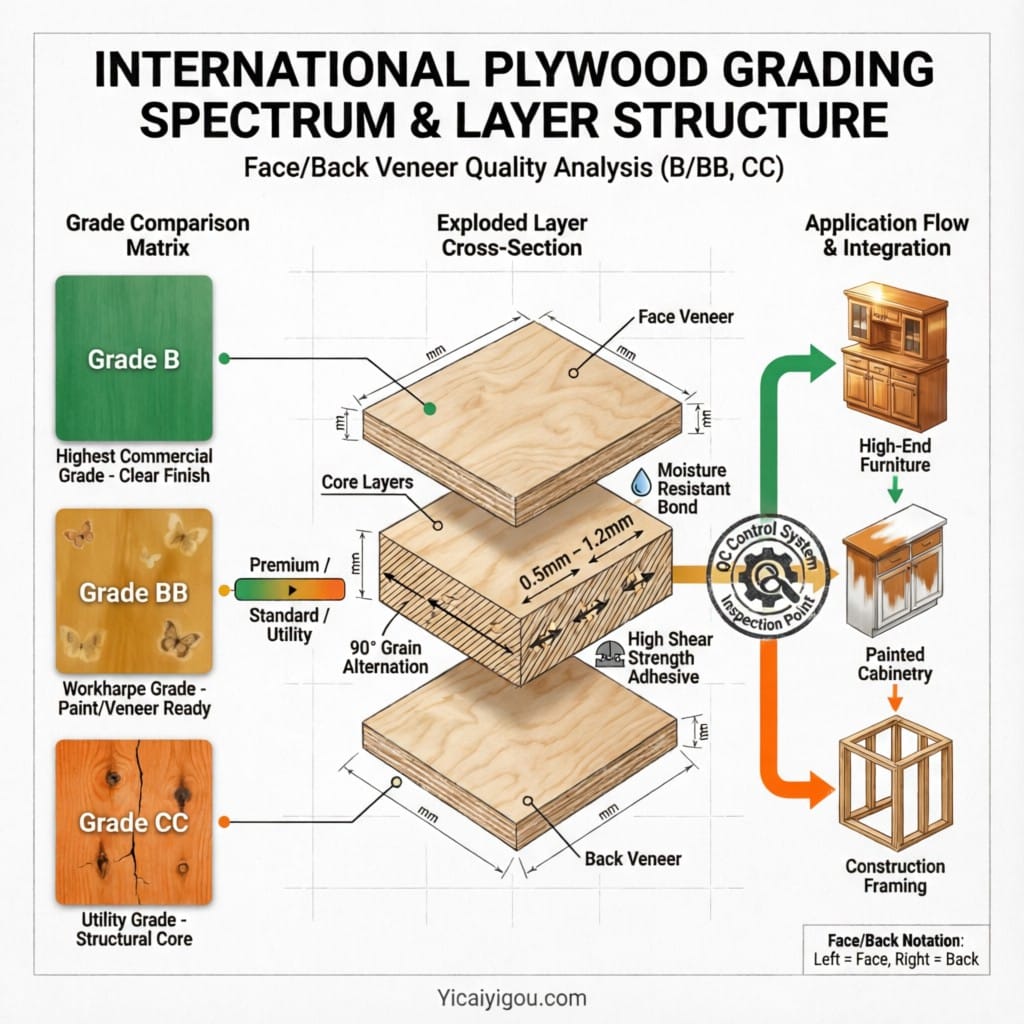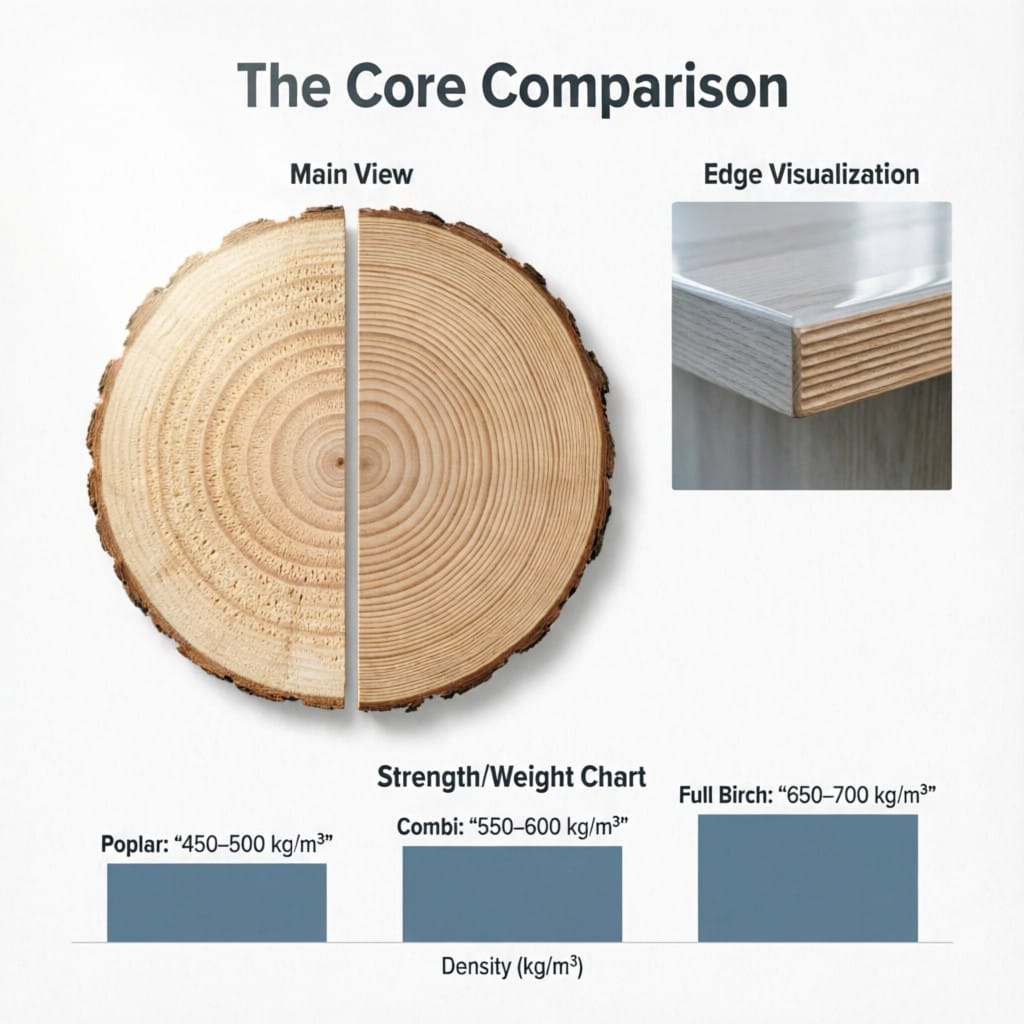
| Feature | Traditional Manual Verification | Digital-First Supplier Model |
|---|---|---|
| Inventory Visibility | Opaque; blind spots until cargo arrival | Real-time API-driven data integration |
| Grade & Quality Check | Manual reconciliation; days to verify | Automated digital scanning (moisture/warping) |
| Compliance Standards | Paper-based Chain of Custody (CoC) | Verifiable digital records for EUDR & CARB P2 |
| Financial Impact | 15-20% margin erosion due to delays/returns | Protected margins; accelerated payment terms |
| Risk Management | High risk of post-delivery defects (cash flow crisis) | Preventive detection before shipment |
Plywood distributors and furniture manufacturers are currently facing a silent crisis where opaque inventory visibility and manual grade verification delays drive 15-20% margin erosion. This article analyzes how digitalization transforms this dynamic, moving beyond simple logistics tracking to integrate API-driven data that eliminates reconciliation costs and ensures compliance with strict standards like EUDR and CARB P2. By adopting these technologies, procurement leaders can secure verifiable quality and financial efficiency in their wood panel sourcing.
The Hidden Cost of Manual Verification in Wood Panels
Consider this specification gap: while major OEMs like IKEA and Apple demand rigorous supply chain transparency, many plywood suppliers still rely on paper-based Chain of Custody (CoC) documents that take days to verify. This latency creates a blind spot where moisture content deviations go undetected until the cargo arrives at the destination port. For a buyer importing High-Density Particleboard or Structural Plywood, discovering warping after a 25-day lead time is not just a quality issue—it is a cash flow crisis.
The urgency is compounded by the EU Deforestation Regulation (EUDR), effective December 30, 2024. Buyers can no longer afford the luxury of manual checks. The traditional model, where procurement teams manually reconcile purchase orders against physical inspections, is financially unsustainable. This article demonstrates how shifting to a digital-first supplier model protects margins by preventing returns before they happen and accelerating payment terms through trusted data.
Technical Benchmarks for Digital Quality Assurance
To understand the value of digitalization, one must look at the specific technical failures it prevents. Manual processes often miss subtle variations in wood content and formaldehyde emissions that lead to costly claims. Digital tracking systems address these risks with measurable precision.
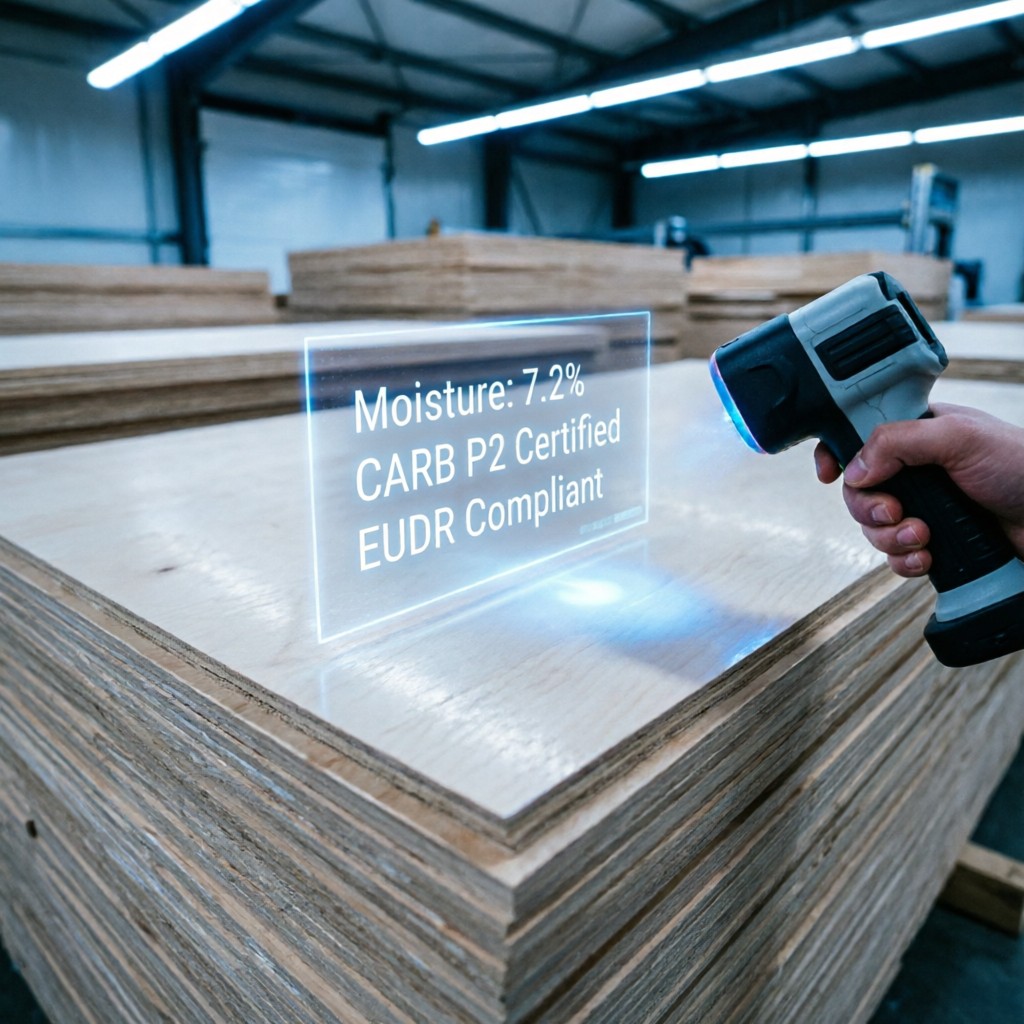
- Moisture Control: IoT moisture sensors maintaining wood content between 6-8% prevent 30% of warping returns. This range is critical for Precision MDF and HDF, where density fluctuations above 1,000 kg/m³ can exacerbate structural instability if moisture is not balanced.
- Dispute Reduction: Adoption of ISO 9001:2015 digital tracking standards reduces claim disputes by 40%. By digitizing the inspection process, buyers receive timestamped evidence of quality at the point of manufacture, not just at delivery.
- Financial Velocity: Blockchain-ledger implementation cuts average payment terms from Net-60 to Net-15. When data is immutable and trusted, banks and buyers release funds faster, improving working capital for both parties.
These benchmarks are not theoretical; they are the operational baseline for suppliers who have integrated digital tools into their production lines for products like CARB P2 compliant particleboard and ENF-rated MDF.
Comparing Traditional vs. Digital Procurement Models
The following table contrasts the operational realities of traditional manual sourcing versus digitalized procurement for wood panels. Note the specific metrics regarding time, error rates, and financial impact.
| Metric | Traditional Manual Sourcing | Digital-Integrated Sourcing |
|---|---|---|
| Inventory Visibility | Weekly batch updates via email | Real-time API feed to buyer ERP |
| Grade Verification Time | 3-5 days post-arrival inspection | Instant digital certificate access |
| Claim Dispute Rate | High (manual evidence review) | Reduced by 40% (ISO 9001:2015 tracking) |
| Moisture Error Risk | 15-20% variance in manual checks | <1% variance via IoT sensors (6-8% target) |
| Payment Terms | Net-60 (due to verification lag) | Net-15 (blockchain-verified delivery) |
| Safety Stock Requirement | High (to cover visibility gaps) | Low (live stock levels known) |
| Formaldehyde Compliance | Paper CoC, prone to loss/forgery | Digital CoC linked to batch ID |
| Lead Time Accuracy | ±5 days estimation error | ±1 day precision via smart logistics |
The key takeaway is that digital integration shifts the risk profile. In the traditional model, the buyer holds the risk of quality failure and inventory bloat. In the digital model, shared data transparency allows for leaner operations and faster financial cycles.

Real-World Application: Precision MDF and Structural Plywood
Yicaiyigou applies these digital principles to its core product lines, ensuring that every panel meets strict international standards. For furniture makers exporting to the EU, the difference lies in the data attached to the product.
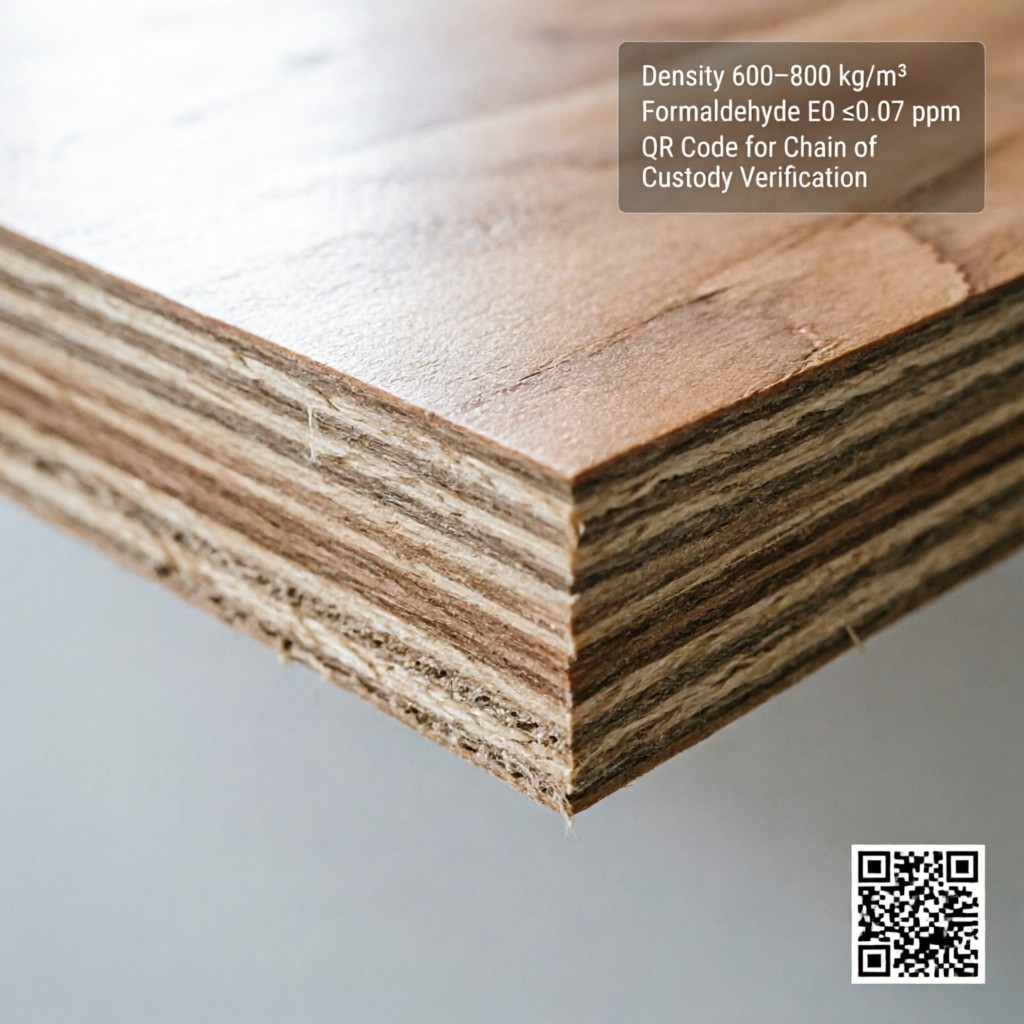
For example, Yicaiyigou’s Precision MDF, with a density of 600-800 kg/m³, is tracked from the press to the container. Each batch is verified for formaldehyde emissions, ensuring compliance with ENF (≤0.05 mg/L) and E0 (≤0.07 ppm) standards. This is crucial for brands like Herman Miller, where indoor air quality is a non-negotiable spec. Similarly, for structural applications, the High-Density Particleboard (550-750 kg/m³) is monitored for moisture content using IoT sensors. If a batch deviates from the 6-8% range, it is flagged digitally before loading, preventing the 30% warping return rate seen in non-digitized supply chains.
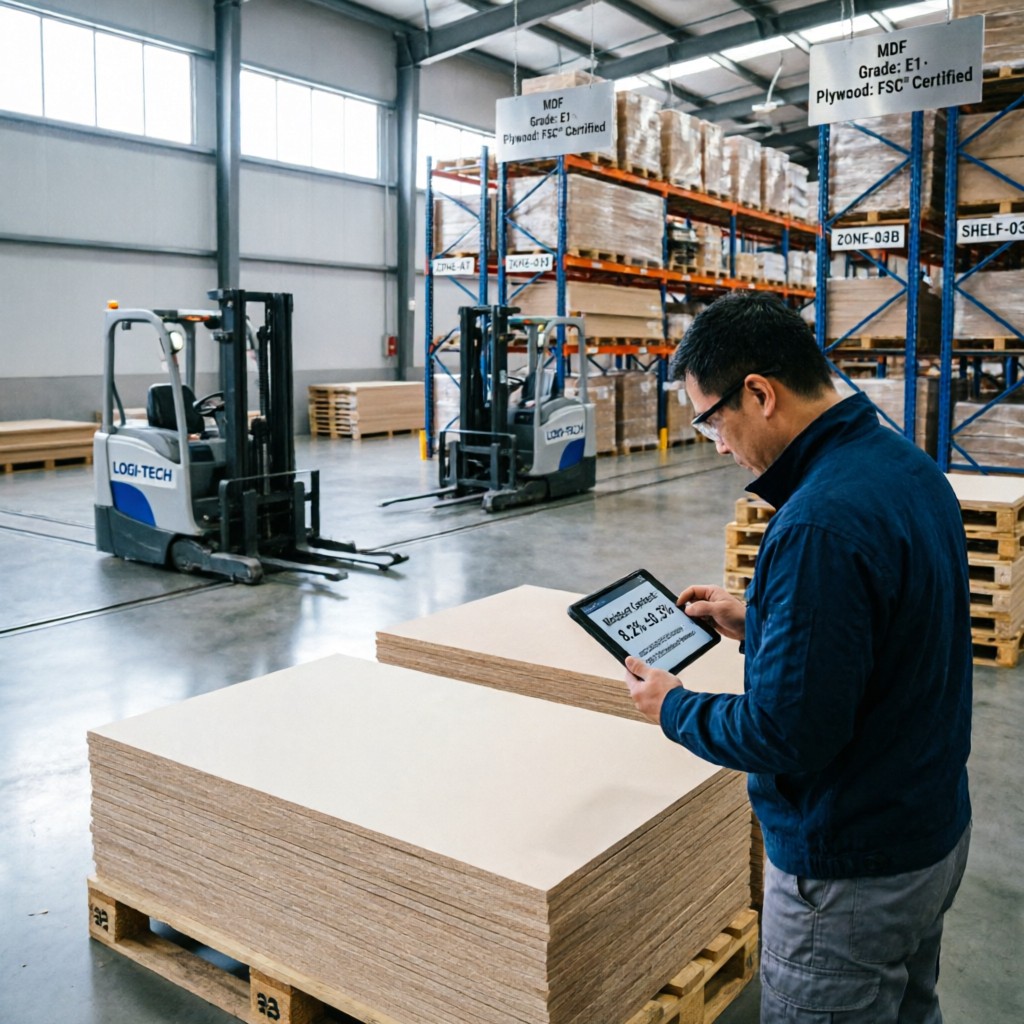
Furthermore, the integration of API-driven inventory feeds means buyers do not need to guess stock levels. A 40ft container holds 45-50 m³ of material, and knowing exactly which batches are available in real-time allows procurement managers to optimize container loading without holding excessive safety stock.
Why Exporters Choose Yicaiyigou for Data-Transparent Panels
Yicaiyigou positions itself not just as a manufacturer, but as a data-transparent partner. By integrating API-driven inventory feeds directly into the buyer’s ERP, Yicaiyigou eliminates the manual reconciliation costs that plague traditional imports. This approach addresses two critical coverage gaps in the market: competitors focus on logistics speed but ignore the financial impact of manual grade-certification errors, and most suppliers lack real-time API integration for live stock levels.
Trust is built on verifiable data. Yicaiyigou provides full Chain of Custody (CoC) documentation for FSC-certified products, ensuring compliance with EUDR requirements. The company’s certifications, including CARB P2 (≤0.11 ppm for composites) and CE, are digitally linked to each shipment. For a 20ft container holding 20-25 m³ of material, the buyer receives a digital packet containing thickness tolerances (3mm-30mm), density reports, and emission test results before the vessel departs. This level of transparency allows procurement teams to audit their supply chain with the same rigor they apply to their financial books.
FAQ
How does digital tracking help with EUDR compliance?
Digital tracking provides an immutable Chain of Custody (CoC) that links each panel to its geographic origin, satisfying the due diligence requirements of the EU Deforestation Regulation effective Dec 30, 2024.
What is the impact of IoT sensors on MDF quality?
IoT sensors maintain wood moisture content between 6-8%, which is critical for preventing warping in Precision MDF (600-800 kg/m³) and reducing return rates by up to 30%.
Can API integration reduce my safety stock levels?
Yes, real-time API feeds provide live visibility into stock levels, allowing buyers to reduce excessive safety stock holdings because they can trust the accuracy of the supplier’s inventory data.
How quickly can payment terms improve with blockchain?
Blockchain-ledger implementation verifies delivery and quality data instantly, allowing payment terms to shift from standard Net-60 to Net-15, significantly improving cash flow.
What formaldehyde standards does Yicaiyigou meet digitally?
Yicaiyigou digitally certifies batches for ENF (≤0.05 mg/L), E0 (≤0.07 ppm), and CARB P2 (≤0.11 ppm), providing instant access to test reports via QR codes on shipping documents.
Summary & Next Steps
Digitalization in the plywood supply chain is no longer optional for buyers facing margin erosion and regulatory pressure. By leveraging suppliers who offer API-driven inventory visibility and IoT-monitored quality control, procurement managers can reduce claim disputes by 40% and accelerate payment terms to Net-15. The shift from manual verification to data-transparent partnerships ensures compliance with EUDR and CARB P2 while optimizing inventory costs.
Request a compliant material sample with full Chain of Custody (CoC) documentation and API integration specs from Yicaiyigou to validate these digital benefits for your next procurement cycle.
Frequently Asked Questions
What is the primary financial impact of opaque inventory visibility and manual grade verification on plywood distributors and furniture manufacturers?
These inefficiencies drive a 15-20% margin erosion due to reconciliation costs, delayed payments, and quality issues that are often detected too late in the supply chain.
How does digitalization help companies comply with regulations like EUDR and CARB P2?
Digitalization integrates API-driven data to ensure strict compliance by providing verifiable, real-time information that eliminates the need for slow, error-prone manual checks and paper-based Chain of Custody documents.
Why is detecting moisture content deviations early critical for buyers importing wood panels?
Detecting moisture deviations early prevents warping and structural instability, which are often only discovered after long lead times (e.g., 25 days) in traditional models, turning quality issues into significant cash flow crises.
What specific technical benchmarks are achieved by using IoT moisture sensors in wood panel production?
IoT sensors maintain wood content between 6-8%, which prevents 30% of warping returns and reduces moisture error risk to less than 1%, compared to a 15-20% variance in manual checks.
How does the adoption of blockchain-ledger implementation affect payment terms in the wood products industry?
Blockchain-ledger implementation cuts average payment terms from Net-60 to Net-15 by providing immutable and trusted data, allowing banks and buyers to release funds faster and improve working capital.