| Feature | Traditional Lumber Processing | Yicaiyigou Integrated Engineering |
|---|---|---|
| Raw Material Utilization | 60-70% (30-40% waste) | 98% |
| Waste Management | Discarded as cost center (bark, sawdust, off-cuts) | Treated as valuable revenue inputs |
| EUDR Compliance | High risk of penalties; complex Chain of Custody | Deforestation-free; streamlined documentation |
| Economic Impact | Eroded profit margins; volatile pricing | Stabilized costs; enhanced profit resilience |
| Environmental Standards | Higher carbon footprint liabilities (Scope 3) | Compliant with E0 and CARB P2 standards |
| Primary Focus | Speed over yield | Yield optimization and process integration |
Traditional lumber processing in China’s manufacturing hubs often discards 30-40% of raw material as waste, a inefficiency that directly erodes profit margins and triggers regulatory penalties under the EU Deforestation Regulation (EUDR). This article details how Yicaiyigou engineers have inverted this model, achieving a 98% wood utilization rate through integrated process engineering. For procurement managers at major firms like IKEA or Apple, understanding this shift from waste disposal to revenue generation is critical for securing supply chains that are both economically resilient and compliant with strict E0 and CARB P2 standards.
The Hidden Cost of Inefficient Log Breakdown
For decades, the standard operating procedure in many Linyi factories involved aggressive log breakdown strategies that prioritized speed over yield. This approach typically results in 30-40% raw material waste, primarily in the form of bark, sawdust, and off-cut veneers. While competitors focus solely on end-product certification, they often ignore the upstream economic loss inherent in these inefficient processes. For global buyers, this inefficiency translates into volatile pricing and increased carbon footprint liabilities, which are now scrutinized under Scope 3 emissions reporting requirements.
The urgency for change is driven by both regulatory pressure and economic necessity. With the EUDR effective December 30, 2024, buyers must prove that their wood products are deforestation-free and legally sourced. Inefficient manufacturing not only wastes resources but also complicates Chain of Custody (CoC) documentation. By contrast, Yicaiyigou has re-engineered its production lines to treat waste streams as valuable inputs, transforming what was once a cost center into a competitive advantage. This pivot ensures that every cubic meter of log contributes to revenue, stabilizing costs for long-term contracts.
Technical Specifications for Closed-Loop Efficiency
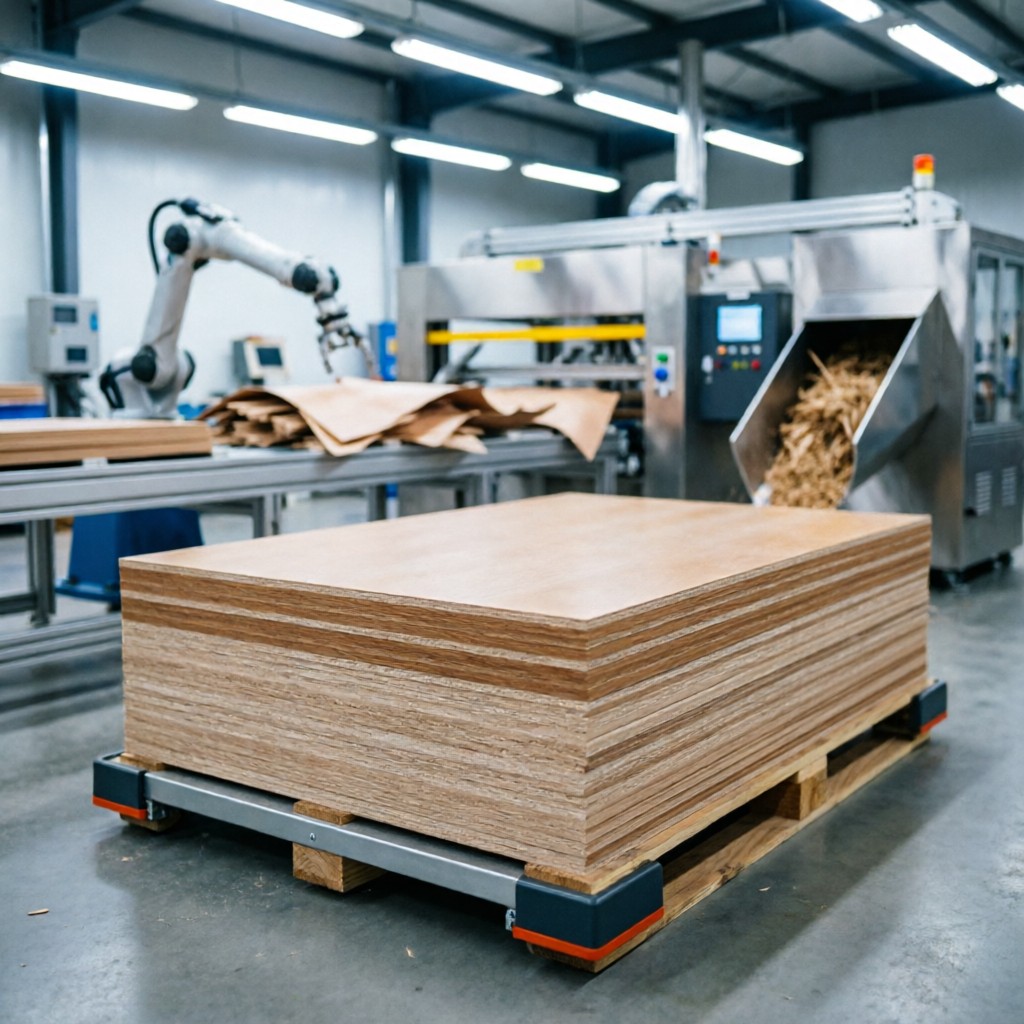
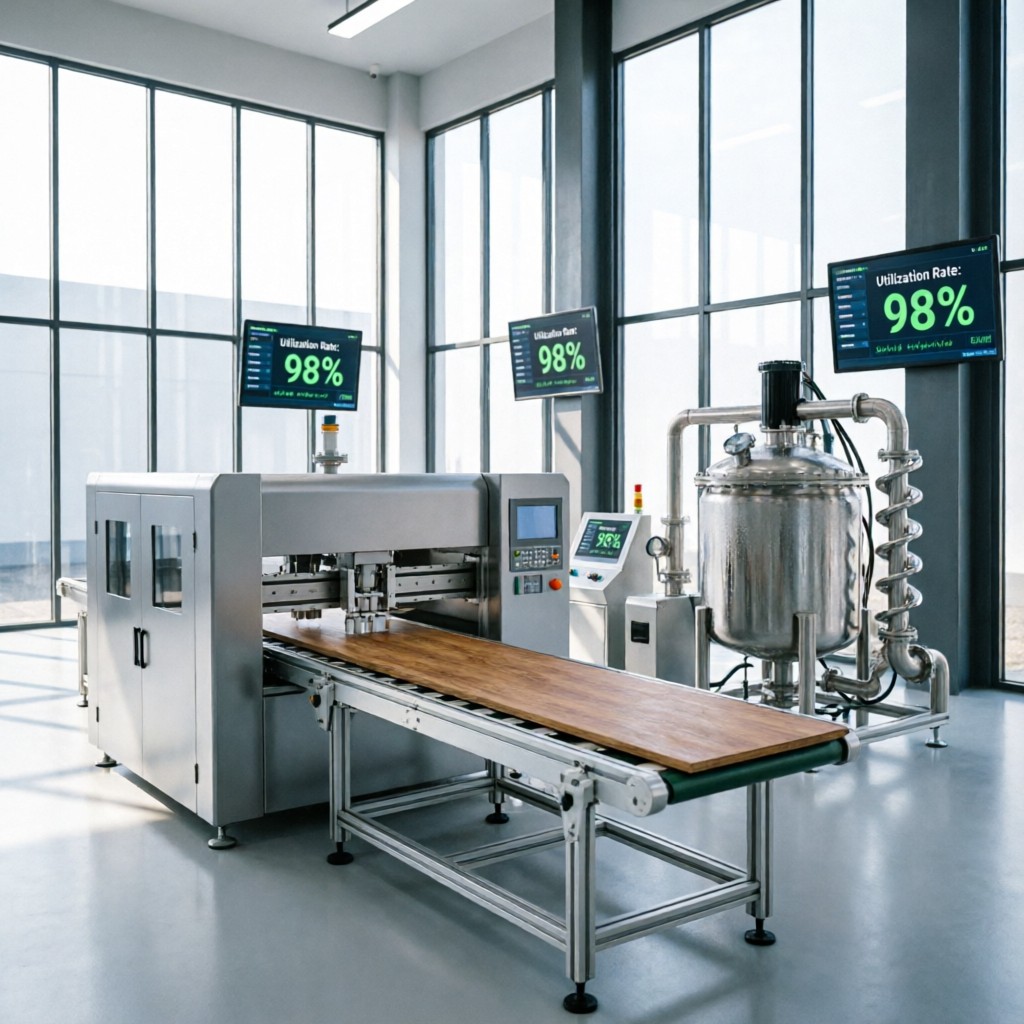
To achieve true zero-waste status, manufacturers must move beyond simple recycling to integrated process engineering. Yicaiyigou implements four core technical specifications that define its sustainable production model. First, the facility achieves a 98% wood utilization rate through advanced veneer splicing and core recycling technologies, ensuring that even small off-cuts are reintegrated into High-Density Particleboard or MDF cores. Second, the use of no-added-formaldehyde adhesives reduces formaldehyde emissions to meet the stringent E0 standard (<0.5 mg/L), aligning with CARB P2 and ENF (≤0.05 mg/L) requirements.
Third, the facility converts 15,000 tons of annual sawdust waste into biomass fuel pellets, saving approximately $200,000 per year in energy costs. This internal energy loop reduces reliance on external fossil fuels and lowers the overall carbon intensity of the product. Fourth, ISO 14001 certified closed-loop water filtration systems reduce wastewater discharge by 90%, ensuring that environmental compliance does not come at the expense of operational efficiency. These specifications are not merely marketing claims but verifiable engineering outcomes that drive both sustainability and profitability.
| Specification | Traditional Linyi Factory | Yicaiyigou Zero-Waste Model |
|---|---|---|
| Wood Utilization Rate | 60-70% | 98% |
| Formaldehyde Emission Standard | E1 (≤0.124 ppm) | E0 (≤0.07 ppm) / ENF (≤0.05 mg/L) |
| Annual Sawdust Disposal | Landfill or Open Burning | 15,000 tons converted to biomass fuel |
| Energy Cost Savings | $0 | $200,000/year |
| Water Discharge Reduction | <50% | 90% via ISO 14001 closed-loop systems |
| Adhesive Type | Urea-Formaldehyde | No-Added-Formaldehyde (NAF) |
| Compliance Focus | End-Product Only | Upstream Process + End-Product |
| Waste Stream Management | Cost Center | Revenue Center |
The data above illustrates a fundamental shift in manufacturing philosophy. While traditional factories view waste as an inevitable byproduct requiring disposal, Yicaiyigou’s model treats it as a resource. This distinction is crucial for buyers evaluating total cost of ownership, as the savings from biomass energy and reduced material waste directly impact unit pricing stability.
Industry Applications with Verifiable Performance
Yicaiyigou’s Precision MDF and Structural Plywood are engineered to meet the rigorous demands of global brands. For furniture makers exporting to the EU, the FSC-certified MDF with ENF ≤0.05 mg/L eliminates compliance risk at customs, ensuring seamless entry into markets governed by the EUDR. The HDF density, exceeding 800 kg/m³ and reaching up to 1,000+ kg/m³, provides the structural integrity required for high-traffic commercial flooring and retail fixtures, outperforming standard particle board which ranges from 550-750 kg/m³.
In the electronics and appliance sector, companies like Apple and Amazon require materials that offer both dimensional stability and low emissions. Yicaiyigou’s High-Density Particleboard, available in thicknesses from 3mm to 30mm and standard sizes of 2440x1220mm, meets these needs with precise tolerances. A 20ft container holds 20-25 m³ of product, while a 40ft container holds 45-50 m³, allowing for efficient logistics planning. With a lead time of 15-25 days and a minimum order quantity of one 20ft container, supply chain managers can optimize inventory levels without compromising on sustainability credentials.
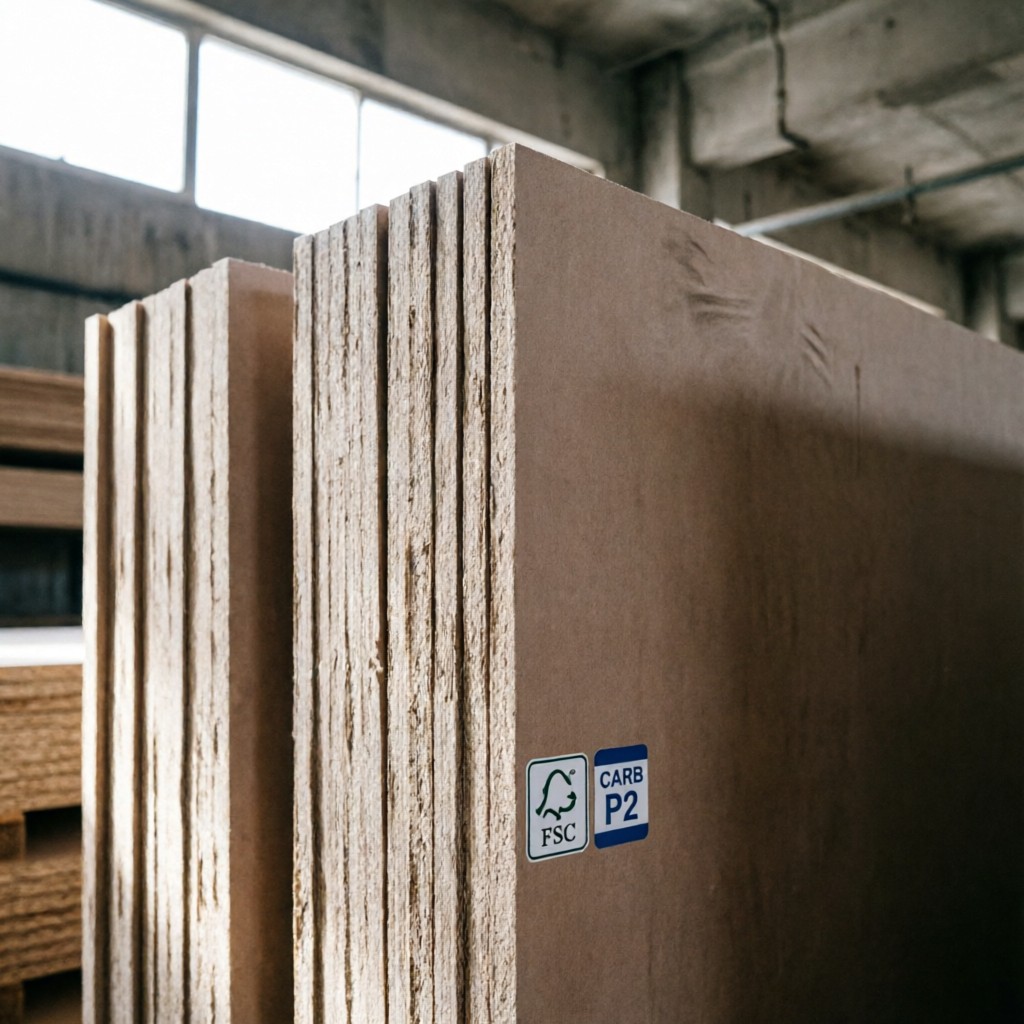
Why Exporters Choose Yicaiyigou for Compliance-Ready Panels
Yicaiyigou positions itself not just as a supplier, but as a technical partner who transforms waste streams into revenue centers. This approach is backed by robust certifications, including FSC, CARB P2, CE, and ENF. The company’s Chain of Custody (CoC) documentation provides full traceability from forest to factory, a critical requirement for buyers navigating the complexities of the EUDR. By integrating zero-waste manufacturing Linyi factories principles, Yicaiyigou offers a level of transparency and reliability that generic suppliers cannot match.
The company’s commitment to quality is evident in its product specifications. Whether sourcing Precision MDF with a density of 600-800 kg/m³ or Structural Plywood for heavy-duty applications, buyers receive materials that meet international standards. The ability to provide compliant material samples with full CoC documentation allows procurement teams to validate claims before committing to large orders. This proactive approach reduces risk and builds trust, making Yicaiyigou a preferred partner for discerning global buyers.
FAQ
What is the specific formaldehyde emission limit for Yicaiyigou’s ENF certified products?
Yicaiyigou’s ENF certified products have a formaldehyde emission limit of ≤0.05 mg/L, which is stricter than the E0 standard of ≤0.07 ppm and significantly lower than the CARB P2 limit of ≤0.11 ppm for composites.
How does the 98% wood utilization rate impact pricing stability?
By achieving a 98% wood utilization rate through veneer splicing and core recycling, Yicaiyigou minimizes raw material waste, reducing exposure to volatile timber prices and passing these savings on to buyers through more stable unit costs.
What is the ROI timeline for converting sawdust into biomass fuel?
The conversion of 15,000 tons of annual sawdust waste into biomass fuel pellets saves approximately $200,000 per year in energy costs, providing a rapid return on investment for the infrastructure required for this closed-loop system.
How does Yicaiyigou ensure compliance with the EU Deforestation Regulation (EUDR)?
Yicaiyigou provides full Chain of Custody (CoC) documentation and FSC certification, ensuring that all wood sources are deforestation-free and legally harvested, which is a mandatory requirement for market access under the EUDR effective December 30, 2024.
What are the loading capacities for Yicaiyigou’s containers?
A 20ft container holds 20-25 m³ of product, while a 40ft container holds 45-50 m³, allowing for efficient logistics planning and optimized shipping costs for bulk orders.
Summary & Next Steps
The shift toward zero-waste manufacturing in Linyi is not just an environmental imperative but a strategic business advantage. By achieving 98% wood utilization, reducing formaldehyde emissions to E0/ENF standards, and converting waste into energy, Yicaiyigou offers a supply chain solution that is both sustainable and economically resilient. For procurement managers, this means lower risk, greater compliance certainty, and stable pricing.
Request a compliant material sample with full Chain of Custody (CoC) documentation from Yicaiyigou to verify these specifications and integrate zero-waste panels into your next project.
Frequently Asked Questions
How does Yicaiyigou’s wood utilization rate compare to traditional lumber processing methods in China?
Traditional lumber processing in China often discards 30-40% of raw material as waste, resulting in a 60-70% utilization rate. In contrast, Yicaiyigou has achieved a 98% wood utilization rate through integrated process engineering, including advanced veneer splicing and core recycling technologies.
What are the financial and regulatory implications of inefficient log breakdown for global buyers?
Inefficient manufacturing leads to volatile pricing, increased carbon footprint liabilities under Scope 3 emissions reporting, and complications with Chain of Custody documentation required by the EU Deforestation Regulation (EUDR). It also erodes profit margins due to high waste disposal costs.
How does Yicaiyigou handle sawdust waste, and what is the economic impact of this process?
Yicaiyigou converts 15,000 tons of annual sawdust waste into biomass fuel pellets instead of sending it to landfills or open burning. This internal energy loop saves approximately $200,000 per year in energy costs and reduces reliance on external fossil fuels.
Which environmental and safety standards do Yicaiyigou’s products meet regarding formaldehyde emissions?
By using no-added-formaldehyde adhesives, Yicaiyigou’s products meet the stringent E0 standard (<0.5 mg/L or ≤0.07 ppm) and CARB P2 requirements. They also align with the ENF standard, which requires formaldehyde emissions to be ≤0.05 mg/L.
What water management technology does Yicaiyigou employ to ensure environmental compliance?
The facility uses ISO 14001 certified closed-loop water filtration systems, which reduce wastewater discharge by 90%. This ensures that environmental compliance is maintained without compromising operational efficiency.