| Engineering Parameter | Specification / Requirement | Purpose / Rationale |
|---|---|---|
| Maximum Vertical Deflection | L/170 | Ensures bending remains below the threshold of human visual detection under normal lighting. |
| Deflection Limit (36-inch span) | ~0.21 inches | Prevents perceptible sagging that can trigger returns and damage brand trust. |
| Minimum Panel Thickness | 3/4-inch (19mm) | Required baseline for spans exceeding 30 inches to ensure long-term structural integrity. |
| Safety Factor for Dead Load | 1.5 | Compensates for material variability and prevents failure under long-term static storage. |
| Target Service Lifecycle | 5 years | Duration over which aesthetic and functional integrity must be maintained. |
Designing retail and industrial shelving requires precise engineering to prevent visible sagging that damages brand perception. This guide details the critical deflection limits, panel thickness baselines, and material specifications necessary to ensure structural integrity over a five-year lifecycle.
The Hidden Cost of Shelf Sag in Retail Environments
A major furniture retailer recently faced a wave of warranty claims when their flagship bookshelf units developed a perceptible bow after just six months of standard use. The root cause was not excessive loading by consumers, but a miscalculation in long-term creep deformation under static loads. For brands supplying giants like IKEA or Amazon, even a 2mm deviation from flatness can trigger returns, eroding margins and damaging trust.
This article resolves these structural uncertainties by defining exact deflection thresholds and material requirements. By adhering to strict engineering standards, manufacturers can eliminate guesswork, reduce warranty costs, and deliver products that maintain their aesthetic and functional integrity for years.
Engineering Standards for Visible Shelving
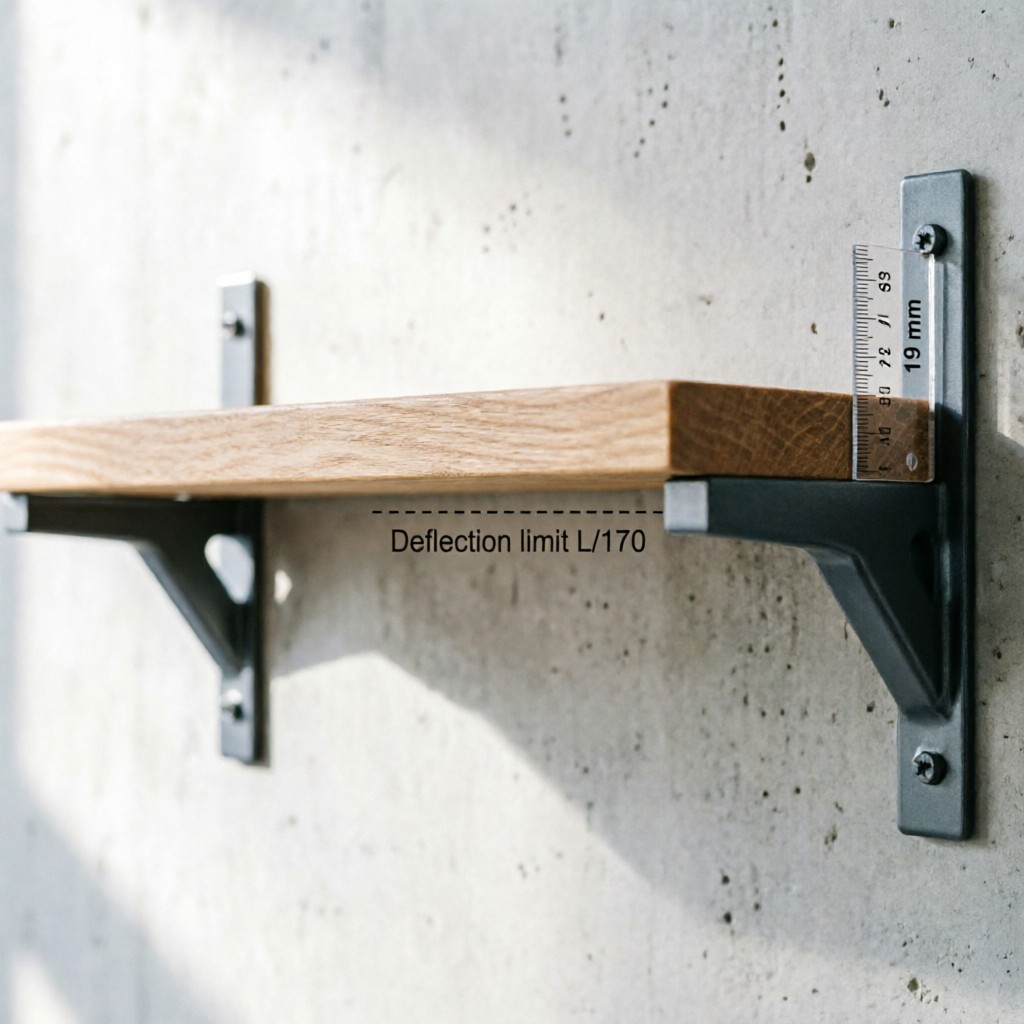
To prevent perceptible sagging, engineers must maintain maximum vertical deflection at L/170 for visible shelves. This ratio ensures that any bending remains below the threshold of human visual detection under normal lighting conditions. For a standard 36-inch span, this limits deflection to approximately 0.21 inches, a tight tolerance that demands high-quality core materials.
Furthermore, designers should utilize 3/4-inch (19mm) thick panels as the minimum baseline for spans exceeding 30 inches. Thinner panels may meet initial load tests but often fail under long-term static storage scenarios. To account for this, apply a safety factor of 1.5 to dead load calculations. This buffer compensates for material variability and ensures the shelf remains rigid throughout its service life.
Material Performance: Precision MDF vs. Structural Plywood
Selecting the right substrate is critical for meeting rigidity requirements. Below is a technical comparison of Yicaiyigou’s core offerings for shelving applications, focusing on density, formaldehyde emissions, and structural behavior.
| Specification | Precision MDF | Structural Plywood | High-Density Particleboard |
|---|---|---|---|
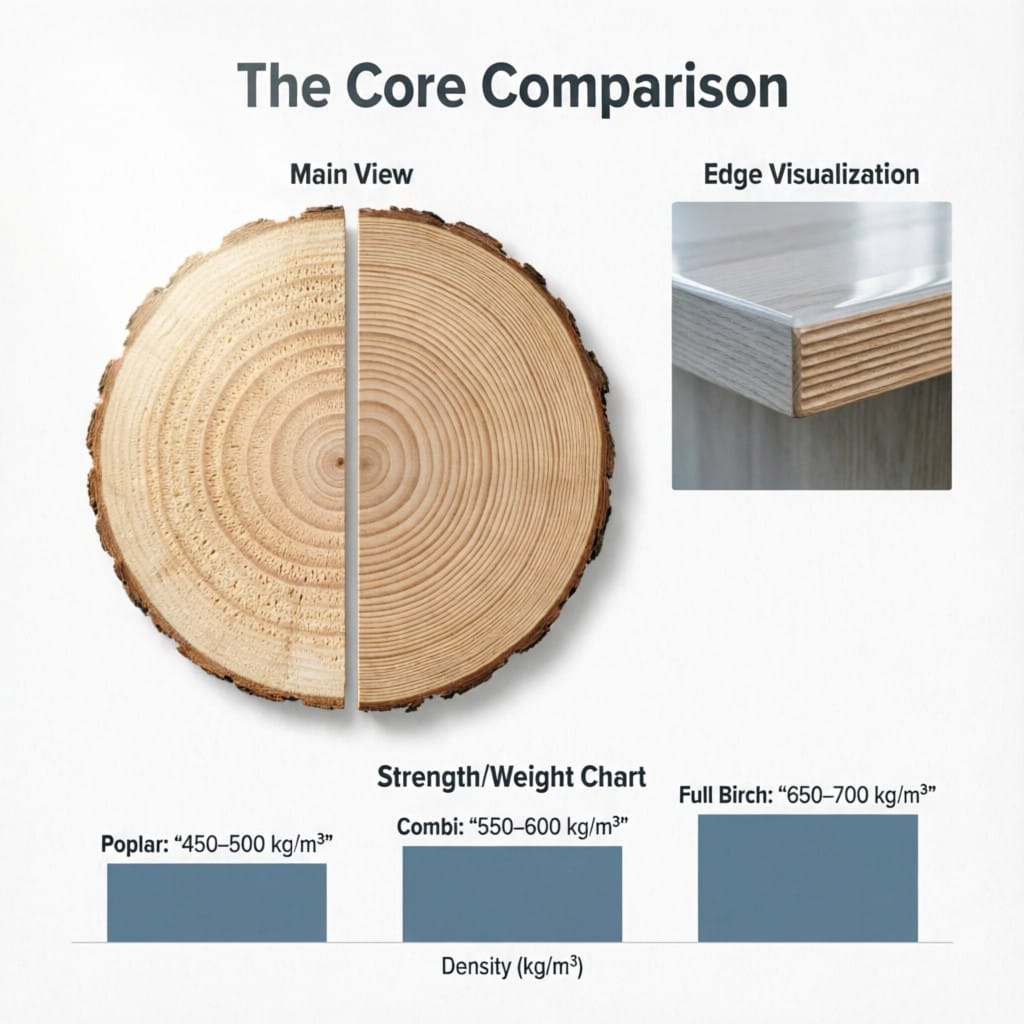
| Density Range | 600-800 kg/m³ | Varies by veneer layer | 550-750 kg/m³ |
| Thickness Tolerance | +/-0.2mm | +/-0.5mm | +/-0.3mm |
| Formaldehyde (CARB P2) | ≤0.11 ppm | ≤0.11 ppm | ≤0.11 ppm |
| Formaldehyde (ENF) | ≤0.05 mg/L | ≤0.05 mg/L | ≤0.05 mg/L |
| Formaldehyde (E0) | ≤0.07 ppm | ≤0.07 ppm | ≤0.07 ppm |
| Modulus of Elasticity | Moderate (Isotropic) | High (Directional) | Low-Moderate |
| Creep Resistance | Moderate | High | Low |
| Edge-Banding Impact | High stiffness gain | Moderate stiffness gain | Low stiffness gain |
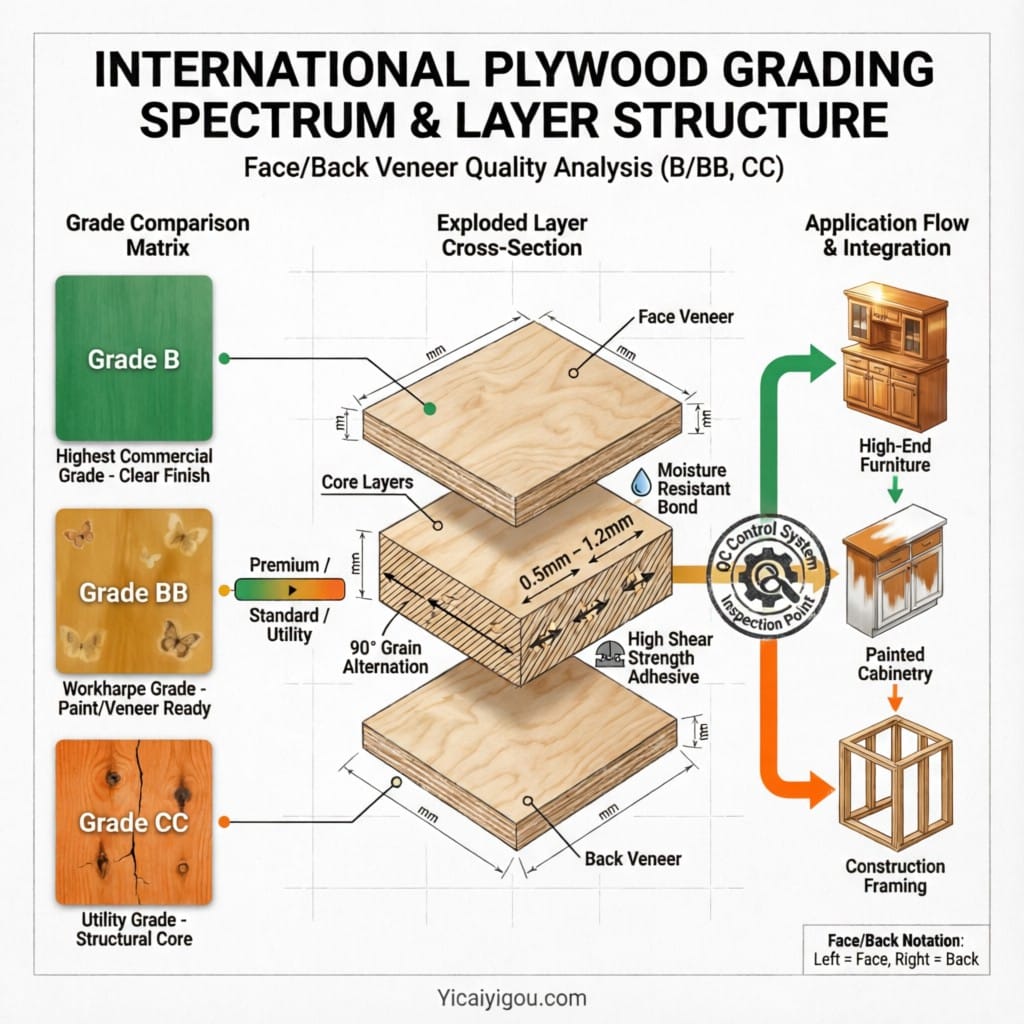
Precision MDF offers isotropic strength, meaning it performs consistently regardless of grain direction, making it ideal for complex CNC machining. Structural Plywood provides superior stiffness per weight due to its cross-laminated layers, though it requires careful orientation during assembly. High-Density Particleboard is cost-effective for short-span applications but requires rigorous edge sealing to prevent moisture ingress.
Addressing Humidity Creep and Edge Stiffness
Most design guides overlook two critical factors: humidity-induced creep deformation and the impact of edge-banding stiffness. Composite wood products, including MDF and particleboard, are hygroscopic. Over a 5-year lifecycle, fluctuations in relative humidity can cause internal stress relaxation, leading to gradual sagging even if the initial load was within limits. Yicaiyigou’s Precision MDF, with a density of 600-800 kg/m³, is engineered to minimize this creep through optimized resin distribution.
Additionally, edge-banding is not merely aesthetic; it significantly contributes to overall panel rigidity. A 19mm panel with high-stiffness ABS or PVC edge-banding can resist deflection up to 20% better than an unsealed edge. Ignoring this factor leads to under-engineered designs. Manufacturers must account for the composite stiffness of the core plus the edge treatment when calculating final deflection limits.
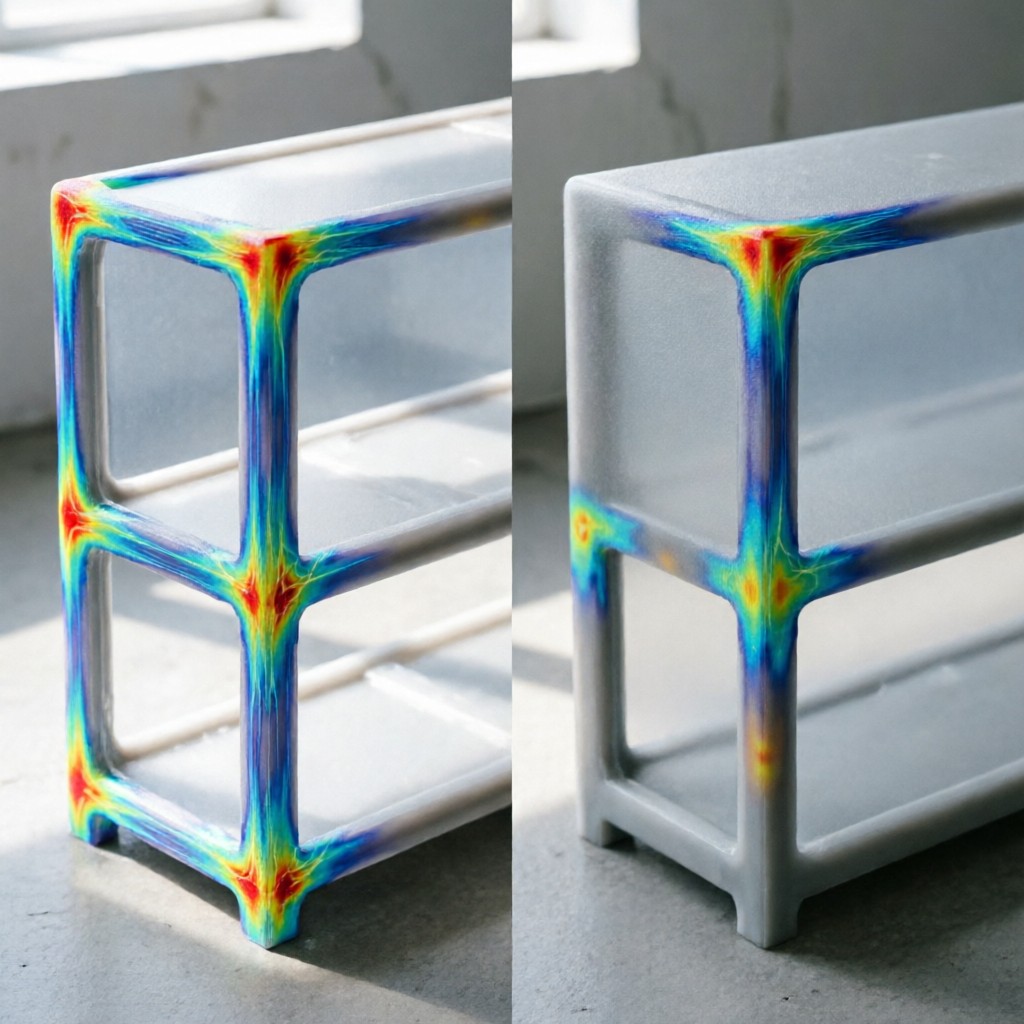
Real-World Applications with Yicaiyigou Panels
For a furniture maker exporting to the EU, compliance with the EU Deforestation Regulation (EUDR), effective Dec 30, 2024, is mandatory. Yicaiyigou provides FSC-certified materials with full Chain of Custody (CoC) documentation, ensuring seamless customs clearance. Our Precision MDF meets ENF standards (≤0.05 mg/L), surpassing the strictest global indoor air quality requirements.
In industrial settings, such as warehouse storage solutions for distributors supplying Amazon, structural rigidity is paramount. Using our High-Density Particleboard (density >800 kg/m³ for HDF variants) with a 1.5 safety factor on dead loads ensures shelves remain flat under heavy static inventory. With a standard size of 2440x1220mm and thickness options from 3mm to 30mm, our panels integrate easily into automated cutting lines.
Why Exporters Choose Yicaiyigou for Structural Panels
Yicaiyigou positions itself as an engineering partner, providing pre-validated span tables and material stress ratings to eliminate guesswork. We supply FSC, CARB P2, CE, and ENF-certified panels, ensuring your products meet global regulatory standards without additional testing delays. Our manufacturing process maintains a tight thickness tolerance of +/-0.2mm for MDF, crucial for precision machining and consistent assembly.
Logistically, we optimize for global supply chains. A 20ft container holds 20-25 m³ of material, while a 40ft container accommodates 45-50 m³. With a minimum order quantity (MOQ) of one 20ft container and a lead time of 15-25 days, we support just-in-time manufacturing models. Request a compliant material sample with full CoC documentation to verify our density and emission specs firsthand.
FAQ
What is the maximum span for 19mm MDF without visible sag?
For visible shelves, maintain a span under 30 inches with a 1.5 safety factor on dead loads to stay within the L/170 deflection limit.
How does humidity affect long-term shelf deflection?
Humidity causes creep deformation in composite woods; using ENF-rated MDF (≤0.05 mg/L) with sealed edges minimizes this risk over a 5-year lifecycle.
Is edge-banding necessary for structural rigidity?
Yes, edge-banding adds significant stiffness to the panel assembly, improving deflection resistance by up to 20% compared to raw edges.
What certification is required for exporting wood panels to the EU?
As of Dec 30, 2024, EUDR compliance is mandatory, requiring FSC certification and full Chain of Custody documentation for deforestation-free verification.
What is the density range for Yicaiyigou’s High-Density Particleboard?
Our High-Density Particleboard ranges from 550-750 kg/m³, while HDF variants exceed 800 kg/m³, offering superior load-bearing capacity for industrial shelving.
Summary & Next Steps
Designing durable shelving units requires adhering to the L/170 deflection limit, using 19mm panels for spans over 30 inches, and applying a 1.5 safety factor for static loads. By accounting for humidity creep and edge-banding stiffness, manufacturers can prevent costly warranty claims. Partner with Yicaiyigou for pre-validated, FSC-certified materials that meet CARB P2 and ENF standards.
Request a compliant material sample with full CoC documentation from Yicaiyigou to validate these specifications for your next production run.
Frequently Asked Questions
What is the recommended maximum vertical deflection ratio for visible shelving to prevent perceptible sagging?
Engineers should maintain a maximum vertical deflection of L/170 for visible shelves. This ratio ensures that bending remains below the threshold of human visual detection under normal lighting conditions.
What is the minimum panel thickness baseline recommended for shelving spans exceeding 30 inches?
Designers should utilize 3/4-inch (19mm) thick panels as the minimum baseline for spans exceeding 30 inches to ensure structural integrity and prevent failure under long-term static storage scenarios.
Why did a major furniture retailer experience warranty claims on their bookshelf units despite standard consumer use?
The root cause was a miscalculation in long-term creep deformation under static loads, which led to perceptible bowing after just six months, rather than excessive loading by consumers.
Which material offers superior stiffness per weight due to its cross-laminated layers, and what is a key consideration when using it?
Structural Plywood provides superior stiffness per weight due to its cross-laminated layers, but it requires careful orientation during assembly because its strength is directional.
What safety factor should be applied to dead load calculations to account for material variability and ensure rigidity?
A safety factor of 1.5 should be applied to dead load calculations. This buffer compensates for material variability and helps ensure the shelf remains rigid throughout its service life.