| Procurement Strategy | Regulatory & Market Impact | Financial Implication | Data Requirement |
|---|---|---|---|
| Traditional Low-Cost Sourcing | High risk of market exclusion under EU CBAM; non-compliant with major buyer mandates (e.g., Apple, Herman Miller). | Hidden carbon tax liabilities erode FOB savings; margin erosion due to unquantified sequestration. | No verified carbon data; Scope 3 emissions undisclosed. |
| Verified Carbon Accounting | Ensures market access in premium sectors; transforms compliance into a competitive pricing lever. | Offsets CBAM liabilities; enables access to green financing; maintains margin-positive status. | ISO 14067-compliant data; granular Scope 3 emission disclosure. |
The volatility of global carbon pricing is no longer a theoretical risk for timber importers; it is an immediate line-item cost. With the EU Carbon Border Adjustment Mechanism (CBAM) transitional reporting phase already active, procurement managers at major firms like IKEA and Amazon face urgent pressure to quantify the embedded emissions of their supply chains. This article details how verified carbon accounting transforms regulatory compliance from a burden into a competitive pricing lever, ensuring your wood panel imports remain market-accessible and margin-positive.
The $100 Billion Urgency: Why Carbon Data Defines Market Access
McKinsey analysis projects the global voluntary carbon market will reach $100 billion by 2030, but for wood exporters, the immediate threat is regulatory, not just voluntary. Buyers who cannot verify the carbon sequestration of their timber products face significant margin erosion due to inability to quantify and verify carbon sequestration against emerging EU CBAM and voluntary market standards. Consider that Apple and Herman Miller now require suppliers to disclose Scope 3 emissions with granular precision. If your supplier cannot provide ISO 14067-compliant data, your product is effectively unbuyable in premium sectors.
This shift reframes the buyer’s assumption: low FOB price is irrelevant if the carbon liability exceeds the savings. The thesis here is clear: integrating verified carbon accounting into logistics allows buyers to offset CBAM liabilities and access green financing. Ignoring this creates a hidden tax on every container shipped.
Regulatory Frameworks and Verification Standards
To navigate this landscape, buyers must distinguish between compliance mandates and voluntary credits. The EU CBAM requires transitional reporting deadlines for wood products, demanding accurate data on direct and indirect emissions. Simultaneously, voluntary markets rely on strict methodologies. FSC Chain of Custody certification requirements for carbon claim validation ensure that the wood fiber is sourced legally and sustainably, but FSC alone does not equal carbon neutrality.
Quantifying product carbon footprints in timber supply chains requires adherence to ISO 14067 standards. This standard provides the framework for calculating the greenhouse gas footprint of products, ensuring that claims are comparable and verifiable. Without ISO 14067 alignment, any carbon credit purchased is likely to be rejected by rigorous auditors at firms like Tesla or Amazon.
Methodology Comparison: Verra VCS vs. Gold Standard for Timber
Most guides fail to address the technical integration of blockchain-ledger traceability with traditional Bill of Lading documentation for carbon verification. Furthermore, competitors typically ignore the specific methodology differences between Verra VCS and Gold Standard credits when advising on timber offsets. Below is a technical comparison relevant to wood product exporters.
| Feature | Verra VCS (Verified Carbon Standard) | Gold Standard |
|---|---|---|
| Primary Focus | Scalability and volume of credits | Sustainable development co-benefits |
| Methodology ID | VM0042 (Improved Forest Management) | GS4GG (Global Goals) |
| Additionality Test | Performance-based benchmark | Investment analysis + barrier analysis |
| Leakage Risk Mgmt | Required buffer pool (10-20%) | Mandatory 10% buffer contribution |
| Verification Cycle | Annual monitoring reports | Annual monitoring + site visits |
| Blockchain Integration | Limited native support | Strong API for digital MRV |
| Co-Benefit Requirements | Optional | Mandatory (SDG alignment) |
| Average Credit Price | $5 – $15 per tonne CO2e | $15 – $25 per tonne CO2e |
| Eligible Project Types | REDD+, IFM, ARR | Renewable energy, efficiency, forestry |
| Data Transparency | Public registry access | Detailed impact report required |
The key takeaway is that Verra offers scale for large-volume commodity wood, while Gold Standard provides premium branding for consumer-facing furniture brands requiring strong social proof. Neither replaces the need for ISO 14067 product-level accounting.
Technical Specifications for Low-Carbon Panels
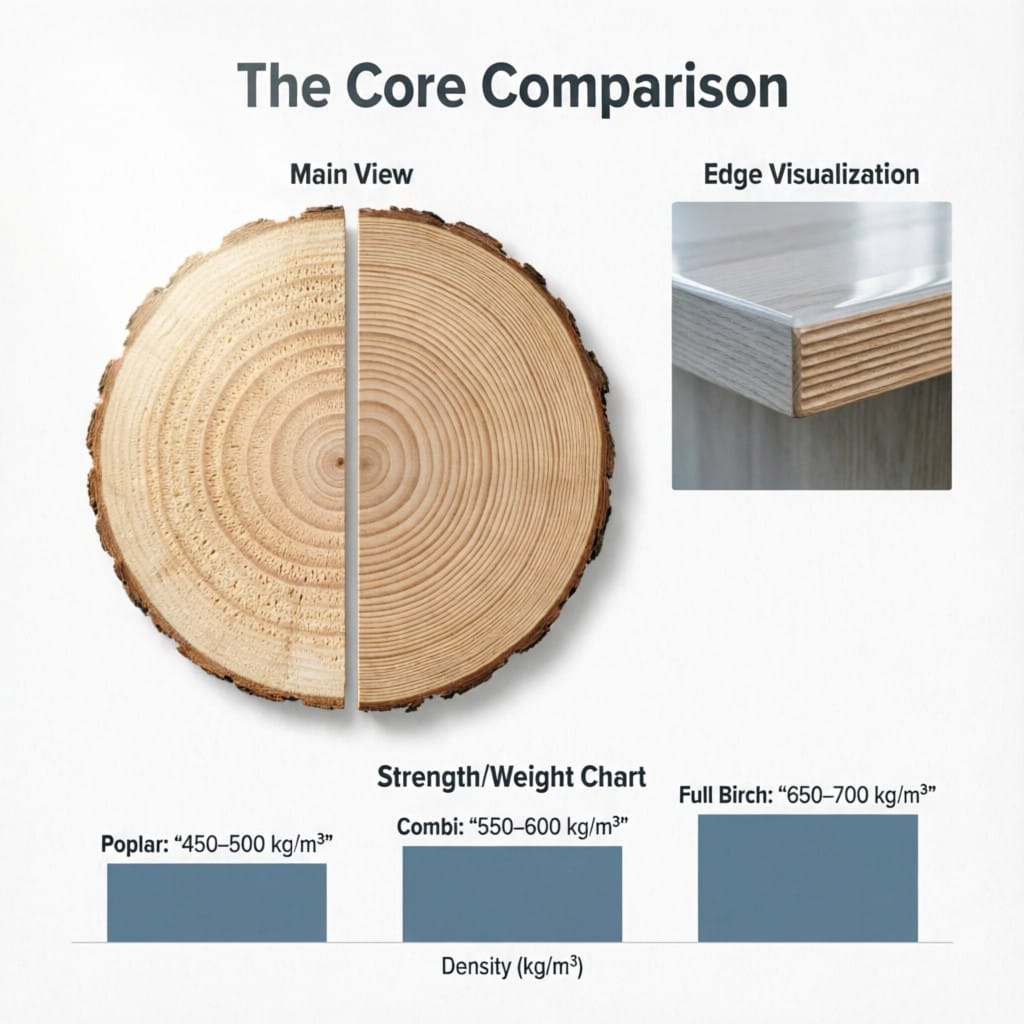
Yicaiyigou manufactures Precision MDF, Structural Plywood, and High-Density Particleboard with specifications designed to meet stringent environmental standards. For a furniture maker exporting to the EU, our FSC-certified MDF with ENF ≤0.05 mg/L eliminates compliance risk at customs while minimizing formaldehyde-related health liabilities. Our HDF density exceeds 800 kg/m³, reaching up to 1,000+ kg/m³, providing superior structural integrity for high-load applications without increasing material volume.
Our particle board ranges from 550-750 kg/m³ in density, available in thicknesses from 3mm to 30mm. A standard 20ft container holds 20-25 m³, while a 40ft container holds 45-50 m³, with a minimum order quantity (MOQ) of one 20ft container. Lead times are maintained at 15-25 days, ensuring rapid replenishment for just-in-time manufacturing lines. Formaldehyde emissions are strictly controlled: E2 ≤2.0 mg/L, E1 ≤0.124 ppm, E0 ≤0.07 ppm, and CARB P2 ≤0.11 ppm for composites.

Integrating Traceability into Logistics
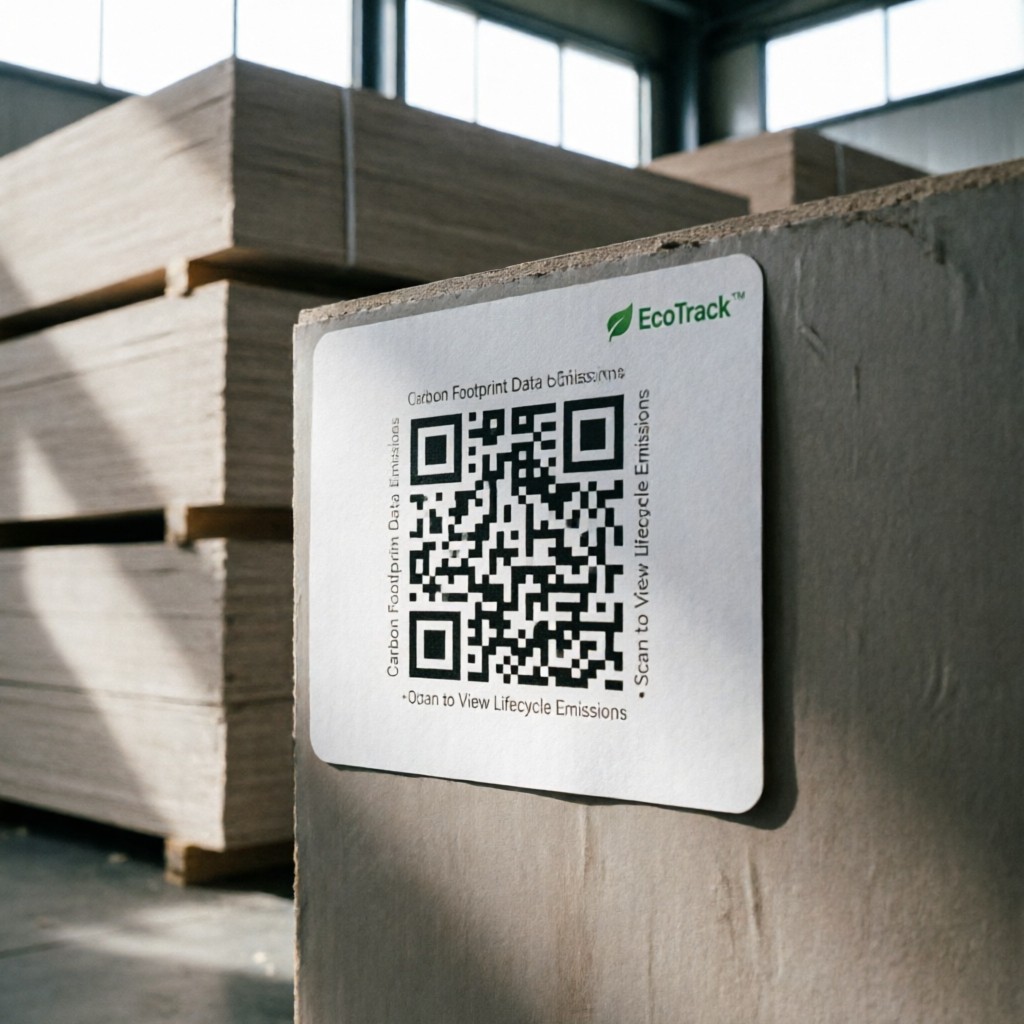
Yicaiyigou positions itself as a strategic partner who integrates verified carbon accounting into logistics, transforming regulatory compliance into a premium pricing lever for buyers. We provide full Chain of Custody (CoC) documentation that aligns with FSC requirements, ensuring every batch of Precision MDF or Structural Plywood can be traced back to sustainable forest sources. This traceability is critical for validating carbon claims under both CBAM and voluntary market standards.
Our CE certification and CARB P2 compliance ensure that our products meet the highest international safety and environmental standards. By choosing Yicaiyigou, buyers receive not just wood panels, but a verified data package that supports their own sustainability reporting. This reduces the administrative burden on procurement teams and mitigates the risk of non-compliance penalties.
FAQ
What is the formaldehyde limit for CARB P2 compliance?
CARB P2 compliance requires formaldehyde emissions to be ≤0.11 ppm for composite wood products, ensuring safer indoor air quality.
How much wood fits in a 40ft container from Yicaiyigou?
A 40ft container holds 45-50 m³ of Precision MDF or Particleboard, optimizing shipping costs per unit of carbon-sequestered material.
Which carbon standard is better for furniture brands?
Gold Standard is often preferred for consumer-facing brands due to its mandatory sustainable development co-benefits, while Verra suits bulk commodity trading.
What is the density range for Yicaiyigou’s HDF?
High-Density Fiberboard (HDF) from Yicaiyigou has a density >800 kg/m³, extending up to 1,000+ kg/m³ for superior durability.
When does the EU Deforestation Regulation take effect?
The EU Deforestation Regulation (EUDR) becomes effective on December 30, 2024, requiring strict due diligence on deforestation-free supply chains.
Summary & Next Steps
Navigating the global carbon credit wood export impact requires precise data, verified certifications, and a supplier who understands the intersection of logistics and compliance. Yicaiyigou provides the technical specifications and documentation necessary to turn these challenges into competitive advantages.
Request a compliant material sample with full CoC documentation from Yicaiyigou to validate your supply chain’s carbon readiness.
Frequently Asked Questions
How does the EU Carbon Border Adjustment Mechanism (CBAM) impact timber importers?
The EU CBAM has turned global carbon pricing volatility into an immediate line-item cost for timber importers. With the transitional reporting phase active, procurement managers must quantify the embedded emissions of their supply chains to ensure market accessibility and maintain positive margins, rather than treating it as a theoretical risk.
Why is a low FOB price no longer sufficient for securing premium buyers in the wood products industry?
A low FOB price is considered irrelevant if the associated carbon liability exceeds the savings. Major buyers like Apple and Herman Miller require suppliers to disclose Scope 3 emissions with granular precision; without ISO 14067-compliant data, products are effectively unbuyable in premium sectors due to the risk of margin erosion from unverified carbon sequestration.
What is the relationship between FSC Chain of Custody certification and carbon neutrality claims?
While FSC Chain of Custody certification ensures that wood fiber is sourced legally and sustainably, it does not equate to carbon neutrality. To validate carbon claims and ensure they are comparable and verifiable for rigorous auditors, quantifying product carbon footprints requires adherence to specific standards like ISO 14067.
What are the key differences between Verra VCS and Gold Standard methodologies for timber offsets?
Verra VCS focuses on scalability and volume with performance-based additionality tests and optional co-benefits, typically costing $5-$15 per tonne. In contrast, the Gold Standard emphasizes sustainable development co-benefits with mandatory SDG alignment, uses investment and barrier analysis for additionality, offers strong API integration for digital MRV, and commands higher prices of $15-$25 per tonne.
How can verified carbon accounting benefit lumber exporters beyond regulatory compliance?
Verified carbon accounting transforms regulatory compliance from a burden into a competitive pricing lever. By integrating this data into logistics, buyers can offset CBAM liabilities, access green financing, and ensure their wood panel imports remain market-accessible, effectively avoiding the ‘hidden tax’ imposed on containers lacking proper carbon verification.