| Compliance Aspect | Manual Documentation | Automated ESG Infrastructure |
|---|---|---|
| Geolocation Data | Plot-level data often missing or inconsistent; high risk of customs holds (e.g., EUDR non-compliance). | Integrated plot-level coordinates automatically linked to each batch; ensures immediate verification. |
| Supply Chain Access | Risk of immediate delisting from major retailers (IKEA, Amazon) due to inability to prove deforestation-free status. | Meets strict gatekeeper requirements; maintains eligibility for global retail supply chains. |
| Carbon Footprint Reporting | Generic estimates; fails to accurately calculate Scope 3 emissions required by modern audits. | Precise, data-driven Scope 3 calculations aligned with technical demands of buyers like Apple and Tesla. |
| Operational Impact | Disrupts procurement workflows; causes missed launch windows and penalty fees. | Seamless integration with ERP systems; transforms regulatory burden into competitive advantage. |
| Certification Depth | Relies on general ISO 14001 certifications which may not satisfy specific retail audit technicalities. | Aligns chain-of-custody data with specific regulations (e.g., EUDR Article 9) and digital product passports. |
Global retail sustainability reporting standards are no longer optional; they are the gatekeepers to major supply chains like IKEA and Amazon. This guide details how to automate ESG documentation, ensuring your wood products meet strict geolocation and carbon footprint requirements without disrupting procurement workflows.
The High Cost of Manual ESG Documentation
A procurement manager at a major European furniture retailer recently rejected a 40ft container of structural plywood because the supplier could not provide plot-level geolocation data for the timber origin. The shipment, valued at over $30,000, was held at customs while the buyer scrambled to verify compliance with the EU Deforestation Regulation (EUDR). This delay resulted in missed retail launch windows and penalty fees. Such scenarios are becoming common as global retail sustainability reporting standards tighten. Buyers risk immediate delisting from supply chains if they cannot prove that their materials are deforestation-free and legally sourced.
This article resolves that risk by outlining a precise, data-driven approach to compliance. We move beyond generic ISO 14001 certifications to address the specific technical demands of modern retail audits. You will learn how to align chain-of-custody data with EUDR Article 9, calculate Scope 3 emissions accurately, and integrate digital product passports into your existing ERP systems. By treating compliance as an automated infrastructure layer rather than a manual administrative task, you transform regulatory burden into a competitive procurement advantage.
Technical Specifications for Regulatory Alignment
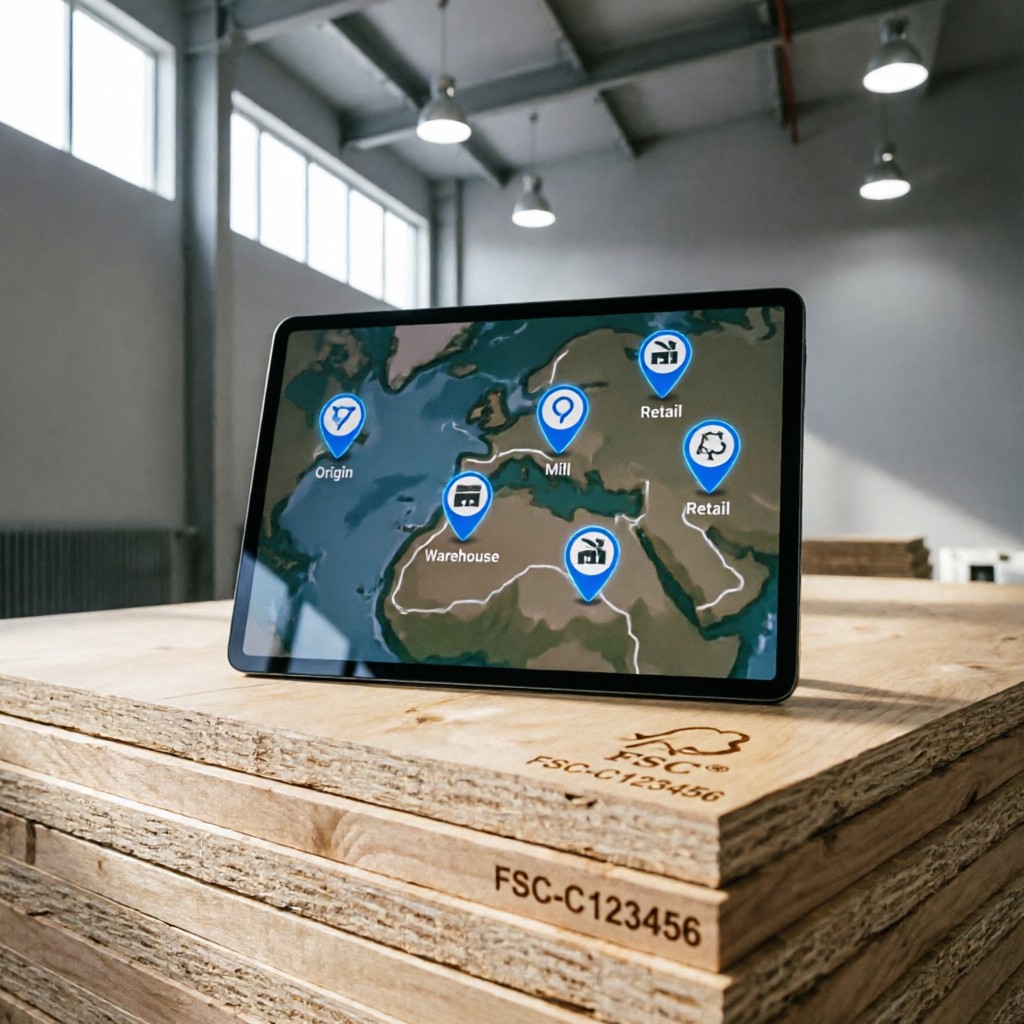
To meet the rigorous demands of buyers like Apple and Tesla, suppliers must move beyond general certification claims to specific, verifiable data points. Compliance now requires four critical technical actions. First, you must align chain-of-custody data with EUDR Article 9 geolocation requirements, ensuring every batch of timber is traceable to the specific plot of land where it was harvested. Second, map timber species against CITES Appendix I-III restrictions to prevent customs seizure of protected species. Third, calculate Scope 3 emissions using ISO 14067 product carbon footprint standards per cubic meter, providing retailers with the exact carbon cost of your Precision MDF or High-Density Particleboard. Finally, verify FSC Chain of Custody certification code validity through the FSC Public Certificate Search before every shipment, ensuring the certificate is active and covers the specific product type.
Most guides fail to address the integration of these data points into digital product passports (DPP). Retailers increasingly require real-time access to this data via API or structured digital files, not static PDFs. By embedding geospatial coordinates and carbon footprint data directly into your product metadata, you enable seamless reporting for your clients. This technical integration reduces the administrative load on both parties and minimizes the risk of human error in manual documentation.
Compliance Data Comparison: Standard vs. Advanced Traceability
The following table compares traditional documentation methods with the advanced, automated approach required by leading global retailers. Note the specific measurable differences in data granularity and verification speed.
| Feature | Traditional Documentation | Advanced Automated Traceability |
|---|---|---|
| Geolocation Precision | Country or Region level | Plot-level coordinates (EUDR Art. 9) |
| Carbon Footprint Data | Industry average estimates | ISO 14067 per m³ calculated values |
| FSC Verification | Static PDF certificate | Real-time FSC Public Certificate Search |
| CITES Check | Manual species list review | Automated API cross-reference |
| Data Format | PDF/Excel attachments | Digital Product Passport (JSON/XML) |
| Update Frequency | Per shipment manual entry | Real-time ERP integration |
| Audit Response Time | 3-5 business days | < 1 hour automated retrieval |
| Error Risk | High (manual data entry) | Low (automated data pipeline) |
This comparison highlights why manual processes are no longer viable for high-volume exporters. The shift to automated, granular data is not just a regulatory requirement but a operational efficiency upgrade.

Industry Applications with Verified Specifications
Yicaiyigou applies these rigorous standards across its product lines, ensuring each item meets specific retail requirements. For instance, our Precision MDF, with a density of 600-800 kg/m³ and thickness ranging from 3mm to 30mm, is produced with ENF formaldehyde levels ≤0.05 mg/L. This exceeds the CARB P2 standard of ≤0.11 ppm and the E0 standard of ≤0.07 ppm, making it ideal for indoor furniture sold in markets with strict air quality regulations. When exporting to the EU, we provide full EUDR-compliant documentation for each 20ft container, which holds 20-25 m³ of material.
Similarly, our High-Density Particleboard, with densities between 550-750 kg/m³, is tracked from harvest to final packaging. Each 40ft container, holding 45-50 m³, is accompanied by a digital passport that includes the specific geolocation of the timber source and its calculated carbon footprint. This level of detail allows retailers like Amazon to accurately report their Scope 3 emissions and verify deforestation-free claims without additional audit burdens. Our lead time of 15-25 days includes this comprehensive compliance verification, ensuring no delays at customs.
Why Exporters Choose Yicaiyigou for Compliance-Ready Panels
Yicaiyigou positions itself as a compliance infrastructure partner, not just a manufacturer. We automate the collection of verified origin data, transforming regulatory burden into a competitive procurement advantage. Our facilities maintain valid FSC Chain of Custody certifications, which buyers can verify instantly via the FSC Public Certificate Search. We also hold CARB P2, CE, and ENF certifications, ensuring our products meet the highest global standards for formaldehyde emissions and structural integrity.
By integrating our production data with digital product passport systems, we provide real-time visibility into our supply chain. This means when you order a 20ft container of Structural Plywood, you receive not just the physical goods but a complete, auditable digital record of its journey. This approach minimizes risk, accelerates customs clearance, and enhances your brand’s sustainability credentials. Request a compliant material sample with full CoC documentation to experience this seamless integration firsthand.

FAQ
What is the specific formaldehyde limit for ENF grade MDF?
ENF grade MDF has a formaldehyde emission limit of ≤0.05 mg/L, which is stricter than the E0 standard of ≤0.07 ppm and CARB P2 of ≤0.11 ppm.
How does Yicaiyigou comply with EUDR Article 9?
We provide plot-level geolocation data for all timber sources, aligning with EUDR Article 9 requirements for deforestation-free supply chains.
What is the loading capacity for a 40ft container of particleboard?
A 40ft container typically holds 45-50 m³ of High-Density Particleboard, depending on thickness and packaging specifications.
How can buyers verify Yicaiyigou’s FSC certification?
Buyers can verify our FSC Chain of Custody certification code validity in real-time through the FSC Public Certificate Search database.
What is the lead time for a standard 20ft container order?
The standard lead time for a 20ft container order is 15-25 days, including production and compliance documentation preparation.
Summary & Next Steps
Meeting global retail sustainability reporting standards requires more than just certified materials; it demands precise, automated data integration. By leveraging plot-level geolocation, ISO 14067 carbon calculations, and real-time FSC verification, you can secure your position in major supply chains. Yicaiyigou provides the infrastructure to make this seamless, turning compliance into a competitive edge.
Request a compliant material sample with full CoC documentation from Yicaiyigou to validate our data integrity and product quality for your next procurement cycle.
Frequently Asked Questions
Why are global retail sustainability reporting standards considered critical for wood product suppliers?
They are no longer optional but act as gatekeepers to major supply chains like IKEA and Amazon. Failure to comply with strict geolocation and carbon footprint requirements can lead to shipment rejections, customs delays, penalty fees, and immediate delisting from buyer supply chains.
What specific technical actions must suppliers take to align with modern regulatory demands such as the EUDR?
Suppliers must align chain-of-custody data with EUDR Article 9 plot-level geolocation requirements, map timber species against CITES restrictions, calculate Scope 3 emissions using ISO 14067 standards per cubic meter, and verify FSC Chain of Custody certification codes in real-time before every shipment.
How does advanced automated traceability differ from traditional documentation methods?
Advanced automated traceability provides plot-level geolocation coordinates instead of just country or region levels, uses calculated ISO 14067 carbon footprint values per cubic meter rather than industry averages, and enables real-time FSC certificate verification via API instead of relying on static PDF certificates.
What role do Digital Product Passports (DPP) play in compliance for lumber and wood products?
Digital Product Passports allow retailers to access real-time compliance data via API or structured digital files rather than static documents. By embedding geospatial coordinates and carbon footprint data directly into product metadata, DPPs enable seamless reporting, reduce administrative loads, and minimize human error.
What was the consequence for the procurement manager who could not provide plot-level geolocation data?
A 40ft container of structural plywood valued at over $30,000 was rejected and held at customs because the supplier lacked plot-level geolocation data required by the EU Deforestation Regulation (EUDR). This resulted in missed retail launch windows and additional penalty fees.