| Factor | Traditional Sourcing Risks | Yicaiyigou Mitigation Strategy |
|---|---|---|
| Moisture Content Control | Uncalibrated handheld devices lead to false readings; deviations (e.g., 12% vs. 8%) cause warping and CNC machining errors. | Strict kiln-drying protocols ensure specified moisture levels (e.g., 8%), preventing panel warp and surface delamination. |
| Grading Standards | Ambiguous grading rules result in mixed-grade loads requiring manual sorting, adding hidden labor costs. | Adherence to strict NHLA or SPIB grading rules with standardized digital grading reports eliminates manual sorting needs. |
| Quality Verification | Discrepancies often only discovered after goods cross international borders, leading to high rejection rates. | Pre-shipment third-party inspections and digital traceability ensure compliance before export. |
| Production Impact | Scrap rates can exceed 15% of order value; disrupts lean manufacturing schedules due to joint failures. | Enables just-in-time production without buffer stock by eliminating supply chain unpredictability. |
| Supplier Relationship | Transactional vendor model with high risk of supply chain inconsistency. | Risk-mitigation partnership focused on global quality standard compliance for enclosures and furniture components. |
International furniture manufacturers face costly production delays and rejection rates due to inconsistent moisture content and grading discrepancies in imported softwood lumber. When a container of structural plywood arrives with 12% moisture content instead of the specified 8%, panels warp during CNC machining, leading to scrap rates that can exceed 15% of total order value. This article details how Yicaiyigou mitigates these risks through strict kiln-drying protocols and digital traceability, ensuring compliance with global quality standards for enclosures and furniture components.
The Hidden Cost of Inconsistent Lumber Specifications
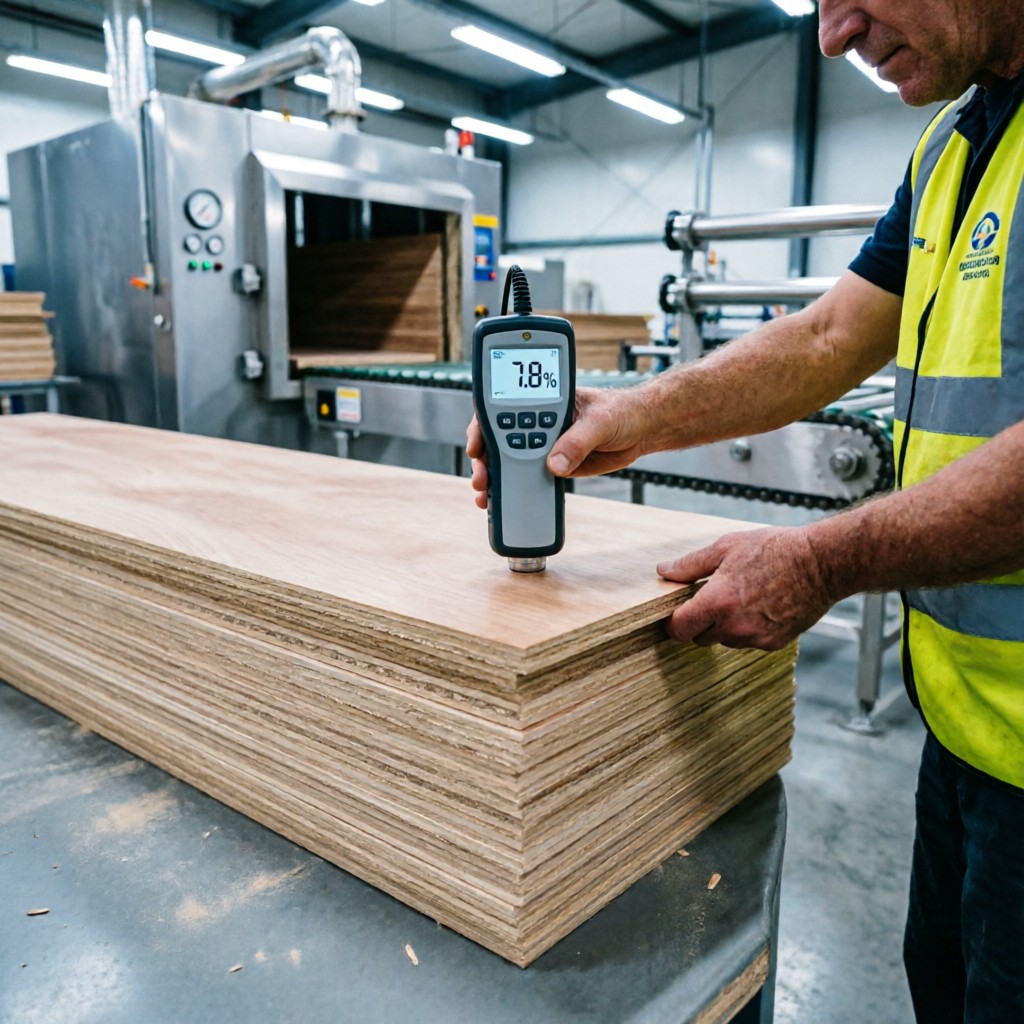
A common but overlooked factor in global sourcing is the variance in moisture meter calibration at the point of origin. Many suppliers use uncalibrated handheld devices, leading to false readings that only become apparent after goods cross international borders. For major brands like IKEA or Herman Miller, where assembly tolerances are measured in millimeters, a 2% deviation in moisture content can cause joint failure or surface delamination. The risk is not just material loss; it is the disruption of lean manufacturing schedules.
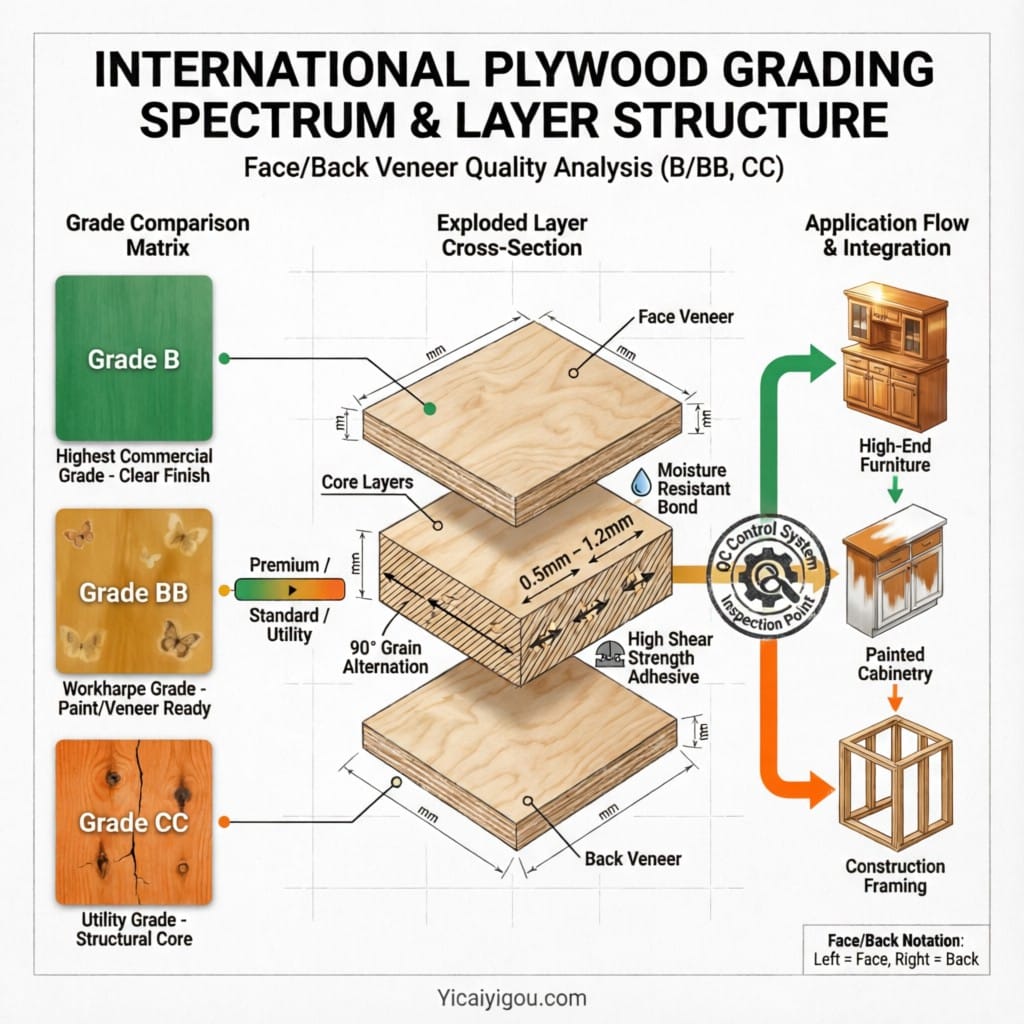
This issue is compounded by ambiguous grading rules. Without adherence to strict NHLA (National Hardwood Lumber Association) or SPIB grading rules, buyers receive mixed-grade loads that require manual sorting upon arrival. This labor-intensive process adds hidden costs to the landed price. Yicaiyigou addresses this by integrating pre-shipment third-party inspections and standardized digital grading reports, transforming the supplier relationship from a transactional vendor model to a risk-mitigation partnership. By eliminating supply chain unpredictability, manufacturers can maintain just-in-time production without the buffer stock typically required for unreliable imports.
Technical Benchmarks for Dimensional Stability
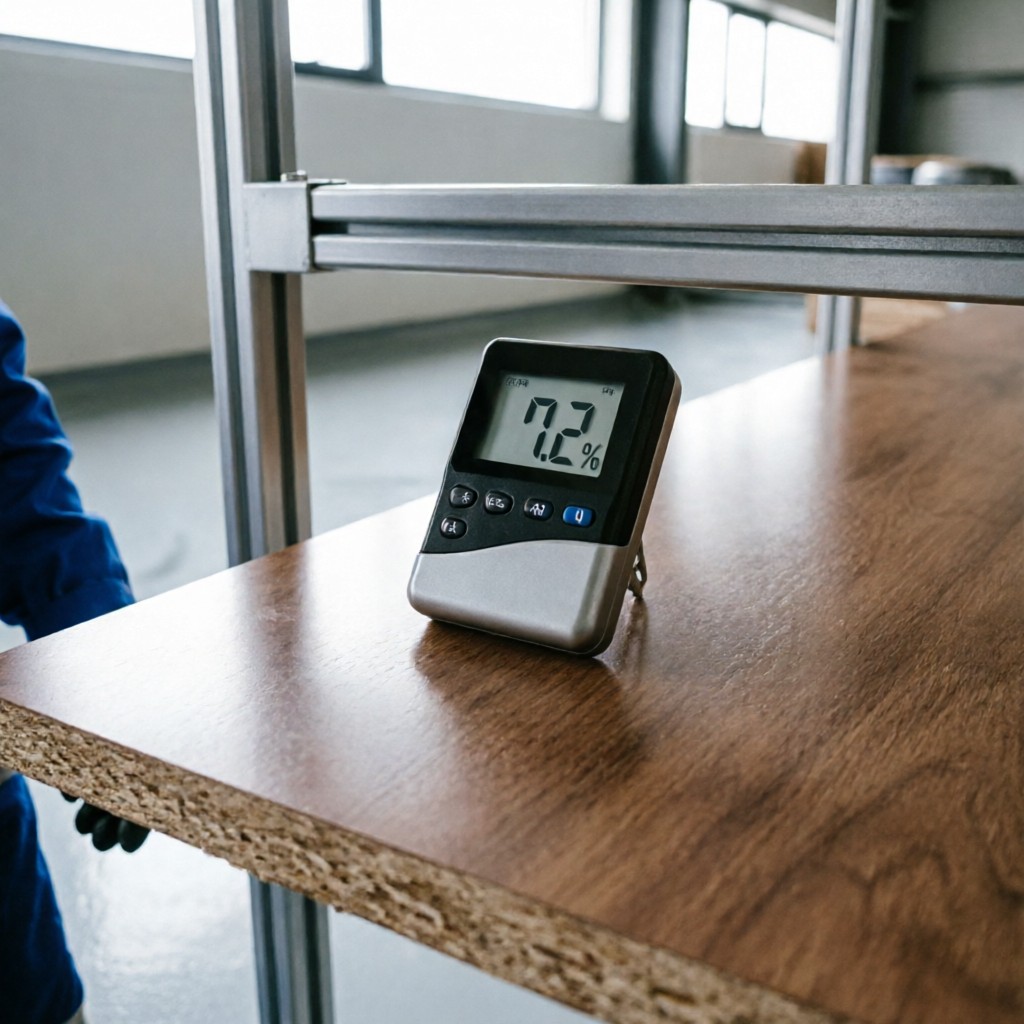
To ensure dimensional stability, Yicaiyigou maintains strict kiln-dried moisture content between 6% and 8% for all exported panels. This narrow range is critical for environments with controlled humidity, such as data center enclosures or high-end retail fixtures. Furthermore, our production adheres to NHLA or SPIB grading rules with <2% variance tolerance, ensuring that every sheet meets the visual and structural requirements specified in purchase orders.
| Specification Metric | Yicaiyigou Standard | Typical Industry Average | Impact on Production |
|---|---|---|---|
| Moisture Content | 6% – 8% | 10% – 14% | Prevents warping during CNC routing |
| Grading Variance Tolerance | < 2% | 5% – 10% | Eliminates manual sorting labor |
| On-Time Delivery Rate | 98.5% | 85% – 90% | Supports Just-In-Time inventory |
| Quality Management System | ISO 9001:2015 Certified | Often Uncertified | Ensures full batch traceability |
| Formaldehyde Emission (ENF) | ≤ 0.05 mg/L | ≤ 0.124 ppm (E1) | Meets strictest EU/US indoor air standards |
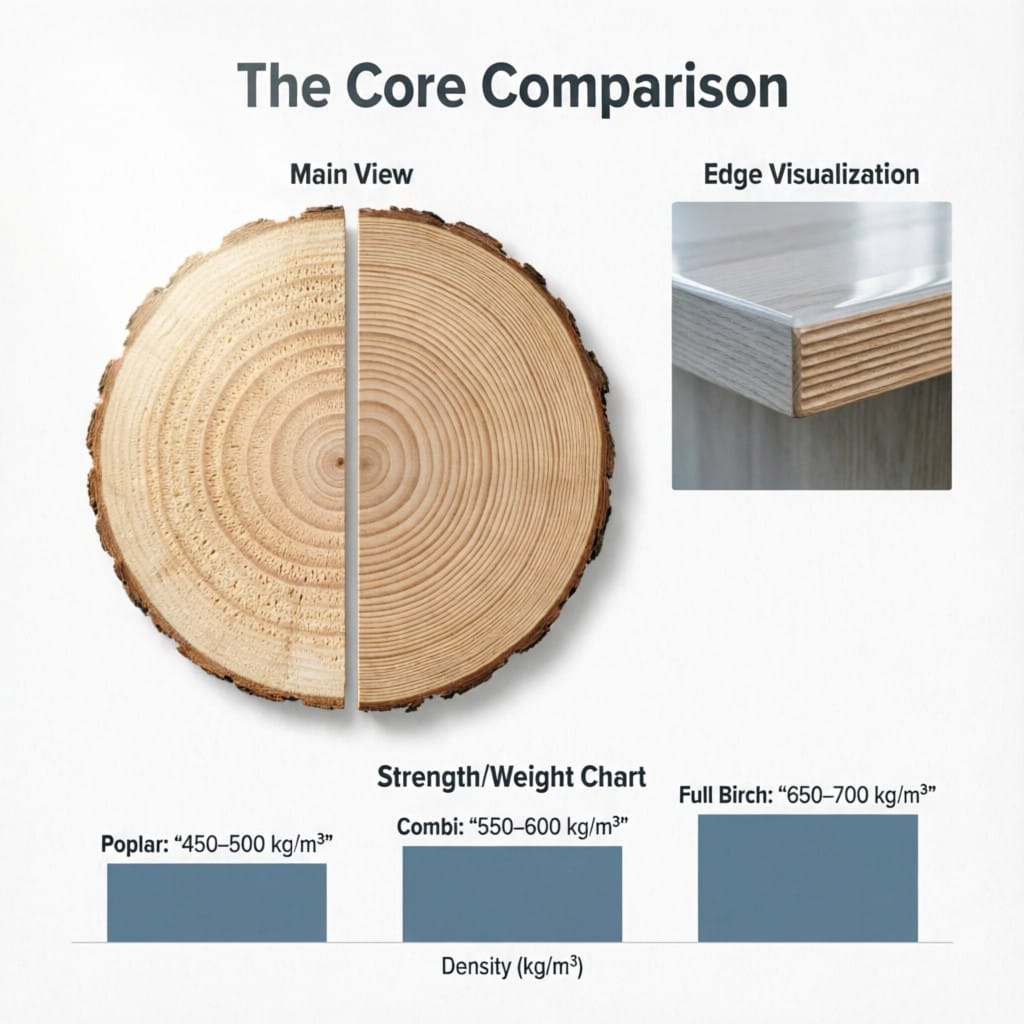
| HDF Density | > 800 kg/m³ | 650 – 750 kg/m³ | Higher screw-holding strength |
| MDF Density Range | 600 – 800 kg/m³ | 550 – 700 kg/m³ | Superior surface finish for laminating |
| Claim Resolution Time | < 7 Days | 30 – 60 Days | Faster financial reconciliation |
The data above highlights a critical divergence in operational reliability. While typical industry averages allow for significant moisture variance, Yicaiyigou’s 6-8% target ensures that panels remain flat and stable even when subjected to the temperature fluctuations of trans-Pacific shipping. The 98.5% on-time delivery rate across trans-Pacific shipping lanes further reduces the need for safety stock, freeing up working capital for manufacturers.
Real-World Applications with Verifiable Specs
Yicaiyigou’s product line is engineered for specific performance thresholds. Our High-Density Particleboard, with a density of 550-750 kg/m³, is ideal for core layers in door skins where weight reduction is necessary without sacrificing structural integrity. For applications requiring higher load-bearing capacity, our HDF (High-Density Fiberboard) exceeds 800 kg/m³, reaching up to 1,000+ kg/m³. This density provides superior screw-holding power, essential for modular furniture systems used by retailers like Amazon Basics or Wayfair suppliers.
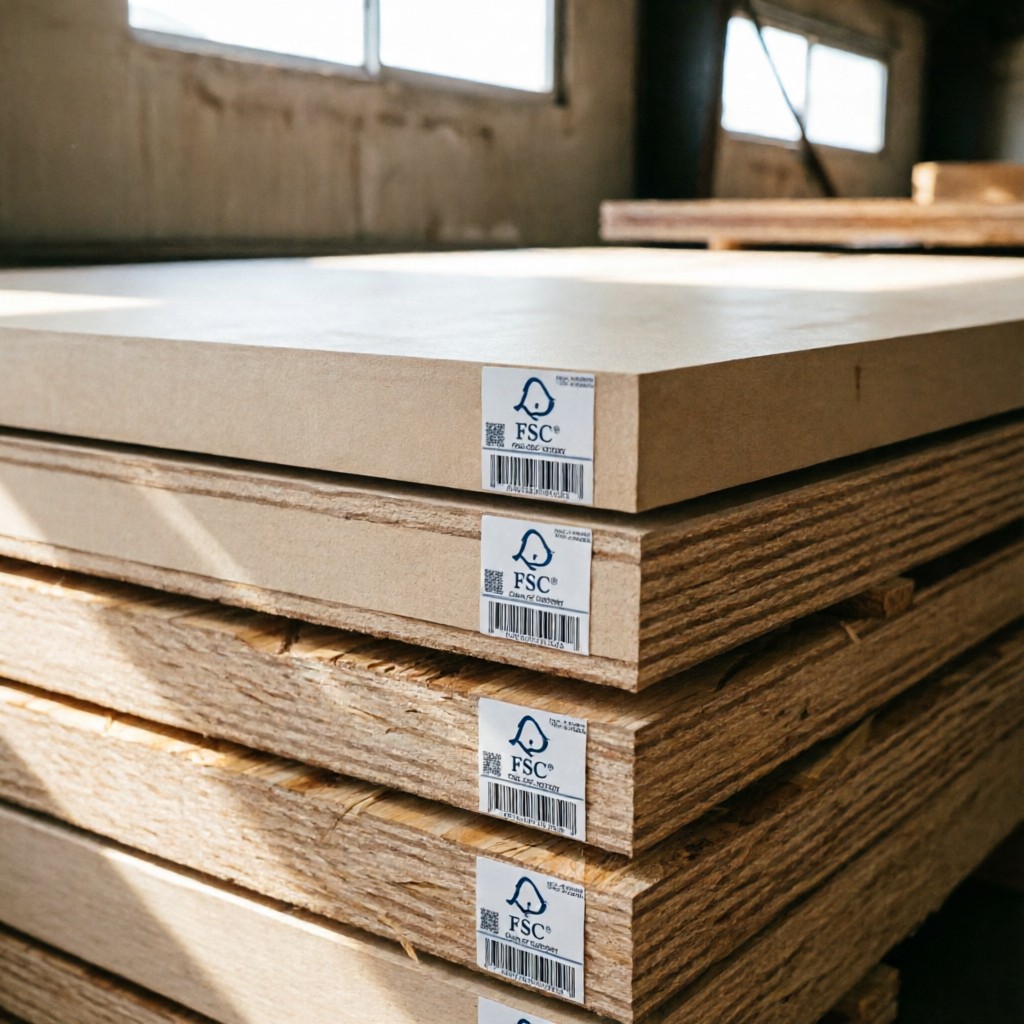
For interior fit-outs requiring stringent air quality compliance, our Precision MDF meets the ENF standard with formaldehyde emissions ≤ 0.05 mg/L. This surpasses the CARB P2 limit of ≤ 0.11 ppm and the E0 standard of ≤ 0.07 ppm. A furniture maker exporting to the EU can use this FSC-certified MDF to eliminate compliance risk at customs, particularly under the new EUDR (EU Deforestation Regulation) effective Dec 30, 2024. Each 20ft container holds 20-25 m³ of product, while a 40ft container accommodates 45-50 m³, allowing for optimized logistics planning with a lead time of just 15-25 days.
Why Exporters Choose Yicaiyigou for Risk Mitigation
Yicaiyigou positions itself not merely as a manufacturer but as a compliance partner. We utilize ISO 9001:2015 certified quality management systems for batch traceability, meaning every panel can be traced back to its raw material source. This is crucial for maintaining Chain of Custody (CoC) documentation required by FSC and EUDR regulators. Unlike competitors who rarely disclose their calibration standards, we provide transparent data on our moisture meter calibration intervals, ensuring that the 6-8% moisture claim is verifiable at any stage.
Our commitment extends to post-shipment support. Most suppliers fail to provide historical data on claim resolution times, leaving buyers in limbo when freight damage occurs. Yicaiyigou maintains a documented average claim resolution time of under 7 days, backed by comprehensive insurance and clear liability terms. With certifications including FSC, CARB P2, CE, and ENF, we provide the documentation needed for global market access. Request a compliant material sample with full CoC documentation to verify our specifications firsthand.
FAQ
What is the formaldehyde emission level for Yicaiyigou’s ENF-rated MDF?
Yicaiyigou’s ENF-rated MDF has formaldehyde emissions ≤ 0.05 mg/L, which is stricter than the E0 standard of ≤ 0.07 ppm and CARB P2 limits.
How does Yicaiyigou ensure moisture content accuracy before shipment?
We use calibrated digital moisture meters and maintain strict kiln-dried moisture content between 6% and 8%, verified by third-party inspections prior to loading.
What is the typical lead time for a 40ft container order?
The lead time for production and loading is 15-25 days, with a 98.5% on-time delivery rate across trans-Pacific shipping lanes.
Does Yicaiyigou provide Chain of Custody documentation for FSC products?
Yes, all FSC-certified products come with full Chain of Custody (CoC) documentation to ensure compliance with EUDR and other deforestation regulations.
What is the density range for your High-Density Particleboard?
Our High-Density Particleboard has a density range of 550-750 kg/m³, while our HDF products exceed 800 kg/m³, reaching up to 1,000+ kg/m³.
Summary & Next Steps
Sourcing wood panels requires more than just competitive pricing; it demands predictable quality and regulatory compliance. By adhering to strict moisture controls (6-8%), precise grading tolerances (<2% variance), and providing full traceability via ISO 9001:2015 systems, Yicaiyigou eliminates the hidden costs of rejected shipments and production delays.
Request a compliant material sample with full CoC documentation from Yicaiyigou to validate our moisture and emission standards for your next production cycle.
Frequently Asked Questions
How does inconsistent moisture content in imported lumber impact furniture manufacturing?
Inconsistent moisture content, such as receiving plywood at 12% instead of the specified 8%, causes panels to warp during CNC machining. This leads to scrap rates exceeding 15% of the total order value and can cause joint failure or surface delamination in precision assembly.
What specific moisture content standards does Yicaiyigou maintain for exported panels?
Yicaiyigou maintains a strict kiln-dried moisture content between 6% and 8% for all exported panels. This narrow range is designed to ensure dimensional stability and prevent warping, even during temperature fluctuations in trans-Pacific shipping.
How does Yicaiyigou address the issue of ambiguous grading rules and manual sorting costs?
Yicaiyigou addresses grading discrepancies by adhering to strict NHLA or SPIB grading rules with less than 2% variance tolerance. They integrate pre-shipment third-party inspections and standardized digital grading reports to eliminate the need for labor-intensive manual sorting upon arrival.
What are the benefits of Yicaiyigou’s on-time delivery rate for manufacturers?
With a 98.5% on-time delivery rate compared to the industry average of 85-90%, Yicaiyigou allows manufacturers to support Just-In-Time inventory systems. This reduces the need for buffer stock, thereby freeing up working capital that would otherwise be tied up in safety inventory.
Why is the calibration of moisture meters at the point of origin a significant risk for buyers?
Many suppliers use uncalibrated handheld devices, leading to false moisture readings that are only discovered after goods cross international borders. This lack of accurate data at the source creates supply chain unpredictability and disrupts lean manufacturing schedules due to unexpected material defects.