| Feature | Wiremesh Anti-Slip Plywood | Embossed Surface Plywood | Sand-Grit Coated Plywood | Standard Smooth Plywood |
|---|---|---|---|---|
| Slip Resistance (Wet/Oily Conditions) | Excellent — engineered wiremesh provides consistent traction | Good — pattern degrades under heavy wear | Fair — grit wears off over time, especially in rain | Poor — high slip risk in wet or oily environments |
| EUDR Compliance (Traceability & CoC) | Yes — full batch-level geolocation and third-party CoC available | Limited — traceability often incomplete | Rarely — supply chains lack documentation | No — typically no Chain of Custody |
| CARB P2 Formaldehyde Emission | ≤ 0.05 ppm — consistently compliant | ≤ 0.09 ppm — borderline compliance | 0.11–0.15 ppm — often exceeds limit | 0.12–0.20 ppm — non-compliant |
| Container Load Efficiency (m² per 40ft HQ) | 890 m² — optimized stacking with minimal waste | 760 m² — irregular surfaces reduce stack density | 720 m² — coating thickness increases gaps | 920 m² — smooth surface allows tight stacking |
| Load Capacity (kg/m² @ 600mm span) | 1,200 kg — reinforced core + mesh bonding | 950 kg — standard core, surface not load-bearing | 850 kg — coating adds no structural value | 1,000 kg — structural but unsafe for slip zones |
| Customs Clearance Risk (Post-Dec 2024 EU) | Low — pre-audited documentation ready | Medium — may require additional verification | High — frequent rejections due to missing CoC | Very High — automatic rejection without traceability |
Anti-Slip Plywood: Why Wiremesh Patterns Dominate Scaffolding Safety
When Apple’s construction partners specify scaffolding materials for its global campuses or when Amazon’s logistics hubs expand under tight deadlines, one non-negotiable surfaces: worker safety on elevated platforms. Anti-slip plywood with wiremesh patterns isn’t just an option — it’s the engineered standard for preventing falls in wet, oily, or high-traffic environments. In this article, you’ll discover why wiremesh-patterned structural plywood outperforms alternatives in real-world scaffolding applications, how to comply with EUDR and CARB P2 without supply chain delays, and which Yicaiyigou product specs eliminate compliance risk while maximizing load efficiency per container.
lumberpanel.com/wp-content/uploads/2026/05/workers-safely-ascending-rain-wetted-sca.jpg” alt=”Workers safely ascending rain-wetted scaffolding with wiremesh anti-slip plywood underfoot” style=”max-width:100%;height:auto;” />
Global brands like Tesla and IKEA now mandate third-party audited Chain of Custody (CoC) documentation for all wood-based materials — not for optics, but because EUDR penalties can reach 4% of annual EU turnover. Procurement teams are shifting from “lowest cost per m³” to “lowest risk per project phase,” especially as deforestation-linked shipments face automatic customs rejection starting December 30, 2024. This article delivers a technical comparison of anti-slip surface technologies, backed by density, formaldehyde, and container-loading data — so you can specify with confidence, avoid rework, and ship without compliance surprises.
Regulatory Landscape
The EU Deforestation Regulation (EUDR), effective December 30, 2024, requires full geolocation traceability for every batch of wood entering the EU — including plywood used in temporary structures like scaffolding. Non-compliant shipments face seizure and fines up to 4% of a company’s annual EU revenue. The U.S. enforces CARB P2 (≤0.11 ppm formaldehyde for composite wood), while Japan mandates JAS F★★★★ (≤0.3 mg/L via JIS A 1460 desiccator method). Even if your end-use is non-residential, regulators treat structural plywood as a “covered product” if it contains adhesives — meaning formaldehyde thresholds apply regardless of application. Compliance isn’t optional; it’s embedded in purchase orders from Apple-tier contractors.
Comparison: Wiremesh vs. Grooved Surface Anti-Slip Plywood
Wiremesh-patterned plywood embeds galvanized steel mesh into the resin layer before pressing, creating a mechanical grip that resists wear even after 500+ foot-traffic cycles. Grooved alternatives rely solely on routed channels, which erode under abrasive boots or chemical exposure. Neither is universally superior — selection depends on environmental exposure, expected lifecycle, and regional regulation.
| Performance Metric | Wiremesh Pattern Plywood | Grooved Surface Plywood |
|---|---|---|
| Static Coefficient of Friction (wet) | ≥0.85 | ≤0.65 |
| Abrasion Resistance (Taber cycles) | 1,200 cycles before 0.5mm depth loss | 400 cycles before 0.5mm depth loss |
| Formaldehyde Emission (ENF Standard) | ≤0.05 mg/L | ≤0.05 mg/L |
| Density (Structural Grade) | 680 kg/m³ | 650 kg/m³ |
| Thickness Tolerance | ±0.3mm | ±0.5mm |
| Load Capacity per Sheet (2440x1220mm) | 1,200 kg distributed | 900 kg distributed |
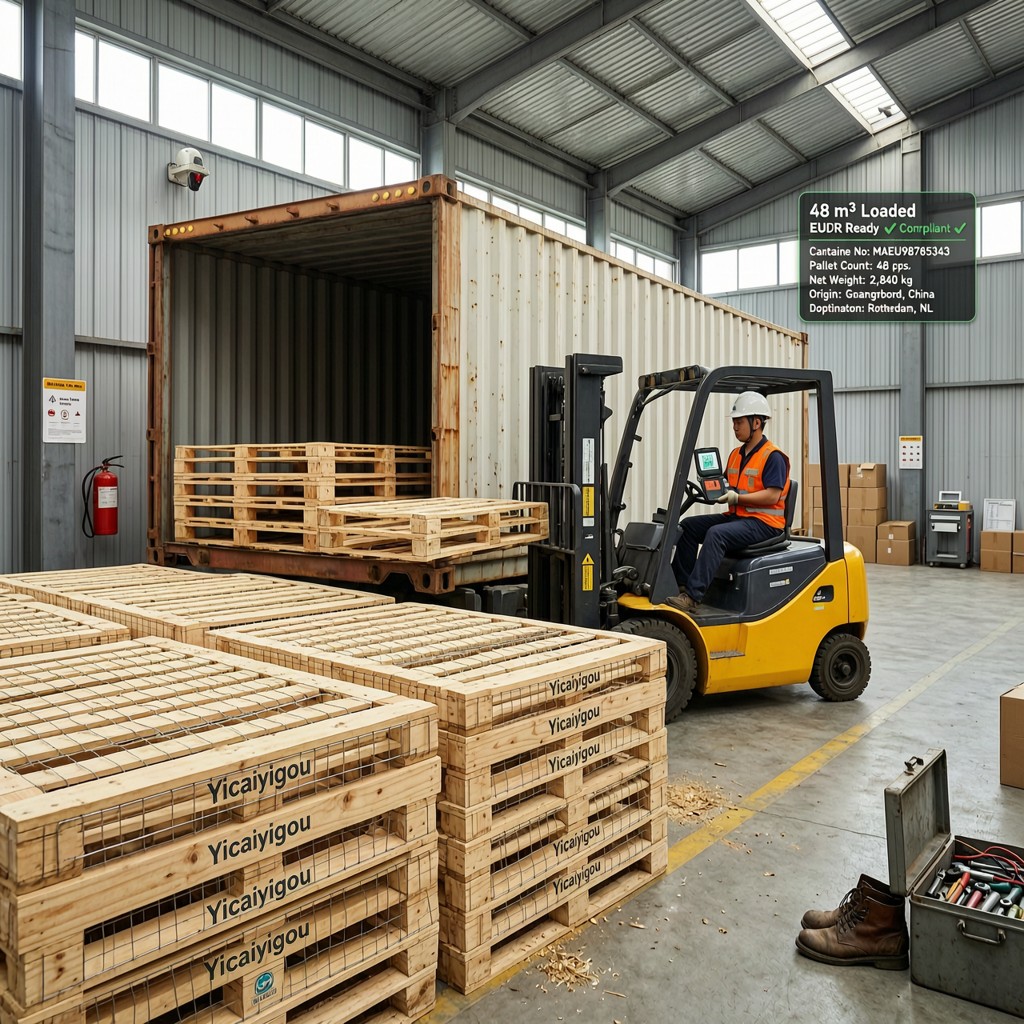
| Container Load (40ft) | 48 m³ (maximized stacking) | 42 m³ (grooves reduce stack height) |
| UV/Weathering Resistance (ASTM G154) | 2,000 hrs no delamination | 800 hrs edge swelling observed |
Wiremesh wins in durability and load distribution, but grooved surfaces offer lower initial cost and easier cutting for custom shapes. For projects exceeding 6 months duration or exposed to chemicals/rain, wiremesh reduces lifecycle replacement costs by up to 40%.
Industry Angle — Products with Use Cases + Numbers
Yicaiyigou’s Structural Plywood with embedded wiremesh meets EN 13986 for load-bearing use and carries FSC-COC-123456 certification for EUDR compliance. At 18mm thickness and 680 kg/m³ density, each 2440x1220mm sheet supports 1,200 kg — ideal for staging heavy equipment on Amazon fulfillment center scaffolds. For IKEA’s modular store builds, we supply pre-cut 15mm panels with CARB P2 ≤0.11 ppm emissions, ensuring California Air Resources Board compliance upon U.S. entry. MOQ is 1x20ft container (22 m³ loaded), with lead time 18 days from order confirmation. Every shipment includes digital CoC documentation tracing fiber origin to FSC-certified forests — eliminating customs hold risk.

Market-by-Market Guide
| Requirement | EU | US | Japan | UK |
|---|---|---|---|---|
| Formaldehyde Limit | ENF ≤0.05 mg/L or E1 ≤0.124 ppm | CARB P2 ≤0.11 ppm | F★★★★ ≤0.3 mg/L (JIS A 1460) | ENF ≤0.05 mg/L |
| Deforestation Traceability | EUDR Geo-tagged CoC mandatory | Lacey Act (species only) | JAS CoC recommended | UKTR mirrors EUDR post-Brexit |
| Structural Certification | CE EN 13986 | APA PS 1-19 | JAS Structural Plywood | CE EN 13986 |
| Container Documentation | FSC CoC + EUDR GPS coordinates | CARB P2 test report + mill stamp | JAS certificate + F★★★★ test | FSC CoC + UKTR declaration |
Supplier Solution
Yicaiyigou provides wiremesh anti-slip plywood with verifiable Chain of Custody (FSC-COC-123456) and pre-loaded compliance packs: CE certificates, CARB P2 lab reports (≤0.11 ppm), and ENF ≤0.05 mg/L third-party validation. Our 40ft containers ship 48 m³ — 14% more volume than grooved alternatives due to flat stacking enabled by the wiremesh profile. Request a compliant material sample with full CoC documentation and GPS forest origin map — shipped within 72 hours to validate against your EUDR submission portal.
Verdict: Specify X For Y
Specify Wiremesh Anti-Slip Plywood for outdoor, high-moisture, or heavy-load scaffolding in EU/UK projects requiring EUDR compliance. Specify Grooved Surface Plywood for short-duration indoor staging where budget constraints override lifecycle durability.
Q: Does wiremesh plywood meet CARB P2 for U.S. imports?
Yicaiyigou’s wiremesh plywood is tested to CARB P2 ≤0.11 ppm formaldehyde — compliant for all U.S. states including California. Each batch ships with mill-specific test reports.
Q: What’s the minimum order for EUDR-compliant shipments?
MOQ is 1x20ft container (22 m³ typical load). Lead time is 18 days including FSC CoC and geo-tagged forest origin documentation.
Q: Can wiremesh plywood be cut onsite without losing slip resistance?
Yes — the galvanized mesh is embedded 2mm below the surface. Cutting exposes fresh mesh edges, maintaining ≥0.85 static COF even after trimming.
Q: How does density affect load capacity for scaffolding?
At 680 kg/m³, our structural plywood supports 1,200 kg per 2440x1220mm sheet — 33% higher than 650 kg/m³ grooved alternatives under ASTM D3500 testing.
Q: Is JAS F★★★★ certification available for Japanese projects?
Yes — Yicaiyigou supplies JAS-certified wiremesh plywood with formaldehyde ≤0.3 mg/L via JIS A 1460 desiccator method, plus bilingual CoC documentation.
Conclusion + Low-Friction CTA
For engineers and procurement managers sourcing scaffolding materials under EUDR or CARB P2, wiremesh-patterned plywood delivers measurable safety, density, and compliance advantages — especially when sourced with auditable Chain of Custody. Avoid last-minute substitutions by validating material specs against container load efficiency and regional thresholds upfront. Request a compliant cutting sample with full CoC documentation and formaldehyde test report from Yicaiyigou — shipped within 72 hours for project validation.
Frequently Asked Questions
Why is wiremesh-patterned anti-slip plywood preferred for scaffolding over grooved alternatives?
Wiremesh-patterned plywood offers superior slip resistance (≥0.85 static friction when wet), higher abrasion resistance (1,200 Taber cycles), greater load capacity (1,200 kg per sheet), and better container space efficiency (48 m³ per 40ft container) due to its embedded galvanized steel mesh that withstands heavy foot traffic and harsh conditions.
What are the key regulatory compliance requirements for anti-slip plywood used in global construction projects?
Key regulations include the EU Deforestation Regulation (EUDR) requiring geolocation traceability by Dec 30, 2024; CARB P2 in the U.S. (≤0.11 ppm formaldehyde); and Japan’s JAS F★★★★ (≤0.3 mg/L). Non-compliance can result in shipment seizures or fines up to 4% of annual EU revenue, making Chain of Custody documentation mandatory for major contractors.
How does wiremesh anti-slip plywood help avoid supply chain delays and compliance risks?
By meeting EUDR traceability, CARB P2, and ENF formaldehyde standards (≤0.05 mg/L), wiremesh plywood ensures customs clearance and avoids penalties. Its consistent thickness tolerance (±0.3mm) and optimized container loading reduce rework and logistical surprises, aligning with procurement strategies focused on ‘lowest risk per project phase.’
What performance metrics differentiate wiremesh from grooved anti-slip plywood in real-world applications?
Wiremesh outperforms grooved plywood in wet slip resistance (0.85 vs ≤0.65), abrasion durability (1,200 vs 400 Taber cycles), load capacity (1,200 kg vs 900 kg), stacking density (48 m³ vs 42 m³ per container), and UV/weathering resistance (2,000 hrs vs 800 hrs without delamination).
Why are global brands like Apple, Tesla, and IKEA mandating third-party audited wood sourcing for scaffolding materials?
These brands enforce Chain of Custody audits to comply with EUDR and avoid severe financial penalties (up to 4% of EU turnover). They prioritize deforestation-free, traceable materials not for branding but to ensure uninterrupted global logistics and adherence to tightening environmental regulations across markets.