The High Stakes of Forest Certification Compliance
Did you know that nearly 15% of sustainable wood shipments face customs delays or rejection annually due to certification mismatches? In the global trade of lumber and forest derivatives, possessing a certificate is not enough; possessing the right certificate is the difference between a cleared shipment and a costly logistical nightmare. For importers and distributors navigating the complex web of environmental regulations, understanding the nuance between the Forest Stewardship Council (FSC) and the Programme for the Endorsement of Forest Certification (PEFC) is critical. Here at Yicaiyigou, we understand that wood products are not just commodities; they are assets tied to rigorous supply chain integrity. Choosing the wrong path can jeopardize your market access, brand reputation, and bottom line.
Decoding the DNA of FSC and PEFC Standards
While both organizations aim to promote sustainable forest management, their operational DNA differs significantly. FSC is often viewed as the “gold standard” by non-governmental organizations (NGOs) and specific retail sectors. It operates on a strict membership model where environmental and social chambers have equal voting power. Technically, FSC Chain of Custody (CoC) offers three distinct models: FSC 100% (all material from FSC forests), FSC Recycled, and FSC Mix (a blend of certified, recycled, and controlled wood).
PEFC, conversely, is an umbrella organization that endorses national forest certification systems. It is generally considered more flexible for family-owned and small-scale forests, which makes up a vast portion of the global timber supply. PEFC focuses heavily on mutual recognition, allowing national systems like SFI (Sustainable Forestry Initiative) in North America to fall under its banner. From a technical compliance standpoint, PEFC’s Due Diligence System is often praised for its robustness in tracking origin, which aligns closely with the European Union Timber Regulation (EUTR). For a supplier like Yicaiyigou, distinguishing these technical frameworks is essential when advising clients on hardwood sourcing versus softwood structural elements.
Geographic Preferences in Global Timber Trade
Market requirement is rarely uniform; it is deeply geopolitical. If your end market is the United Kingdom, the public sector procurement policy heavily favors FSC. A contractor bidding on a UK government project will almost certainly require FSC-certified lumber to meet sustainability scoring criteria. Similarly, the Netherlands and certain sectors in Germany show a strong preference for FSC labeling on consumer-facing goods.
However, cross the Atlantic to North America, and the landscape shifts. PEFC (including its endorsed SFI system) holds a dominant market share by forest area. Many US builders and developers accept PEFC as standard compliance for structural timber. In Asia, particularly in Japan and China, the market is more pragmatic. While certification is increasingly demanded to meet export regulations like the US Lacey Act, the specific label (FSC vs. PEFC) often matters less than the legality verification. However, for high-end export projects targeting eco-conscious consumers in Western Europe, FSC remains the safer bet. Understanding these geographic nuances prevents the scenario where you ship PEFC-certified plywood to a client who strictly mandates FSC for their LEED building certification points.
Impact on Specific Wood Products and Plywood Grades
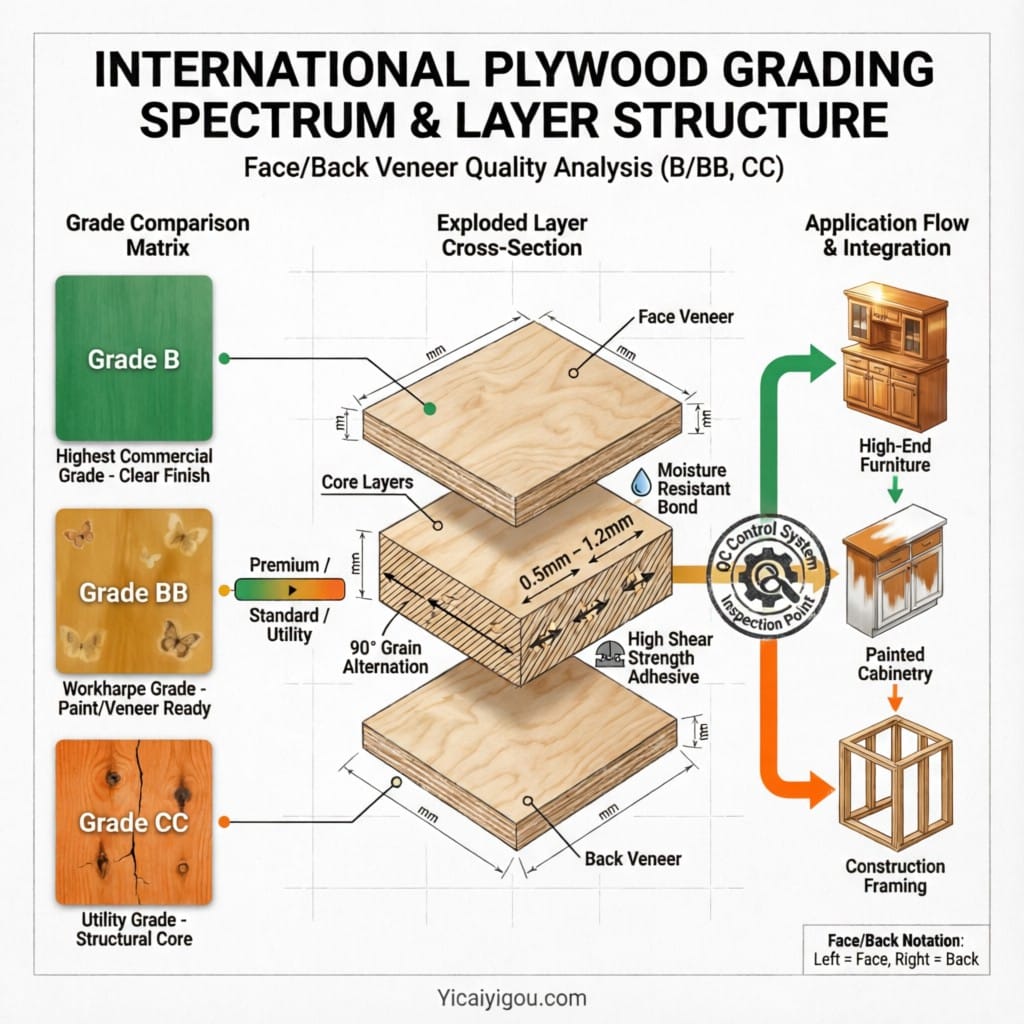
The type of product you are sourcing often dictates the certification viability. For engineered wood products like plywood, the complexity increases due to the layered supply chain. A plywood panel might have a core from one region and face veneers from another. FSC Mix is commonly used here to accommodate supply chain realities while maintaining certification status. However, certain high-specification architectural projects require FSC 100% for all layers, which limits supplier options and increases cost.
When dealing with solid hardwood flooring or furniture components, the certification affects the perceived value. Luxury markets in Europe often demand FSC to justify premium pricing, associating the logo with superior ethical standards. Conversely, in industrial packaging or pallet manufacturing, PEFC is widely accepted because the focus is on legal sourcing rather than consumer-facing eco-labeling. At Yicaiyigou, we analyze the end-use application. If you are manufacturing consumer goods where the logo will be visible on packaging, FSC might provide better marketing leverage. If the lumber is destined for structural framing where the wood will be concealed, PEFC often offers a more cost-effective compliance solution without sacrificing legal assurance.
Strategic Selection for Your Supply Chain
So, how do you decide? The answer lies in asking the right questions before the purchase order is cut. First, identify the end-user’s certification policy. Do they require a specific logo for marketing? Second, consider the volume and availability. FSC-certified tropical hardwood can be scarcer and more expensive than PEFC-certified equivalents due to stricter harvesting constraints. Third, evaluate the risk profile. Both systems combat illegal logging, but if your clients are highly sensitive to NGO campaigns, FSC provides an additional layer of reputational shield.
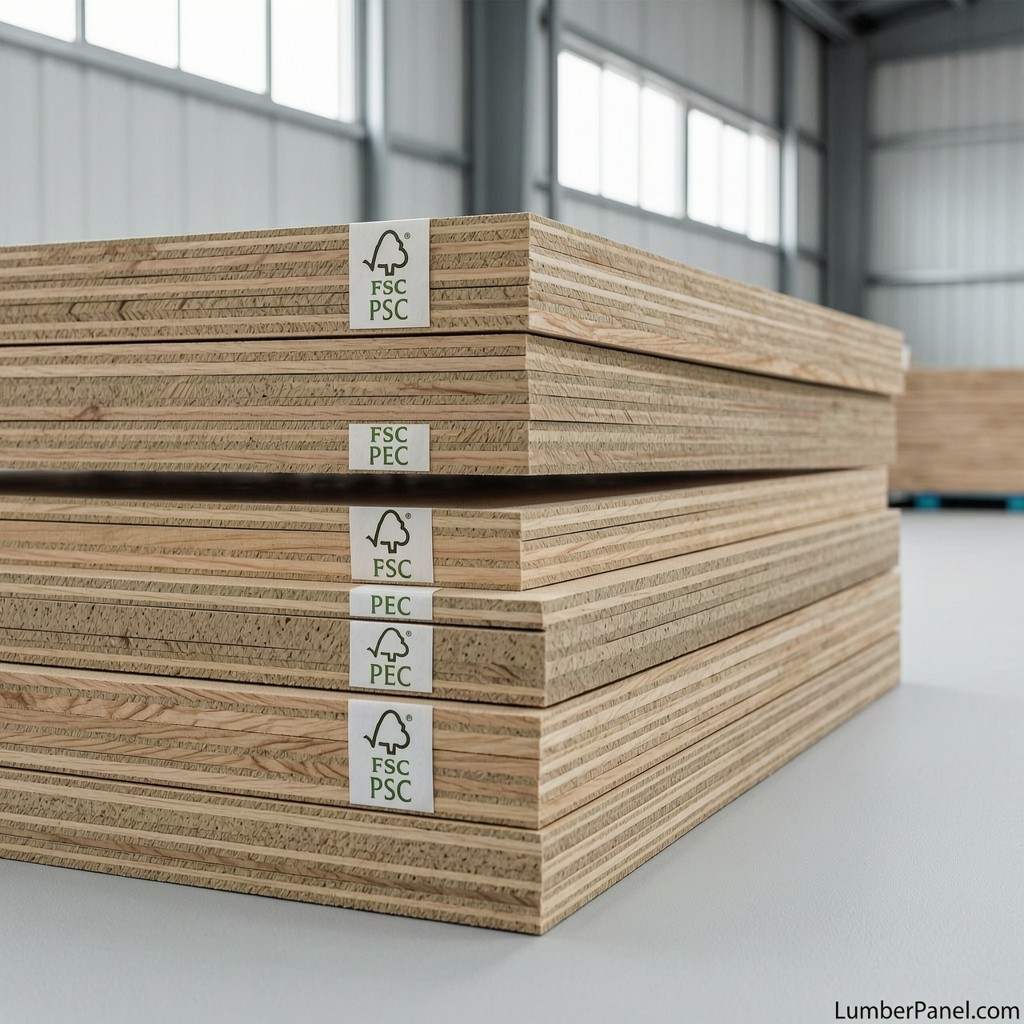
Dual certification is another strategy employed by major exporters. Many mills now hold both FSC and PEFC CoC certificates, allowing them to switch labels based on client demand. When partnering with Yicaiyigou, we help navigate these options to ensure your supply chain remains agile. Do not assume one size fits all. A mismatched certification is not just a paperwork error; it is a barrier to entry. By aligning your certification choice with your specific market’s regulatory and consumer demands, you secure not just the wood products, but the longevity of your business relationships.
Image Attachment
Frequently Asked Questions
What is the main difference between FSC and PEFC certification?
FSC (Forest Stewardship Council) and PEFC (Programme for the Endorsement of Forest Certification) are both global forest certification systems that promote sustainable forestry, but they differ in governance and focus. FSC is widely regarded as having stricter environmental and social standards, including stronger protections for endangered species, indigenous rights, and high conservation value forests. PEFC, on the other hand, is more industry-driven and often considered more flexible, with a focus on mutual recognition of national certification schemes. For lumber and wood products, the choice between them often depends on your target market’s regulatory requirements and buyer preferences.
Which certification is required for the European market?
In the European Union, both FSC and PEFC are recognized under the EU Timber Regulation (EUTR) as evidence of legal and sustainable sourcing. However, market demand varies by country and sector. For example, the UK and Scandinavian markets often favor FSC for its stringent social criteria, while PEFC is widely accepted in Germany, France, and Italy due to its alignment with national forestry schemes. For construction and building materials, PEFC is frequently specified in public procurement contracts, but FSC is preferred by eco-conscious retailers and furniture brands. Always verify with your specific buyer or local regulations, as some green building certifications (e.g., LEED) may give extra credit for FSC.
Does the North American market prefer FSC or PEFC?
In North America, FSC has historically been the dominant certification for lumber and wood products, especially in the U.S. and Canada, due to its strong brand recognition among architects, builders, and environmentally focused consumers. However, PEFC is gaining traction, particularly through its endorsement of the Sustainable Forestry Initiative (SFI) in the U.S. and the Canadian Standards Association (CSA) in Canada. For markets like residential construction, big-box retailers (e.g., Home Depot, Lowe’s) accept both certifications, but FSC is often required for projects seeking LEED v4 credits or targeting high-end, eco-conscious buyers. Check your customer’s specific procurement policies, as some large corporations mandate FSC for their supply chains.
Can I use both FSC and PEFC certifications for the same product?
Yes, it is possible to hold dual certification for the same lumber or wood product, but it requires separate chain-of-custody (CoC) audits and documentation for each system. This can increase administrative costs and complexity, but it allows you to access both FSC- and PEFC-demanding markets without restriction. Many large producers and distributors opt for dual certification to maximize market flexibility. However, for smaller operations, it may be more cost-effective to choose one certification based on your primary export markets. Note that mixing certified and non-certified material in a single product is not allowed unless under specific controlled wood or PEFC-controlled sources rules.
How do I determine which certification my market requires?
To determine the right certification, start by analyzing your target market’s regulatory landscape, buyer specifications, and industry trends. For example, if you export to the EU, review the EUTR requirements and consult with local trade associations. For the U.S., check if your customers are part of the Sustainable Forestry Initiative (SFI) program or require FSC for green building projects. Additionally, survey your key clients: many large retailers, furniture manufacturers, and construction firms have published sustainability policies that specify a preferred certification. Finally, consider third-party certifications like LEED, BREEAM, or the Living Building Challenge, which often assign higher points to FSC. When in doubt, dual certification offers the broadest market access, but a targeted approach based on your primary buyers is usually more efficient.
| Specification | FSC (Forest Stewardship Council) | PEFC (Programme for the Endorsement of Forest Certification) |
|---|---|---|
| Chain of Custody (CoC) Requirements | Strict physical separation of certified and non-certified material; 100% FSC or FSC Mix credit system | Allows percentage-based blending (e.g., 70% certified + 30% controlled sources) with less rigid segregation |
| Market Preference by Region | Dominant in North America, UK, and for high-end retail; often required by green building programs (LEED, BREEAM) | Strong in Europe (especially Germany, France, Scandinavia); accepted by many national eco-labels and public procurement policies |
| Audit & Certification Cost (Est.) | Higher — typically $2,000–$5,000+ per year for small to medium enterprises due to more frequent audits | Lower — often $1,000–$3,000 per year; group certification options reduce costs for small forest owners |
| Controlled / Controversial Sources | Prohibits genetically modified trees, old-growth logging, and conversion of natural forests; strict social criteria | Allows GMO trees in some endorsed schemes; less restrictive on conversion of natural forests to plantations |
| Label Recognition & Consumer Trust | High — widely recognized by NGOs and environmentally conscious consumers; seen as gold standard | Moderate — recognized in B2B and European markets; sometimes viewed as industry-friendly alternative |