| Feature | Solid Wood | Engineered Wood (MDF/Plywood/Particleboard) |
|---|---|---|
| Primary Use Case | Aesthetic surfaces, high-end furniture, structural beams | Internal components, casework, high-volume manufacturing |
| Dimensional Stability | Low (prone to warping/expansion with humidity changes) | High (consistent performance, minimal expansion) |
| Pricing Volatility | High (subject to raw timber market fluctuations) | Low (predictable pricing, optimized for scale) |
| Regulatory Compliance | Focus on sourcing legality (EUDR) | Strict formaldehyde limits (CARB P2, ENF standards) |
| Supply Chain Efficiency | Variable lead times, lower container utilization | Consistent lead times, high container loading efficiency |
| Sustainability Focus | Longevity and natural material appeal | Resource efficiency, reduced waste, certified emissions |
Choosing between engineered wood and solid wood is no longer just an aesthetic decision; it is a critical supply chain calculation that impacts project margins, compliance risk, and long-term durability. This analysis breaks down the measurable cost-performance differences, helping procurement managers and engineers select the right material for high-volume manufacturing without compromising on structural integrity or regulatory standards.
The global furniture and construction industries are undergoing a quiet but profound shift. Major brands like IKEA and Apple have moved away from traditional solid timber for internal components and casework, prioritizing materials that offer dimensional stability and predictable pricing. As raw timber prices fluctuate and sustainability regulations tighten under the EU Deforestation Regulation (EUDR) effective December 30, 2024, the engineered wood vs solid wood cost debate has become central to strategic sourcing. Buyers are no longer asking which material looks better, but which material delivers consistent performance at scale while mitigating supply chain volatility.
For procurement leaders at companies like Amazon or Herman Miller, the choice dictates more than just unit price. It determines lead times, container utilization efficiency, and compliance with strict formaldehyde emissions standards such as CARB P2 and ENF. This article provides a data-driven comparison of Precision MDF, Structural Plywood, and High-Density Particleboard against solid wood, offering a clear framework for reducing total cost of ownership. By understanding the specific density thresholds, emission limits, and loading capacities of engineered alternatives, decision-makers can optimize their bills of materials for both economic and environmental performance.
Technical Specifications and Performance Metrics
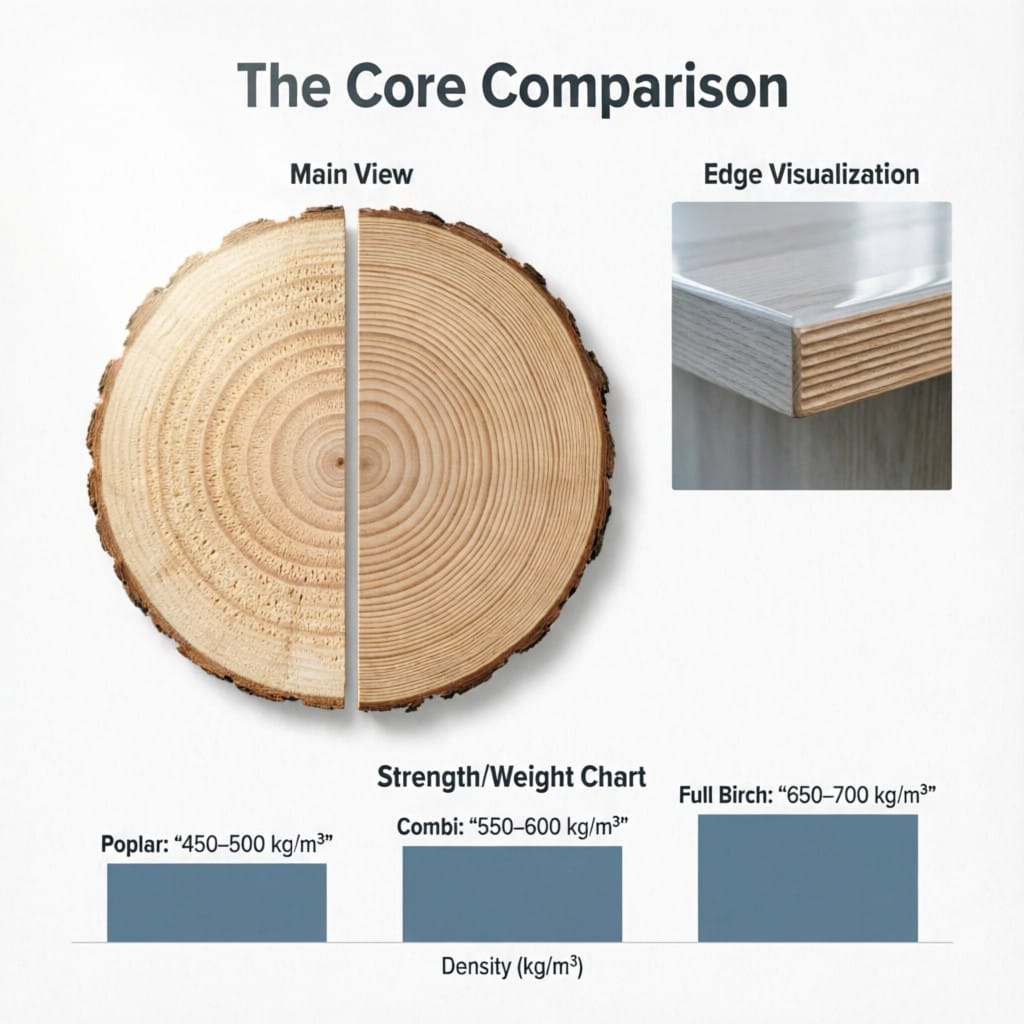
When evaluating engineered wood vs solid wood cost, technical consistency is the primary driver of value. Solid wood is hygroscopic and anisotropic, meaning it expands and contracts unevenly across the grain, leading to warping in controlled environments. In contrast, engineered products like Yicaiyigou’s Precision MDF and High-Density Particleboard are isotropic, offering uniform strength in all directions. The density of these materials is tightly controlled: MDF ranges from 600-800 kg/m³, while High-Density Fiberboard (HDF) exceeds 800 kg/m³, reaching up to 1,000+ kg/m³ for heavy-duty applications. Particleboard typically falls between 550-750 kg/m³, providing a lightweight yet stable core for laminates.
Regulatory compliance is another critical differentiator. Solid wood requires no formaldehyde testing, but engineered woods must meet stringent limits to be viable in global markets. Yicaiyigou’s products adhere to the highest standards, including CARB P2 (≤0.11 ppm for composites), E0 (≤0.07 ppm), and the ultra-low ENF standard (≤0.05 mg/L). For buyers targeting the Japanese market, compliance with JAS F★★★★ (≤0.3 mg/L via JIS A 1460 desiccator method) is essential. These certifications are not merely badges; they are entry tickets to premium retail channels and government contracts where indoor air quality is legally mandated.
Comparison Table: Engineered Wood vs Solid Wood
| Metric | Solid Wood (Hardwood) | Precision MDF / HDF | Structural Plywood | High-Density Particleboard |
|---|---|---|---|---|
| Density Range | 400-900 kg/m³ (Variable) | 600-1,000+ kg/m³ (Controlled) | 500-700 kg/m³ | 550-750 kg/m³ |
| Dimensional Stability | Low (Prone to warping) | High (Isotropic structure) | High (Cross-laminated) | Moderate-High |
| Formaldehyde Emission | N/A (Natural) | ENF ≤0.05 mg/L / E0 ≤0.07 ppm | CARB P2 ≤0.11 ppm | CARB P2 ≤0.11 ppm |
| Standard Thickness | 19mm-50mm (Custom mill) | 3mm-30mm (Precision cut) | 3mm-30mm | 3mm-30mm |
| Surface Uniformity | Variable (Knots/Grain) | Perfectly Smooth (Ra < 3.2µm) | Visible Veneer Layers | Granular Texture |
| Machinability | Difficult (Tear-out risk) | Excellent (Clean edges) | Good (Edge sealing required) | Good (Requires edge banding) |
| Moisture Resistance | Moderate (Swells unevenly) | Low (Unless treated) | High (Exterior glue options) | Low (Swells if unsealed) |
| Cost Volatility | High (Subject to harvest cycles) | Low (Industrial byproduct base) | Moderate | Low |
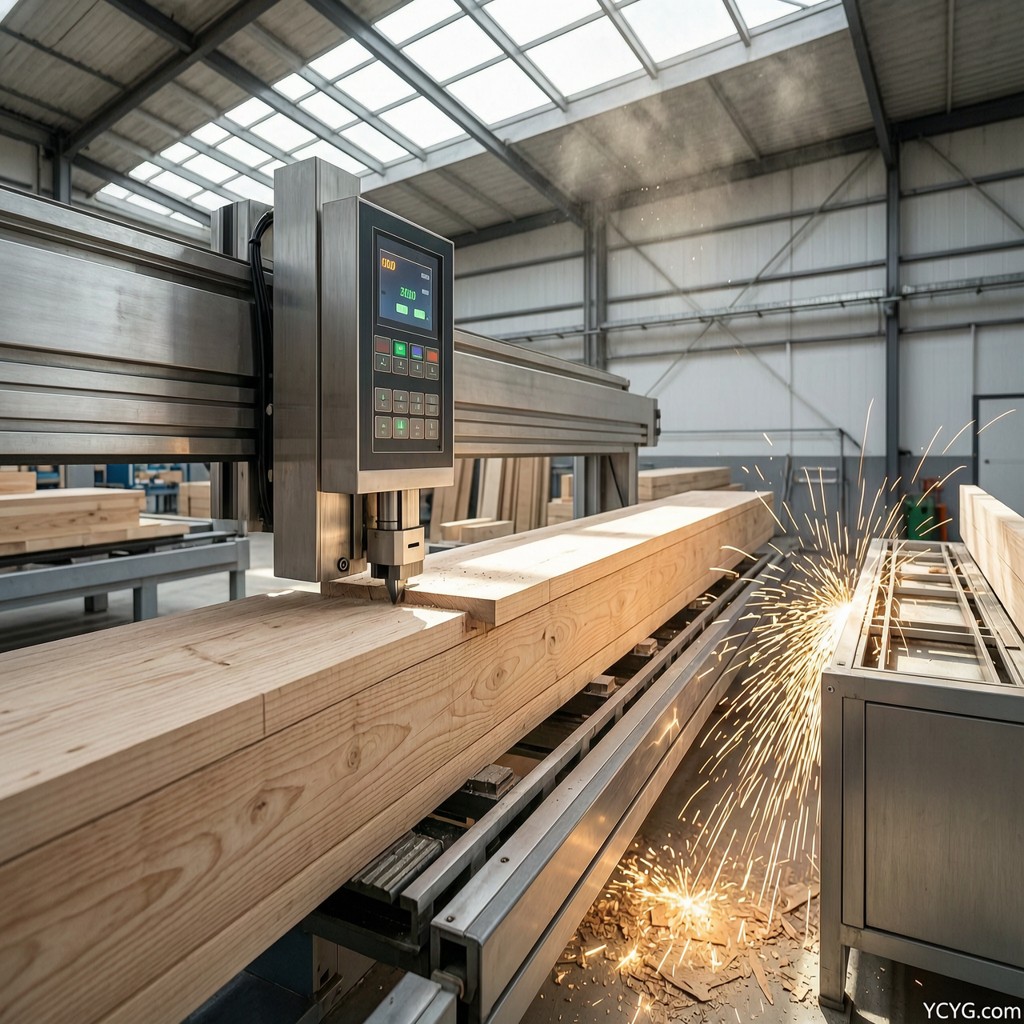
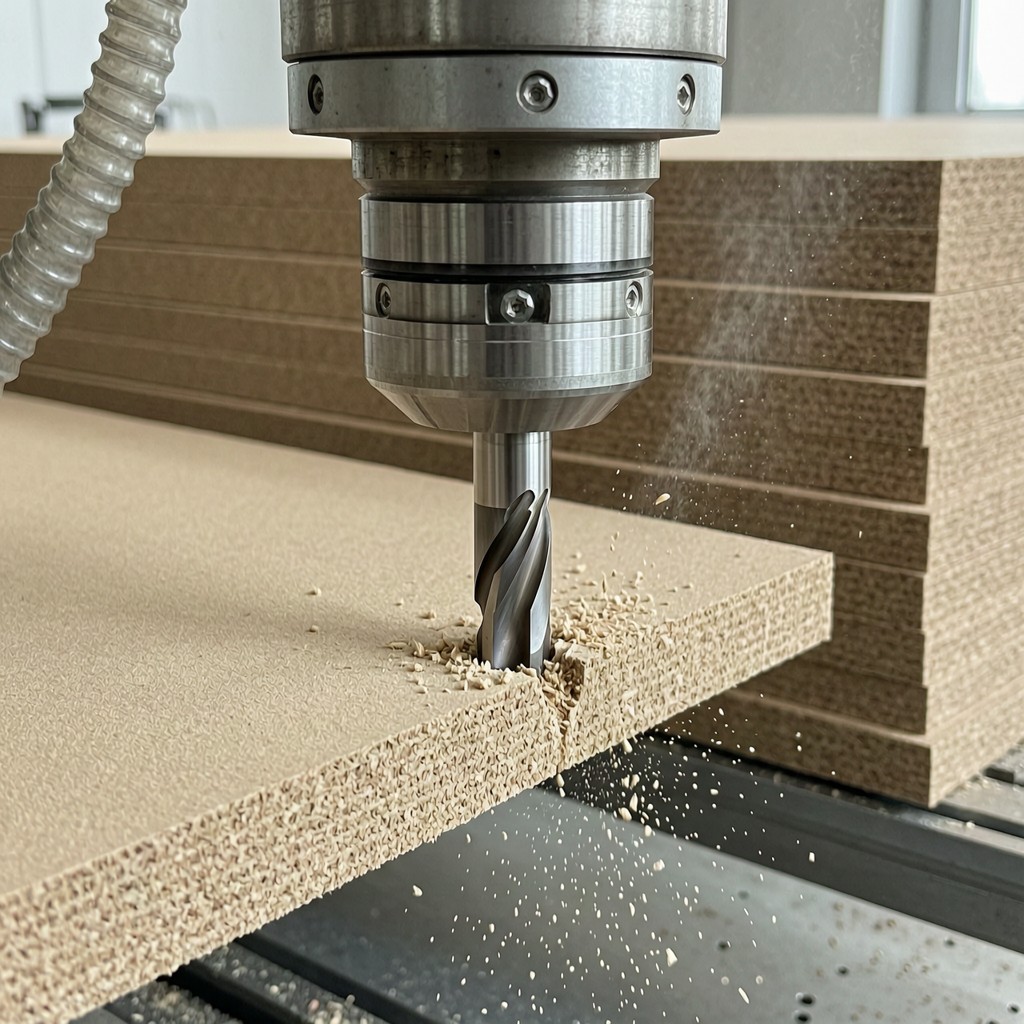
The data reveals that while solid wood offers unique aesthetic character, it fails in predictability. Engineered wood provides a standardized platform for automation. For instance, the uniform density of HDF (>800 kg/m³) allows for precise CNC routing without the tear-out common in solid oak or maple. Furthermore, the ability to source materials in standard 2440x1220mm sheets simplifies nesting software calculations, reducing waste compared to irregular solid lumber boards.
Industry Applications with Real Specifications
In high-volume furniture manufacturing, the choice of material directly impacts assembly line efficiency. Consider a case study involving flat-pack office desks for a major retailer. Using solid wood would require extensive acclimatization periods to prevent joint failure due to humidity changes. By switching to Yicaiyigou’s Precision MDF (density 700 kg/m³), the manufacturer achieved a consistent screw-holding capacity and eliminated warping issues. The panels, available in thicknesses from 3mm to 30mm, allowed for optimized nesting on standard 2440x1220mm sheets, reducing material waste by 15% compared to solid board yield.
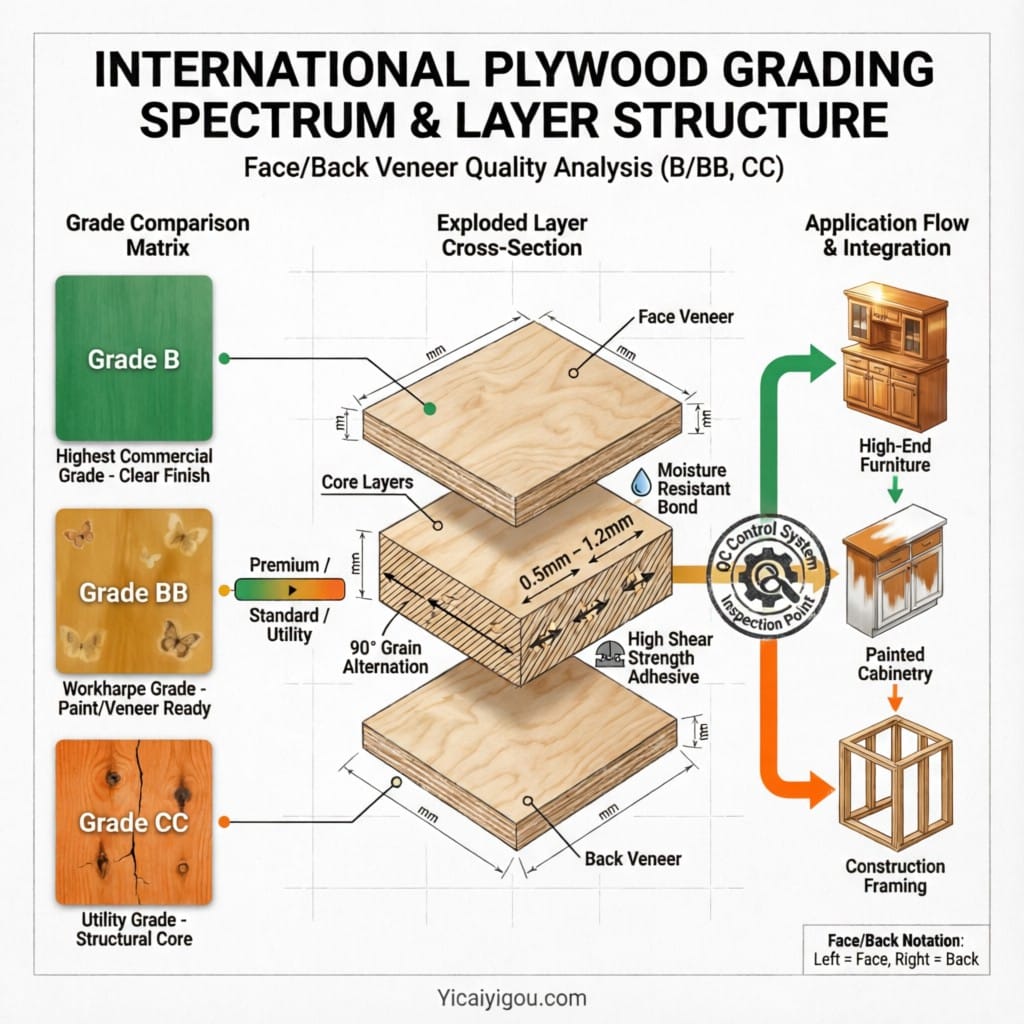
For structural applications such as shelving units or sub-flooring, Structural Plywood offers superior load-bearing capabilities compared to particleboard. With cross-laminated veneers, it resists bending under heavy loads, making it ideal for warehouse racking or commercial fit-outs. Meanwhile, High-Density Particleboard (550-750 kg/m³) remains the cost-effective choice for internal cabinet cores where surface aesthetics are handled by laminates. Its uniform composition ensures that edge-banding adheres securely, a critical factor for durability in high-traffic environments like hotel rooms or hospital cabins.
Compliance with the upcoming EUDR requires rigorous Chain of Custody (CoC) documentation. Yicaiyigou provides full traceability for its FSC-certified products, ensuring that every batch of MDF or plywood can be traced back to sustainable sources. This is vital for exporters to the EU, where non-compliance can result in severe penalties and market exclusion. By integrating CoC data into their procurement systems, buyers can automate compliance reporting, saving hundreds of hours in administrative overhead.
Supplier Solution: Yicaiyigou
Yicaiyigou distinguishes itself through rigorous quality control and logistical efficiency. Our production lines are calibrated to deliver MDF with a density tolerance of ±5%, ensuring that every panel meets the specified 600-800 kg/m³ range. For projects requiring higher impact resistance, our HDF options exceed 800 kg/m³, suitable for flooring underlayment and high-wear surfaces. All products are manufactured to meet CARB P2, CE, and ENF (≤0.05 mg/L) standards, providing a seamless path to global market entry.
Logistics are optimized for international buyers. A 20ft container holds 20-25 m³ of material, while a 40ft container accommodates 45-50 m³, allowing for precise volume planning. With a minimum order quantity (MOQ) of one 20ft container and a lead time of 15-25 days, Yicaiyigou supports just-in-time inventory strategies without the risk of stockouts. We provide complete documentation, including test reports for formaldehyde emissions (E0 ≤0.07 ppm, E1 ≤0.124 ppm) and FSC Chain of Custody certificates, ensuring transparency at every step.

Specify Precision MDF or HDF for interior furniture, cabinetry, and decorative panels where surface smoothness and machining precision are critical. Specify Structural Plywood for load-bearing applications, shelving, and environments with variable humidity. Specify High-Density Particleboard for cost-sensitive internal cores and non-structural partitions where weight reduction is a priority. Avoid solid wood for large-scale, flat-pack manufacturing due to its unpredictability in dimensional stability and higher total cost of ownership.
FAQ
What is the formaldehyde emission limit for ENF certification?
The ENF standard requires formaldehyde emissions to be ≤0.05 mg/L, which is stricter than E0 (≤0.07 ppm) and CARB P2 (≤0.11 ppm).
How much material fits in a 40ft container?
A 40ft container typically holds 45-50 m³ of engineered wood panels, depending on packaging and thickness configurations.
What is the density range for High-Density Particleboard?
High-Density Particleboard from Yicaiyigou has a density range of 550-750 kg/m³, offering a balance of strength and weight.
Is FSC certification available for these products?
Yes, Yicaiyigou provides FSC-certified products with full Chain of Custody (CoC) documentation to comply with EUDR and other sustainability regulations.
What is the standard lead time for orders?
The standard lead time for production and preparation is 15-25 days, depending on order volume and customization requirements.
Summary & Next Steps
The engineered wood vs solid wood cost analysis clearly favors engineered solutions for scalable, compliant, and predictable manufacturing. By leveraging materials with verified densities, emission standards, and logistical efficiencies, buyers can reduce risk and improve margins. Request a compliant material sample with full CoC documentation from Yicaiyigou to validate these specifications for your next project.
Frequently Asked Questions
Why are major brands like IKEA and Apple shifting from solid wood to engineered wood for internal components?
Major brands are prioritizing engineered wood because it offers dimensional stability and predictable pricing, which helps mitigate supply chain volatility and raw timber price fluctuations while ensuring consistent performance at scale.
How does the structural behavior of engineered wood differ from solid wood in controlled environments?
Solid wood is hygroscopic and anisotropic, meaning it expands and contracts unevenly across the grain, which can lead to warping. In contrast, engineered products like Precision MDF and High-Density Particleboard are isotropic, providing uniform strength in all directions and high dimensional stability.
What are the specific density ranges for Precision MDF, HDF, and Particleboard mentioned in the article?
Precision MDF typically ranges from 600-800 kg/m³, High-Density Fiberboard (HDF) exceeds 800 kg/m³ and can reach over 1,000 kg/m³ for heavy-duty applications, while Particleboard generally falls between 550-750 kg/m³.
Which formaldehyde emission standards must engineered woods meet to be viable in global markets such as Japan and premium retail channels?
Engineered woods must meet stringent limits including CARB P2 (≤0.11 ppm), E0 (≤0.07 ppm), and the ultra-low ENF standard (≤0.05 mg/L). For the Japanese market, compliance with JAS F★★★★ (≤0.3 mg/L via JIS A 1460 desiccator method) is essential.
How does the EU Deforestation Regulation (EUDR) impact the decision between solid and engineered wood?
With the EUDR becoming effective on December 30, 2024, tightening sustainability regulations make the choice of material a critical compliance risk factor. This drives buyers to select materials that not only offer economic performance but also help mitigate regulatory risks associated with sourcing.