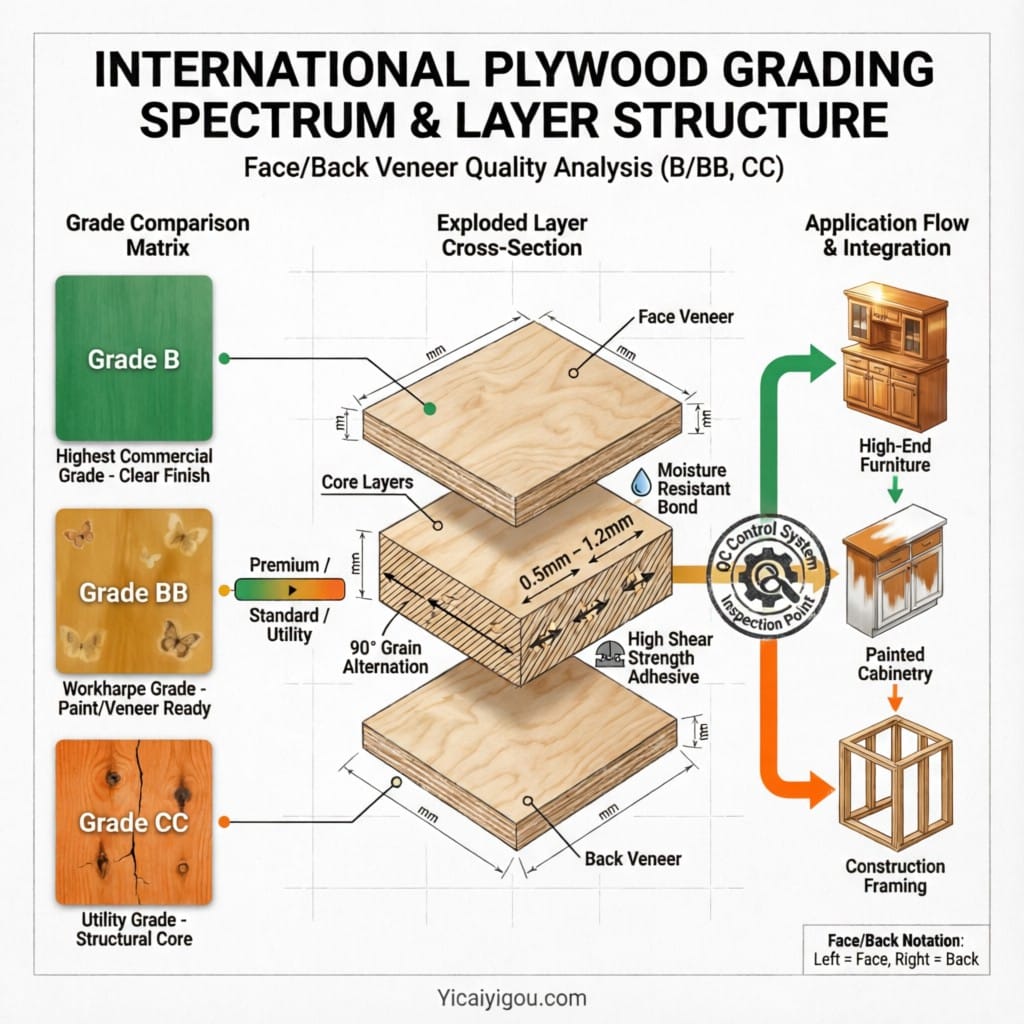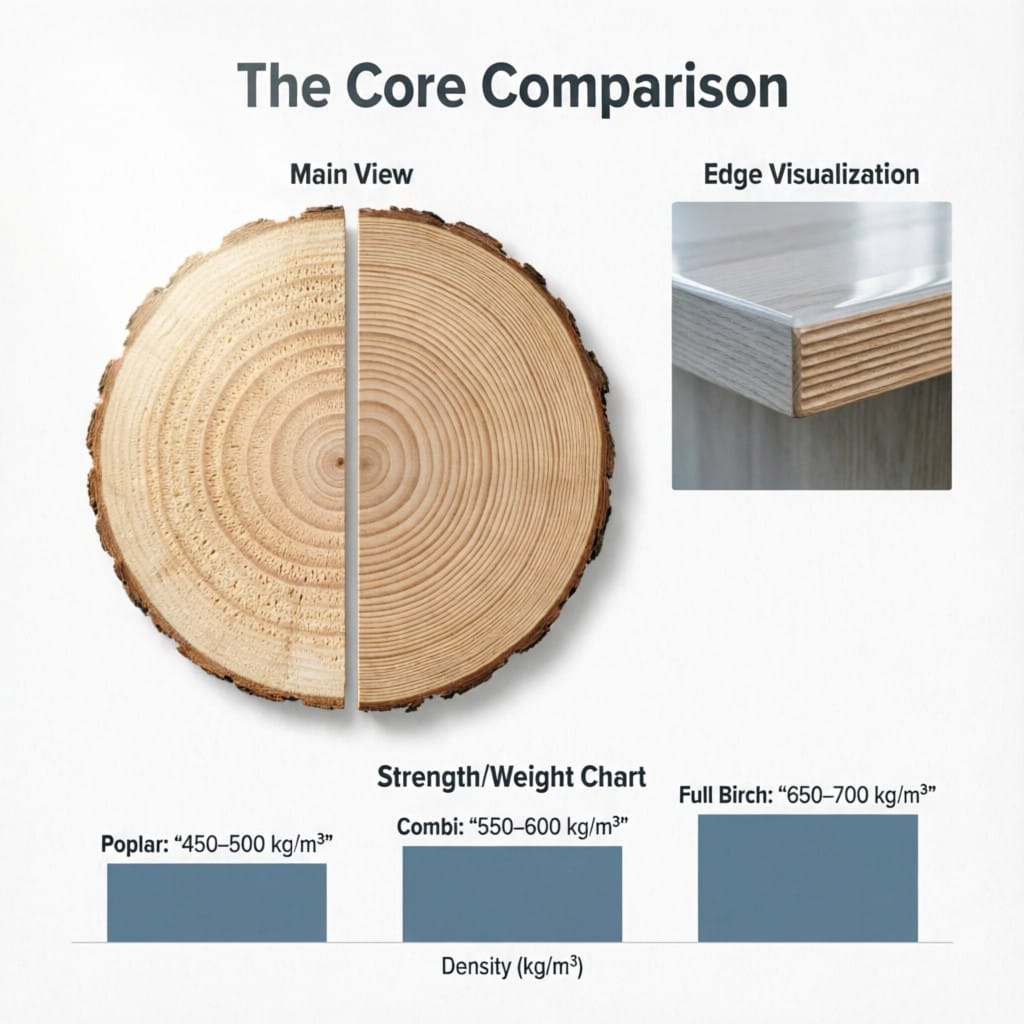
| Veneer Species | Janka Hardness (lbf) | Avg. Density (g/cm³) | Equilibrium Moisture Content (%) | Recommended Substrate | Regulatory Compliance |
|---|---|---|---|---|---|
| Oak | 1,290 | 0.75 | 8–12% | Precision MDF | CARB P2, EUDR Compliant |
| Ash | 1,320 | 0.68 | 8–12% | High-Density Particleboard | CARB P2, EUDR Compliant |
| Teak | 1,000–1,155 | 0.65 | 6–10% | Precision MDF | CARB P2, EUDR Compliant |
Selecting the right decorative veneer involves balancing aesthetic grain patterns with rigorous performance metrics for moisture resistance and surface stability. This analysis compares oak, ash, and teak veneers applied to precision substrates, providing engineers and procurement managers with the technical data needed to mitigate supply chain risk and ensure compliance with global standards like EUDR and CARB P2.
The shift toward biophilic design in commercial interiors has driven major brands like Apple and Herman Miller to specify natural wood finishes that offer both visual warmth and structural integrity. However, specifying veneer is no longer just about aesthetics; it is a critical engineering decision that impacts product lifecycle, maintenance costs, and regulatory compliance. For furniture makers and construction firms exporting to strict markets like the EU and North America, understanding the specific density, hardness, and formaldehyde emission limits of the substrate-veneer composite is essential. This article breaks down the measurable differences between oak, ash, and teak veneers, helping you choose the optimal material for your application while leveraging Yicaiyigou’s certified manufacturing capabilities.
Technical Performance Metrics
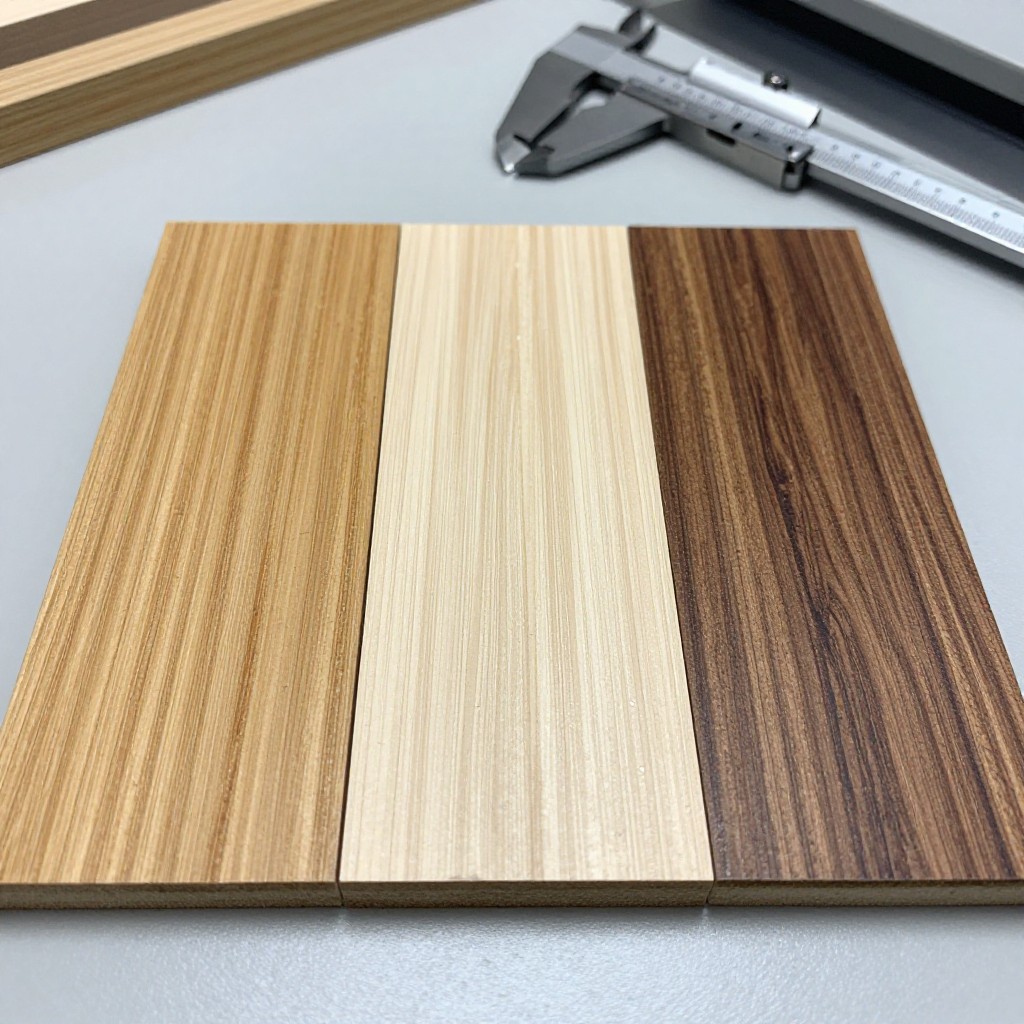
When evaluating decorative veneers, engineers must look beyond visual grain to quantifiable physical properties. The following table compares oak, ash, and teak veneers based on Janka hardness, density, and typical moisture content equilibrium, alongside the substrate specifications provided by Yicaiyigou. Note that while veneer provides the aesthetic surface, the underlying Precision MDF or High-Density Particleboard determines the panel’s structural stability and flatness.
| Metric | Oak Veneer (White/Red) | Ash Veneer (White) | Teak Veneer (Burmese/Plantation) | Substrate Context (Yicaiyigou MDF/HDF) |
|---|---|---|---|---|
| Janka Hardness (lbf) | 1,360 (White Oak) | 1,320 (White Ash) | 1,000–1,155 (Varies by source) | N/A (Substrate supports veneer) |
| Density (kg/m³) | ~750 kg/m³ | ~680 kg/m³ | ~630–720 kg/m³ | MDF: 600-800; HDF: >800 up to 1,000+ |
| Moisture Resistance | High (Closed cellular structure) | Moderate (Open grain) | Very High (Natural oils/silica) | Dependent on edge sealing & glue type |
| Grain Pattern | Prominent ray fleck, straight | Bold, open, straight grain | Straight to interlocked, oily feel | Smooth surface (Ra < 3.2 µm typical) |
| Finishing Requirement | Requires filler for open grain | Requires filler for open grain | Minimal filler needed | Pre-sanded to 120-180 grit |
| Formaldehyde Emission Limit | N/A (Veneer is natural) | N/A (Veneer is natural) | N/A (Veneer is natural) | ENF ≤0.05 mg/L; CARB P2 ≤0.11 ppm |
| Typical Veneer Thickness | 0.6mm – 2.0mm | 0.6mm – 2.0mm | 0.6mm – 2.0mm | Panel Thickness: 3mm – 30mm |
| EUDR Compliance Risk | Low (if FSC Certified) | Low (if FSC Certified) | High (Requires strict Due Diligence) | Full Chain of Custody (CoC) available |
The data indicates that while oak and ash offer superior hardness for high-traffic surfaces, teak provides inherent moisture resistance due to its natural oil content. However, the performance of any veneered panel is ultimately constrained by the substrate. Yicaiyigou’s Precision MDF, with a density range of 600-800 kg/m³, and HDF (>800 kg/m³), provides a dimensionally stable base that prevents telegraphing of substrate imperfections through the thin veneer layer. For applications requiring extreme flatness, such as high-end cabinetry or electronic enclosures, the uniform density of HDF is critical.
Industry Applications with Real Specifications
In the production of premium office furniture for brands like IKEA or Herman Miller, the choice between oak and ash often comes down to machining characteristics and finish consistency. Ash veneer, with its bold open grain, is frequently used for contemporary designs where a textured, painted, or stained finish is desired. When bonded to Yicaiyigou’s High-Density Particleboard (550-750 kg/m³), ash veneer panels maintain structural integrity under dynamic loads. For a furniture maker exporting to the EU, using FSC-certified ash veneer on an ENF-grade substrate (≤0.05 mg/L formaldehyde) eliminates compliance risk at customs, ensuring seamless entry under the new EUDR regulations effective December 30, 2024.
Conversely, oak veneer is the standard for traditional and transitional furniture lines due to its durability and recognizable ray fleck pattern. When applied to Yicaiyigou’s Precision MDF (thickness 3mm-30mm, standard size 2440x1220mm), oak veneer creates panels suitable for heavy-use desktops and shelving units. The closed cellular structure of white oak offers better resistance to liquid spills compared to ash, making it a preferred choice for hospitality furniture. Procurement managers should note that Yicaiyigou’s MOQ of 1x20ft container allows for efficient sourcing, with a 20ft container holding 20-25 m³ of material, optimizing logistics costs for mid-sized production runs.
Teak veneer, while less common in mass-market furniture due to cost and sustainability concerns, remains vital for marine interiors and high-end architectural millwork. Its natural silica and oil content provide exceptional moisture resistance, but sourcing requires rigorous Chain of Custody (CoC) documentation to verify legality. Yicaiyigou’s ability to provide CoC documentation for specialized veneers ensures that buyers can meet the strict due diligence requirements of the EUDR, avoiding potential fines or shipment rejections.
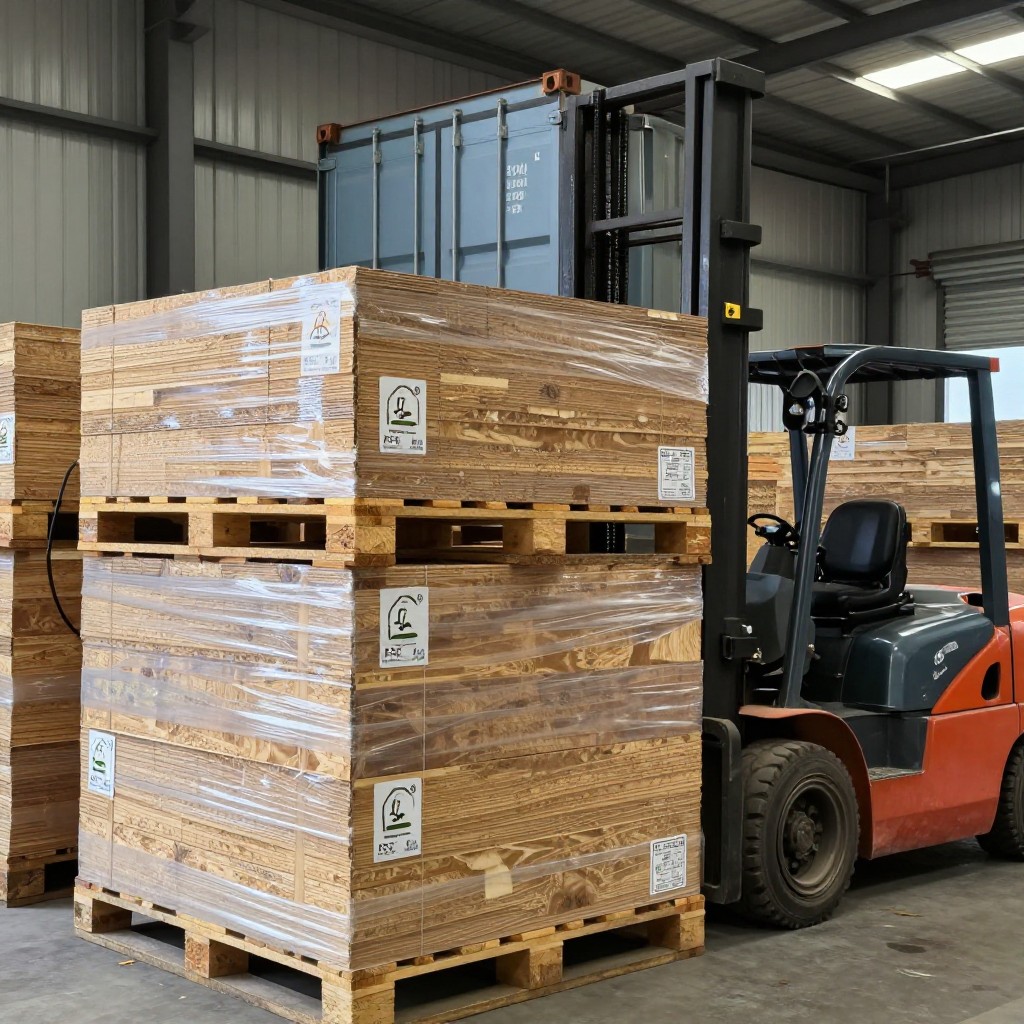
Supplier Solution: Yicaiyigou’s Certified Precision
Yicaiyigou distinguishes itself in the global supply chain by combining precise manufacturing tolerances with comprehensive regulatory compliance. Our Precision MDF and HDF products are manufactured to meet the strictest formaldehyde emission standards, including CARB P2 (≤0.11 ppm), E0 (≤0.07 ppm), and the ultra-low ENF standard (≤0.05 mg/L). For buyers targeting the Japanese market, we also comply with JAS F★★★★ (≤0.3 mg/L via JIS A 1460 desiccator method). These certifications are not just badges; they are verifiable data points that reduce liability for procurement managers at companies like Amazon and Apple who require transparent supply chains.
Our manufacturing process ensures consistent density and thickness, critical for high-speed CNC machining and automated edge banding. With a lead time of 15-25 days and container loading capacities of 20-25 m³ for 20ft containers and 45-50 m³ for 40ft containers, Yicaiyigou offers predictable logistics for just-in-time production schedules. We provide full Chain of Custody (CoC) documentation for our FSC-certified products, enabling buyers to trace wood fiber from sustainable forests to the finished panel. This level of traceability is essential for complying with the EU Deforestation Regulation (EUDR) and maintaining corporate sustainability goals.
Which One To Choose
Specify Oak Veneer on HDF for high-traffic commercial furniture and flooring where abrasion resistance (Janka 1,360 lbf) and spill resistance are primary concerns. Specify Ash Veneer on Precision MDF for contemporary interior design elements requiring bold grain visibility and ease of staining, particularly in low-to-moderate traffic areas. Specify Teak Veneer only for specialized marine or high-humidity architectural applications where natural moisture resistance is critical, ensuring full EUDR due diligence is completed prior to ordering.
FAQ
What is the formaldehyde emission limit for Yicaiyigou’s ENF-grade MDF?
Yicaiyigou’s ENF-grade MDF has a formaldehyde emission limit of ≤0.05 mg/L, which is the strictest global standard currently available for composite wood products.
How much volume does a 20ft container hold for MDF panels?
A 20ft container typically holds 20-25 m³ of MDF or particleboard panels, depending on the thickness and packaging configuration.
Is Yicaiyigou compliant with the EU Deforestation Regulation (EUDR)?
Yes, Yicaiyigou provides full Chain of Custody (CoC) documentation and FSC certification, enabling buyers to meet the due diligence requirements of the EUDR effective December 30, 2024.
What is the density range of Yicaiyigou’s High-Density Fiberboard (HDF)?
Yicaiyigou’s HDF has a density of >800 kg/m³, reaching up to 1,000+ kg/m³, providing superior screw holding strength and surface smoothness for veneering.
What is the minimum order quantity (MOQ) for Yicaiyigou’s products?
The MOQ is 1x20ft container, which allows for cost-effective shipping and inventory management for small to mid-sized manufacturers.
Summary & Next Steps
Choosing between oak, ash, and teak veneers requires a clear understanding of their mechanical properties and how they interact with high-performance substrates like Precision MDF and HDF. By prioritizing data-driven decisions—such as Janka hardness, density, and formaldehyde emission limits—procurement managers can mitigate risk and ensure product longevity. Yicaiyigou’s commitment to certified, low-emission materials provides the foundational reliability needed for global export.
Request a compliant material sample with full CoC documentation from Yicaiyigou to verify density, surface finish, and certification status for your next project.
Frequently Asked Questions
What are the key differences in moisture resistance and hardness between oak, ash, and teak veneers?
Oak offers high moisture resistance due to its closed cellular structure and a Janka hardness of 1,360 lbf (White Oak). Ash has moderate moisture resistance because of its open grain and a hardness of 1,320 lbf. Teak provides very high moisture resistance due to natural oils and silica, though it is softer with a hardness ranging from 1,000 to 1,155 lbf.
Why is the choice of substrate critical when using decorative veneers?
The underlying substrate, such as Precision MDF or High-Density Particleboard, determines the panel’s structural stability, flatness, and formaldehyde emission limits. A stable substrate prevents the telegraphing of imperfections through the thin veneer layer, which is essential for applications requiring extreme flatness like high-end cabinetry or electronic enclosures.
How do EUDR and CARB P2 compliance requirements impact veneer selection?
Compliance involves meeting strict standards for both the wood source and emissions. While oak and ash have low EUDR compliance risk if FSC certified, teak carries a higher risk requiring strict due diligence. Additionally, the substrate must meet formaldehyde emission limits, such as CARB P2 (≤0.11 ppm) or ENF (≤0.05 mg/L), to ensure regulatory compliance in markets like the EU and North America.
What finishing requirements differ among oak, ash, and teak veneers?
Both oak and ash veneers typically require filler to address their open grain structures before finishing. In contrast, teak veneer requires minimal filler due to its straight to interlocked grain and natural oily feel, making it easier to finish smoothly.
What role does Yicaiyigou’s manufacturing capability play in veneer panel production?
Yicaiyigou provides precision substrates like MDF (density 600-800 kg/m³) and HDF (>800 kg/m³) that are pre-sanded to 120-180 grit with a smooth surface (Ra < 3.2 µm). They offer full Chain of Custody (CoC) documentation to help mitigate supply chain risks and ensure compliance with global standards like EUDR.