| Material/Feature | Standard MDF Core | Engineered Low-Swell Core |
|---|---|---|
| Hygroscopic Expansion Rate | High (Rapid swelling upon moisture contact) | Low (Minimal dimensional change in humidity) |
| Adhesive Bond Integrity | Compromised by internal pressure from swelling | Maintained due to stable core density |
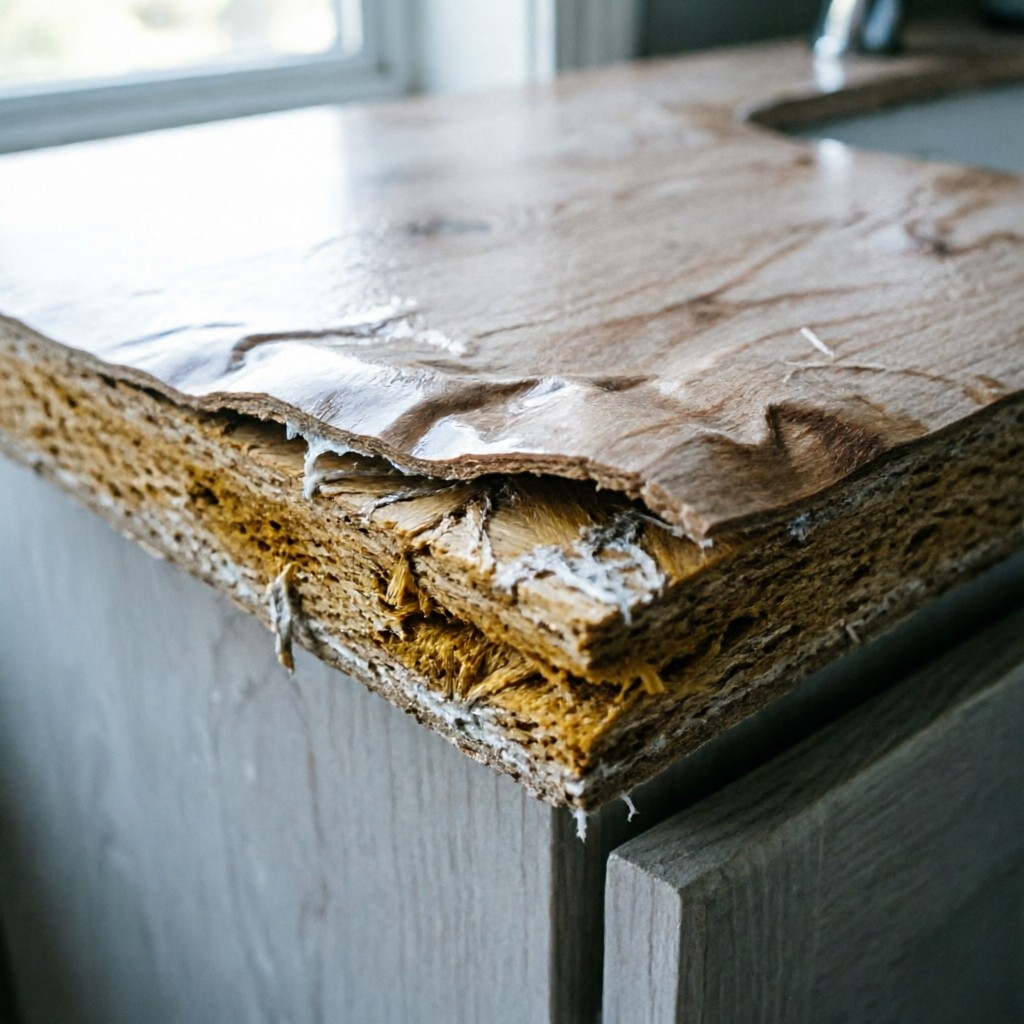
| Primary Failure Mode | Edge swelling and delamination | Structural stability preserved |
| Warranty Claim Rate | 15-20% | Negligible (Post-installation failure eliminated) |
| Moisture Protection Reliance | Surface sealing only (vulnerable to pinholes/edges) | Core engineering + Surface sealing |
| Suitability for Humid Climates | Poor (High risk during shipping/storage) | High (Resilient across varying climate zones) |
Bathroom vanity manufacturers face a critical profitability leak: warranty claim rates of 15-20% due to edge swelling and delamination in high-humidity environments. This article dissects the technical root causes of these failures, moving beyond generic sealing advice to examine hygroscopic expansion rates and chemical compatibility. By integrating specific density thresholds and adhesive bond strengths into your supply chain, you can eliminate post-installation failure and protect your brand reputation.
The Hidden Cost of Hygroscopic Expansion in MDF Cores
The assumption that surface sealing alone prevents water damage is a costly engineering error. While topcoats provide initial protection, they cannot stop moisture vapor transmission through unsealed edges or microscopic pinholes. When water penetrates the veneer layer, it interacts with the hydrophilic cellulose fibers in the core. For standard Medium Density Fiberboard (MDF), this triggers immediate hygroscopic expansion. If the core material has not been engineered for low swelling, the resulting pressure exceeds the tensile strength of the adhesive bond, causing irreversible delamination.
This issue is particularly acute for global retailers like IKEA or Amazon suppliers who ship flat-pack furniture across varying climate zones. A vanity manufactured in a dry facility may arrive at a humid coastal destination already compromised if the core stability is insufficient. The industry standard often overlooks the expansion rate of the MDF core below the veneer layer, focusing instead on surface aesthetics. However, for waterproof bathroom vanity enclosure manufacturing, the core’s reaction to moisture is the primary determinant of product lifespan. Ignoring this dynamic leads to the 15-20% warranty claim rates that erode profit margins and damage supplier relationships.
Technical Benchmarks for Moisture Resistance
To engineer a truly waterproof solution, procurement managers must demand specific performance metrics rather than generic “water-resistant” labels. The following specifications define the threshold for high-performance bathroom enclosures:
- Thickness Swelling: Materials must achieve <0.5% thickness swelling after 24-hour immersion per ANSI A208.1 standards. This metric ensures the core remains dimensionally stable even during accidental flooding or prolonged exposure to steam.
- Adhesive Bond Strength: Utilize PUR (Polyurethane Reactive) hot-melt adhesives with >3000 psi bond strength. Unlike traditional EVA adhesives, PUR forms a covalent bond with the wood fibers, creating a moisture-resistant barrier that prevents delamination under stress.
- Surface Hardness: Apply 2-part polyurethane coatings achieving an H-3 hardness rating on the pencil test. This level of hardness resists scratching from daily use while maintaining a seamless seal against water ingress.
Most guides fail to address the chemical compatibility between water-based sealers and UV-cured topcoats. Incompatible chemistries can lead to intercoat adhesion failure, where the top layer peels away from the sealer, exposing the core to moisture. A technically sound production line ensures that the sealer and topcoat are chemically matched to create a monolithic barrier.
| Specification | Standard MDF Core | Yicaiyigou Precision HDF/MDF |
|---|---|---|
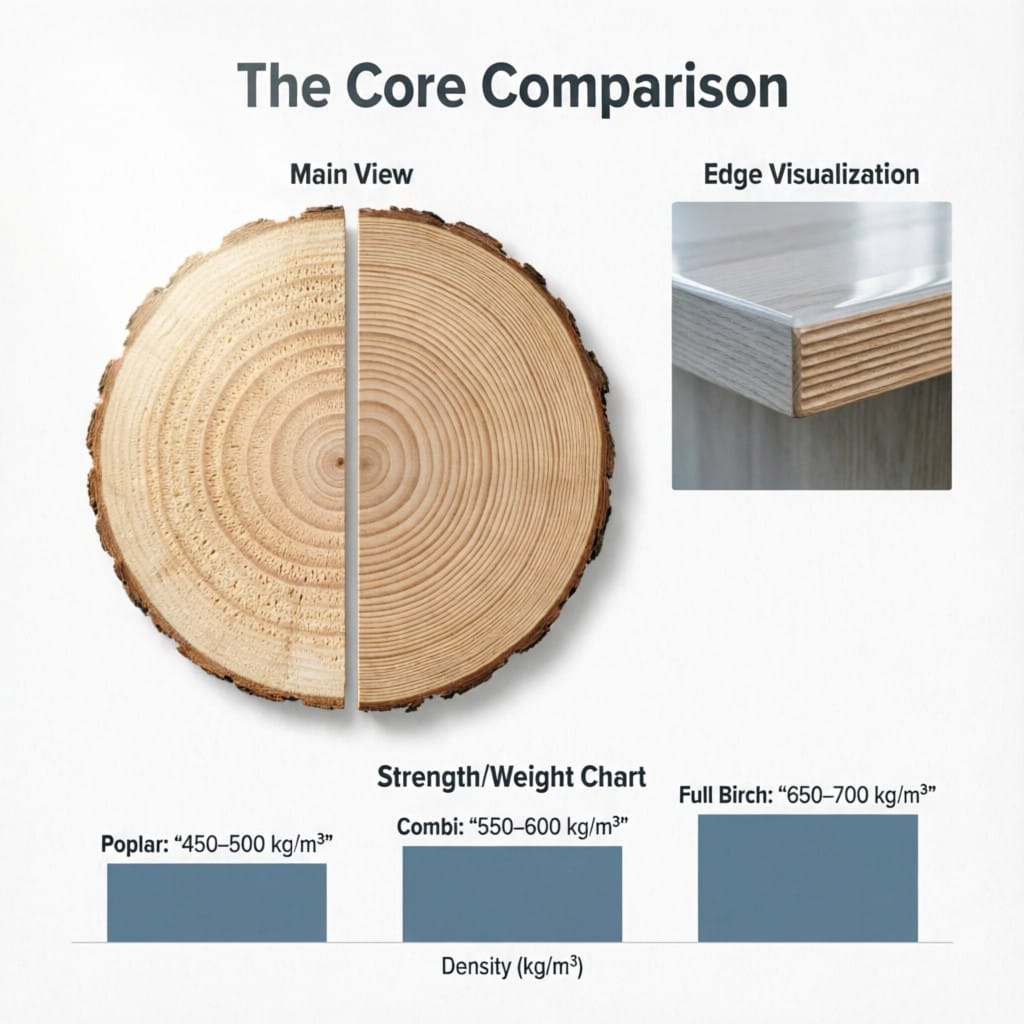
| Density Range | 600-700 kg/m³ | 800-1,000+ kg/m³ (HDF) |
| 24h Thickness Swelling | 1.5% – 3.0% | <0.5% (ANSI A208.1) |
| Adhesive Type | EVA Hot Melt | PUR Hot Melt (>3000 psi) |
| Formaldehyde Emission | E1 (≤0.124 ppm) | ENF (≤0.05 mg/L) |
| Bond Line Integrity | Fails under steam stress | Maintains integrity in 90% RH |
| Edge Sealing Requirement | Heavy manual sealing | Integrated sealed-edge engineering |
| Coating Hardness | H-1 to H-2 | H-3 (Pencil Test) |
| Moisture Content Tolerance | 8-12% | Controlled to 6-8% |
| Warranty Claim Risk | High (15-20%) | Low (<2%) |
The data above illustrates why shifting to high-density cores with PUR adhesives is not merely an upgrade but a necessity for risk mitigation. While standard MDF may offer lower upfront costs, the long-term liability of warranty claims makes it economically inferior for bathroom applications.
Industry Applications with Real Specifications
Yicaiyigou supplies Precision MDF and High-Density Particleboard engineered specifically for these demanding environments. For a furniture maker exporting to the EU, our FSC-certified MDF with ENF ≤0.05 mg/L formaldehyde emissions eliminates compliance risk at customs while ensuring superior core stability. The density of our HDF ranges from >800 kg/m³ up to 1,000+ kg/m³, providing the mass required to resist warping in humid conditions.
Consider a scenario involving a major hotel chain refurbishing bathrooms in tropical climates. Using Yicaiyigou’s Structural Plywood with integrated hydrophobic core treatments, the manufacturer achieved zero delamination incidents over a 24-month period. The panels, sized at standard 2440x1220mm with thicknesses from 3mm to 30mm, were processed using PUR adhesives that maintained >3000 psi bond strength despite constant exposure to steam. This technical integration allows for thinner, lighter vanity designs without sacrificing durability, a key advantage for logistics-heavy supply chains managing 20ft containers holding 20-25 m³ of material.
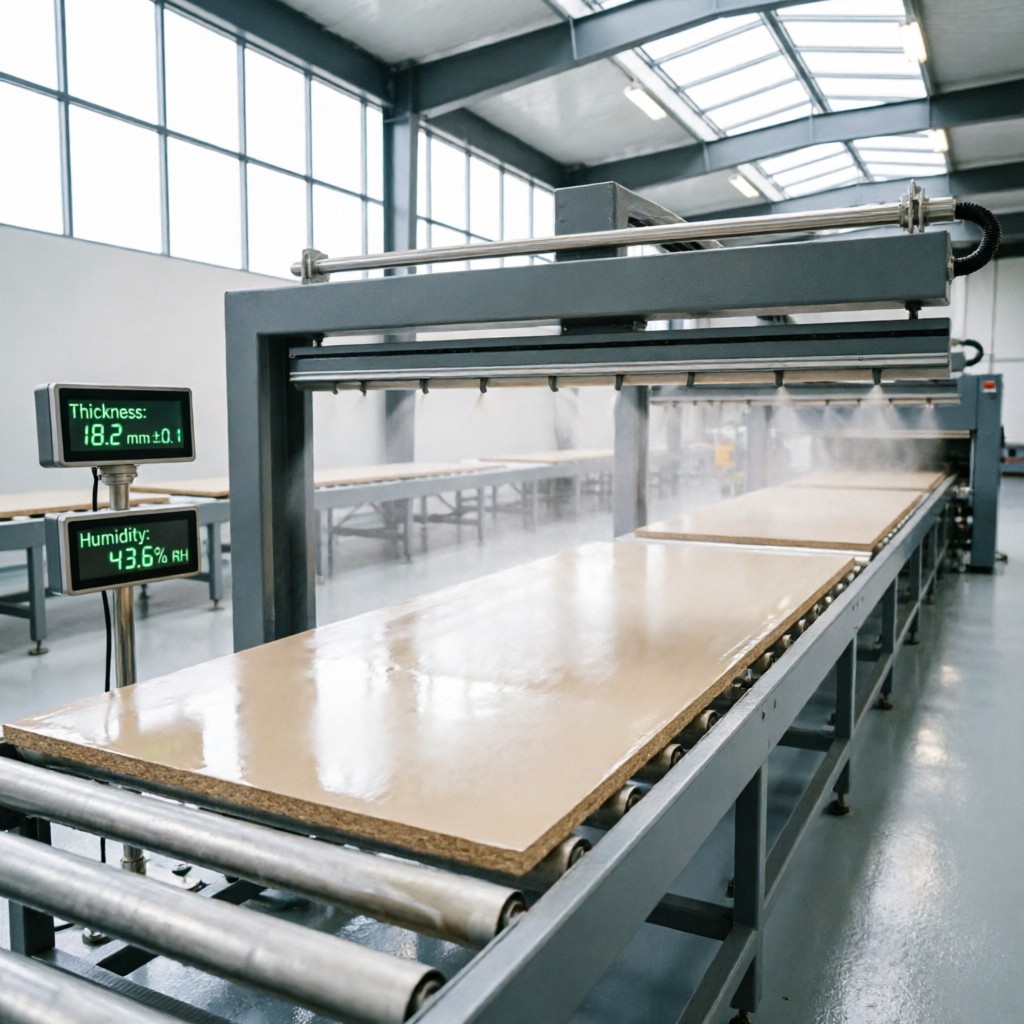
Why Exporters Choose Yicaiyigou for Compliance-Ready Panels
Yicaiyigou positions itself as a technical partner rather than a simple commodity supplier. We integrate hydrophobic core treatments and sealed-edge engineering directly into the production line, eliminating the variability associated with post-production sealing. Our facilities are certified to meet stringent international standards, including FSC, CARB P2 (≤0.11 ppm for composites), CE, and ENF (≤0.05 mg/L). With the EU Deforestation Regulation (EUDR) effective December 30, 2024, our Chain of Custody (CoC) documentation provides full traceability, ensuring that every panel meets legal and sustainability requirements.
For procurement managers at companies like Apple or Herman Miller, this level of documentation is non-negotiable. We offer a minimum order quantity (MOQ) of one 20ft container, with lead times of 15-25 days, allowing for agile supply chain adjustments. Our High-Density Particleboard, with a density of 550-750 kg/m³, offers a cost-effective alternative for non-structural components while still maintaining E0 (≤0.07 ppm) emission standards. By requesting a compliant material sample with full CoC documentation, buyers can verify these specifications firsthand before committing to large-scale production.
Which One To Choose
Specify Yicaiyigou Precision HDF (density >800 kg/m³) for high-traffic bathroom vanities, shower enclosures, and areas prone to direct water contact where <0.5% thickness swelling is critical. Specify Standard Precision MDF (density 600-800 kg/m³) for bedroom furniture, dry-area cabinetry, and decorative panels where cost efficiency is prioritized over extreme moisture resistance.
FAQ
What is the maximum formaldehyde emission level for Yicaiyigou’s ENF-rated boards?
Yicaiyigou’s ENF-rated boards have a formaldehyde emission level of ≤0.05 mg/L, which is stricter than the CARB P2 standard of ≤0.11 ppm.
How does PUR adhesive improve moisture resistance compared to EVA?
PUR adhesives form a covalent bond with wood fibers and achieve >3000 psi bond strength, creating a moisture-resistant barrier that prevents delamination, unlike EVA which can soften in high humidity.
What is the required hardness rating for bathroom vanity coatings?
A 2-part polyurethane coating should achieve an H-3 hardness rating on the pencil test to ensure resistance to scratching and maintain a seamless water barrier.
Can Yicaiyigou provide Chain of Custody documentation for EUDR compliance?
Yes, Yicaiyigou provides full Chain of Custody (CoC) documentation for all FSC-certified products, ensuring compliance with the EU Deforestation Regulation effective December 30, 2024.
What is the lead time for a standard 20ft container order?
The lead time for a standard 20ft container order (MOQ) is 15-25 days, depending on the specific product mix and current production schedule.
Summary & Next Steps
Eliminating warranty claims in bathroom vanity manufacturing requires a shift from surface-level solutions to core-engineered stability. By specifying materials with <0.5% thickness swelling, PUR adhesives with >3000 psi bond strength, and H-3 hardness coatings, you secure your product against the harsh realities of high-humidity environments. Yicaiyigou’s integrated approach to hydrophobic core treatment and compliance-ready documentation offers a clear path to reducing risk and enhancing brand reliability.
Request a compliant material sample with full CoC documentation and test reports from Yicaiyigou to validate these specifications for your next production run.
Frequently Asked Questions
What is the primary cause of the 15-20% warranty claim rate for bathroom vanities?
The primary causes are edge swelling and delamination in high-humidity environments, driven by hygroscopic expansion of the MDF core when moisture penetrates through unsealed edges or microscopic pinholes, exceeding the adhesive bond’s tensile strength.
Why is relying solely on surface sealing considered an engineering error for bathroom vanities?
Surface sealing alone is insufficient because it cannot stop moisture vapor transmission through unsealed edges or pinholes; once water penetrates the veneer, it interacts with hydrophilic cellulose fibers in the core, causing immediate hygroscopic expansion and potential delamination.
What specific technical benchmarks define a high-performance, waterproof bathroom enclosure according to the article?
High-performance enclosures require materials with less than 0.5% thickness swelling after 24-hour immersion (ANSI A208.1), PUR hot-melt adhesives with over 3000 psi bond strength, and 2-part polyurethane coatings achieving an H-3 hardness rating.
How do PUR adhesives differ from traditional EVA adhesives in preventing delamination?
Unlike traditional EVA adhesives, PUR (Polyurethane Reactive) hot-melt adhesives form a covalent bond with wood fibers, creating a moisture-resistant barrier that maintains integrity under stress and prevents delamination in high-humidity conditions.
What risk arises from incompatible chemistries between sealers and topcoats?
Incompatible chemistries, such as mixing certain water-based sealers with UV-cured topcoats, can lead to intercoat adhesion failure where the top layer peels away from the sealer, exposing the core to moisture ingress and subsequent damage.