| Specification Category | Standard Substrate | Premium High-Gloss Substrate | Impact on Finish Quality |
|---|---|---|---|
| Moisture Content Stability | 8% – 12% (Variable) | 6% – 8% (Strictly Controlled) | Prevents swelling/shrinking that causes micro-fractures and delamination in rigid gloss coatings. |
| Surface Density Consistency | Moderate variation across board | High uniformity; minimal density gradients | Eliminates “telegraphing” of internal inconsistencies through the cured paint layer. |
| Rework Rate Due to Defects | Up to 15% of batches | < 2% of batches | Significantly reduces financial loss from rejected batches in high-end manufacturing. |
| Regulatory Compliance (EUDR) | Basic documentation often insufficient | Full traceability and legal sourcing verification | Avoids legal liability and ensures market access post-December 2024 regulations. |
| Primary Failure Mode | Substrate instability manifesting days after painting | Structural integrity maintained under curing stress | Ensures long-term aesthetic perfection and visual continuity for premium brands. |
Achieving a mirror-like high-gloss finish is less about the quality of the paint and more about the microscopic stability of the substrate beneath it. Even minor inconsistencies in board density or moisture content can cause “telegraphing,” where surface imperfections become visible after curing, leading to costly rework and rejected batches. This guide details the precise technical specifications required for substrates to support premium glossy finishes, ensuring procurement managers and engineers can specify materials that guarantee aesthetic perfection and structural integrity.
The Hidden Cost of Substrate Imperfection in Premium Finishes
In high-end furniture manufacturing for brands like IKEA or Herman Miller, a single visible defect in a high-gloss panel can result in the rejection of an entire batch. Industry data indicates that up to 15% of finish-related rework stems not from application errors, but from substrate instability that manifests days after painting. When a board swells or shrinks due to poor moisture control, the rigid high-gloss coating cracks or delaminates, creating micro-fractures that ruin the visual continuity. For supply chain decision-makers, understanding the root cause of these failures is critical to reducing waste and maintaining brand reputation.
The urgency of this issue is compounded by tighter global compliance standards. With the EU Deforestation Regulation (EUDR) effective December 30, 2024, buyers must now verify not only the physical quality of their wood products but also their legal sourcing. A substrate that fails physically is a financial loss; a substrate that fails compliance is a legal liability. Therefore, selecting the right board requires a dual focus on mechanical precision for surface prep for high gloss paint and documented regulatory adherence.
Technical Benchmarks for Gloss-Ready Substrates
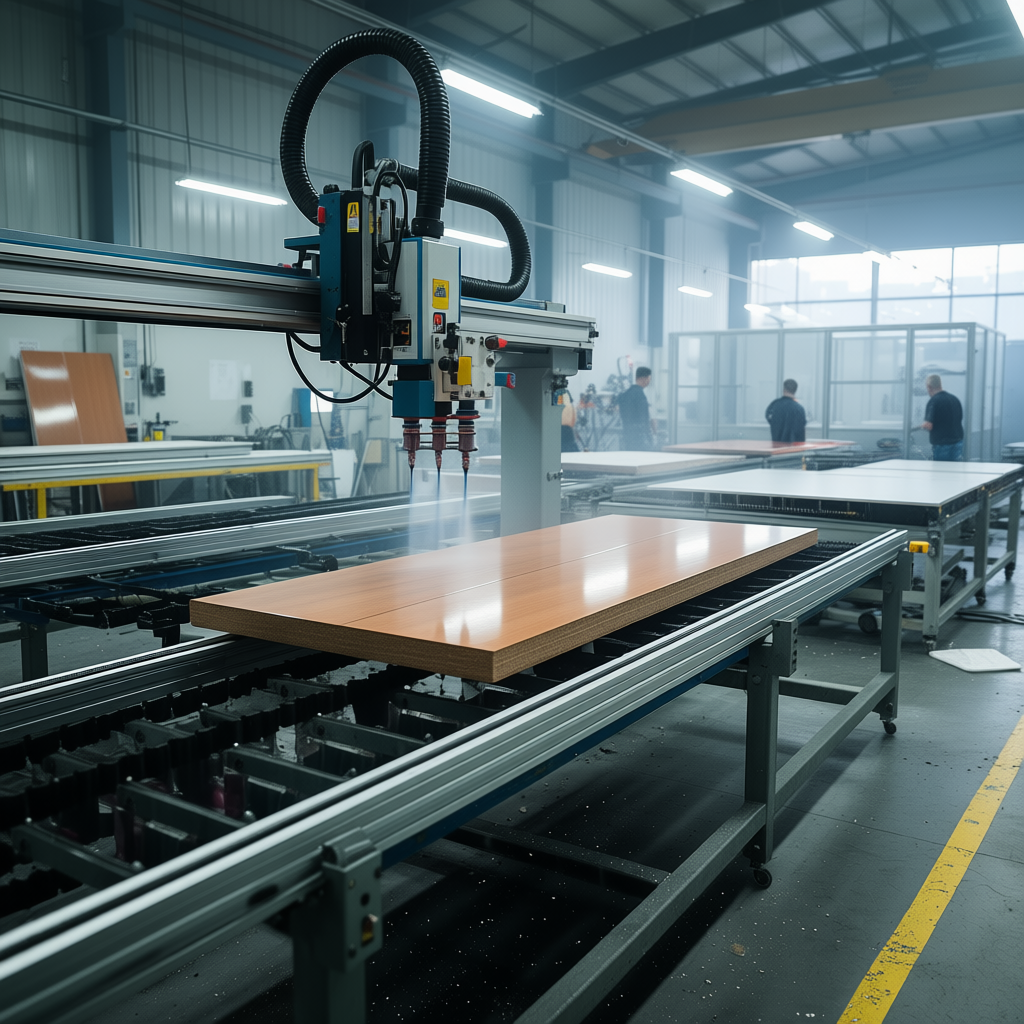
To eliminate telegraphing, engineers must move beyond generic “smooth surface” requests and specify measurable physical properties. The following benchmarks are non-negotiable for high-gloss applications:
- Internal Bond Strength: Specify MDF or HDF with an internal bond strength exceeding 80 psi per ANSI A208.2 standards. This ensures the surface fibers do not lift during sanding or painting.
- Moisture Content Stability: Ensure moisture content is stabilized between 6% and 8%. Deviations outside this range cause post-finish swelling, which breaks the gloss layer.
- Surface Density Uniformity: Verify surface density uniformity with a variance of less than 5% across the panel face. Inconsistent density leads to uneven paint absorption, creating “ghosting” effects under bright light.
- Sanding Grit Sequence: Require substrates sanded to a minimum grit sequence ending at 220-grit for optimal adhesion. Coarser grits leave scratches that fill with paint but remain visible as dull spots in high-gloss finishes.
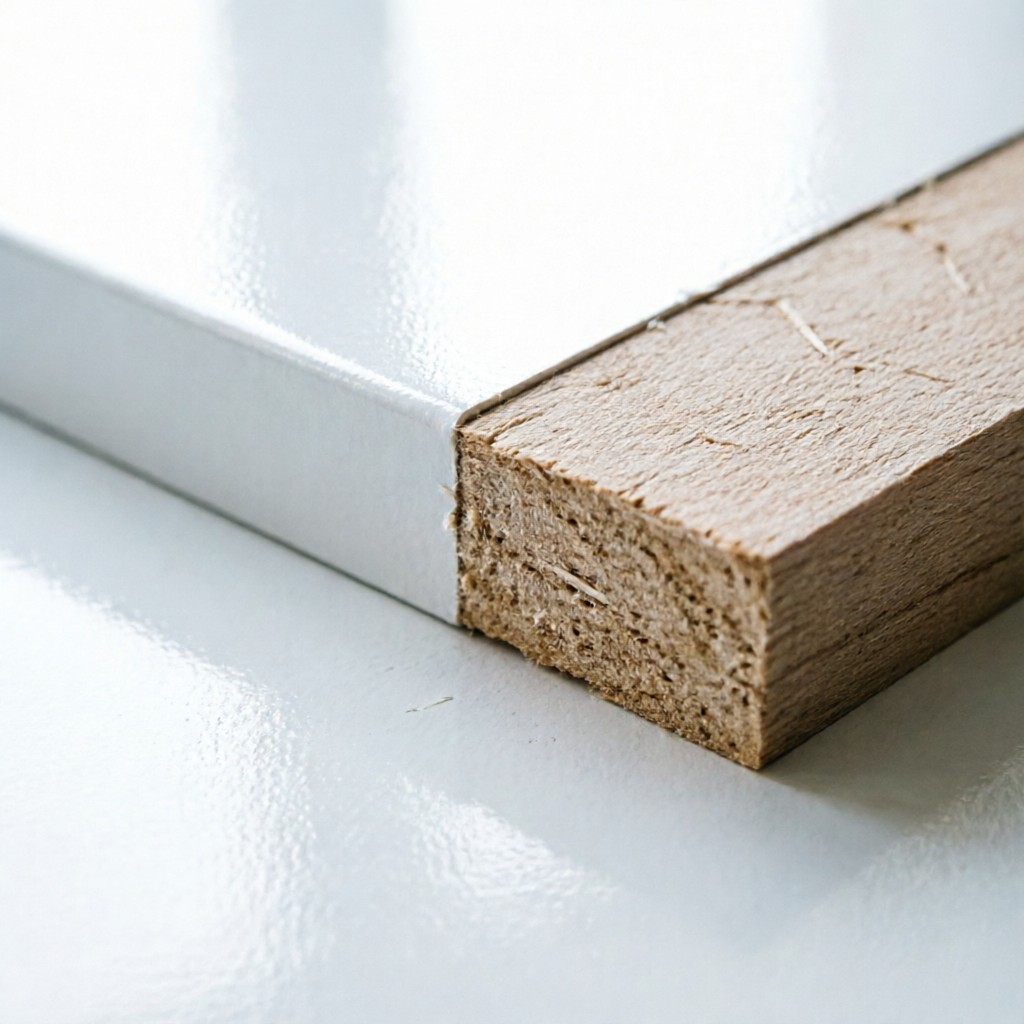
Most guides ignore the specific impact of resin distribution patterns in MDF on gloss uniformity. Uneven resin pockets create hard spots that resist sanding equally, resulting in a wavy surface known as “orange peel.” Additionally, competitors rarely address the correlation between edge-sealing techniques and face-finish durability over 12 months. Poorly sealed edges absorb ambient humidity, causing the panel core to expand slightly, which pushes against the rigid face finish and causes micro-cracking along the perimeter.
Material Comparison: Precision MDF vs. HDF for Gloss Finishes
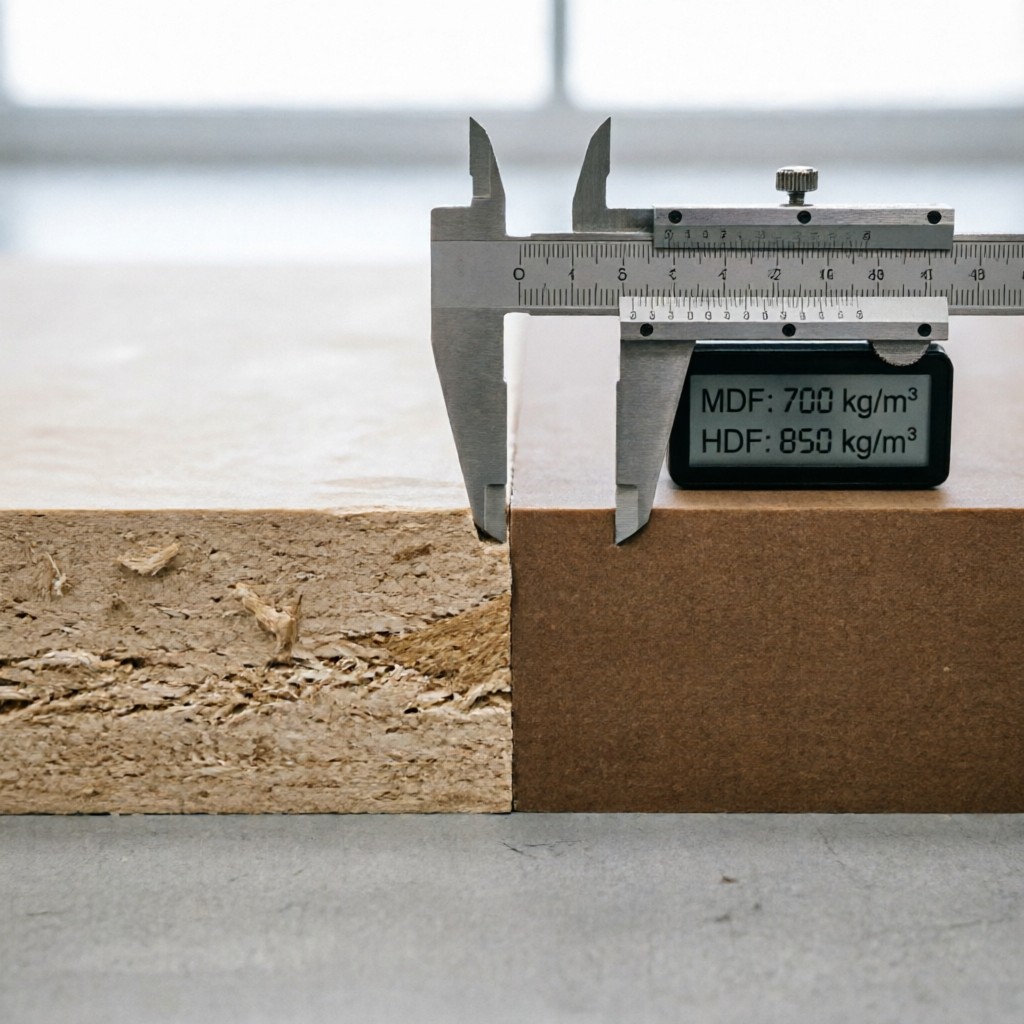
When selecting a substrate, the choice between Medium Density Fiberboard (MDF) and High-Density Fiberboard (HDF) depends on the specific mechanical demands of the application. Both offer superior smoothness compared to particleboard, but their performance metrics differ significantly.
| Specification | Precision MDF (Yicaiyigou) | High-Density Fiberboard (HDF) |
|---|---|---|
| Density Range | 600-800 kg/m³ | >800 kg/m³ up to 1,000+ kg/m³ |
| Internal Bond Strength | >80 psi (ANSI A208.2) | >90 psi (ANSI A208.2) |
| Surface Roughness (Ra) | < 2.5 µm (after 220-grit sand) | < 1.5 µm (after 220-grit sand) |
| Moisture Content | 6% – 8% | 6% – 8% |
| Thickness Tolerance | ±0.2 mm | ±0.15 mm |
| Formaldehyde Emission | ENF ≤0.05 mg/L | ENF ≤0.05 mg/L |
| Edge Machinability | Excellent for routing | Superior for sharp profiles |
| Paint Absorption Rate | Moderate (requires primer) | Low (requires less primer) |
The key takeaway is that while Precision MDF is sufficient for most flat-panel applications, HDF provides the additional density required for intricate routed edges where high-gloss paint tends to pool or thin out. For large, flat surfaces such as cabinet doors or wall panels, Precision MDF offers a cost-effective solution without compromising on the 5% density variance requirement.
Real-World Application: Yicaiyigou Precision Panels
Yicaiyigou manufactures Precision MDF and HDF specifically engineered for demanding finish applications. For a furniture maker exporting to the EU, our FSC-certified MDF with ENF ≤0.05 mg/L eliminates compliance risk at customs while meeting the strictest aesthetic standards. Our standard size of 2440x1220mm allows for efficient nesting in CNC operations, minimizing waste for high-volume producers.
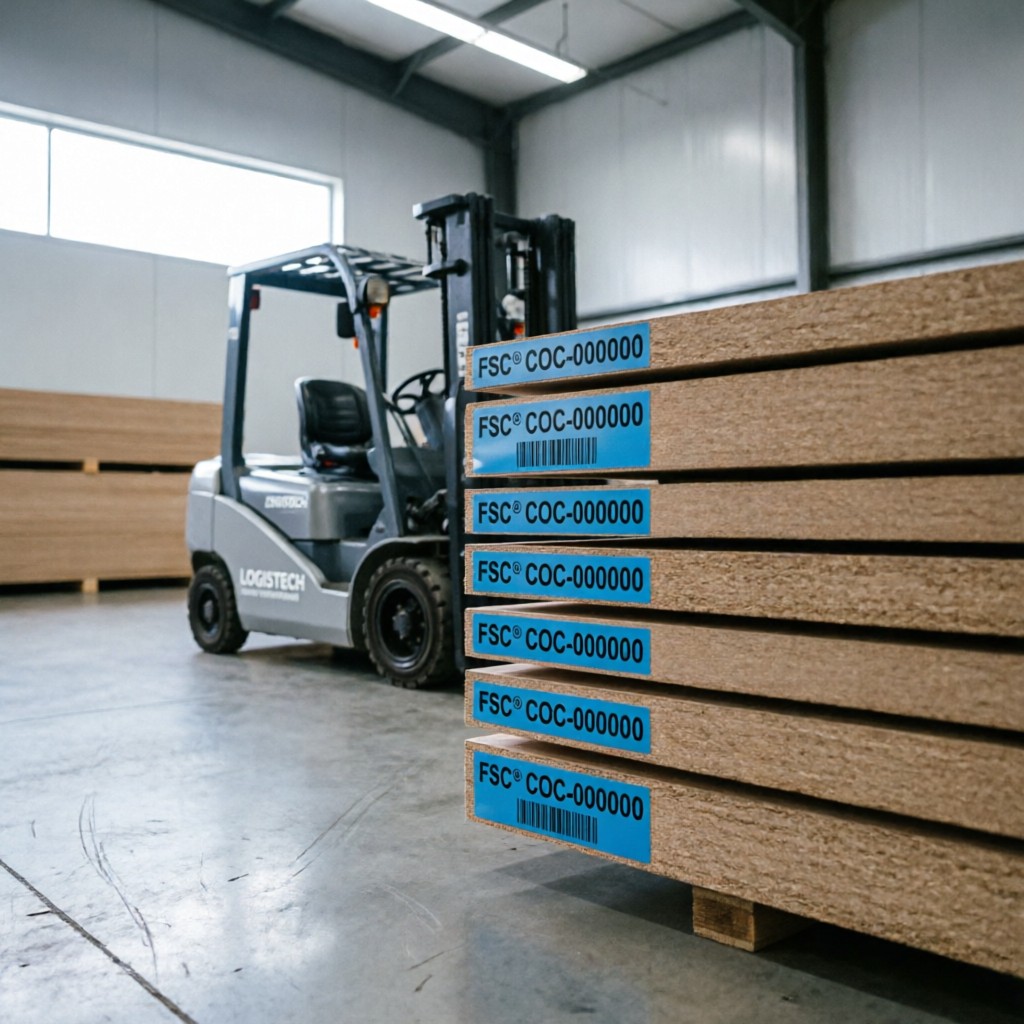
Consider a scenario involving high-traffic retail fixtures for a brand like Apple. Using Yicaiyigou’s HDF with a density of >800 kg/m³ ensures that the high-gloss white finish remains intact despite frequent cleaning and handling. The boards are supplied with a documented Chain of Custody (CoC), verifying that every panel meets the CARB P2 ≤0.11 ppm formaldehyde standard. With a lead time of 15-25 days and container loading capacities of 20-25 m³ for 20ft containers, supply chains can maintain just-in-time inventory without sacrificing quality control.
Why Exporters Choose Yicaiyigou for Compliance-Ready Panels
Yicaiyigou positions itself as a technical partner rather than a mere commodity supplier. We provide certified, finish-ready substrates with documented quality control metrics. Every shipment includes test reports verifying internal bond strength and moisture content, ensuring that the 6% to 8% moisture target is met before the material leaves the factory. This proactive approach prevents the costly rework associated with substrate failure.
Our commitment to sustainability is verified through FSC, CARB P2, CE, and ENF certifications. For buyers navigating the new EUDR landscape, our Chain of Custody documentation provides the necessary traceability to prove deforestation-free sourcing. By choosing Yicaiyigou, procurement managers secure a supply of High-Density Particleboard and MDF that is not only aesthetically superior for high-gloss applications but also legally compliant for global markets.
FAQ
What is the maximum acceptable moisture content for high-gloss MDF?
The moisture content must be stabilized between 6% and 8% to prevent post-finish swelling and cracking of the gloss layer.
How does resin distribution affect high-gloss finishes?
Uneven resin distribution creates hard spots that resist sanding, leading to “orange peel” effects; Yicaiyigou ensures uniform density variance of less than 5%.
Is CARB P2 certification sufficient for EU exports?
While CARB P2 (≤0.11 ppm) is rigorous, EU buyers should also verify ENF (≤0.05 mg/L) compliance and EUDR traceability for seamless customs clearance.
What grit sequence is recommended for substrate preparation?
Substrates should be sanded to a minimum grit sequence ending at 220-grit to ensure optimal adhesion and a scratch-free surface for high-gloss paint.
What is the lead time for Yicaiyigou Precision MDF orders?
The standard lead time is 15-25 days, with MOQ starting at one 20ft container holding 20-25 m³ of material.
Summary & Next Steps
Selecting the right substrate for high-gloss applications requires strict adherence to technical specifications, including internal bond strength >80 psi, moisture content of 6-8%, and surface density variance <5%. By prioritizing these metrics, manufacturers can eliminate telegraphing and reduce rework costs. Yicaiyigou provides the documented quality control and compliance certifications needed to support these high standards.
Request a compliant material sample with full CoC documentation from Yicaiyigou to verify surface density and moisture stability for your next production run.
Frequently Asked Questions
What is the primary cause of ‘telegraphing’ in high-gloss wood finishes?
Telegraphing is primarily caused by microscopic instability in the substrate, such as minor inconsistencies in board density or moisture content, rather than the quality of the paint itself. These imperfections become visible after curing.
What are the specific technical benchmarks required for substrates to support premium glossy finishes?
The non-negotiable benchmarks include an internal bond strength exceeding 80 psi (ANSI A208.2), moisture content stabilized between 6% and 8%, surface density uniformity with less than 5% variance, and a sanding grit sequence ending at minimum 220-grit.
How does poor moisture control affect high-gloss coatings over time?
If moisture content deviates from the 6-8% range, the board may swell or shrink after painting. This movement causes the rigid high-gloss coating to crack, delaminate, or develop micro-fractures, ruining the visual continuity of the finish.
Why is edge-sealing critical for the durability of high-gloss panels?
Poorly sealed edges absorb ambient humidity, causing the panel core to expand slightly. This expansion pushes against the rigid face finish, leading to micro-cracking along the perimeter and compromising the finish’s durability over time.
In addition to physical quality, what regulatory compliance must buyers verify for wood products starting December 30, 2024?
Buyers must verify legal sourcing adherence to the EU Deforestation Regulation (EUDR). Failure to comply creates legal liability, while physical failure results in financial loss, requiring a dual focus on mechanical precision and regulatory documentation.