| Feature | Traditional Pre-Shipment Photos | Remote Video Inspections |
|---|---|---|
| Moisture Content Verification | Cannot verify meter calibration or real-time readings; often masks variations. | Allows live verification of calibrated meter readings and specific board conditions. |
| Grade Classification | Static images may miss subtle defects or misclassifications. | Dynamic viewing enables detailed inspection of grain, knots, and grading standards. |
| Loading Sequence | Fails to capture how goods are stacked, increasing risk of transit damage. | Verifies proper loading techniques to prevent warping and physical damage during shipping. |
| Risk Management Approach | Reactive: Issues discovered post-delivery leading to claims and rejections. | Proactive: Issues identified and resolved before goods leave the factory floor. |
| Operational Impact | High rejection rates (e.g., 15%), production delays, and costly disputes. | Ensures compliance with strict standards, reducing delays and ensuring supply chain precision. |
Importers of hardwood lumber and engineered wood products face costly container rejections and production delays due to undetected moisture content deviations and grade misclassifications that traditional pre-shipment photos fail to capture. This article details how conducting remote video inspections for orders transforms quality assurance from a reactive claims process into a proactive verification step, ensuring compliance with strict moisture and grading standards before goods leave the factory floor.
The Cost of Static Photos in Wood Procurement
When a major European furniture distributor faced a 15% rejection rate on a recent shipment of indoor components, they discovered that static pre-shipment photos had masked critical moisture variations. The images showed visually acceptable boards, but upon arrival, the wood had warped due to moisture content exceeding safe thresholds for their climate-controlled assembly lines. This scenario is increasingly common as supply chains stretch across oceans, leaving buyers blind to the actual condition of their goods until they arrive at port.
Traditional documentation often fails to capture the dynamic nature of wood products. A single photograph cannot prove that a moisture meter was calibrated correctly, nor can it reveal the specific loading sequence that prevents transit damage. For procurement managers at companies like IKEA or Herman Miller, where precision is non-negotiable, relying on static images is a significant operational risk. By shifting to live, synchronized video audits, buyers can verify real-time data, moving risk management from post-delivery disputes to pre-shipment validation.
Technical Benchmarks for Remote Verification
To ensure data integrity during a virtual factory audit process, specific technical benchmarks must be met. Buyers must demand live verification of three critical parameters: moisture content, visual grading, and packaging stability. Without these specific checks, the inspection lacks the rigor required for high-value contracts.
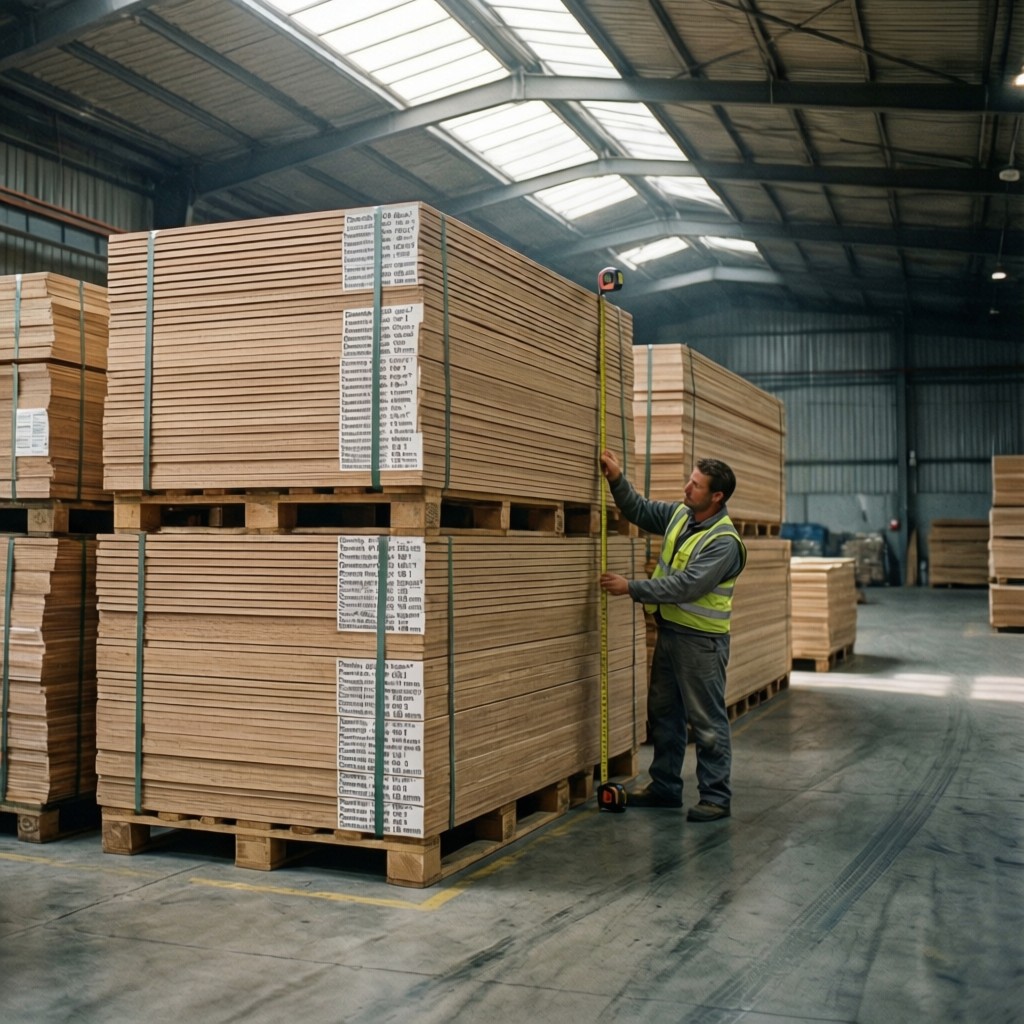
First, verify moisture content readings strictly between 6% and 8% for indoor furniture components using calibrated pin-type meters. This range is critical for preventing warping in controlled environments. Second, confirm adherence to NHLA grading rules by visually inspecting clear-face cuttings on No. 1 Common boards during the live stream. This ensures that the aesthetic quality matches the contractual agreement. Finally, validate packaging stability by checking stack height limits do not exceed 1.2 meters to prevent transit crushing. Exceeding this limit often leads to bottom-layer compression damage during ocean freight.
| Inspection Parameter | Standard Requirement | Verification Method | Risk of Non-Compliance |
|---|---|---|---|
| Moisture Content | 6% – 8% (Indoor) | Live pin-type meter check | Warping, joint failure |
| Grading Standard | NHLA No. 1 Common | Live visual inspection of cuttings | Aesthetic rejection, waste |
| Stack Height | Max 1.2 meters | Visual measurement during loading | Transit crushing, edge damage |
| Formaldehyde Emission | ENF ≤0.05 mg/L | Review of lab test reports | Customs seizure, health risks |
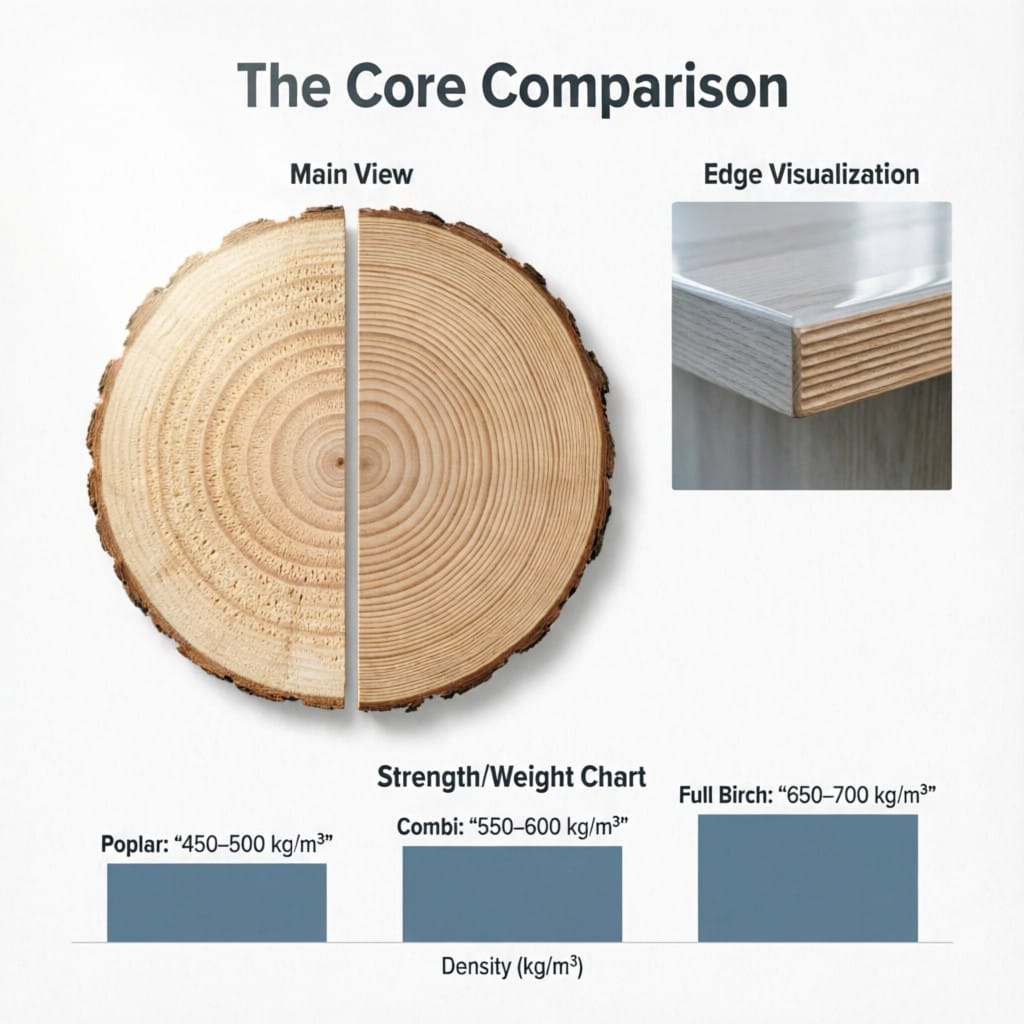
| Density (MDF) | 600-800 kg/m³ | Certificate of Analysis review | Structural weakness, screw pull-out |
| Density (HDF) | >800 kg/m³ up to 1,000+ kg/m³ | Certificate of Analysis review | Inadequate wear resistance |
| Particleboard Density | 550-750 kg/m³ | Certificate of Analysis review | Poor surface finish, swelling |
| Container Load | 20ft: 20-25 m³ / 40ft: 45-50 m³ | Loading plan verification | Inefficient logistics costs |
This table highlights the measurable standards that must be verified during a remote audit. Note that both the physical inspection and the documentary review are required to form a complete quality picture. Ignoring either aspect leaves gaps in the supply chain defense.
Real-World Application: Yicaiyigou’s Precision Panels
Yicaiyigou applies these rigorous standards to its core product lines: Precision MDF, Structural Plywood, and High-Density Particleboard. For a furniture maker exporting to the EU, our FSC-certified MDF with ENF ≤0.05 mg/L eliminates compliance risk at customs. The density of this MDF ranges from 600-800 kg/m³, providing optimal machinability for CNC routing while maintaining structural integrity.
For high-traffic applications, our High-Density Particleboard offers a density of 550-750 kg/m³, with HDF options exceeding 800 kg/m³ up to 1,000+ kg/m³. These panels are available in thicknesses from 3mm to 30mm and standard sizes of 2440x1220mm. A 20ft container holds 20-25 m³, while a 40ft container holds 45-50 m³, allowing for efficient logistics planning with a minimum order quantity of one 20ft container. Lead times are typically 15-25 days, ensuring timely delivery for just-in-time manufacturing schedules.
Why Exporters Choose Yicaiyigou for Transparent Audits
Yicaiyigou positions itself as a transparent partner by using synchronized, timestamped video audits to provide real-time quality assurance. Unlike competitors who omit live calibration checks of inspection tools, Yicaiyigou inspectors demonstrate meter calibration against known standards before taking readings. This practice ensures that the data reported is accurate and verifiable. Furthermore, most remote audits fail to document the specific loading sequence and dunnage placement. Yicaiyigou addresses this gap by recording the entire loading process, highlighting dunnage placement to prevent warping during ocean freight.
Our commitment to compliance is backed by FSC, CARB P2, CE, and ENF certifications. For buyers concerned with formaldehyde emissions, we provide detailed test reports showing compliance with E0 (≤0.07 ppm), E1 (≤0.124 ppm), and ENF (≤0.05 mg/L) standards. We also adhere to Japan JAS F★★★★ standards (≤0.3 mg/L via JIS A 1460 desiccator method). Chain of Custody (CoC) documentation is provided for all FSC-certified orders, ensuring traceability from forest to factory.
FAQ
What is the acceptable moisture content for indoor furniture components?
Moisture content should be strictly between 6% and 8% for indoor components to prevent warping and joint failure in climate-controlled environments.
How does Yicaiyigou verify grading standards during remote inspections?
Inspectors visually inspect clear-face cuttings on No. 1 Common boards during the live stream to confirm adherence to NHLA grading rules.
What is the maximum stack height for packaging stability?
Stack height limits must not exceed 1.2 meters to prevent transit crushing and edge damage during ocean freight.
What are the formaldehyde emission limits for ENF certified panels?
ENF certified panels must have formaldehyde emissions of ≤0.05 mg/L, which is stricter than E0 (≤0.07 ppm) and E1 (≤0.124 ppm) standards.
What is the typical lead time for a 20ft container order?
The typical lead time for a minimum order of one 20ft container is 15-25 days, depending on product specification and current production schedule.
Summary & Next Steps
Conducting remote video inspections for orders requires a disciplined approach to verifying moisture, grade, and packaging. By demanding live calibration checks and documented loading sequences, buyers can mitigate the risks associated with international wood procurement. Yicaiyigou’s transparent audit process ensures that every shipment meets the specified technical benchmarks before it leaves the factory.
Request a compliant material sample with full CoC documentation from Yicaiyigou to verify our quality standards firsthand.
Frequently Asked Questions
Why are traditional pre-shipment photos considered insufficient for hardwood lumber and engineered wood products?
Traditional static photos fail to capture dynamic factors such as undetected moisture content deviations, grade misclassifications, and the specific loading sequence. They cannot prove that moisture meters were calibrated correctly or reveal transit damage risks, often leading to costly container rejections and production delays upon arrival.
What is the recommended moisture content range for indoor furniture components to prevent warping?
The recommended moisture content range for indoor furniture components is strictly between 6% and 8%. This range is critical for preventing warping in climate-controlled assembly lines and should be verified using calibrated pin-type meters during live inspections.
How does remote video inspection transform the quality assurance process for wood importers?
Remote video inspections shift quality assurance from a reactive claims process to a proactive verification step. By conducting live, synchronized video audits, buyers can verify real-time data on moisture, grading, and packaging before goods leave the factory, ensuring compliance with standards and reducing post-delivery disputes.
What is the maximum stack height allowed during packaging to prevent transit crushing?
Stack heights should not exceed 1.2 meters. Exceeding this limit often leads to bottom-layer compression damage during ocean freight, so visual measurement during the loading process is required to validate packaging stability.
Which three critical parameters must be verified during a virtual factory audit to ensure data integrity?
Buyers must demand live verification of moisture content (using calibrated pin-type meters), visual grading (adhering to NHLA rules), and packaging stability (checking stack height limits). These checks ensure the rigor required for high-value contracts and prevent issues like warping, aesthetic rejection, and transit damage.