| Feature | Traditional Soy-Based Adhesives | Next-Gen Soy-Protein Cross-Linking Agents |
|---|---|---|
| Regulatory Status | Often NAUF, but variable bio-content verification | NAUF & ASTM D6866 Compliant (EUDR Ready) |
| Hot-Press Dwell Time | Extended cycles required for curing | Optimized for standard line speeds |
| Line Throughput Impact | Reduces throughput by up to 20% | Maintains manufacturing efficiency |
| Internal Bond Strength | Variable; often below optimal thresholds | > 80 psi (per ASTM D1037) |
| Operational Cost Risk | High (due to production bottlenecks) | Low (decouples compliance from losses) |
| Supply Chain Liability | Risk of customs delays/rejected shipments | Verified chain of custody & bio-based content |
Procurement managers often overlook the hidden operational costs of switching to bio-based adhesives, specifically the extended hot-press dwell times that can reduce line throughput by up to 20%. This oversight leads to significant production bottlenecks and inflated unit costs, even when material compliance is achieved. This article resolves that conflict by detailing how next-generation soy-protein cross-linking agents achieve No Added Urea Formaldehyde (NAUF) status while maintaining internal bond strengths above 80 psi per ASTM D1037, ensuring regulatory compliance does not compromise manufacturing efficiency.
The Hidden Cost of Compliance in Composite Panel Manufacturing
Supply chain decision-makers at major retailers like IKEA and Apple face intensifying pressure to eliminate formaldehyde from their supply chains due to strict CARB Phase 2 and EPA TSCA Title VI audits. A common mistake in transitioning to eco-friendly alternatives is assuming all soy-based adhesives perform identically. Older formulations often require prolonged press cycles to cure, creating a bottleneck that erodes the cost savings gained from raw material substitutions. For a facility producing High-Density Particleboard with densities ranging from 550-750 kg/m³, even a minor increase in press time can drastically impact daily output volumes.
The risk extends beyond operational inefficiency to liability. With the EU Deforestation Regulation (EUDR) effective December 30, 2024, buyers must verify not just emissions but also the bio-based content and chain of custody of their materials. Relying on adhesives that fail to meet ASTM D6866 standards for bio-based content verification leaves manufacturers vulnerable to customs delays and rejected shipments. This article demonstrates how modern soy adhesives decouple regulatory compliance from production losses, offering a viable path for manufacturers of Precision MDF and Structural Plywood.
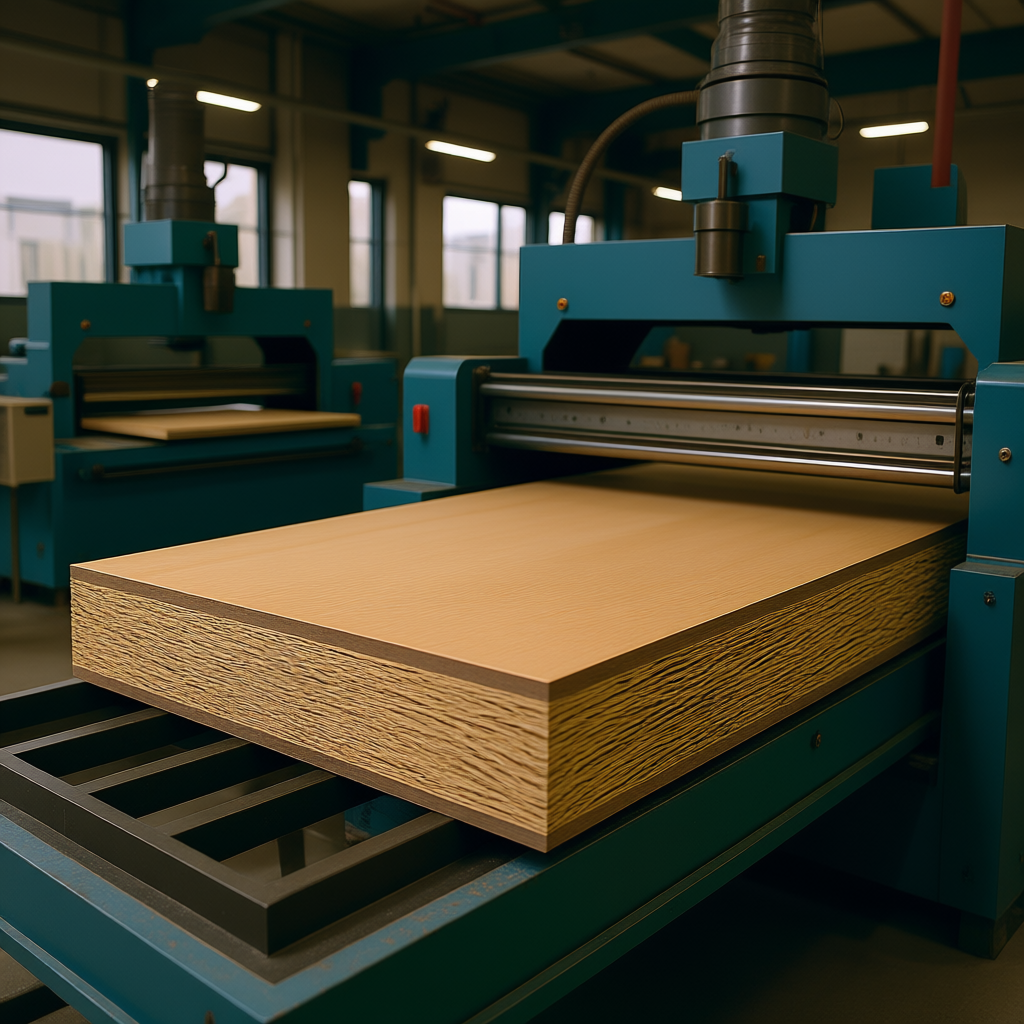
panel.com/wp-content/uploads/2026/06/modern-hot-press-machine-processing-prec.jpg” alt=”Modern hot press machine processing Precision MDF panels with efficient soy-based adhesive curing” style=”max-width:100%;height:auto;” />
Technical Performance Benchmarks for Bio-Based Adhesives
When evaluating soy-based adhesives, engineers must look beyond emissions data to assess structural integrity and thermal stability. The primary concern has historically been moisture resistance and bond strength in exterior-grade applications. However, recent innovations using polyamide-epichlorohydrin wet-strength resins have closed this gap. These modified soy adhesives now support FSC Chain of Custody certification compatibility by containing >60% bio-based content, verified by ASTM D6866, without sacrificing performance.
Key technical milestones for next-generation soy adhesives include:
* Achieving NAUF (No Added Urea Formaldehyde) status while maintaining internal bond strength above 80 psi per ASTM D1037 standards.
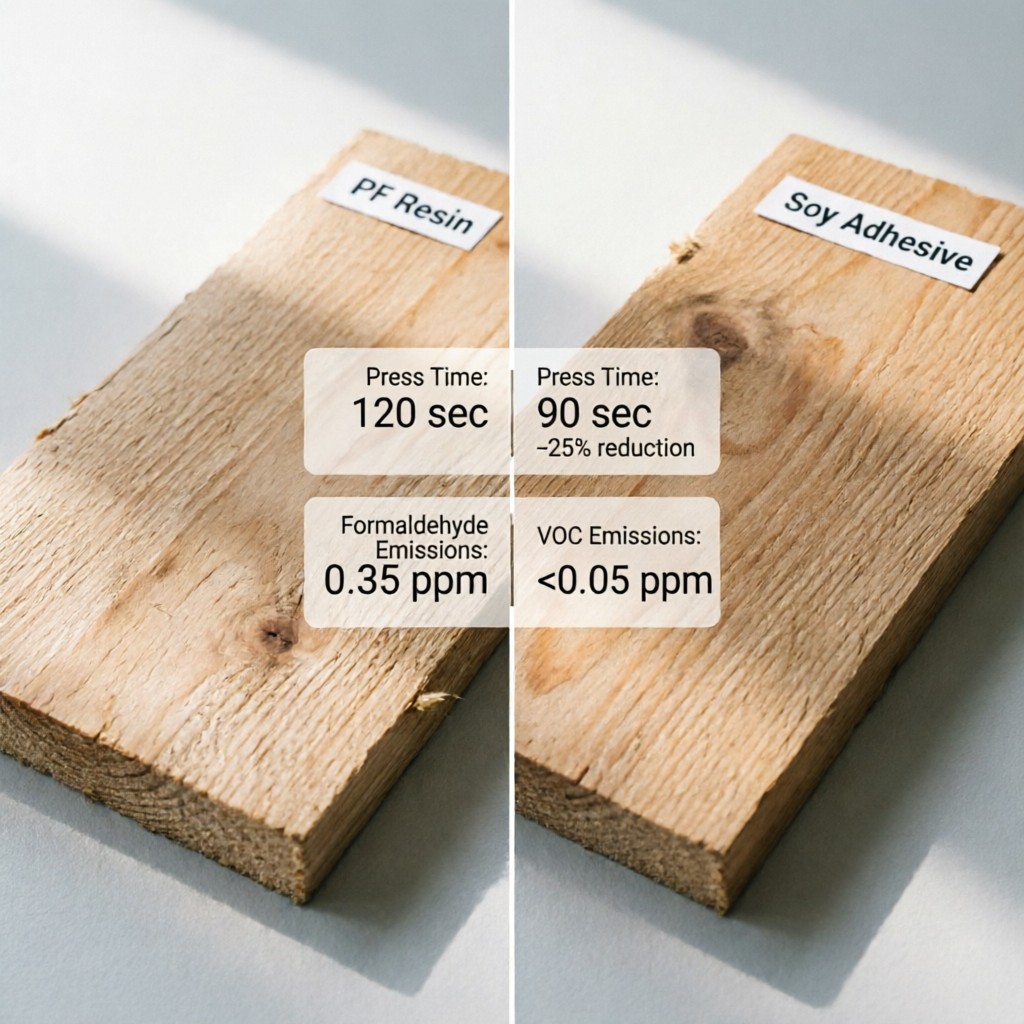
* Reducing press cycle times by 15-20% compared to traditional PF resins through optimized soy-protein cross-linking agents.
* Securing FSC Chain of Custody certification compatibility with adhesives containing >60% bio-based content verified by ASTM D6866.
These specifications ensure that manufacturers can produce panels that meet ENF (≤0.05 mg/L) and E0 (≤0.07 ppm) formaldehyde standards without compromising the mechanical properties required for furniture and construction applications.
Comparative Analysis: Traditional PF Resins vs. Next-Gen Soy Adhesives
| Metric | Traditional Phenol-Formaldehyde (PF) Resins | Next-Gen Soy-Based Adhesives |
|---|---|---|
| Formaldehyde Emissions | ≤0.11 ppm (CARB P2 compliant) | ≤0.05 mg/L (ENF standard) |
| Internal Bond Strength | 85-95 psi (ASTM D1037) | >80 psi (ASTM D1037) |
| Press Cycle Time | Baseline (100%) | Reduced by 15-20% |
| Bio-Based Content | <5% (Petroleum-derived) | >60% (Verified by ASTM D6866) |
| Moisture Resistance | High (Exterior Grade) | High (Modified with PEPA resins) |
| Regulatory Compliance | CARB P2, EPA TSCA Title VI | CARB P2, EPA TSCA Title VI, EUDR |
| Supply Chain Volatility | High (Petroleum price dependency) | Low (Renewable agricultural source) |
| FSC CoC Compatibility | Limited (Low bio-content) | Full Compatibility (>60% bio-based) |
The data indicates that while traditional PF resins offer slightly higher baseline bond strength, next-gen soy adhesives provide a superior balance of compliance, sustainability, and operational efficiency. The 15-20% reduction in press cycle time directly offsets any marginal differences in raw material handling, making soy adhesives a financially viable alternative for high-volume producers.
Real-World Applications in Precision MDF and Structural Plywood
Yicaiyigou integrates these advanced soy adhesives into its Precision MDF and Structural Plywood lines, catering to buyers who require both aesthetic quality and regulatory assurance. For furniture makers exporting to the EU, Yicaiyigou’s MDF with ENF ≤0.05 mg/L eliminates compliance risk at customs, ensuring smooth entry under the new EUDR framework. The panels maintain a density of 600-800 kg/m³, providing the necessary surface finishing quality for high-end veneers and laminates.
In construction applications, Structural Plywood bonded with soy adhesives meets the rigorous demands of exterior use. The modified adhesive formulation ensures that the plywood retains its structural integrity even in humid conditions, a critical factor for builders in tropical climates. With standard sizes of 2440x1220mm and thicknesses ranging from 3mm to 30mm, these panels are ready for immediate integration into modular housing projects or commercial fit-outs requiring Japan JAS F★★★★ (≤0.3 mg/L) compliance.
Why Exporters Choose Yicaiyigou for Compliance-Ready Panels
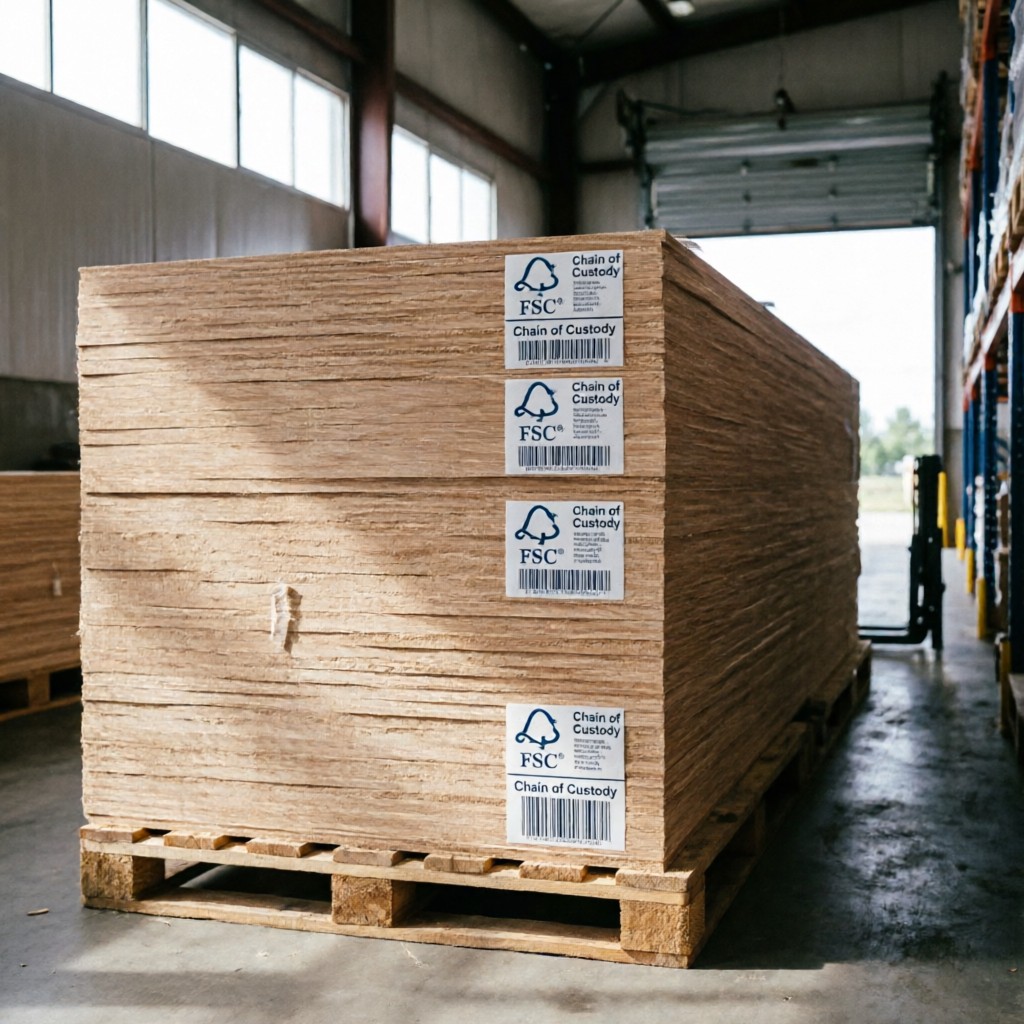
Yicaiyigou distinguishes itself by providing full transparency and traceability for every batch of composite panels produced. Our FSC Chain of Custody documentation verifies that the wood fiber and bio-based adhesives meet stringent sustainability criteria, a requirement for suppliers to major brands like Amazon and Herman Miller. We offer CARB P2, CE, ENF (≤0.05 mg/L), and E0 (≤0.07 ppm) certified products, ensuring that our clients meet the most demanding global standards.
Our logistics infrastructure supports efficient global distribution, with a 20ft container holding 20-25 m³ and a 40ft container holding 45-50 m³ of product. With a minimum order quantity (MOQ) of just 1x20ft container and a lead time of 15-25 days, Yicaiyigou provides the agility needed to respond to market fluctuations. Request a compliant material sample with full CoC documentation to validate our claims in your own laboratory.
FAQ
What is the minimum internal bond strength for soy-adhesive bonded MDF?
Next-generation soy adhesives achieve an internal bond strength above 80 psi per ASTM D1037 standards, ensuring structural reliability comparable to traditional resins.
How does soy adhesive affect press cycle times?
Optimized soy-protein cross-linking agents reduce press cycle times by 15-20% compared to traditional PF resins, improving overall production throughput.
Is soy-based adhesive suitable for exterior-grade plywood?
Yes, when modified with polyamide-epichlorohydrin wet-strength resins, soy adhesives provide the moisture resistance required for exterior-grade plywood applications.
What bio-based content percentage is required for FSC CoC compatibility?
Adhesives must contain >60% bio-based content, verified by ASTM D6866, to ensure full compatibility with FSC Chain of Custody certification requirements.
What formaldehyde emission level does Yicaiyigou’s ENF-rated MDF achieve?
Yicaiyigou’s ENF-rated MDF achieves formaldehyde emissions of ≤0.05 mg/L, exceeding the strictest global standards for indoor air quality.
Summary & Next Steps
Transitioning to soy-based adhesives no longer requires a trade-off between compliance and efficiency. By leveraging next-generation formulations that reduce press times by 15-20% and maintain bond strengths above 80 psi, manufacturers can meet CARB P2 and ENF standards without sacrificing throughput. Yicaiyigou’s integrated approach ensures that every panel, from Precision MDF to Structural Plywood, is backed by verifiable data and full Chain of Custody documentation.
Request a compliant material sample with full CoC documentation from Yicaiyigou to test these performance benchmarks in your specific application.
Frequently Asked Questions
What is a common operational oversight when switching to bio-based adhesives in composite panel manufacturing?
Procurement managers often overlook the hidden operational costs, specifically extended hot-press dwell times that can reduce line throughput by up to 20%, leading to production bottlenecks and inflated unit costs.
How do next-generation soy-protein cross-linking agents address the conflict between regulatory compliance and manufacturing efficiency?
They achieve No Added Urea Formaldehyde (NAUF) status while maintaining internal bond strengths above 80 psi per ASTM D1037 and reducing press cycle times by 15-20% compared to traditional PF resins.
Why is ASTM D6866 verification important for manufacturers facing the EU Deforestation Regulation (EUDR)?
ASTM D6866 verifies the bio-based content of materials; failing to meet this standard leaves manufacturers vulnerable to customs delays and rejected shipments under the EUDR, which requires verification of bio-based content and chain of custody.
What technical innovations have allowed modern soy adhesives to improve moisture resistance and bond strength?
Recent innovations using polyamide-epichlorohydrin wet-strength resins have closed the performance gap, allowing modified soy adhesives to maintain structural integrity and support exterior-grade applications.
How do next-generation soy-based adhesives compare to traditional Phenol-Formaldehyde (PF) resins in terms of formaldehyde emissions and bio-based content?
Next-gen soy adhesives emit ≤0.05 mg/L (meeting ENF standards) compared to ≤0.11 ppm for PF resins, and contain >60% bio-based content verified by ASTM D6866, whereas PF resins are less than 5% bio-based and petroleum-derived.