| Metric | Precision MDF | Structural Plywood |
|---|---|---|
| Density Threshold | >800 kg/m³ (HDF grade) | Variable (Layer-dependent) |
| Formaldehyde Emissions | ENF ≤0.05 mg/L | CARB P2 Compliant |
| Structural Technique | Precise Density Gradients | Cross-Lamination |
| Primary Stability Benefit | Dimensional Tolerance & Surface Finish | Mitigates Warping Under Load |
| Manufacturing Suitability | Automated CNC Lines & High-Volume Machining | Modular Construction & Load-Bearing Frames |
| Regulatory Compliance Focus | EUDR & CARB P2 | EUDR & Structural Safety Standards |
Structural integrity in engineered wood relies on precise density gradients and cross-lamination techniques that mitigate warping under load. This analysis compares the mechanical performance of Precision MDF and Structural Plywood, providing procurement managers with verifiable data to minimize supply chain risk. Understanding these metrics ensures compliance with strict EUDR and CARB P2 standards while optimizing material selection for high-volume manufacturing.
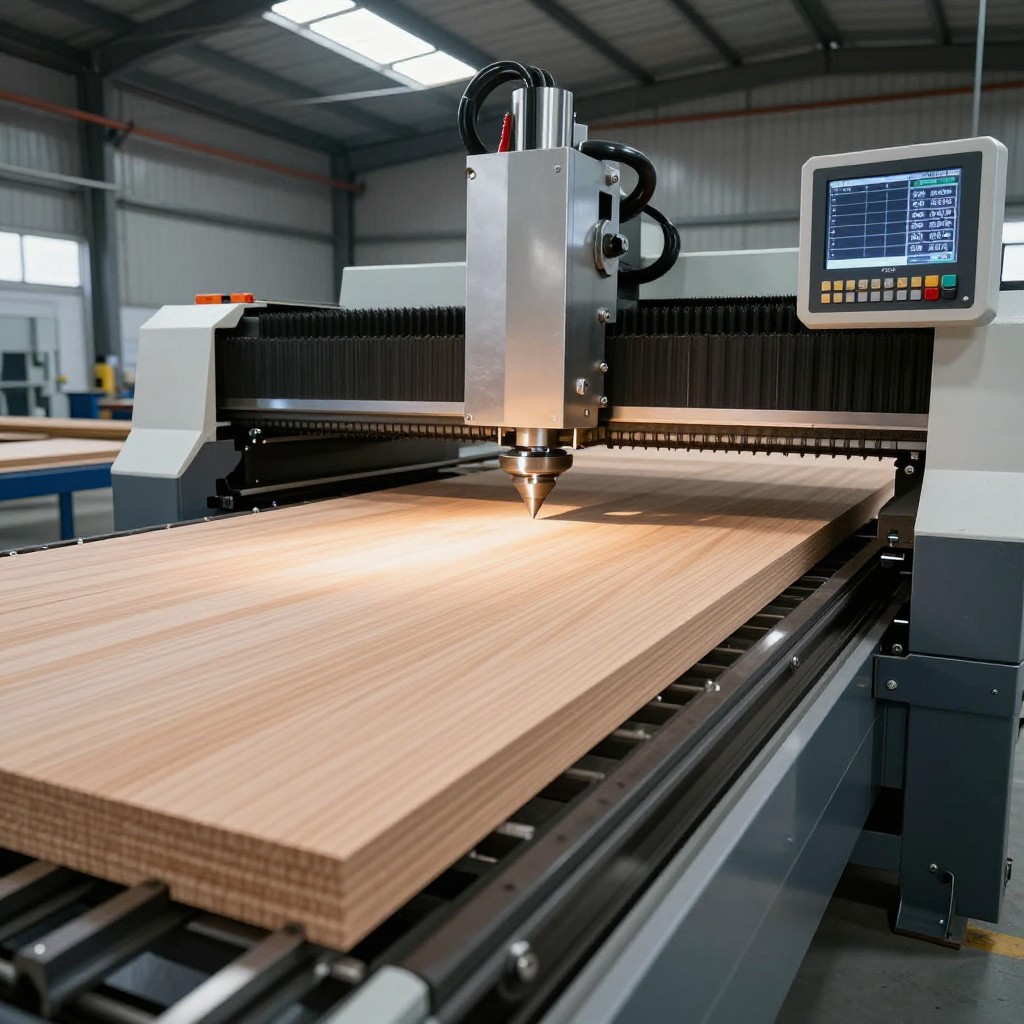
The shift toward modular construction and flat-pack furniture design, driven by giants like IKEA and Amazon, demands materials that offer predictable behavior during machining and assembly. Apple’s stringent requirements for surface finishing and dimensional tolerance further illustrate the industry’s move away from variable natural timber toward engineered consistency. For supply chain decision-makers, the choice between panel types is no longer just about cost; it is about reducing rejection rates at customs and ensuring seamless integration with automated CNC lines.
This article dissects the stability metrics of cross-laminated panels, focusing on density thresholds, formaldehyde emissions, and load-bearing capacities. By examining specific data points such as HDF density >800 kg/m³ and ENF ≤0.05 mg/L limits, readers will learn how to specify materials that balance structural rigidity with regulatory compliance. This knowledge directly translates to reduced lead times and lower total cost of ownership for global distribution networks.
Relevant Standards and Specifications
Regulatory compliance is the baseline for market access, particularly with the EU Deforestation Regulation (EUDR) effective December 30, 2024. Buyers must verify that their engineered wood products meet specific emission standards to avoid shipment delays. The California Air Resources Board (CARB) Phase 2 standard sets a formaldehyde limit of ≤0.11 ppm for composites, a critical benchmark for North American imports. In Europe and Asia, the stricter ENF standard requires formaldehyde emissions to be ≤0.05 mg/L, while the E0 standard caps emissions at ≤0.07 ppm.
Japan’s JAS F★★★★ rating, measured via the desiccator method (JIS A 1460), allows up to ≤0.3 mg/L, offering a different testing paradigm but equally rigorous safety profile. For global suppliers, maintaining Chain of Custody (CoC) documentation linked to FSC certification is essential to prove sustainable sourcing. These certifications are not merely badges; they are technical guarantees that the adhesive systems used in cross-lamination do not compromise indoor air quality or structural longevity.
Comparison Table: Precision MDF vs Structural Plywood
| Specification | Precision MDF / HDF | Structural Plywood |
|---|---|---|
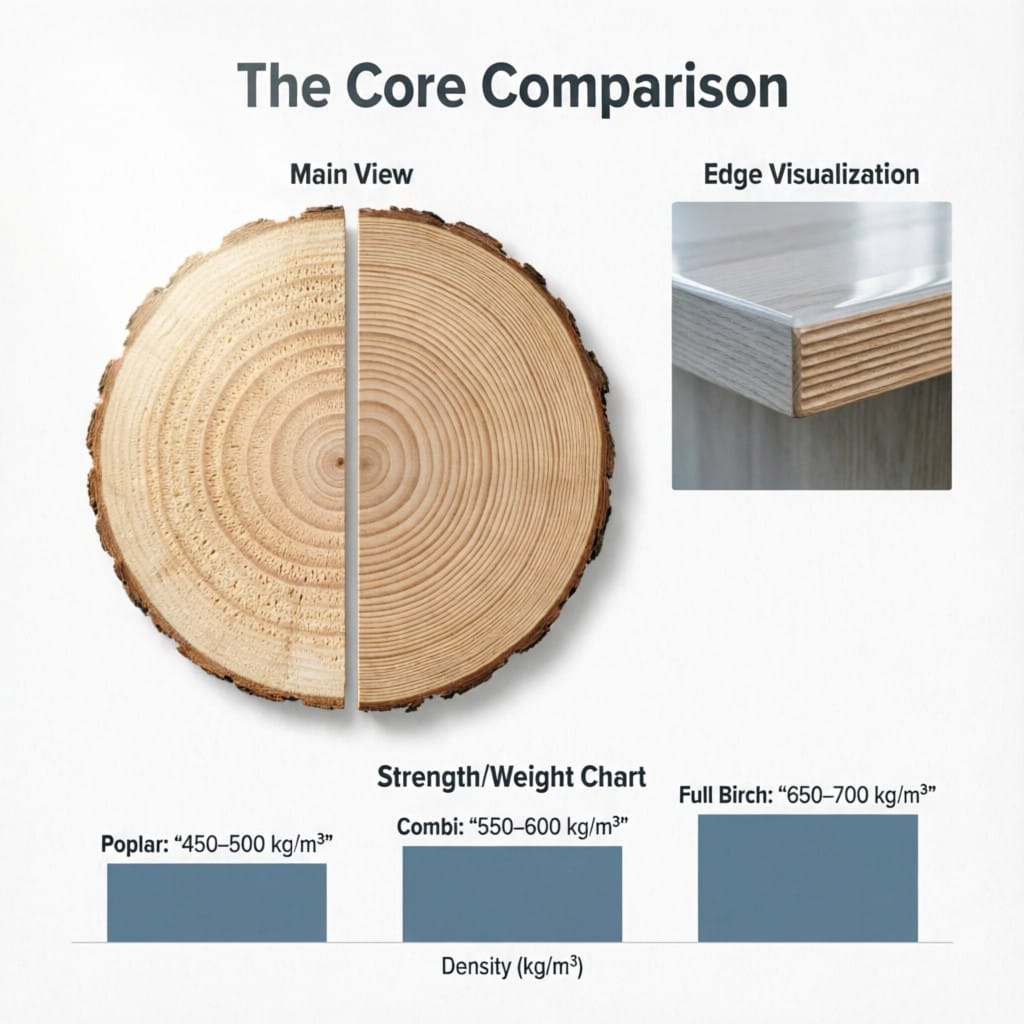
| Density Range | 600-800 kg/m³ (MDF); >800-1,000+ kg/m³ (HDF) | 550-750 kg/m³ (varies by veneer species) |
| Thickness Tolerance | ±0.2mm on 3mm-30mm range | ±0.5mm on standard 12mm-18mm sheets |
| Formaldehyde Limit (ENF) | ≤0.05 mg/L | ≤0.05 mg/L (if using low-emission adhesives) |
| Formaldehyde Limit (CARB P2) | ≤0.11 ppm | ≤0.11 ppm |
| Surface Roughness (Ra) | < 1.6 µm (ideal for direct printing) | 3.2-6.3 µm (requires filling/sanding) |
| Internal Bond Strength | High uniformity due to fiber homogeneity | Variable depending on veneer grade and glue line |
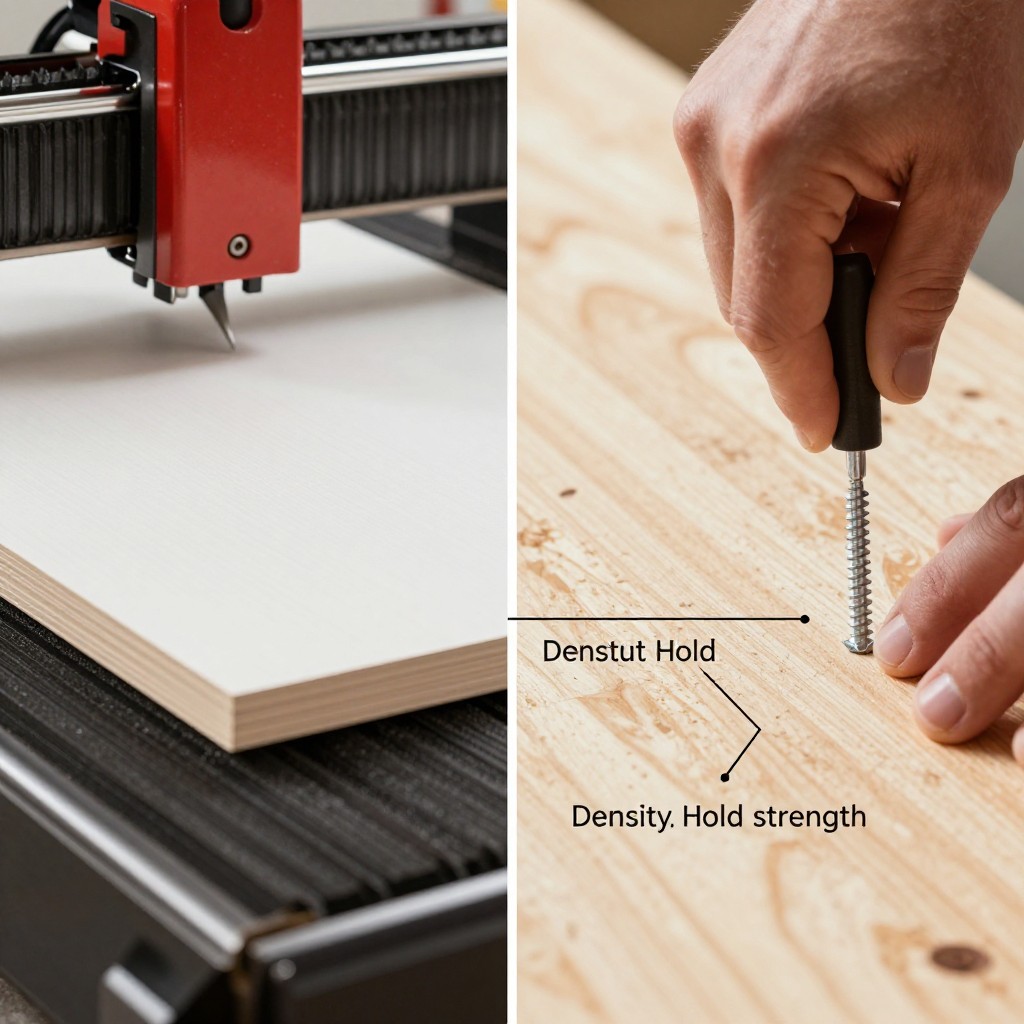
| Screw Holding Capacity | Moderate (requires pilot holes in HDF) | High (excellent grip in cross-grain layers) |
| Moisture Swelling Rate | Higher susceptibility without sealants | Lower susceptibility due to veneer structure |
| Standard Sheet Size | 2440x1220mm | 2440x1220mm |
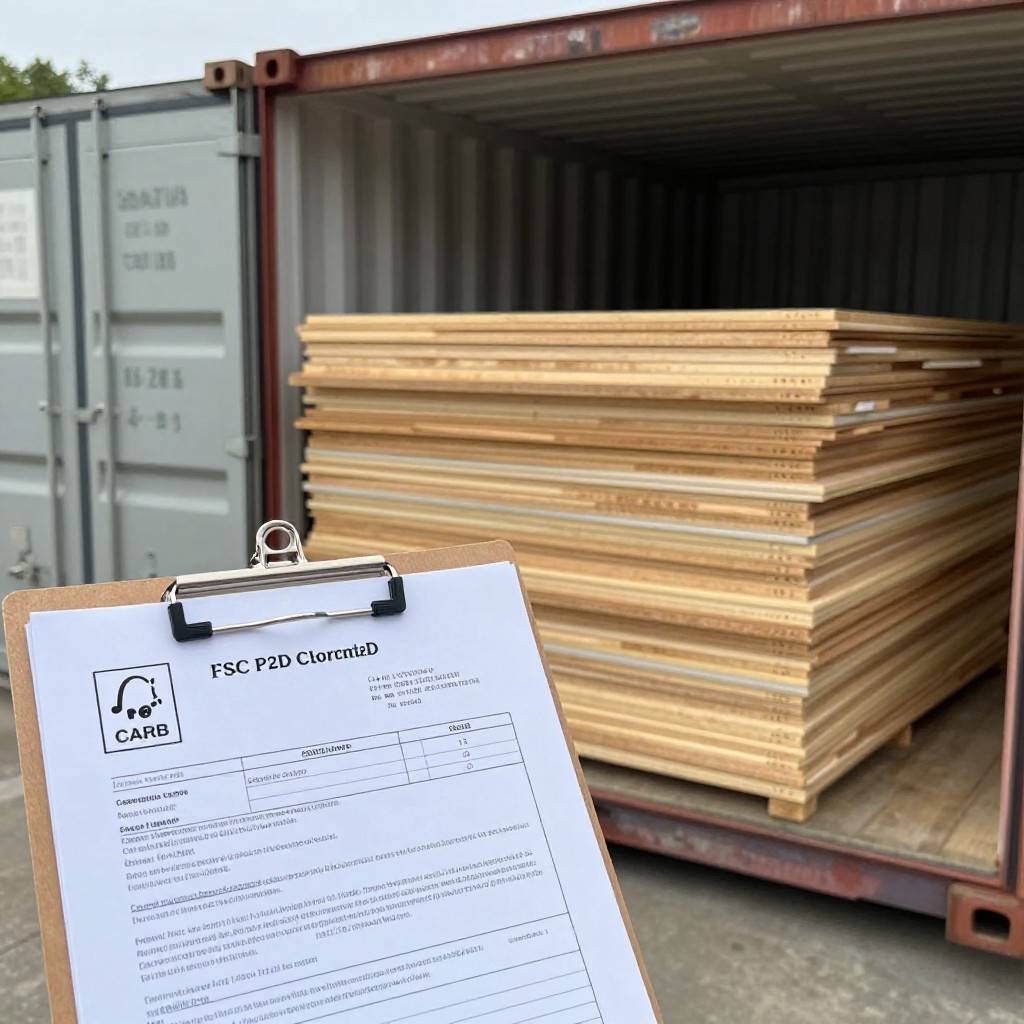
| Container Load (40ft) | 45-50 m³ | 45-50 m³ |
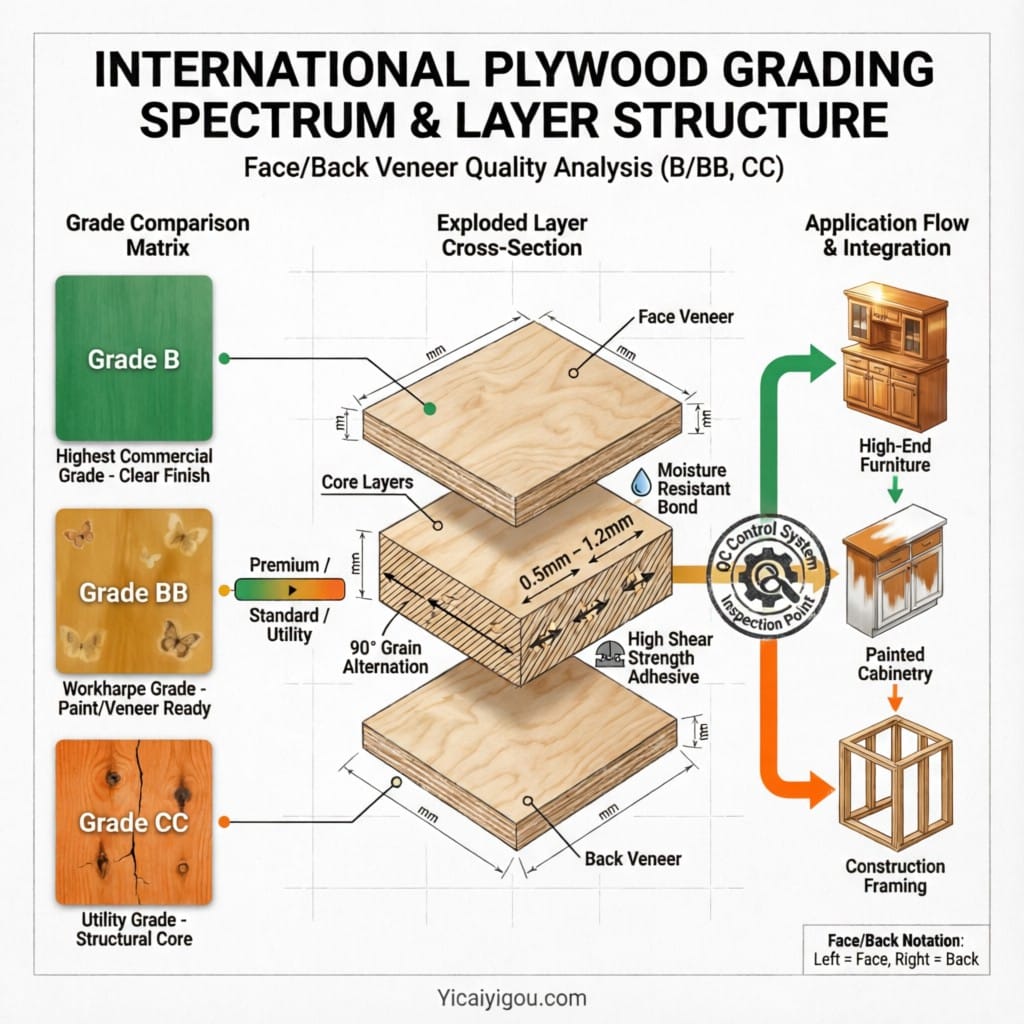
The data reveals a clear divergence in application suitability. Precision MDF and HDF offer superior surface uniformity and density consistency, making them ideal for high-finish applications where surface finishing and precision machining are critical. Structural Plywood, with its cross-laminated veneer layers, provides better mechanical screw holding and moisture resistance, suitable for structural frameworks where load distribution is paramount. Neither material is universally superior; the choice depends on whether the priority is surface aesthetics or structural grip.
Industry Examples with Real Specifications
For a furniture maker exporting to the EU, Yicaiyigou’s FSC-certified MDF with ENF ≤0.05 mg/L eliminates compliance risk at customs. The uniform density of 600-800 kg/m³ ensures that laser engraving and edge banding adhere without gaps, reducing rework rates by significant margins. A typical order might involve 3mm-30mm thicknesses cut to 2440x1220mm, loaded efficiently into 20ft containers holding 20-25 m³ or 40ft containers holding 45-50 m³.
In contrast, construction firms utilizing Structural Plywood benefit from its cross-laminated architecture, which distributes CLP mechanical load bearing capacity more effectively across spans. With a density of 550-750 kg/m³, these panels provide the necessary rigidity for subflooring and wall sheathing. When paired with Yicaiyigou’s CARB P2 compliant adhesives, these panels meet the stringent ≤0.11 ppm requirement, ensuring safe indoor environments for residential projects. The lead time of 15-25 days allows for just-in-time inventory management, crucial for large-scale developers.
Supplier Solution
Yicaiyigou distinguishes itself through rigorous adherence to international standards and transparent supply chain practices. Our Precision MDF and High-Density Particleboard are manufactured to exacting tolerances, with HDF densities exceeding 800 kg/m³ up to 1,000+ kg/m³ for premium applications. We provide full Chain of Custody (CoC) documentation for all FSC-certified products, ensuring traceability from forest to factory. This level of transparency is vital for buyers navigating the new EUDR landscape.
Our facility supports high-volume orders with a minimum order quantity (MOQ) of one 20ft container, allowing distributors to test markets without excessive capital tie-up. With certifications including CE, CARB P2, and ENF, our products are ready for global deployment. Request a compliant material sample with full CoC documentation to verify our density claims and surface quality firsthand. This proactive approach minimizes qualification time and accelerates your product launch cycle.
FAQ
What is the formaldehyde emission limit for ENF certified boards?
The ENF standard requires formaldehyde emissions to be ≤0.05 mg/L, representing the strictest global benchmark for indoor air quality.
How much volume can a 40ft container hold for these panels?
A 40ft container typically holds 45-50 m³ of Precision MDF or Structural Plywood, optimized for standard 2440x1220mm sheet sizes.
What is the density range for High-Density Fiberboard (HDF)?
HDF produced by Yicaiyigou has a density of >800 kg/m³, often reaching 1,000+ kg/m³ for enhanced durability and machining precision.
What is the lead time for standard orders?
The standard lead time for production and preparation is 15-25 days, depending on order volume and customization requirements.
Is FSC certification available for all product lines?
Yes, Yicaiyigou offers FSC-certified options with full Chain of Custody (CoC) documentation to ensure sustainable sourcing compliance.
Summary & Next Steps
Selecting the right cross-laminated panel requires balancing density, emission standards, and mechanical performance. Precision MDF and HDF excel in surface-critical applications with densities up to 1,000+ kg/m³, while Structural Plywood offers superior screw holding for construction uses. Both must meet rigorous standards like CARB P2 (≤0.11 ppm) and ENF (≤0.05 mg/L) to ensure global market access.
To validate these specifications for your specific application, request a compliant material sample with full CoC documentation from Yicaiyigou. This low-friction step allows your engineering team to test machinability and finish quality before committing to bulk orders, ensuring your supply chain remains resilient and compliant.
Frequently Asked Questions
How do Precision MDF and Structural Plywood differ in terms of surface roughness and suitability for finishing?
Precision MDF offers a surface roughness (Ra) of less than 1.6 µm, making it ideal for direct printing and stringent surface finishing requirements like those of Apple. In contrast, Structural Plywood has a rougher surface ranging from 3.2 to 6.3 µm, which typically requires additional filling or sanding before finishing.
What are the key formaldehyde emission limits for engineered wood products under CARB P2 and ENF standards?
Under the California Air Resources Board (CARB) Phase 2 standard, the formaldehyde limit for composites is ≤0.11 ppm. The stricter European ENF standard requires formaldehyde emissions to be ≤0.05 mg/L, ensuring compliance with rigorous indoor air quality regulations in Europe and Asia.
Why is the shift toward engineered wood products like Precision MDF important for modular construction and automated manufacturing?
Engineered wood provides predictable behavior during machining and assembly, consistent dimensional tolerance, and uniform density, which are critical for reducing rejection rates in automated CNC lines and meeting the demands of flat-pack furniture design driven by companies like IKEA and Amazon.
What density thresholds are recommended for High-Density Fiberboard (HDF) to ensure structural rigidity?
To balance structural rigidity with regulatory compliance, HDF should have a density greater than 800 kg/m³, with some specifications reaching over 1,000 kg/m³, compared to standard MDF which ranges from 600-800 kg/m³.
Which material offers better screw holding capacity and moisture resistance: Precision MDF or Structural Plywood?
Structural Plywood offers high screw holding capacity due to its cross-grain layers and has lower susceptibility to moisture swelling because of its veneer structure. Precision MDF has moderate screw holding capacity (often requiring pilot holes in HDF) and higher susceptibility to moisture swelling unless sealed.