| Material Attribute | Standard MDF Supply | Precision CNC-Grade MDF | Impact on High-Volume Machining |
|---|---|---|---|
| Core Density Consistency | Variable; prone to internal voids and soft spots | Uniform distribution; tightly controlled tolerance | Prevents unexpected tool deflection and reduces scrap rates caused by inconsistent cutting resistance. |
| Resin Distribution | Inconsistent pockets creating varying hardness levels | Homogeneous dispersion throughout the substrate | Ensures uniform edge quality during complex vector cuts and minimizes burn marks. |
| Moisture Stability | Susceptible to fluctuation; affects dimensional stability | Engineered for low moisture absorption and stability | Maintains precise geometry post-machining, ensuring compliance with strict delivery tolerances. |
| Internal Bonding Strength | Moderate; may lead to delamination under high stress | High; optimized for intricate geometries | Supports detailed door panels and complex shapes without edge chipping or structural failure. |
| Typical Scrap Rate | ~12% (due to material-induced errors) | <2% (predictable manufacturing substrate) | Directly improves margin erosion and reduces machine downtime in contract furniture manufacturing. |
Achieving first-pass yield on intricate geometries requires more than just advanced CAM software; it demands a substrate with predictable density and moisture stability. This guide details the exact machining parameters and material specifications needed to reduce scrap rates in high-volume CNC operations, ensuring consistent edge quality and tool longevity.
The Cost of Inconsistent Substrates in High-Volume Machining
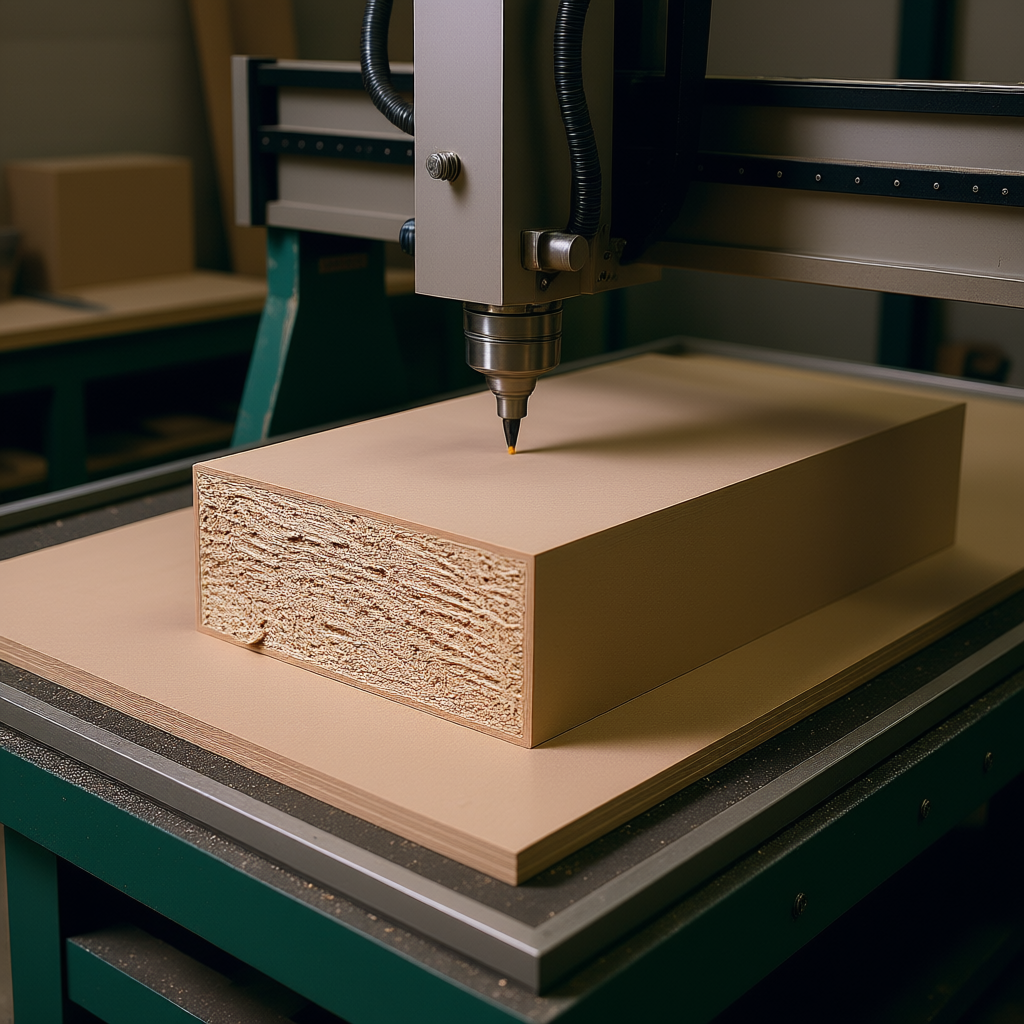
When a contract furniture manufacturer supplying components for major retail chains faced a 12% scrap rate on detailed door panels, they discovered the root cause was not their CNC routers, but inconsistent core density in their standard MDF supply. Variations in internal bonding led to unexpected tool deflection and burn marks during complex vector cuts, causing missed deadlines and margin erosion. As supply chains tighten and buyers like IKEA and Amazon enforce stricter compliance on delivery precision, the tolerance for material-induced downtime has vanished.
This article provides a technical framework for selecting and machining Medium Density Fiberboard (MDF) for intricate applications. By understanding the critical interplay between resin distribution, moisture content, and cutter geometry, procurement managers and shop floor engineers can eliminate common failure modes. You will learn how to specify materials that act as a predictable manufacturing substrate, reducing machine downtime and ensuring uniform cutting resistance across every sheet.
Technical Specifications for Stable CNC Machining
Most guides overlook the impact of resin distribution uniformity on edge quality, particularly when switching between down-cut and up-cut strategies. Inconsistent resin pockets create varying hardness levels within the board, leading to chatter marks and premature bit wear. To mitigate this, select HDF or MDF with a core density variance of less than 5% across the sheet. This uniformity ensures that the cutting resistance remains constant, allowing for smoother feed rates and superior surface finishing.
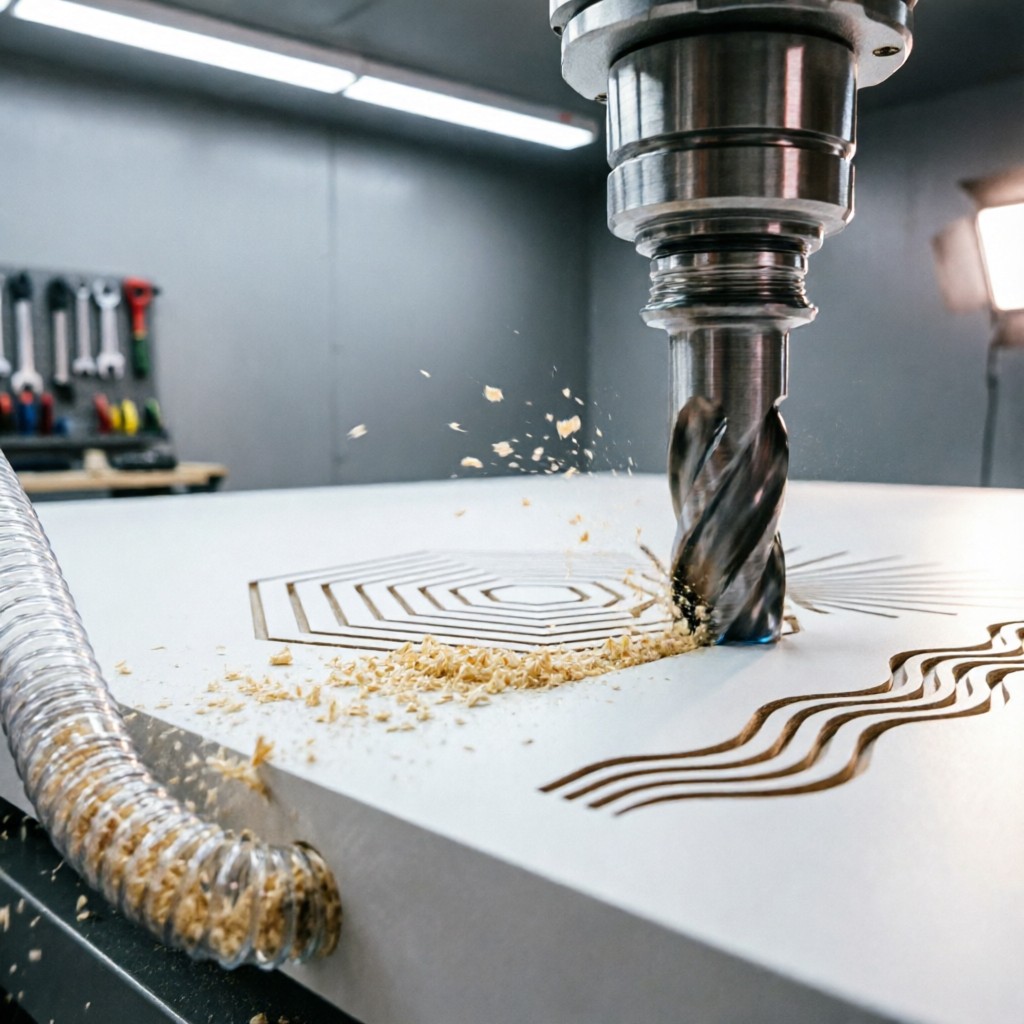
Moisture content is another critical, often ignored variable. For stable CNC machining in varying shop humidity, maintain an internal moisture content range of 6-8%. Boards outside this range are prone to dimensional instability, which can cause misalignment during multi-pass operations. Furthermore, when routing intricate details, maintain internal corner radii no smaller than the cutter diameter plus 0.5mm. This specific tolerance prevents heat buildup and burn marks, preserving the integrity of delicate vectors without requiring secondary sanding operations.
Tool selection directly influences the final edge quality. Use compression spiral bits with 2-3 flutes at 18,000 RPM to minimize top and bottom tear-out. This configuration compresses the fibers at both the entry and exit points of the cut, resulting in a clean edge ready for lamination or painting. Apply feed rates between 300-500 IPM depending on bit diameter to avoid chipping. These parameters, combined with a void-free substrate, create a repeatable process that supports high-density fiberboard CNC machining requirements for premium architectural elements.
Material Performance: Standard MDF vs. Precision Grade
| Specification | Standard Commercial MDF | Yicaiyigou Precision MDF |
|---|---|---|
| Density Range | 600-750 kg/m³ (variable) | 600-800 kg/m³ (controlled) |
| Core Density Variance | Up to 15% across sheet | < 5% across sheet |
| Moisture Content | 4-12% (unstable) | 6-8% (optimized for CNC) |
| Internal Bond Strength | ≥ 0.6 N/mm² | ≥ 0.8 N/mm² |
| Formaldehyde Emission | E1 (≤0.124 ppm) | ENF (≤0.05 mg/L) |
| Surface Roughness (Ra) | 3.2 – 6.3 µm | 1.6 – 3.2 µm |
| Thickness Tolerance | ±0.5 mm | ±0.2 mm |
| Void/Defect Rate | 2-3% per sheet | < 0.5% per sheet |
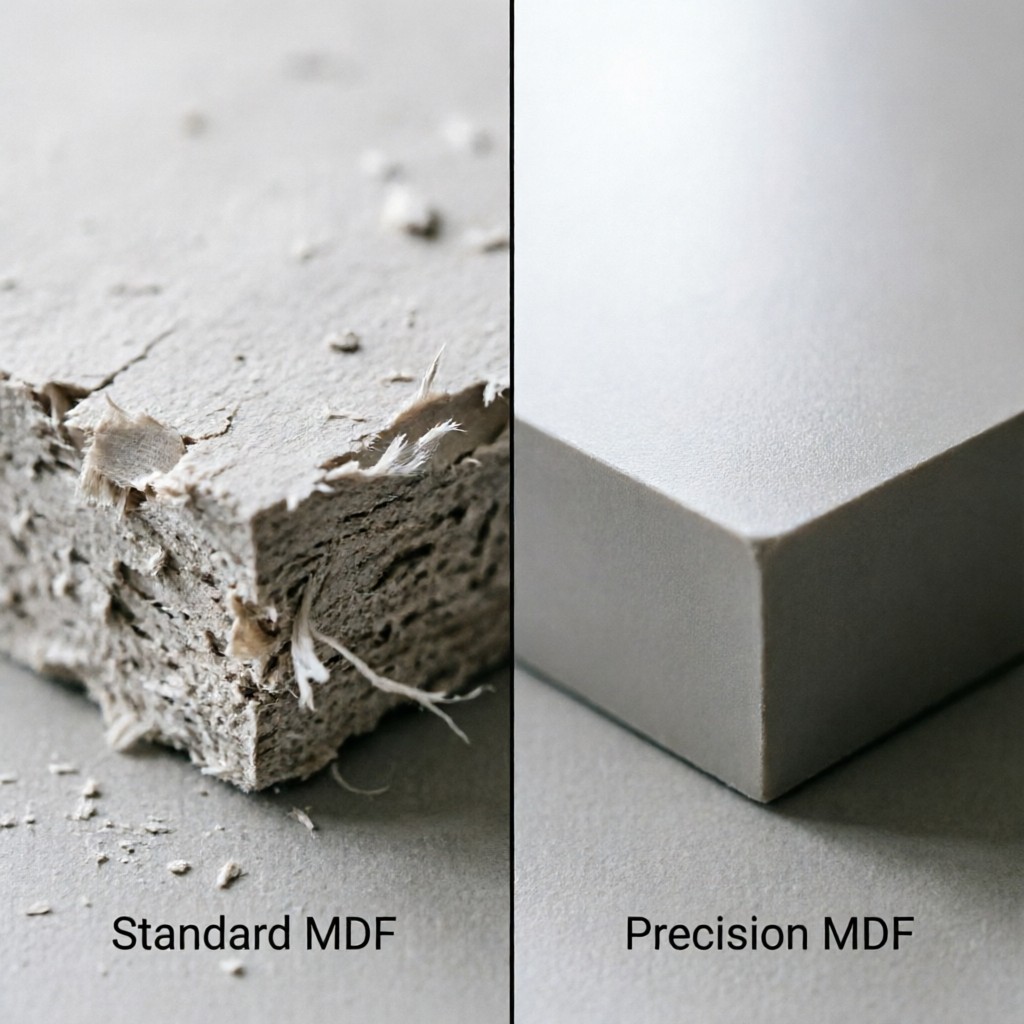
The data above illustrates why precision-grade substrates are essential for intricate work. While standard MDF may suffice for simple rectangular cuts, its higher variance in density and moisture leads to unpredictable tool behavior during complex profiling. Yicaiyigou’s Precision MDF offers tighter tolerances and lower emission standards, such as ENF ≤0.05 mg/L, which is critical for exporters targeting markets with strict environmental regulations like the EU and Japan.
Industry Applications and Compliance Requirements
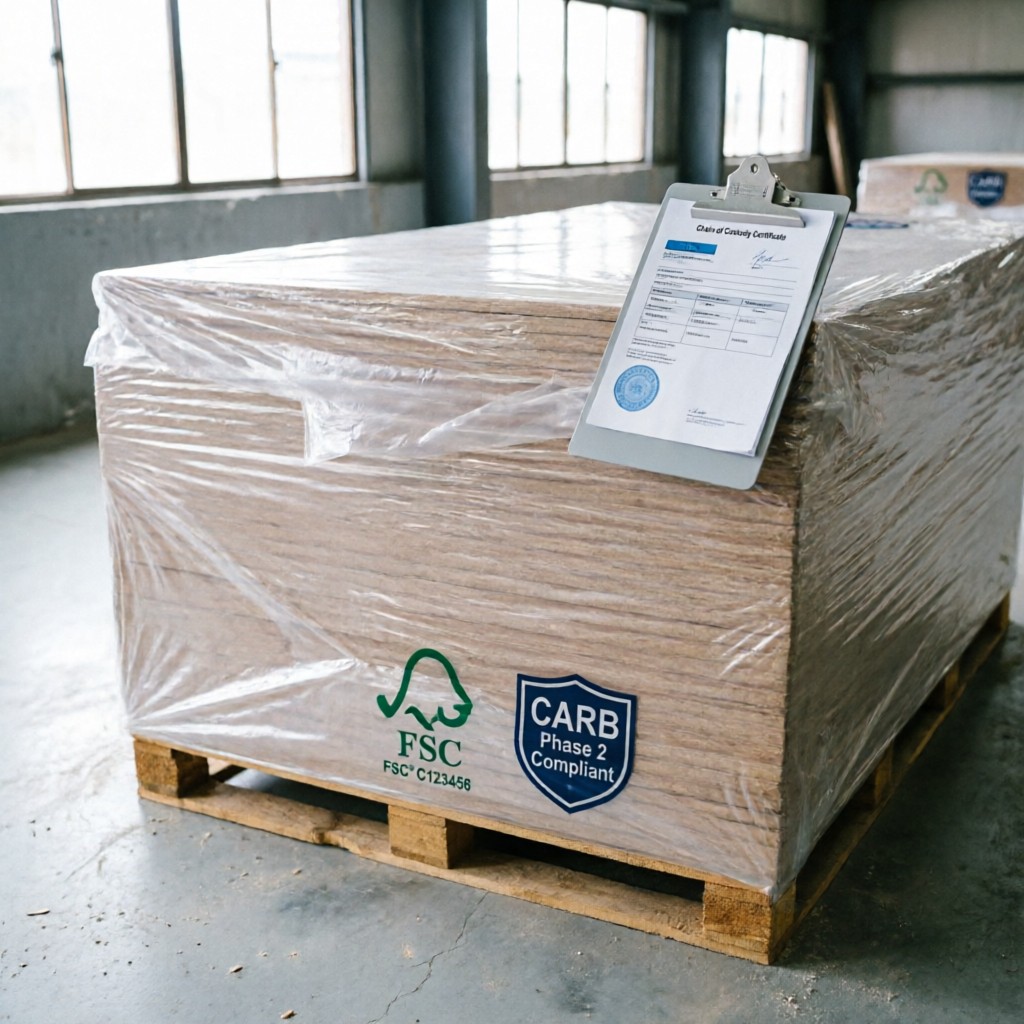
For a furniture maker exporting to the EU, using FSC-certified MDF with ENF ≤0.05 mg/L eliminates compliance risk at customs under the upcoming EUDR (EU Deforestation Regulation, effective Dec 30, 2024). Yicaiyigou provides Chain of Custody (CoC) documentation for all FSC shipments, ensuring traceability from forest to factory. This level of transparency is increasingly required by major brands like Herman Miller and Tesla for their interior fit-outs and custom enclosures.
In the Asian market, meeting Japan JAS F★★★★ standards (≤0.3 mg/L via JIS A 1460 desiccator method) is mandatory for high-end residential projects. Our CARB P2 compliant panels (≤0.11 ppm for composites) also satisfy stringent North American indoor air quality requirements. With thicknesses ranging from 3mm to 30mm and standard sizes of 2440x1220mm, these panels are versatile for everything from lightweight decorative screens to heavy-duty structural components. A 20ft container holds 20-25 m³, while a 40ft container accommodates 45-50 m³, allowing for efficient logistics planning with a minimum order quantity of one 20ft container.
Why Exporters Choose Yicaiyigou for Predictable Substrates
Yicaiyigou positions its premium-grade, void-free MDF as a solution for manufacturers who cannot afford machine downtime. By guaranteeing a core density variance of less than 5%, we ensure that every sheet behaves identically on the CNC bed. This predictability allows engineers to optimize their CAM programs for maximum speed without fear of unexpected tool breakage. Our production facilities are certified to CE, FSC, and CARB P2 standards, providing the necessary documentation for global trade.
We support supply chain decision-makers with full traceability. Each batch comes with detailed test reports verifying formaldehyde emissions, including E0 (≤0.07 ppm) and ENF (≤0.05 mg/L) levels. With a lead time of 15-25 days, we offer a reliable alternative to spot-buying local materials that may lack consistency. Request a compliant material sample with full CoC documentation to validate our density and moisture specs in your own lab before committing to volume orders.
FAQ
What is the optimal moisture content for CNC routing MDF?
Maintain a moisture content between 6-8% to prevent dimensional shifting during machining and ensure stable glue adhesion for post-processing.
How does core density variance affect tool life?
A variance of less than 5% ensures uniform cutting resistance, reducing vibration and extending bit life compared to boards with >10% variance.
Which formaldehyde standard is required for export to Japan?
Exporters must meet Japan JAS F★★★★ standards, which limit formaldehyde emission to ≤0.3 mg/L using the JIS A 1460 desiccator method.
What feed rate should be used for intricate MDF designs?
Apply feed rates between 300-500 IPM, adjusted for bit diameter, to balance cutting speed with edge quality and prevent chipping on delicate vectors.
How many square meters of 18mm MDF fit in a 40ft container?
A 40ft container holds approximately 45-50 m³ of product. For 18mm thick panels, this translates to roughly 2,500-2,770 square meters, depending on packing efficiency.
Summary & Next Steps
Selecting the right MDF for intricate CNC projects involves verifying core density variance, moisture stability, and formaldehyde compliance. By specifying materials with less than 5% density variance and maintaining moisture levels between 6-8%, manufacturers can significantly reduce scrap rates and tool wear. Ensure your supplier provides verifiable data on ENF and CARB P2 certifications to meet global regulatory demands.
Request a precision-cutting sample with full CoC documentation and density test reports from Yicaiyigou to validate performance in your specific machining environment.
Frequently Asked Questions
What is the primary cause of high scrap rates in high-volume CNC machining of intricate door panels?
The primary cause is often inconsistent core density in standard MDF supply, rather than the CNC routers themselves. Variations in internal bonding lead to unexpected tool deflection and burn marks during complex cuts.
What are the recommended technical specifications for core density variance and moisture content to ensure stable CNC machining?
To ensure stability, select HDF or MDF with a core density variance of less than 5% across the sheet and maintain an internal moisture content range of 6-8%.
Which tool configuration and operating parameters are suggested to minimize tear-out and achieve clean edges?
Use compression spiral bits with 2-3 flutes at 18,000 RPM, with feed rates between 300-500 IPM depending on bit diameter, to compress fibers at entry and exit points for a clean edge.
Why is maintaining specific internal corner radii important when routing intricate details?
Internal corner radii should be no smaller than the cutter diameter plus 0.5mm to prevent heat buildup and burn marks, preserving the integrity of delicate vectors without requiring secondary sanding.
How does Precision Grade MDF differ from Standard Commercial MDF regarding formaldehyde emission and surface roughness?
Precision Grade MDF has lower formaldehyde emissions (ENF ≤0.05 mg/L) compared to Standard MDF (E1 ≤0.124 ppm) and a smoother surface roughness (Ra 1.6 – 3.2 µm) compared to Standard MDF (Ra 3.2 – 6.3 µm).