| Feature | Traditional 12mm Birch Plywood | Advanced Engineered Wood Composites |
|---|---|---|
| Density | High (Standard hardwood density) | < 0.45 g/cm³ |
| Impact on Payload & Fuel Efficiency | Significant erosion of capacity | Minimized weight penalty |
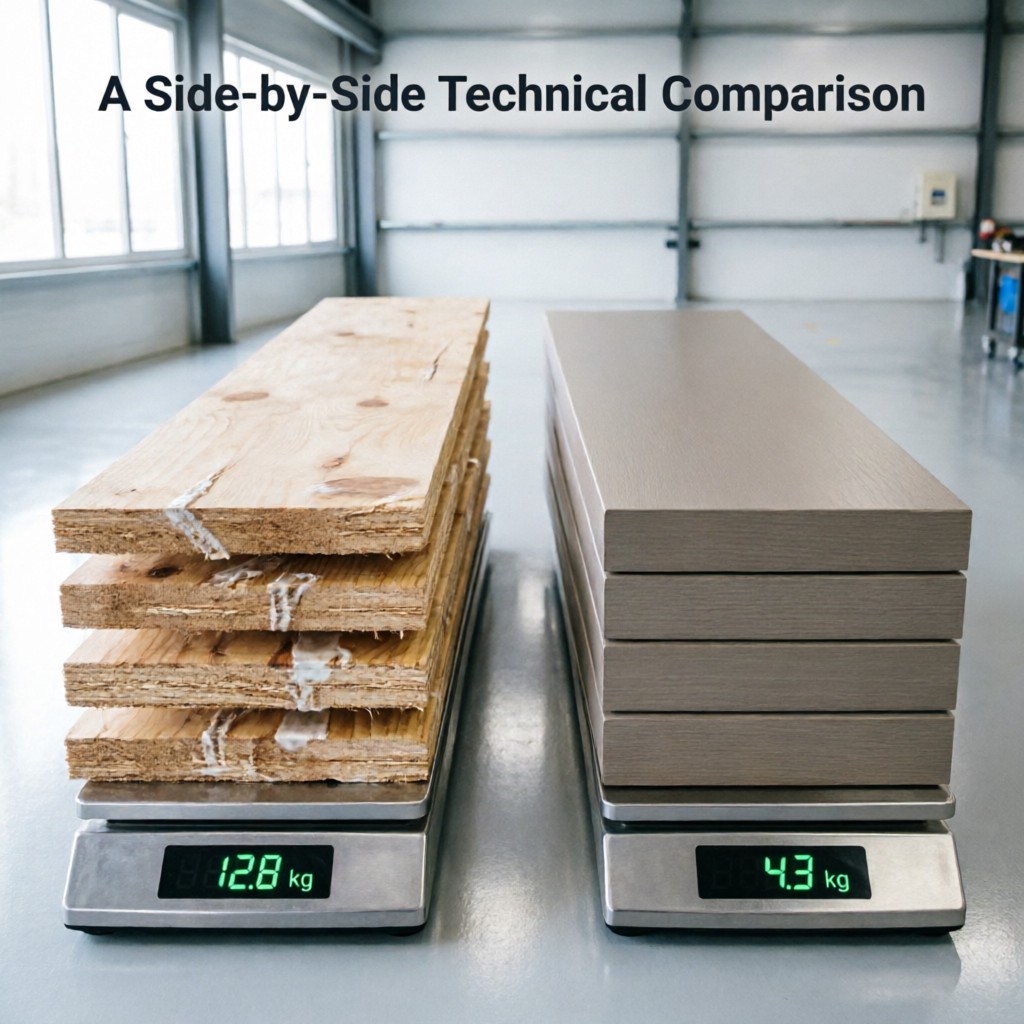
| Total Interior Build Weight | Baseline (Heavy) | Reduced by 15-20% |
| Structural Integrity | High durability | Maintained structural integrity |
| Screw-Holding Strength | Excellent | Comparable/Verified performance |
| Aesthetic Finish Quality | Standard wood grain | High-quality finish |
| Design Flexibility | Limited by GVWR constraints | Allows for larger battery/water tanks |
Every kilogram added to a recreational vehicle chassis directly erodes payload capacity and fuel efficiency, creating a critical engineering bottleneck for modern campervan manufacturers. This article details how advanced engineered wood composites achieve densities under 0.45 g/cm³ while maintaining structural integrity, offering a verified alternative to traditional heavy plywood interiors. By integrating these lightweight rv interior panel materials, procurement teams can reduce total interior build weight by 15-20% without compromising on screw-holding strength or aesthetic finish quality.
The Payload Penalty of Traditional Plywood Interiors
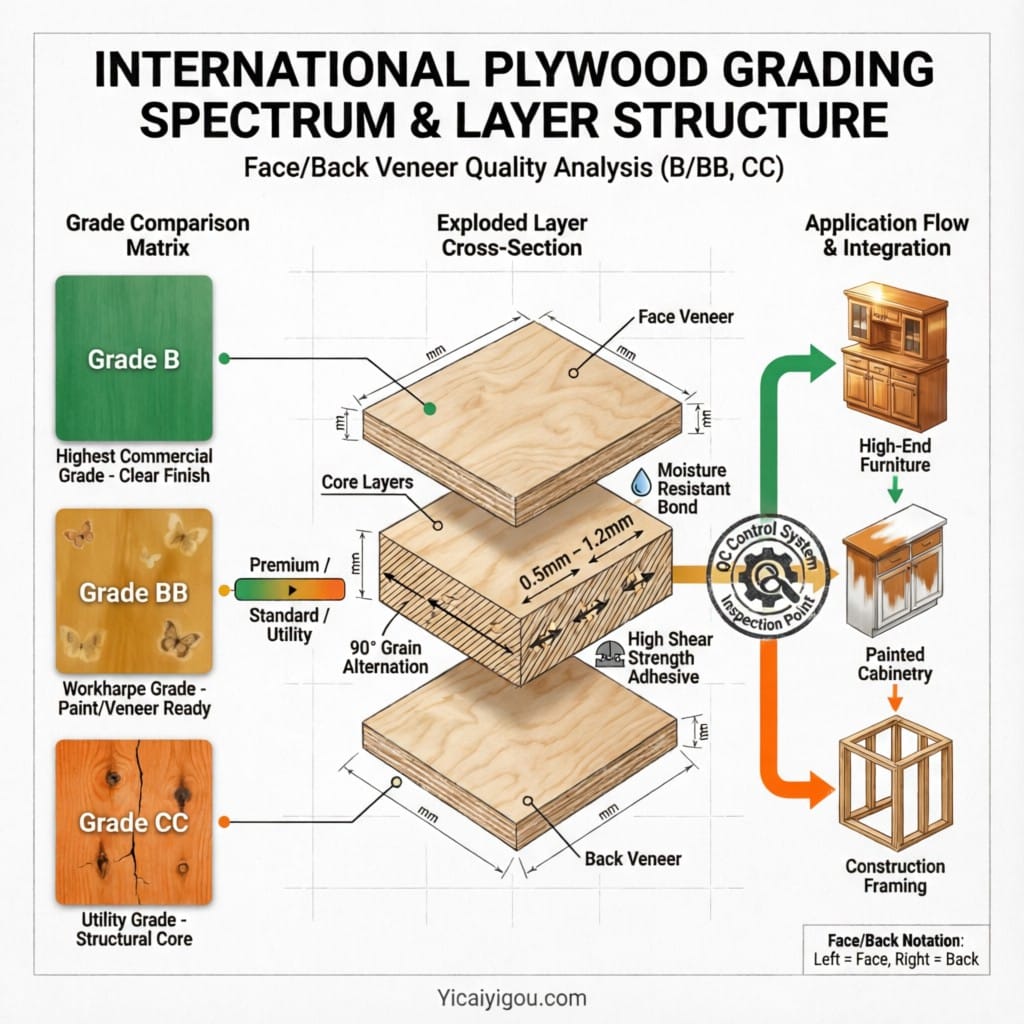
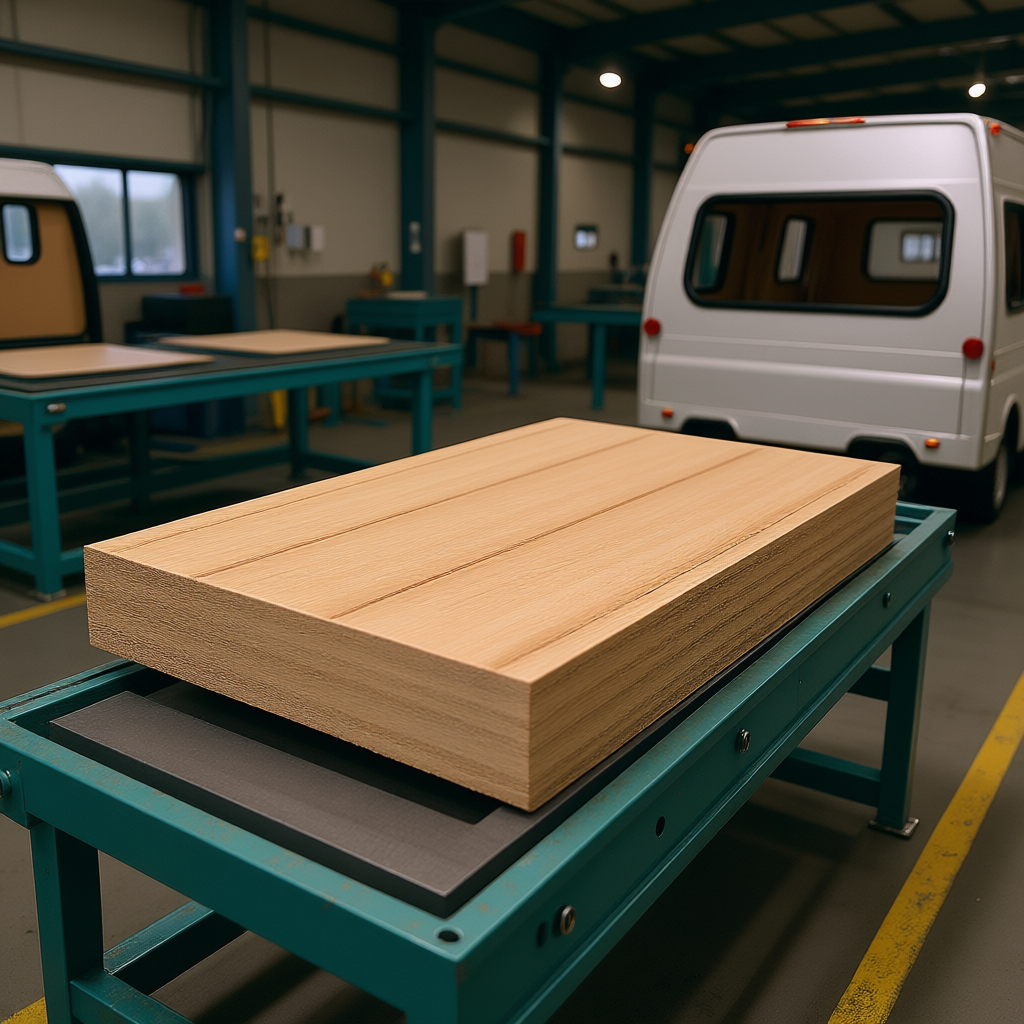
In the competitive landscape of Class B van conversions, every component is scrutinized for mass. Traditional 12mm birch plywood, long considered the gold standard for durability, imposes a significant weight penalty that limits usable cargo capacity. For manufacturers aiming to meet strict Gross Vehicle Weight Ratings (GVWR), the cumulative mass of cabinetry, wardrobes, and wall linings often forces compromises in battery size or water tank capacity. Reducing this dead weight is no longer just an optimization; it is a fundamental requirement for viable vehicle design.
Leading automotive and consumer brands like Tesla and IKEA have long leveraged material science to balance mass and performance, proving that lightweight does not mean fragile. For RV engineers, the challenge lies in finding a material that mimics the workability of wood but sheds the density. Advanced engineered cores now allow for substantial campervan wall panel weight savings, enabling designers to maximize living space and utility features within tight regulatory weight limits.
Technical Performance Benchmarks for Lightweight Cores
To replace traditional plywood effectively, alternative materials must meet rigorous mechanical and safety standards. The following specifications define the baseline for high-performance lightweight panels suitable for automotive and marine-adjacent applications.
| Specification Metric | Traditional 12mm Birch Plywood | Advanced Lightweight Engineered Panel |
|---|---|---|
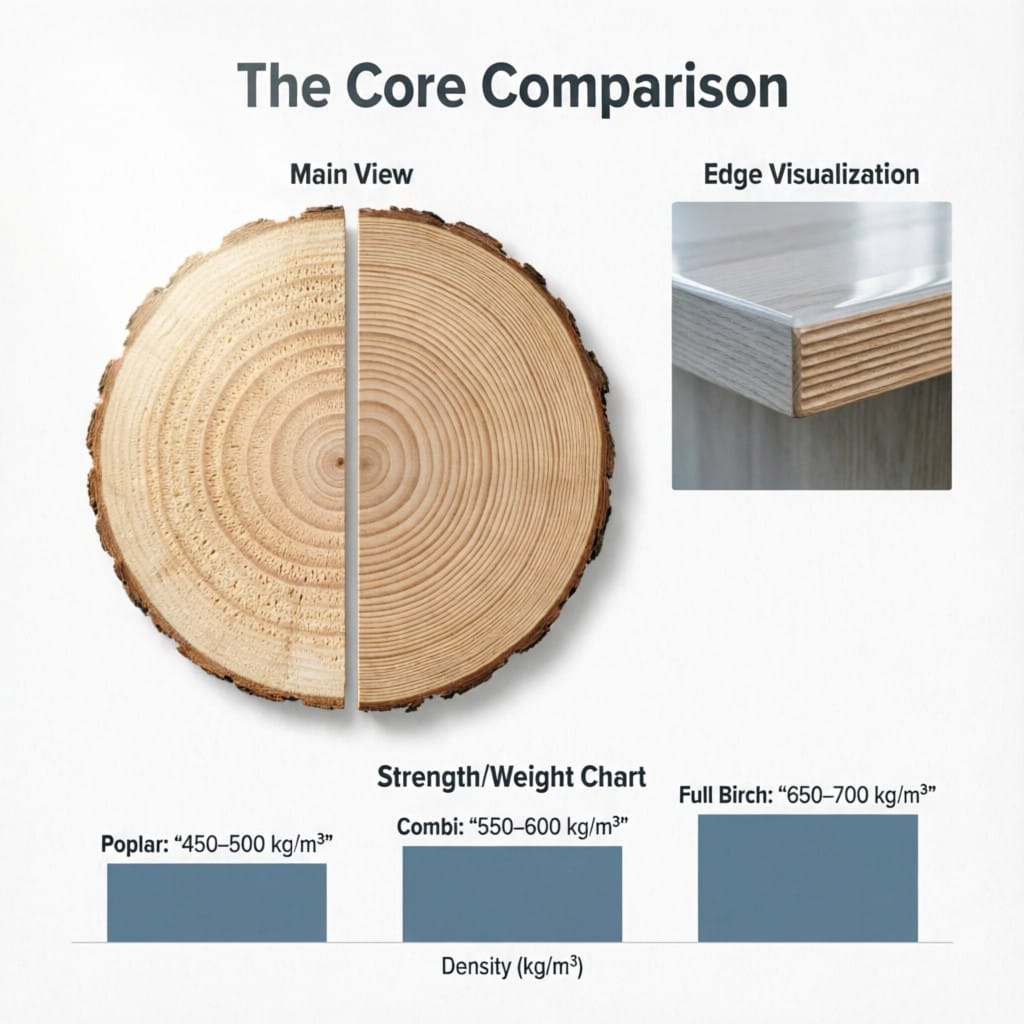
| Panel Density | 0.65 – 0.70 g/cm³ | < 0.45 g/cm³ |
| Weight Reduction | Baseline (0%) | 15-20% reduction |
| Edge-Grain Screw Holding | ~900N | ≥ 800N |
| Flammability Standard | Often requires treatment | Compliant with FMVSS 302 |
| Moisture Resistance (Shower Adj.) | Moderate (prone to delamination) | High (engineered hydrophobic core) |
| CNC Machining Tolerance | ±0.5mm (variable due to voids) | ±0.2mm (consistent homogeneous core) |
| Formaldehyde Emission (CARB P2) | Varies by adhesive | ≤ 0.11 ppm |
| Surface Finish Compatibility | Good | Excellent (no grain telegraphing) |
The data highlights a critical trade-off: while traditional plywood offers slightly higher raw screw-holding power, the engineered panel maintains a robust 800N threshold, which is sufficient for most cabinetry hinges and drawer slides. More importantly, the homogeneous core of the engineered panel eliminates the voids common in plywood, ensuring superior CNC machining tolerance. This consistency prevents fitment issues during assembly, a frequent pain point when using variable-density natural woods.
Engineering Precision for Modular RV Systems
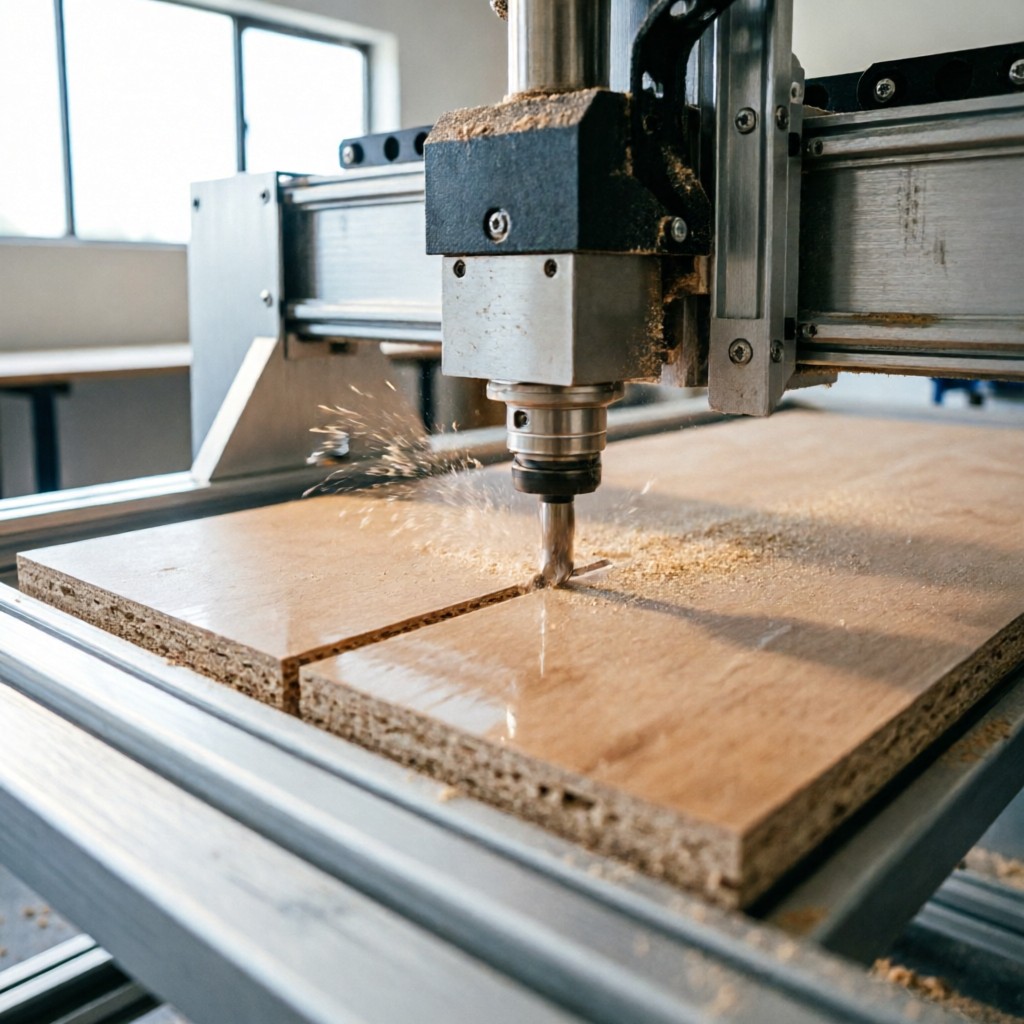
Yicaiyigou’s approach to lightweight panel manufacturing focuses on the intersection of density control and structural reliability. By utilizing high-density particleboard and precision MDF technologies, we produce panels that integrate seamlessly with modular aluminum rv enclosure systems. These materials are designed to withstand the vibrations and thermal cycling inherent in mobile environments.
For shower-adjacent cabinetry in Class B vans, moisture resistance is paramount. Unlike standard competitors who overlook this specific use case, our engineered composites are formulated to resist swelling and delamination in high-humidity zones. This ensures that bathroom vanities and storage units remain structurally sound over years of use. Furthermore, the smooth surface of these panels supports high-quality surface finishing, allowing for direct lamination or painting without the extensive sanding required for natural wood grains.
Why Exporters Choose Yicaiyigou for Compliance-Ready Panels
Navigating global environmental regulations requires more than just quality materials; it demands verifiable documentation. Yicaiyigou provides full Chain of Custody (CoC) documentation, ensuring that every panel meets FSC standards and complies with the EU Deforestation Regulation (EUDR), effective December 30, 2024. Our commitment to transparency extends to formaldehyde emissions, with products certified to CARB P2 (≤ 0.11 ppm), E0 (≤ 0.07 ppm), and ENF (≤ 0.05 mg/L) standards.
Our manufacturing capabilities support large-scale procurement with efficient logistics. A 20ft container holds 20-25 m³ of product, while a 40ft container accommodates 45-50 m³, with a minimum order quantity of one 20ft container. Lead times are maintained at 15-25 days, ensuring consistent supply for production lines. By choosing Yicaiyigou, buyers secure a partner that prioritizes both technical performance and regulatory compliance, reducing risk at customs and enhancing brand credibility.
FAQ
What is the maximum thickness available for these lightweight panels?
Yicaiyigou produces these engineered composites in thicknesses ranging from 3mm to 30mm, allowing for versatile applications from thin wall linings to sturdy cabinet carcasses.
How do these panels perform in terms of formaldehyde emissions compared to E1 standards?
Our panels exceed E1 requirements (≤ 0.124 ppm), achieving CARB P2 compliance at ≤ 0.11 ppm and ENF status at ≤ 0.05 mg/L, making them safer for enclosed vehicle interiors.
Can these panels be used with standard woodworking adhesives?
Yes, the homogeneous surface accepts standard PVA and polyurethane adhesives effectively, though we recommend testing bond strength for specific high-load structural joints.
What is the lead time for a standard 20ft container order?
Production and preparation for a 20ft container order typically take 15-25 days, depending on current factory load and specific customization requirements.
Do these panels require edge banding for moisture protection?
While the core has enhanced moisture resistance, applying edge banding or sealant is recommended for areas directly exposed to water, such as sink cabinets, to ensure maximum longevity.
Summary & Next Steps
Transitioning to lightweight engineered wood composites allows RV manufacturers to reclaim critical payload capacity while maintaining the durability and aesthetic quality expected by consumers. By leveraging materials that offer densities under 0.45 g/cm³ and compliance with FMVSS 302 and CARB P2 standards, companies can future-proof their supply chains against tightening environmental regulations.
Request a compliant material sample with full CoC documentation from Yicaiyigou to evaluate the weight savings and machining precision for your next production run.
Frequently Asked Questions
How do advanced engineered wood composites compare to traditional birch plywood in terms of density and weight reduction?
Advanced engineered wood composites achieve densities under 0.45 g/cm³, compared to 0.65–0.70 g/cm³ for traditional 12mm birch plywood. This difference allows procurement teams to reduce total interior build weight by 15-20% without compromising structural integrity.
Why is reducing interior weight critical for modern campervan manufacturers?
Every kilogram added to a recreational vehicle chassis erodes payload capacity and fuel efficiency. Reducing the dead weight of interiors like cabinetry and wall linings is essential for meeting strict Gross Vehicle Weight Ratings (GVWR) and allows for larger battery sizes or water tanks without exceeding limits.
Do lightweight engineered panels maintain sufficient screw-holding strength for RV cabinetry?
Yes, while traditional plywood offers slightly higher raw screw-holding power (~900N), advanced lightweight engineered panels maintain a robust threshold of ≥800N. This is sufficient for most cabinetry hinges and drawer slides, ensuring durability without the extra mass.
What advantages do engineered panels offer over plywood regarding CNC machining and assembly?
Engineered panels feature a consistent homogeneous core that eliminates the voids common in natural plywood. This results in superior CNC machining tolerances (±0.2mm vs. ±0.5mm for plywood), preventing fitment issues during assembly and ensuring precise modular construction.
How do these engineered materials perform in terms of moisture resistance and safety standards?
The engineered panels have a hydrophobic core that offers high moisture resistance, making them less prone to delamination in shower-adjacent areas compared to plywood. Additionally, they are compliant with FMVSS 302 flammability standards and meet CARB P2 formaldehyde emission limits (≤ 0.11 ppm).