| Logistics Metric | Qingdao Port | Lianyungang Port |
|---|---|---|
| Primary Hinterland | Shandong Province, Central China | Jiangsu Province, Northwest China |
| Terminal Efficiency | High throughput; advanced automation reduces turnaround time | Moderate throughput; potential for congestion during peak seasons |
| Rail Connectivity | Extensive network connecting to inland manufacturing hubs | Key node for New Eurasian Land Bridge; strong rail links to northwest |
| Demurrage Risk | Lower risk due to faster processing and higher capacity | Higher risk if documentation delays occur or terminal is congested |
| Cost Structure | Competitive ocean freight rates; potentially higher inland trucking costs for Jiangsu suppliers | Lower inland transportation costs for Jiangsu-based manufacturers |
| EUDR Compliance Speed | Faster documentation processing minimizes storage fees and compliance risks | Slower processing may increase risk of documentation discrepancies |
Optimizing export routes from China’s eastern seaboard requires a precise understanding of hinterland connectivity and terminal throughput. For manufacturers of engineered wood products, the choice between Qingdao and Lianyungang directly impacts lead times, demurrage risks, and final landed costs for global buyers. This analysis compares these two critical gateways to help procurement managers select the most efficient logistics partner for their supply chain.
Opening Section
Which port offers the fastest turnaround for containerized wood panel exports from Shandong and Jiangsu provinces? Procurement managers at major furniture retailers and construction firms frequently face this dilemma when sourcing Precision MDF, Structural Plywood, and High-Density Particleboard. The decision is not merely about geographic proximity; it involves evaluating terminal efficiency, rail connectivity, and congestion patterns that can delay shipments by days or even weeks.
With the EU Deforestation Regulation (EUDR) effective December 30, 2024, supply chain transparency and speed are more critical than ever. Delays at port increase the risk of documentation discrepancies and storage fees, eroding profit margins on high-volume orders. Understanding the operational differences between Qingdao and Lianyungang allows buyers to mitigate these risks and ensure timely delivery of compliant materials.
This article provides a data-driven comparison of Qingdao and Lianyungang port logistics, focusing on metrics that matter to B2B buyers: transit times, handling capacities, and cost structures. By analyzing these factors, readers will gain a clear framework for selecting the optimal shipping route for their specific sourcing needs.
Relevant Standards and Specifications
While port selection is a logistical decision, it must align with the technical specifications of the goods being shipped. Yicaiyigou’s engineered wood products adhere to strict international standards, requiring careful handling to maintain integrity during transit. Key specifications include MDF density ranges of 600-800 kg/m³ and HDF density exceeding 800 kg/m³ up to 1,000+ kg/m³. Particleboard densities range from 550-750 kg/m³, with thicknesses available from 3mm to 30mm in standard 2440x1220mm sizes.
Compliance with formaldehyde emission standards is non-negotiable for global markets. Yicaiyigou ensures all shipments meet CARB P2 (≤0.11 ppm), E0 (≤0.07 ppm), and ENF (≤0.05 mg/L) thresholds. For Japanese markets, products comply with JAS F★★★★ (≤0.3 mg/L via JIS A 1460 desiccator method). These certifications require unbroken Chain of Custody (CoC) documentation, which must be processed efficiently through port customs to avoid inspection delays.
Comparison Table: Qingdao vs Lianyungang Port Logistics
| Metric | Qingdao Port | Lianyungang Port |
|---|---|---|
| Annual Container Throughput | >24 million TEUs | ~5 million TEUs |
| Primary Hinterland Access | Shandong, Central China | Jiangsu, Northwest China |
| Rail Connectivity Score | High (Direct Europe trains) | Medium (Growing network) |
| Average Vessel Wait Time | 1-2 days | 0.5-1 day |
| Terminal Congestion Risk | Moderate to High | Low |
| Distance from Yicaiyigou Facilities | ~300-400 km (Shandong) | ~200-300 km (Jiangsu border) |
| Customs Clearance Speed | Standard (High volume) | Fast (Lower volume) |
| Feeder Service Frequency | Very High | Moderate |
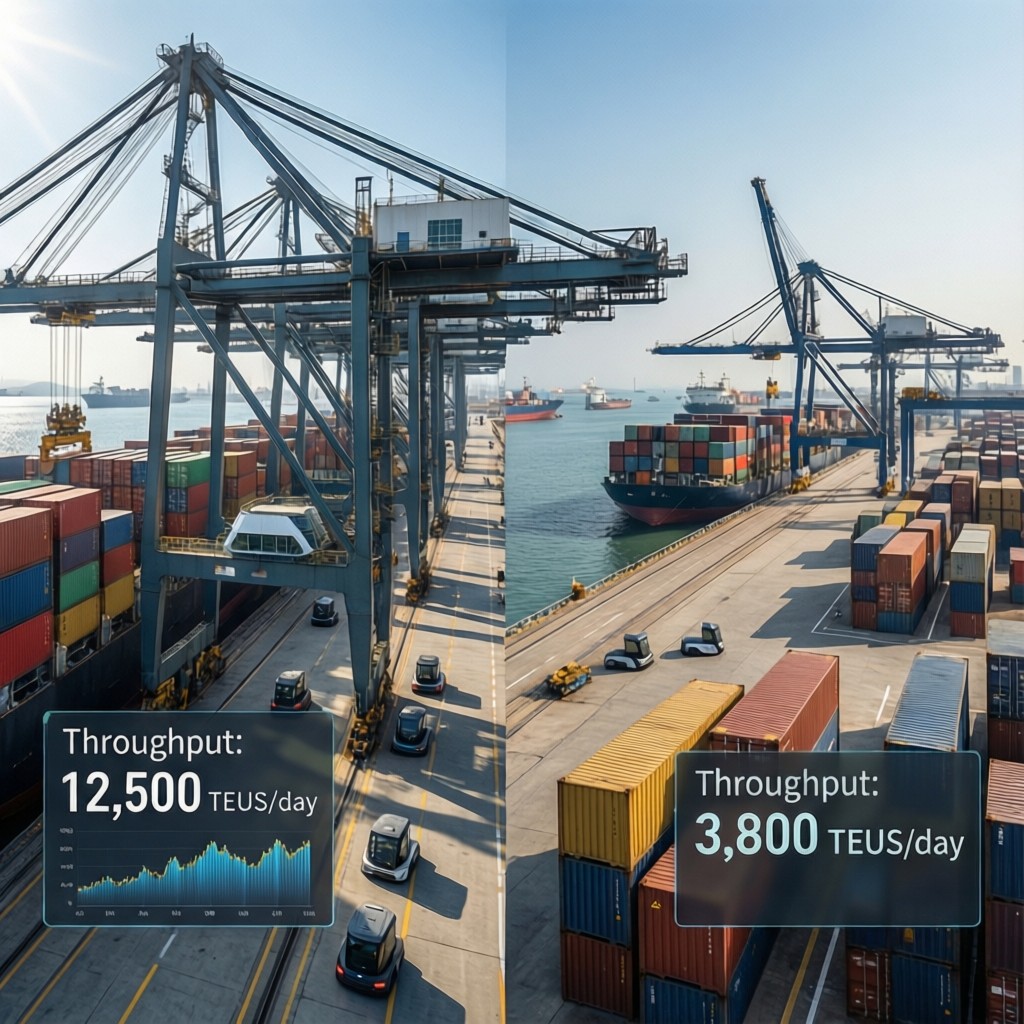
Qingdao offers superior global connectivity and frequency, making it ideal for large-volume shipments destined for diverse international markets. However, its high volume can lead to congestion during peak seasons. Lianyungang, while smaller, provides faster turnaround times and lower congestion risks, particularly for buyers sourcing from Jiangsu province or those prioritizing speed over vessel frequency.
Industry Examples with Real Specifications
For a European furniture manufacturer importing 40ft containers of E0-certified MDF, choosing Qingdao might offer more direct vessel options to Rotterdam or Hamburg. Each 40ft container holds 45-50 m³ of product, maximizing shipping efficiency. With a lead time of 15-25 days from order to shipment, minimizing port dwell time is crucial. Qingdao’s extensive feeder network ensures that even if a direct vessel is missed, alternative routing is readily available.
Conversely, a distributor in Southeast Asia sourcing High-Density Particleboard (density >800 kg/m³) from Jiangsu-based facilities may find Lianyungang more efficient. The shorter inland trucking distance reduces pre-carriage costs and carbon footprint. With lower terminal congestion, the risk of demurrage charges is minimized, protecting margins on orders with tight MOQs of 1x20ft containers (holding 20-25 m³). This route is particularly advantageous for urgent replenishment orders where speed is paramount.
Application Context
The choice between these ports also depends on the specific regulatory requirements of the destination market. For shipments to the US, compliance with CARB P2 (≤0.11 ppm) must be clearly documented. Qingdao’s experienced customs brokers are well-versed in handling these complex documentation requirements for high-volume exports. For EU-bound shipments under the new EUDR regulations, Lianyungang’s faster clearance processes can help accelerate the verification of due diligence statements, reducing the time goods spend in limbo.
Supplier Solution
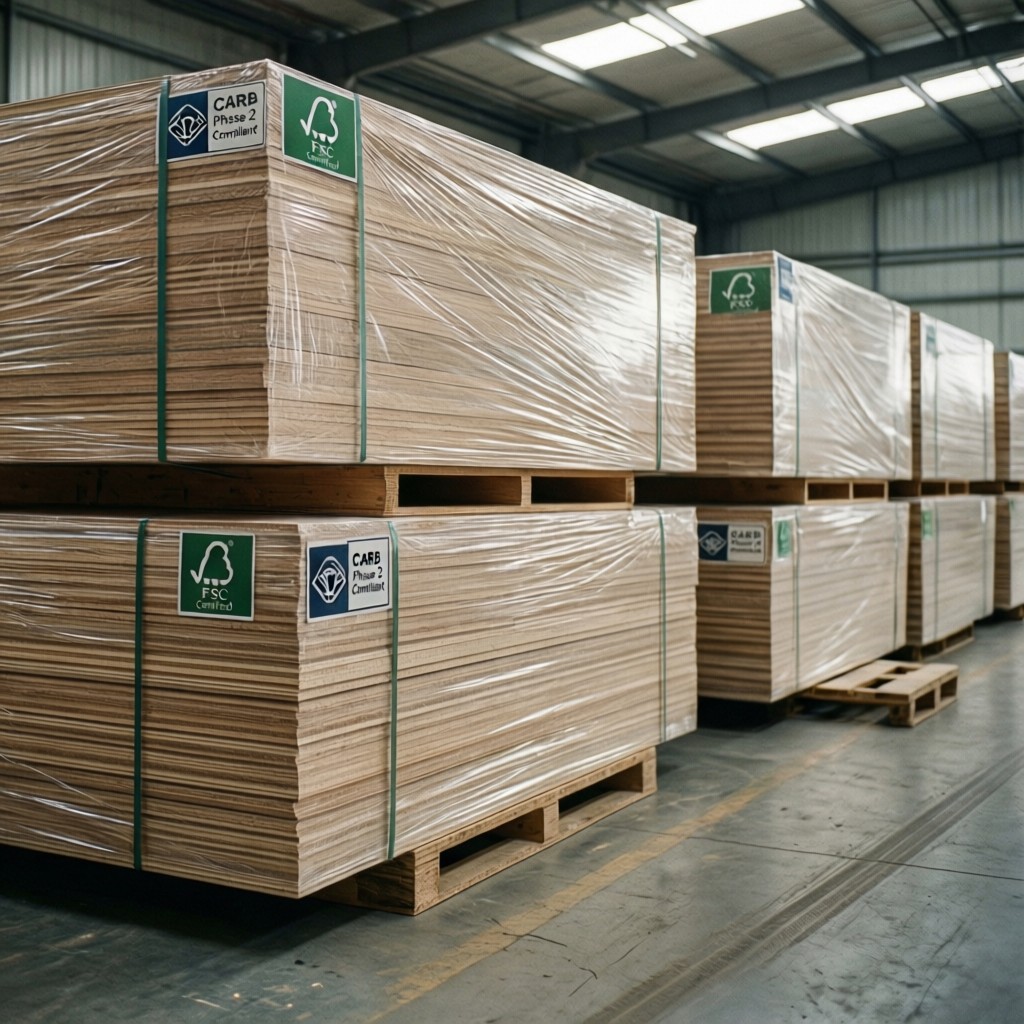
Yicaiyigou leverages its strategic location to optimize logistics through both Qingdao and Lianyungang ports. As a manufacturer of Precision MDF, Structural Plywood, and High-Density Particleboard, we provide full Chain of Custody (CoC) documentation for all FSC-certified products. Our facilities produce boards with densities ranging from 550 kg/m³ for particleboard to 1,000+ kg/m³ for HDF, ensuring consistent quality regardless of the shipping route.
We offer flexible loading options, with 20ft containers holding 20-25 m³ and 40ft containers holding 45-50 m³. Our lead times of 15-25 days include buffer periods for potential port delays, but our logistics team actively monitors port conditions to select the most efficient gateway for each shipment. Whether you require ENF (≤0.05 mg/L) panels for sensitive indoor applications or CARB P2 compliant boards for the US market, Yicaiyigou ensures seamless export execution.
Which One To Choose
Specify Qingdao Port for high-volume, multi-destination shipments where vessel frequency and global connectivity are the primary concerns. Its robust infrastructure supports large-scale exports to Europe and North America. Specify Lianyungang Port for urgent orders, shipments originating closer to Jiangsu, or when minimizing terminal congestion and demurrage risk is the top priority.
FAQ
What is the typical lead time for Yicaiyigou wood panel exports?
Our standard lead time is 15-25 days, which includes production, quality control, and inland transportation to either Qingdao or Lianyungang port.
How much product fits in a 40ft container?
A 40ft container typically holds 45-50 m³ of engineered wood products, such as MDF or particleboard, depending on thickness and packaging.
Are Yicaiyigou products compliant with EU EUDR regulations?
Yes, all FSC-certified products come with full Chain of Custody documentation required for EUDR compliance, effective December 30, 2024.
What is the formaldehyde emission level for ENF-rated MDF?
ENF-rated MDF has a formaldehyde emission level of ≤0.05 mg/L, meeting the strictest international standards for indoor air quality.
Can I request a sample before placing a bulk order?
Yes, we offer compliant material samples with full CoC documentation. The minimum order quantity for bulk shipments is 1x20ft container.
Summary & Next Steps
Selecting between Qingdao and Lianyungang depends on your specific balance of cost, speed, and volume. Qingdao offers scale and connectivity, while Lianyungang provides agility and lower congestion. Yicaiyigou supports both routes with certified, high-quality engineered wood products. Request a compliant material sample with full CoC documentation from Yicaiyigou to verify quality and streamline your next procurement cycle.
Frequently Asked Questions
How do Qingdao and Lianyungang ports differ in terms of congestion and vessel wait times?
Qingdao Port has a moderate to high terminal congestion risk with average vessel wait times of 1-2 days due to its high volume (>24 million TEUs), whereas Lianyungang Port offers low congestion risk and faster turnaround with average wait times of 0.5-1 day.
What impact does the EU Deforestation Regulation (EUDR) have on port selection for wood product exports?
With the EUDR effective December 30, 2024, supply chain transparency and speed are critical; delays at ports increase the risk of documentation discrepancies and storage fees, making efficient ports like Lianyungang potentially advantageous for maintaining compliance and profit margins.
Which port is better suited for manufacturers sourcing from Jiangsu province versus Shandong province?
Lianyungang is generally more accessible for facilities near the Jiangsu border (~200-300 km), while Qingdao serves as the primary gateway for Shandong and Central China (~300-400 km from Yicaiyigou’s Shandong facilities), though both offer distinct logistical advantages depending on volume and destination.
What formaldehyde emission standards must engineered wood products meet for global markets according to the article?
Products must meet CARB P2 (≤0.11 ppm), E0 (≤0.07 ppm), and ENF (≤0.05 mg/L) thresholds, with Japanese market compliance requiring JAS F★★★★ (≤0.3 mg/L via JIS A 1460 desiccator method).
Why might a procurement manager choose Qingdao over Lianyungang despite higher congestion risks?
Qingdao offers superior global connectivity, very high feeder service frequency, and direct rail links to Europe, making it ideal for large-volume shipments destined for diverse international markets where schedule frequency outweighs the risk of moderate congestion.