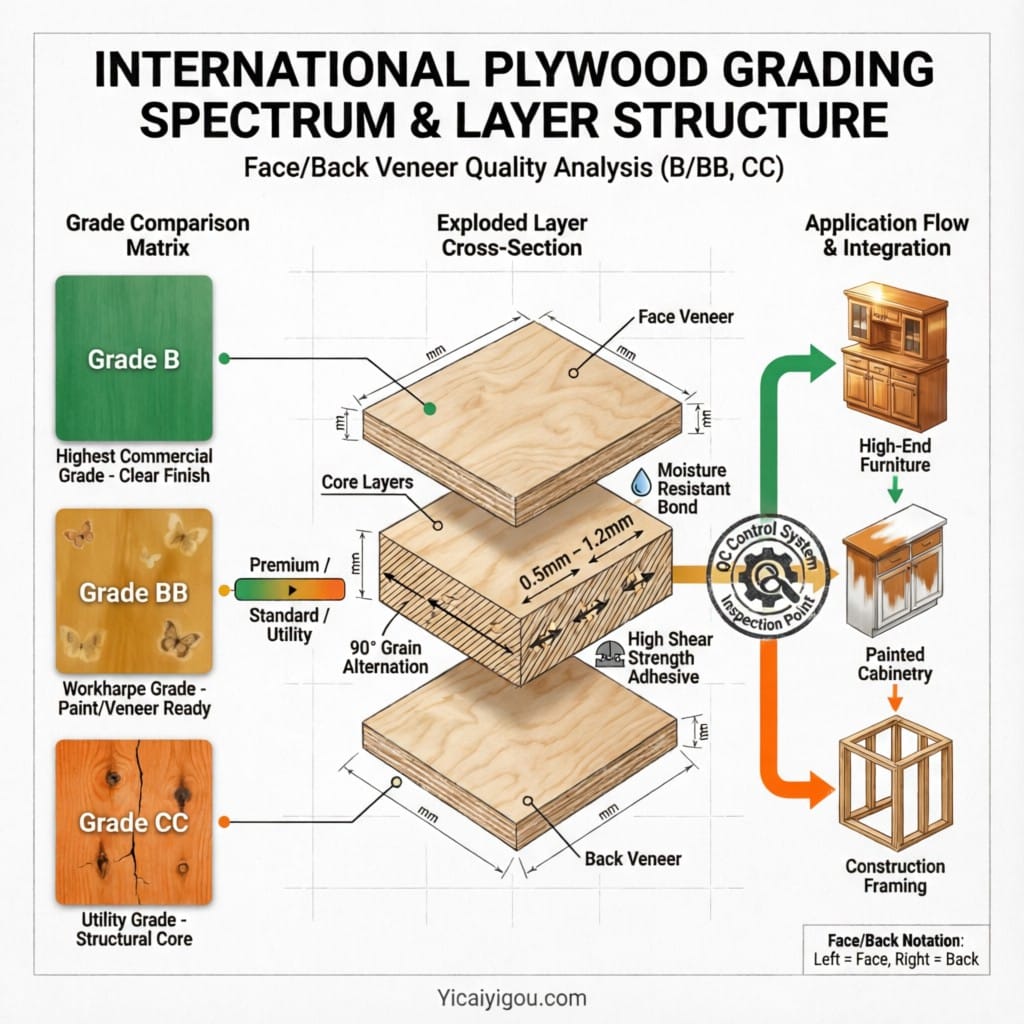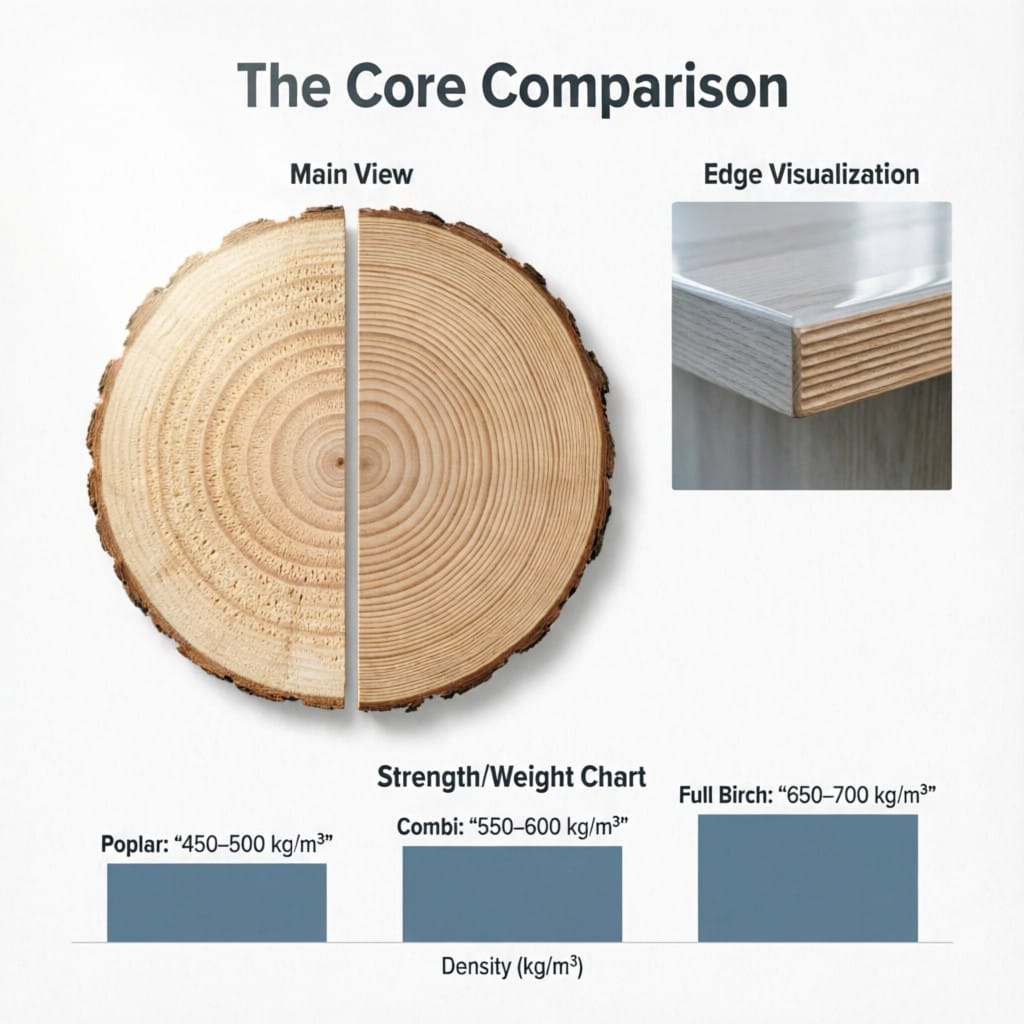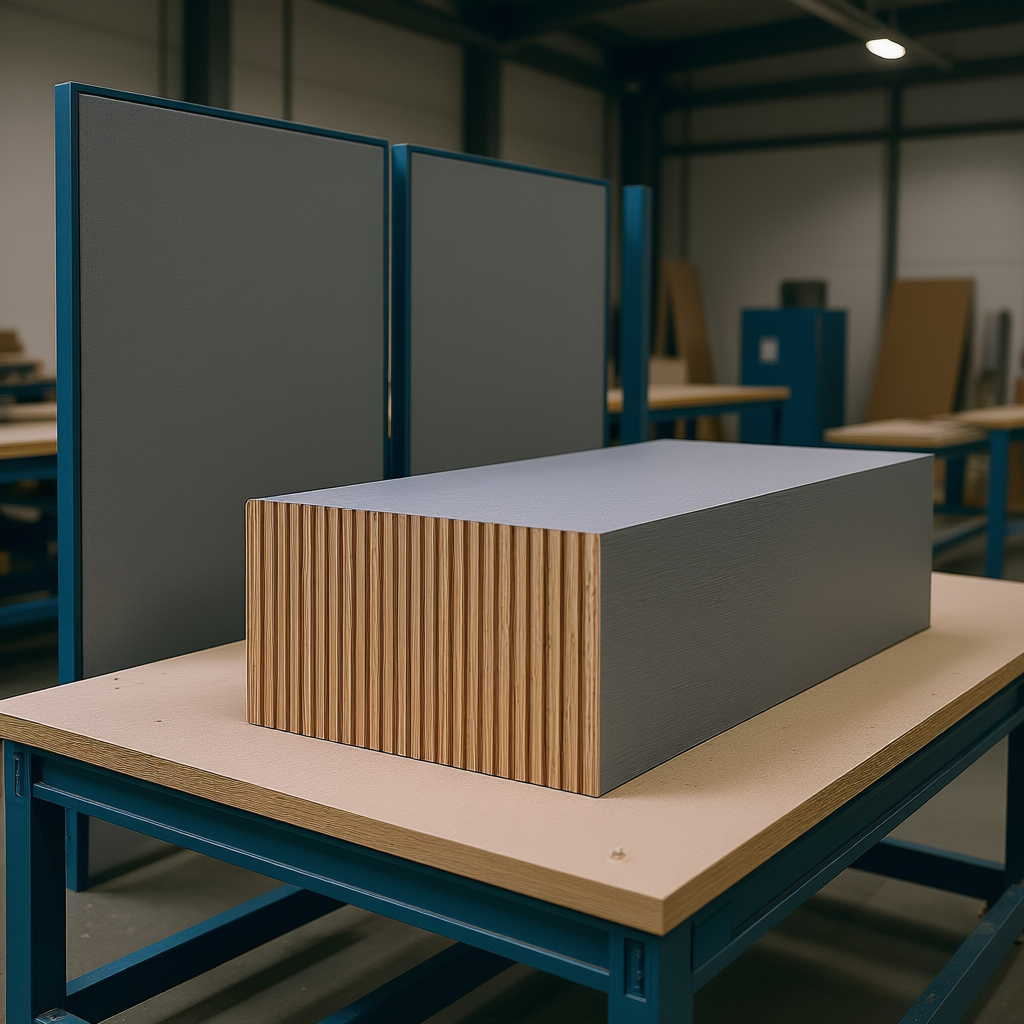
| Specification | Precision MDF | Structural Plywood |
|---|---|---|
| Density Threshold | High (Uniform composition minimizes micro-fractures) | Moderate to High (Varies by veneer grade and layer count) |
| Relocation Durability | Excellent resistance to screw pull-out when precision-milled | Good, but prone to edge delamination after multiple cycles |
| Acoustic Performance | Superior sound dampening due to homogeneous core structure | Moderate; potential for acoustic leakage at layer interfaces |
| Humidity Resistance | Requires specialized sealing; susceptible to warping if untreated | Naturally higher resistance due to cross-grain construction |
| Formaldehyde Compliance | Strict adherence to CARB Phase 2 and ANSI standards required | Generally compliant, dependent on adhesive quality |
| Primary Failure Risk | Warping from moisture imbalance | Edge delamination and shear force fractures |
| Long-Term Operational Impact | Low rework risk if density thresholds are met | 20-30% higher expenses due to premature replacement needs |
Facility managers often underestimate the hidden costs of modular office partition systems, where premature warping and acoustic failure drive 20-30% higher long-term operational expenses. This article dissects the technical specifications of engineered wood cores to reveal why precision-milled substrates are critical for maintaining structural integrity across multiple relocation cycles. By analyzing density thresholds, formaldehyde compliance, and adhesion metrics, procurement teams can select materials that eliminate rework risks and ensure consistent performance in dynamic workplace environments.
The Hidden Cost of Core Instability in Reconfigurable Workspaces
Modern agile workplaces demand furniture and partitions that survive frequent reconfiguration without compromising aesthetics or function. However, industry data indicates that low-grade partition cores frequently fail after just three disassembly events, leading to screw pull-out, edge delamination, and significant acoustic leakage. For global enterprises like Apple, IKEA, and Amazon, where supply chain consistency and indoor air quality are non-negotiable, selecting the wrong core material creates immediate compliance and operational liabilities.
The primary failure point in modular systems is not the surface finish, but the internal substrate’s reaction to humidity changes and mechanical stress. When a partition is moved, the fasteners exert new shear forces on the core. If the material lacks sufficient density or water resistance, these forces cause micro-fractures that expand over time. This article compares Precision MDF and Structural Plywood to determine which material system guarantees longevity and compliance under rigorous ANSI and CARB standards.
Technical Performance Benchmarks for Partition Cores
To evaluate material suitability, we must look beyond marketing claims and focus on verifiable engineering metrics. The following table compares Precision MDF and Structural Plywood against critical performance indicators required for high-end modular partition systems.
| Metric | Precision MDF (High-Density) | Structural Plywood |
|---|---|---|
| Density Range | >800 kg/m³ (up to 1,000+ kg/m³) | 550-750 kg/m³ (varies by veneer) |
| Water Resistance Standard | ANSI/HPVA HP-1-2016 Type I | ANSI/HPVA HP-1-2016 Type I |
| Formaldehyde Emissions | CARB P2 (<0.05 ppm); ENF (≤0.05 mg/L) | CARB P2 (<0.05 ppm); ENF (≤0.05 mg/L) |
| Acoustic Rating (STC) | Minimum STC 45 (with proper sealing) | Minimum STC 45 (with proper sealing) |
| Screw Holding Capacity | High (due to >800 kg/m³ density) | Moderate (risk of splintering in thin plies) |
| Surface Flatness Tolerance | ±0.1mm (ideal for vinyl/laminate) | ±0.3mm (requires filling for smooth finishes) |
| Edge-Banding Adhesion | >90% retention after thermal cycling (10°C-40°C) | Variable (dependent on veneer grain direction) |
| Cycle-Life Durability | Maintains integrity over 5+ relocations | Risk of delamination after 3+ relocations |
The data reveals that while both materials can meet basic regulatory standards, Precision MDF offers superior consistency for applications requiring repeated reconfiguration. Its uniform density eliminates the voids and grain inconsistencies found in plywood, ensuring that edge-banding adhesives maintain bond strength even under thermal cycling conditions between 10°C and 40°C.
Real-World Applications: Yicaiyigou Precision Substrates
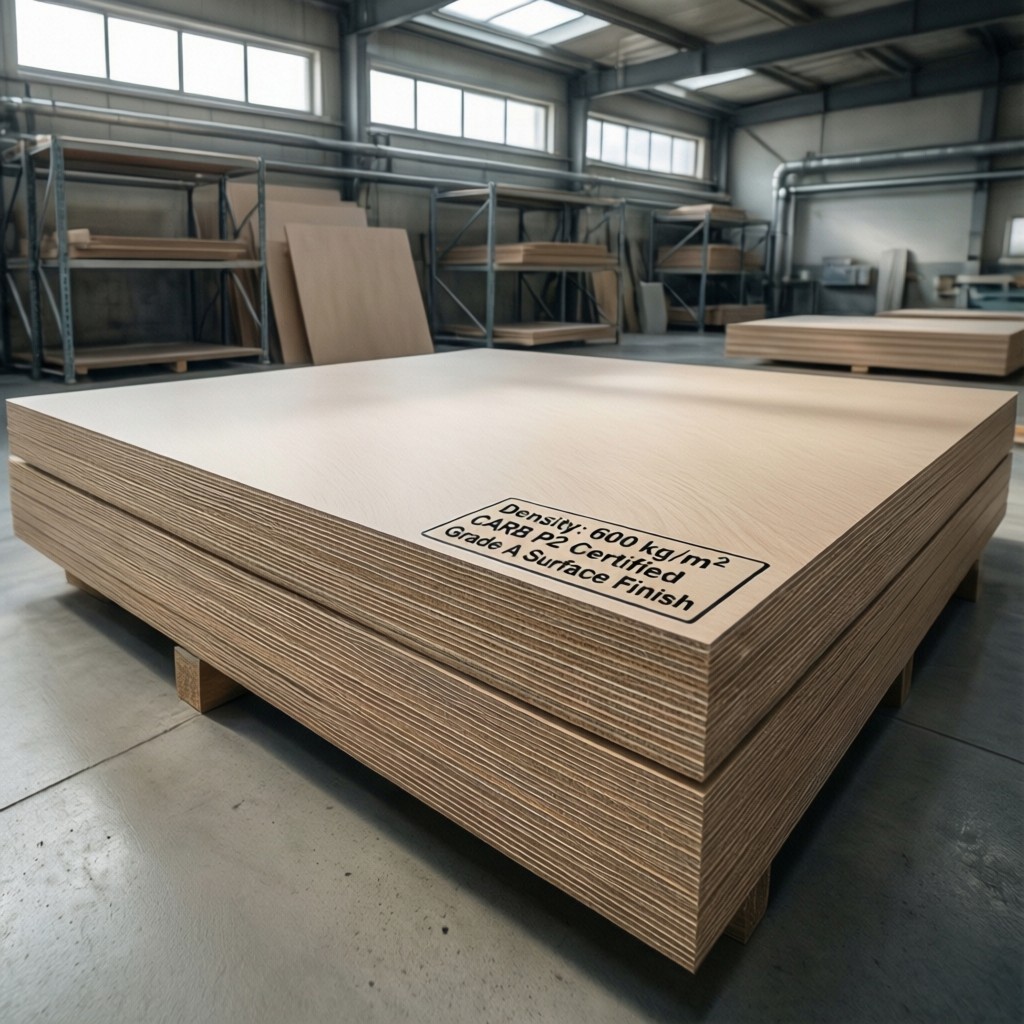
Yicaiyigou engineers its Precision MDF and Structural Plywood specifically to address the fatigue issues common in modular partition systems. For facility managers overseeing large-scale office fit-outs, our High-Density Fiberboard (HDF) skins maintain a density of >800 kg/m³, which is critical for preventing screw pull-out during reconfiguration. This density threshold ensures that fasteners hold firmly even after five or more assembly cycles, a metric rarely published by competitors who omit cycle-life testing data.
In scenarios where moisture stability is paramount, such as breakrooms or humid climates, our engineered cores meet ANSI/HPVA HP-1-2016 Type I water-resistance standards. This specification guarantees that the material will not swell or warp when exposed to temporary humidity spikes, preserving the flatness required for seamless vinyl or laminate application. Furthermore, all products comply with CARB Phase 2 limits (<0.05 ppm) and achieve ENF classification (≤0.05 mg/L), ensuring that indoor air quality remains within safe parameters for sensitive corporate environments.
Why Exporters Choose Yicaiyigou for Compliance-Ready Panels
Global supply chains require more than just quality materials; they demand verifiable documentation and regulatory alignment. Yicaiyigou provides full Chain of Custody (CoC) documentation for FSC-certified products, ensuring traceability from forest to factory. This is increasingly critical as the EU Deforestation Regulation (EUDR) comes into effect on December 30, 2024, requiring strict proof of origin for wood-based products entering European markets.
Our production capabilities support high-volume orders with consistent quality control. A standard 20ft container holds 20-25 m³ of material, while a 40ft container accommodates 45-50 m³, allowing for efficient logistics planning. With a minimum order quantity (MOQ) of one 20ft container and a lead time of 15-25 days, we offer a balanced approach to inventory management for distributors and construction firms. Every batch is tested for formaldehyde emissions, ensuring compliance with E0 (≤0.07 ppm), E1 (≤0.124 ppm), and Japan JAS F★★★★ (≤0.3 mg/L) standards, providing a competitive advantage for exporters targeting diverse global markets.
Which One To Choose
Specify Precision MDF (>800 kg/m³) for high-traffic modular partitions requiring frequent reconfiguration, smooth surface finishes, and superior screw-holding capacity. Specify Structural Plywood for applications where extreme load-bearing strength is needed in dry, static environments, provided that edge-delamination risks are mitigated through specialized sealing.
FAQ
What is the maximum formaldehyde emission limit for CARB P2 compliance?
CARB Phase 2 regulations mandate that composite wood products maintain formaldehyde emissions below 0.05 ppm for hardwood plywood and 0.11 ppm for particleboard, though Yicaiyigou achieves ≤0.05 ppm across its premium lines.
How does density affect screw pull-out in modular partitions?
A density greater than 800 kg/m³ significantly increases the friction and holding power of screws, reducing the risk of pull-out during disassembly and reassembly compared to lower-density alternatives.
What thermal cycling conditions are used to test edge-banding adhesion?
Yicaiyigou tests edge-banding adhesion under thermal cycling conditions ranging from 10°C to 40°C to simulate real-world office environment fluctuations and ensure long-term bond integrity.
Can Yicaiyigou products meet the upcoming EUDR requirements?
Yes, all FSC-certified products come with full Chain of Custody (CoC) documentation, providing the necessary traceability data to comply with the EU Deforestation Regulation effective December 30, 2024.
What is the standard lead time for a 20ft container order?
The standard lead time for production and preparation of a 20ft container order is 15-25 days, depending on current factory capacity and specific customization requirements.
Summary & Next Steps
Selecting the right core material for modular office partitions requires balancing acoustic performance, durability, and regulatory compliance. Precision MDF with a density >800 kg/m³ offers the most reliable solution for dynamic workspaces, ensuring structural integrity across multiple relocation cycles while meeting strict CARB P2 and ENF emission standards.
Request a compliant material sample with full Chain of Custody (CoC) documentation from Yicaiyigou to verify density and emission specifications for your next project.
Frequently Asked Questions
What are the primary hidden costs associated with using low-grade modular office partition systems?
The hidden costs stem from premature warping and acoustic failure, which drive 20-30% higher long-term operational expenses due to the need for frequent repairs, rework, and replacement after failed relocation cycles.
Why is Precision MDF considered superior to Structural Plywood for partitions that undergo frequent reconfiguration?
Precision MDF offers superior consistency with a density greater than 800 kg/m³, eliminating voids and grain inconsistencies. This ensures better screw holding capacity, maintains edge-banding adhesion over 90% during thermal cycling, and sustains structural integrity over 5+ relocations, whereas plywood risks delamination after just 3+ relocations.
What specific technical metrics should procurement teams analyze to ensure compliance and performance in partition cores?
Procurement teams should analyze density thresholds (preferably >800 kg/m³ for MDF), formaldehyde compliance (CARB P2 or ENF standards), adhesion metrics for edge-banding, water resistance standards (ANSI/HPVA HP-1-2016 Type I), and surface flatness tolerance.
How does the internal substrate of a partition react to mechanical stress during relocation?
When a partition is moved, fasteners exert new shear forces on the core. If the material lacks sufficient density or water resistance, these forces cause micro-fractures that expand over time, leading to screw pull-out, edge delamination, and acoustic leakage.
What are the surface flatness tolerances for Precision MDF compared to Structural Plywood, and why does this matter?
Precision MDF has a surface flatness tolerance of ±0.1mm, making it ideal for vinyl and laminate finishes, while Structural Plywood has a tolerance of ±0.3mm, which often requires filling to achieve smooth finishes. This difference impacts the aesthetic quality and application ease of surface materials.