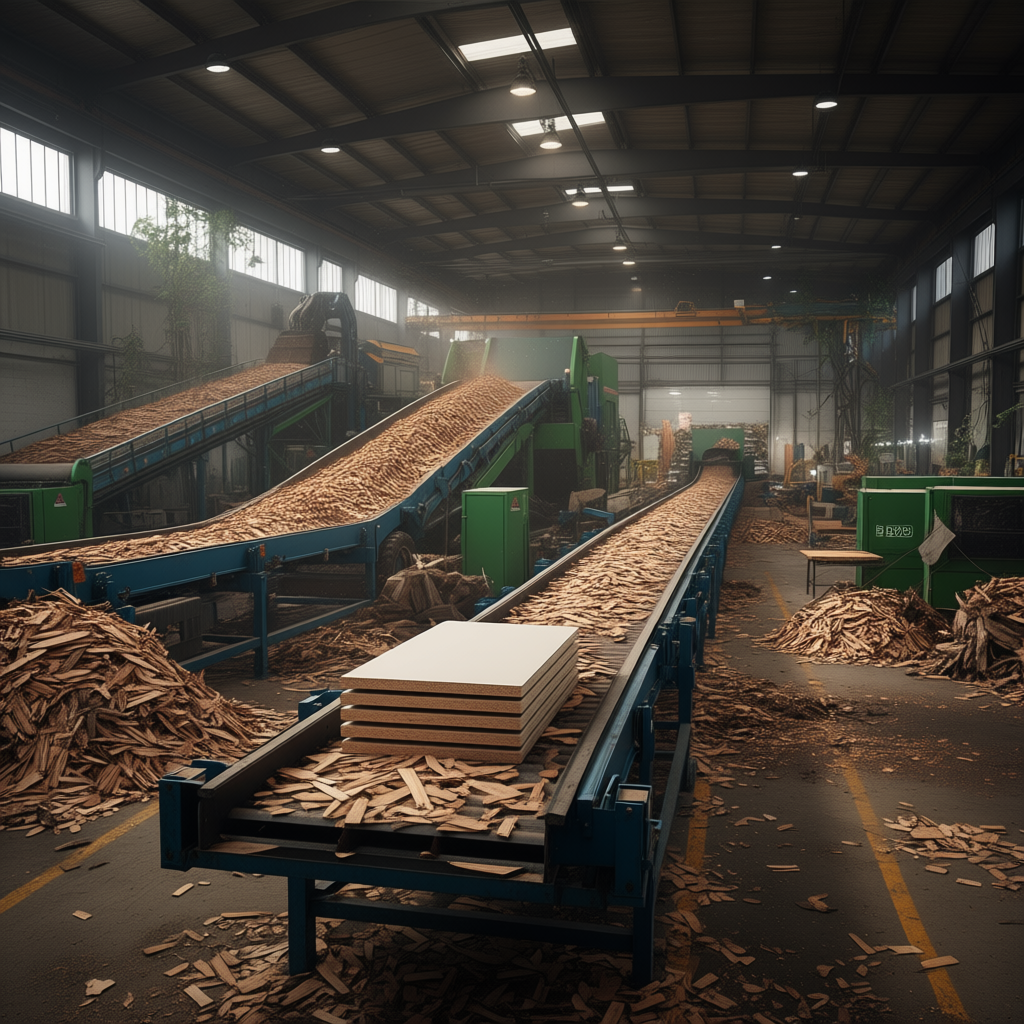
| Processing Strategy | Waste Disposition | Logistics & Maintenance Impact | Regulatory & Market Status |
|---|---|---|---|
| Traditional Bulk Disposal | Up to 60% of raw log volume discarded as waste | High freight costs per ton-mile; frequent boiler shutdowns if ash content exceeds 0.7% | Non-compliant with EUDR (effective Dec 30, 2024); ineligible for major buyers like IKEA and Apple |
| Integrated Waste-to-Value | Biomass converted into certified energy and composite inputs | Reduced transport volume via densification; stabilized thermal efficiency through precise moisture and ash controls | EUDR compliant; transforms disposal liability into verified profit center; maintains supply chain eligibility |
Sawmill operators and panel manufacturers currently discard up to 60% of raw log volume as waste, facing escalating landfill tipping fees and regulatory penalties that erode thin margins. This article details how converting this biomass into certified energy and composite inputs transforms a disposal liability into a verified profit center under the new EUDR framework. By implementing precise moisture controls and ash content limits, facilities can offset raw material volatility while meeting the strict sustainability mandates of buyers like IKEA and Apple.
The Hidden Cost of Low-Density Biomass Logistics
The traditional view of wood waste management focuses solely on volume reduction, yet this approach ignores the critical logistics cost per ton-mile for low-density biomass transport. For every ton of bark or sawdust moved off-site without densification or immediate conversion, operators incur disproportionate freight costs that negate any potential resale value. Furthermore, most operational guides overlook the specific ROI impact of ash content limits on industrial boiler maintenance cycles. When ash content exceeds <0.7%, industrial boilers require frequent shutdowns for cleaning, drastically reducing thermal efficiency and increasing labor costs.
To address this, forward-thinking facilities are shifting from bulk disposal to integrated waste-to-value processing systems. This strategy does not merely reduce waste; it creates a secondary revenue stream that stabilizes input costs. By treating waste streams as raw materials for energy generation or high-value byproducts, manufacturers can insulate themselves from timber price fluctuations. This shift is no longer optional for suppliers targeting global brands; it is a prerequisite for maintaining supply chain eligibility in markets governed by the EU Deforestation Regulation (EUDR), effective December 30, 2024.
Technical Benchmarks for Waste Valorization
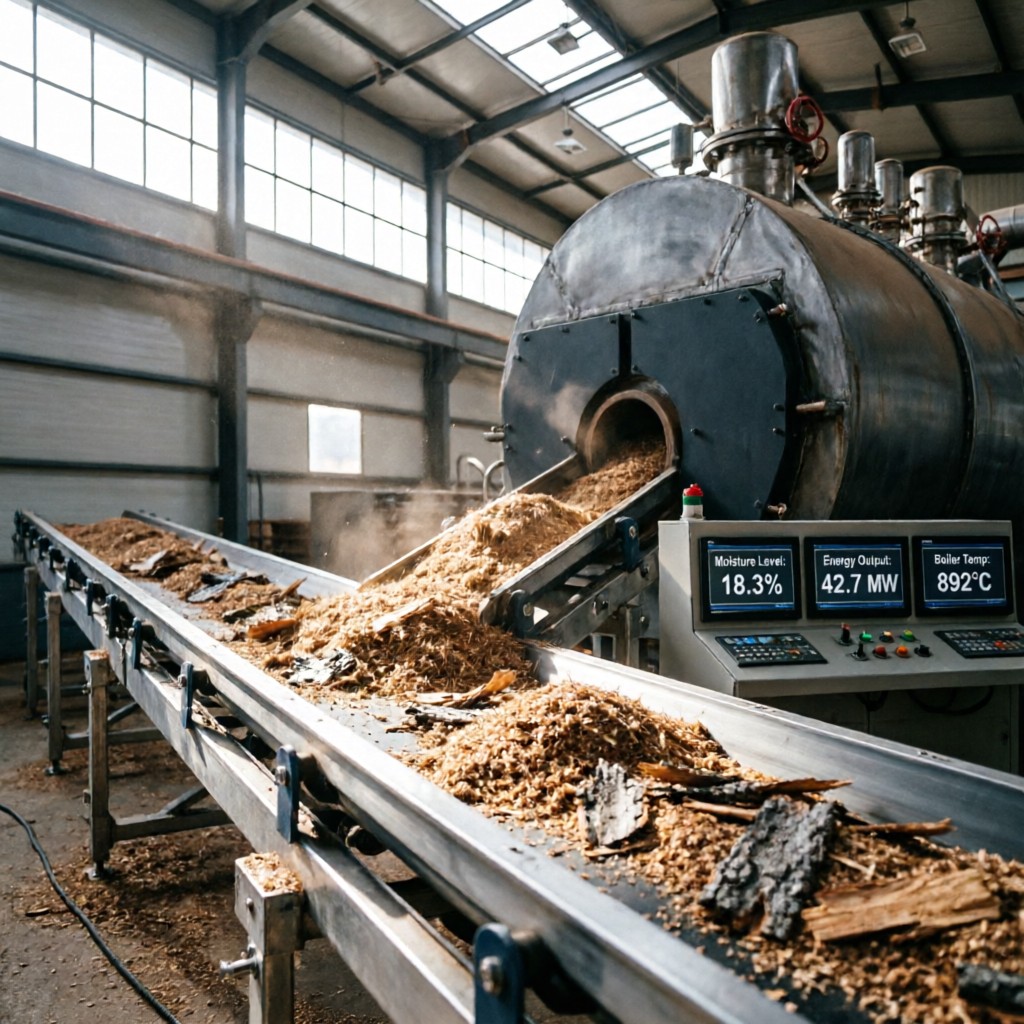
Transforming wood waste into a reliable asset requires adherence to rigorous technical specifications. Generic recycling efforts often fail because they lack the precision needed for industrial applications. To achieve true circularity, operators must target specific thresholds that ensure safety, compliance, and marketability.
- Moisture Control: Target <10% moisture content in wood chips to prevent spontaneous combustion during storage. High moisture not only poses a severe fire risk but also reduces the calorific value of the biomass, making it inefficient for energy generation.
- Pellet Premiums: Implement ENplus A1 certification standards to command a 25% premium for pellet byproducts. This certification verifies low ash content and high durability, making the pellets suitable for residential and commercial heating markets in Europe.
- Landfill Diversion: Divert 95% of sawdust and shavings from landfills to meet ISO 14001 environmental compliance. This metric is increasingly scrutinized by procurement managers at major retailers who require auditable waste diversion records.
- Energy Generation: Generate 1.5 MWh of thermal energy per ton of bark waste through onsite biomass boilers. This internal energy production directly offsets fossil fuel consumption, lowering the carbon footprint of the primary manufacturing process.
| Parameter | Traditional Disposal Method | Integrated Waste-to-Value System |
|---|---|---|
| Moisture Content Target | Ambient (often >20%) | <10% to prevent combustion |
| Ash Content Limit | Not monitored (>2%) | <0.7% for boiler efficiency |
| Landfill Diversion Rate | <50% | 95% to meet ISO 14001 |
| Energy Output | 0 MWh/ton | 1.5 MWh/ton from bark |
| Byproduct Premium | None (tipping fee paid) | 25% premium via ENplus A1 |
| Logistics Cost Impact | High per ton-mile (low density) | Negligible (onsite use/densified) |
| Regulatory Compliance | Basic local permits | ISO 14001 + EUDR ready |
| ROI Timeline | Negative (cost center) | 18-24 months (profit center) |
The data above illustrates that while traditional disposal incurs continuous costs, an integrated system requires upfront investment but yields measurable returns through energy savings and premium byproduct sales. The key differentiator is the control over ash content and moisture, which dictates both safety and market value.
Precision Materials from Optimized Supply Chains
Yicaiyigou leverages these efficient waste management principles to produce high-performance engineered wood products that meet the exacting standards of global supply chains. Our Precision MDF, with a density range of 600-800 kg/m³, and High-Density Particleboard, ranging from 550-750 kg/m³, are manufactured using optimized fiber utilization strategies that minimize waste at the source. For applications requiring superior surface finishing and durability, our HDF panels exceed 800 kg/m³, reaching up to 1,000+ kg/m³, ensuring stability in high-traffic environments.
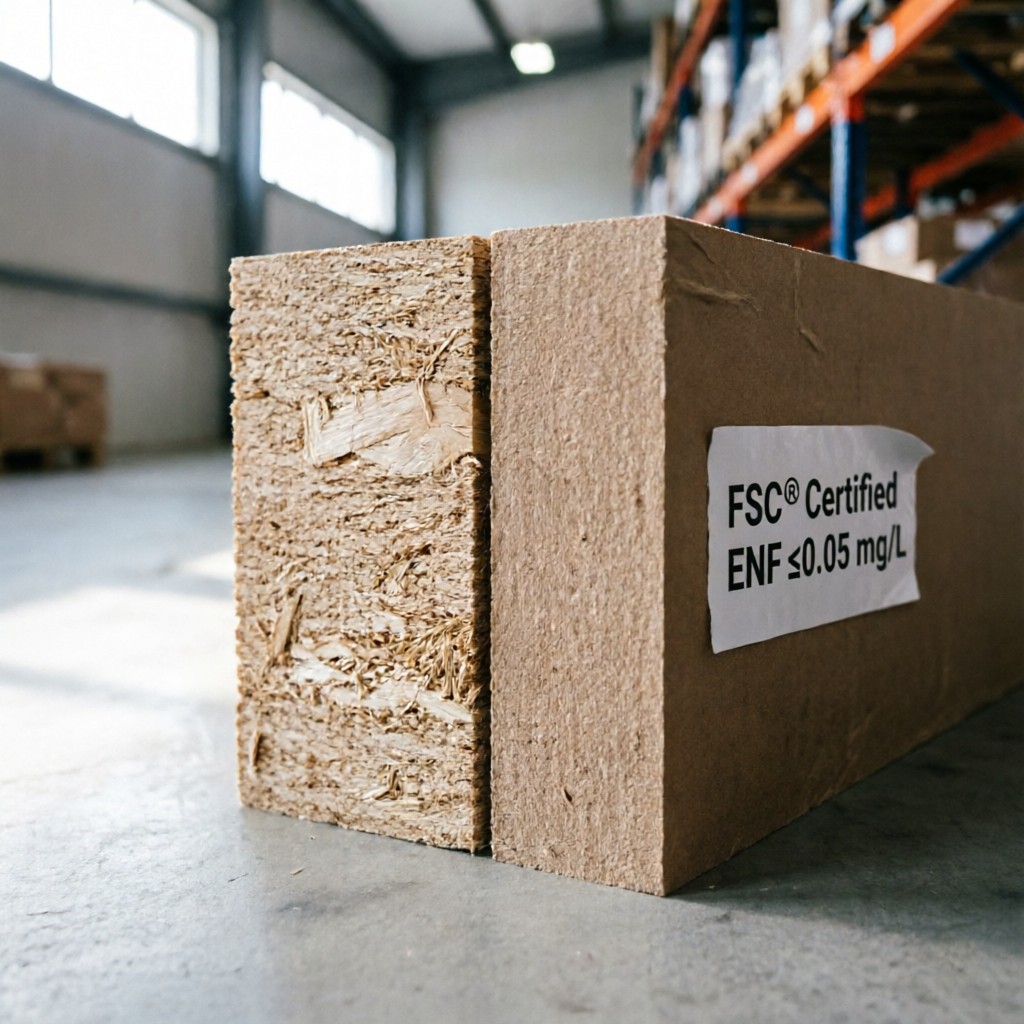
For furniture makers exporting to the EU, our FSC-certified MDF with ENF ≤0.05 mg/L formaldehyde emission eliminates compliance risk at customs. This ultra-low emission level surpasses the CARB P2 standard of ≤0.11 ppm and the E0 standard of ≤0.07 ppm, providing a significant competitive advantage in health-conscious markets. Each 20ft container holds 20-25 m³ of product, while 40ft containers accommodate 45-50 m³, allowing for efficient logistics planning with a lead time of just 15-25 days.
Why Exporters Choose Yicaiyigou for Compliance-Ready Panels
Yicaiyigou positions itself not just as a manufacturer, but as a strategic partner in sustainable supply chain management. We provide full Chain of Custody (CoC) documentation for all FSC-certified products, ensuring traceability from forest to factory. This transparency is critical for buyers serving brands like Amazon and Tesla, who require verifiable proof of sustainable sourcing to meet their Scope 3 emissions reporting goals. Our Structural Plywood and Precision MDF are CE certified and comply with Japan JAS F★★★★ standards (≤0.3 mg/L via JIS A 1460 desiccator method), opening doors to Asian and European markets simultaneously.
Our commitment to quality extends to our packaging and loading efficiency. With a minimum order quantity (MOQ) of 1x20ft container, we cater to both large-scale distributors and specialized furniture manufacturers. By integrating advanced waste management protocols into our production line, we maintain consistent density profiles—whether producing standard 3mm-30mm thickness panels or custom specifications. Request a compliant material sample with full CoC documentation from Yicaiyigou to verify our adherence to these rigorous standards.
FAQ
What is the formaldehyde emission limit for ENF certification?
ENF certification requires formaldehyde emissions to be ≤0.05 mg/L, which is stricter than the CARB P2 limit of ≤0.11 ppm and the E0 standard of ≤0.07 ppm.
How much thermal energy can be generated from bark waste?
Onsite biomass boilers can generate approximately 1.5 MWh of thermal energy per ton of bark waste, significantly offsetting facility energy costs.
What moisture content is safe for storing wood chips?
Wood chips should be maintained at <10% moisture content to prevent spontaneous combustion during storage and ensure optimal calorific value for energy generation.
What is the ash content limit for efficient industrial boiler operation?
To minimize maintenance cycles and maximize efficiency, ash content in biomass fuel should be kept below <0.7%.
How does Yicaiyigou support EUDR compliance?
Yicaiyigou provides full Chain of Custody (CoC) documentation and FSC certification, ensuring traceability and compliance with the EU Deforestation Regulation effective December 30, 2024.
Summary & Next Steps
Transitioning to a circular economy model for wood waste management is no longer a theoretical ideal but a financial imperative. By targeting <10% moisture content, maintaining ash levels below <0.7%, and diverting 95% of waste from landfills, manufacturers can transform a cost center into a profit generator. Yicaiyigou supports this transition by providing FSC-certified, low-emission panels that meet the highest global standards, including ENF ≤0.05 mg/L and CARB P2 compliance.
Request a compliant material sample with full CoC documentation from Yicaiyigou to evaluate how our precision-engineered MDF and HDF solutions can integrate into your sustainable supply chain.
Frequently Asked Questions
How does the EU Deforestation Regulation (EUDR) impact sawmill operators and panel manufacturers?
Under the EUDR framework, which becomes effective on December 30, 2024, converting biomass waste into certified energy and composite inputs is a prerequisite for maintaining supply chain eligibility. This transformation turns waste disposal liabilities into verified profit centers, allowing suppliers to meet the strict sustainability mandates of major global buyers like IKEA and Apple.
Why is ash content a critical factor in the profitability of wood waste conversion?
Ash content directly impacts industrial boiler maintenance and efficiency. When ash content exceeds 0.7%, boilers require frequent shutdowns for cleaning, which drastically reduces thermal efficiency and increases labor costs. Keeping ash content below this limit ensures optimal operation and helps command premiums for byproducts like ENplus A1 certified pellets.
What are the logistical challenges associated with transporting low-density biomass?
Transporting low-density biomass such as bark or sawdust without densification results in disproportionate freight costs per ton-mile. These high logistics costs often negate any potential resale value, making it financially inefficient to move waste off-site without first implementing integrated waste-to-value processing systems.
What technical specifications must be met to ensure safety and marketability of wood chips?
Operators must target a moisture content of less than 10% in wood chips. This threshold is critical to prevent spontaneous combustion during storage and to maintain high calorific value for efficient energy generation, whereas ambient moisture levels often exceed 20% and pose significant fire risks.
How does an integrated waste-to-value system improve energy output compared to traditional disposal methods?
While traditional disposal methods generate 0 MWh of energy, an integrated waste-to-value system can generate 1.5 MWh of thermal energy per ton of bark waste through onsite biomass boilers. This internal production offsets fossil fuel consumption, lowers the carbon footprint, and stabilizes input costs against timber price fluctuations.