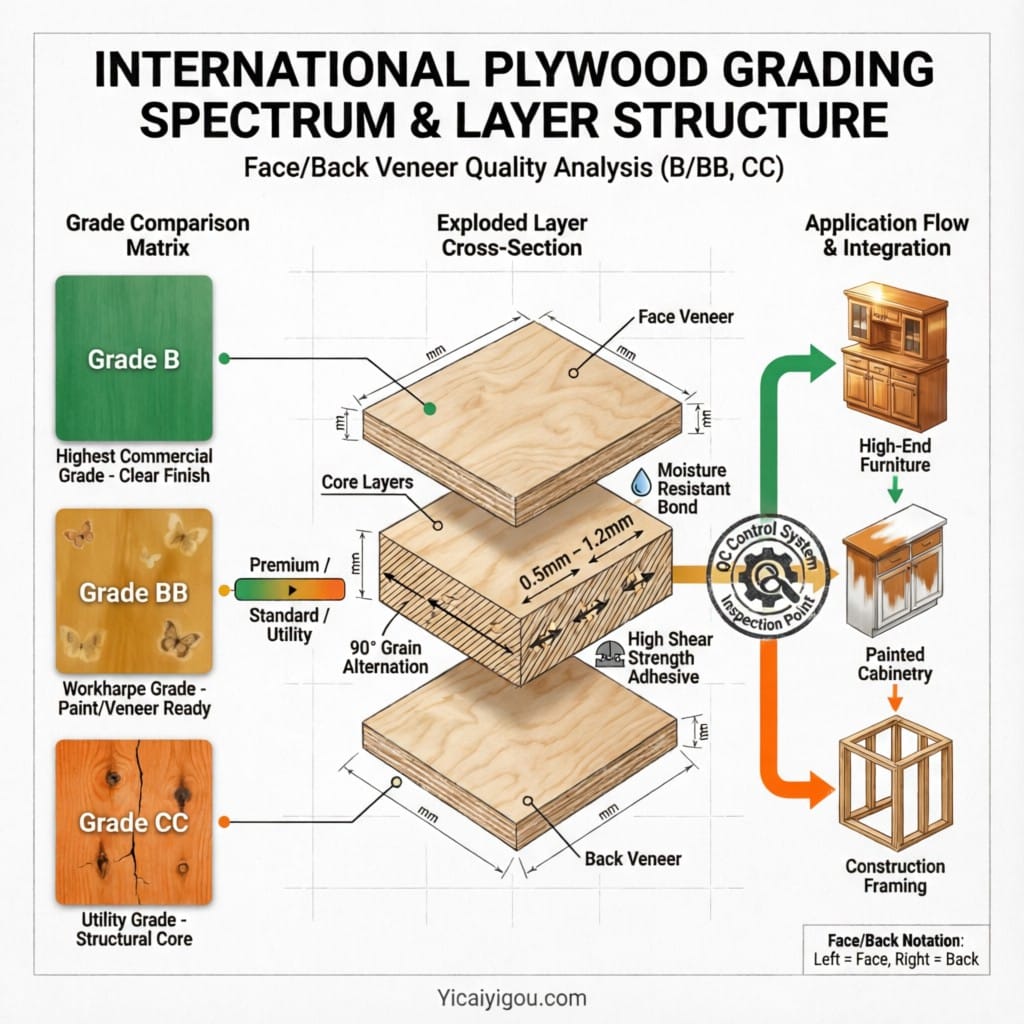
| Feature | Standard Veneer Batches | Engineered-Grade Substrates with Digital Grain-Mapping |
|---|---|---|
| Color Consistency | High variance; frequent failure to match specific Pantone codes | Guaranteed aesthetic consistency; precise color matching protocols |
| Grain Continuity | Visible discontinuities and shifts under showroom lighting | Seamless grain flow via digital mapping and artisanal selection |
| Panel Dimensions | Limited consistency in large formats | Consistent aesthetics across panels exceeding 2.4 meters |
| Manufacturing Precision | Treated as commodity; ignores microscopic wood structure variations | Integrates CNC precision with strict thickness tolerances |
| Risk Profile | High risk of brand dilution, costly rework, and installation delays | Minimized rejection rates; supports seamless global rollouts |
| Compliance | Variable environmental standards | Maintains strict environmental compliance |
Luxury retail visual merchandisers risk brand dilution and costly rework when standard veneer batches fail to match specific Pantone color codes or grain continuity requirements for high-end flagship stores. This article details how engineering-grade substrate selection and digital grain-mapping protocols solve these aesthetic inconsistencies, ensuring seamless global rollouts for premium brands. By integrating CNC precision with artisanal wood selection, manufacturers can guarantee aesthetic consistency across panels exceeding 2.4 meters in length while maintaining strict environmental compliance.
The Cost of Aesthetic Inconsistency in Flagship Rollouts
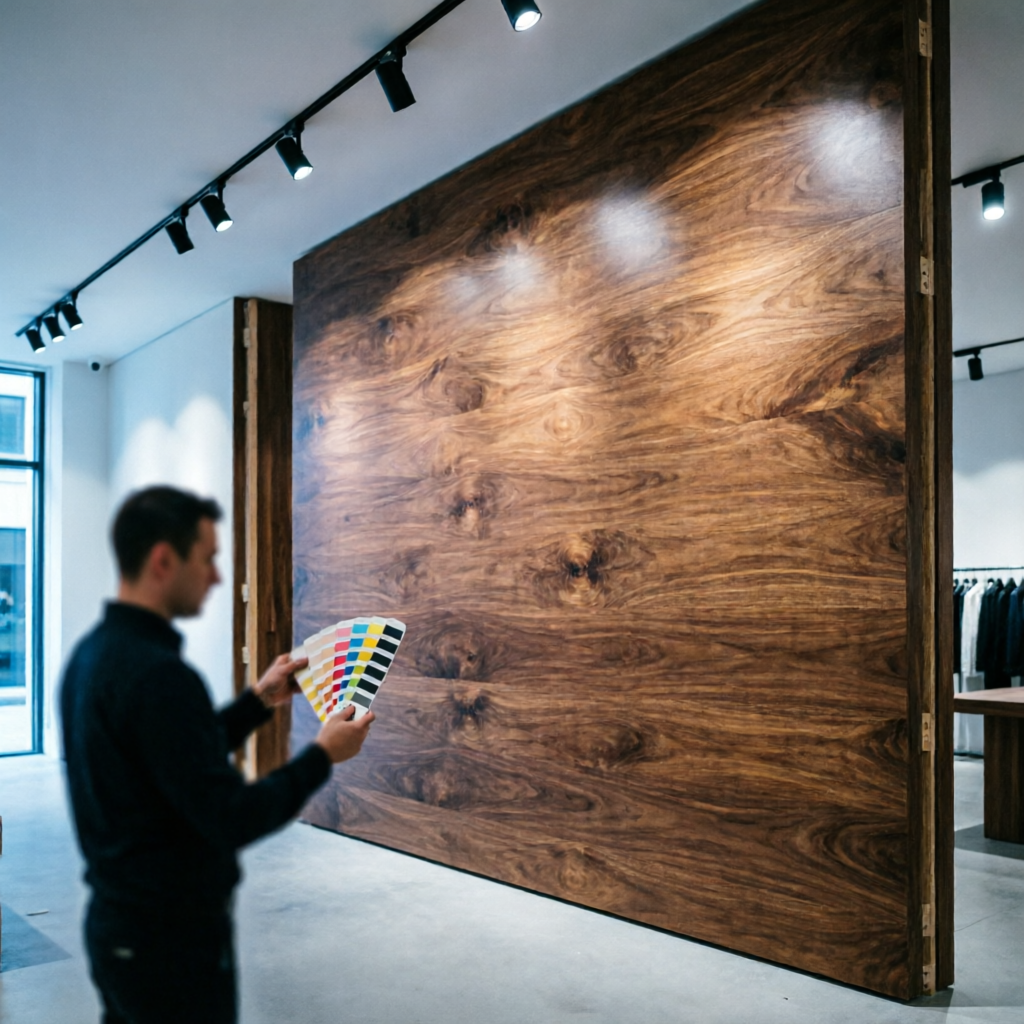
When a global luxury fashion retailer faced a critical challenge during their Shanghai flagship renovation, they discovered that standard veneer supplies from multiple vendors resulted in visible grain discontinuities and color shifts under showroom lighting. The inconsistency threatened the brand’s premium image, leading to a halt in installation and potential delays in their seasonal launch. This scenario is not unique; as brands like Apple and Tesla raise the bar for store design, the tolerance for material variance approaches zero.
The core issue lies in the disconnect between artistic vision and industrial manufacturing. Most suppliers treat veneer as a commodity, ignoring the microscopic variations in wood structure that become glaringly obvious in large-format displays. For procurement managers and supply chain decision-makers, the risk is twofold: immediate financial loss from rejected batches and long-term brand erosion due to perceived quality drops. Understanding the technical specifications required to mitigate these risks is no longer optional—it is a competitive necessity.
This article outlines a technical framework for selecting veneered substrates that meet rigorous aesthetic and dimensional standards. Readers will learn how to specify moisture content stabilization, thickness tolerances, and grain-matching protocols that prevent rework and ensure brand integrity across international markets.
Technical Specifications for Veneer Consistency
Achieving flawless aesthetics requires adherence to precise manufacturing parameters that go beyond surface appearance. The following specifications are critical for ensuring that veneered panels perform consistently in climate-controlled retail environments.
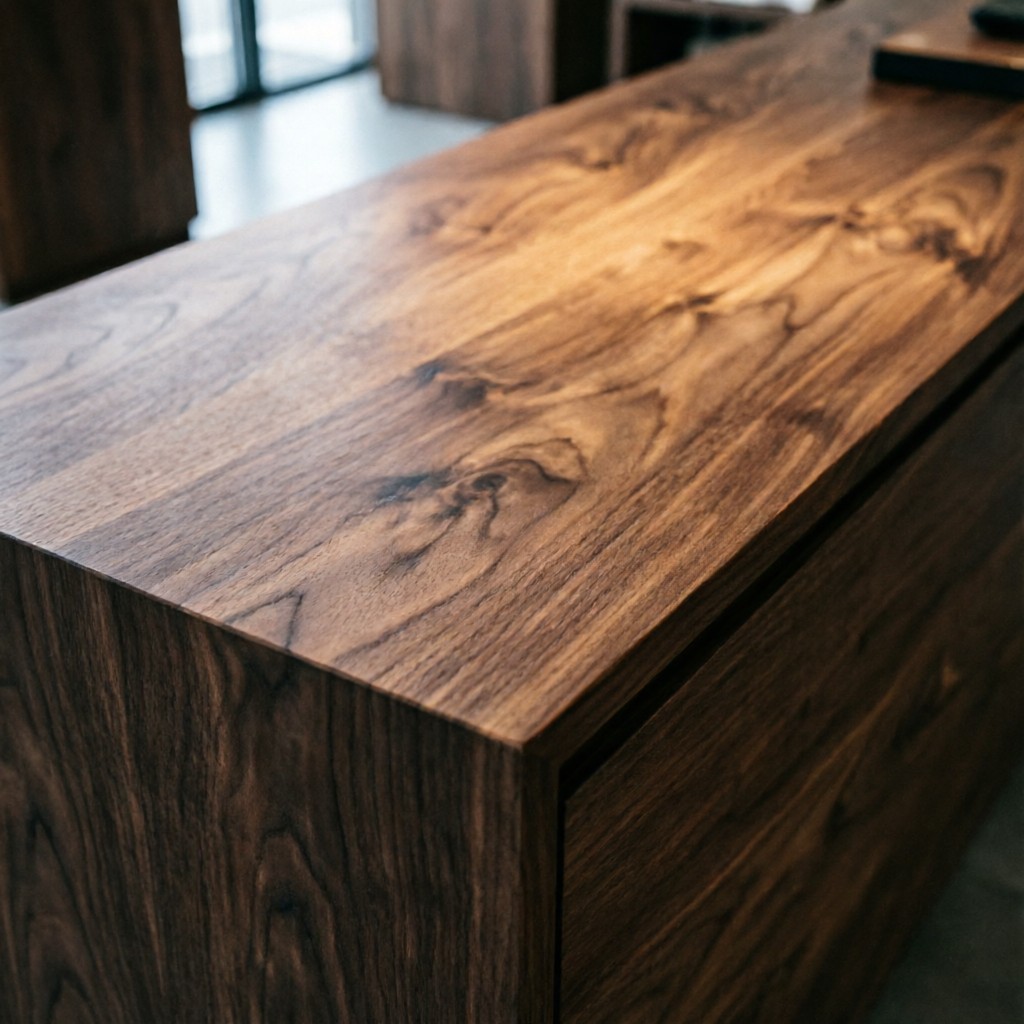
- Grain Matching Continuity: Panels must achieve seamless grain matching across lengths exceeding 2.4 meters. This requires book-matching or slip-matching techniques applied with digital precision to ensure visual flow without abrupt breaks.
- Thickness Tolerance: Veneer thickness must be maintained within ±0.1mm. This tight tolerance is essential for seamless edge banding application, preventing visible lines or ridges that detract from the premium finish.
- Moisture Content Stabilization: Exotic species used in luxury displays must be FSC-certified and stabilized at a moisture content of 8-10%. This range prevents warping or cracking in climate-controlled environments typical of high-end retail spaces.
These specifications form the baseline for any supplier claiming to support luxury retail projects. Deviations from these numbers often result in visible defects that compromise the overall design intent.
Digital Grain-Mapping vs. Traditional Selection
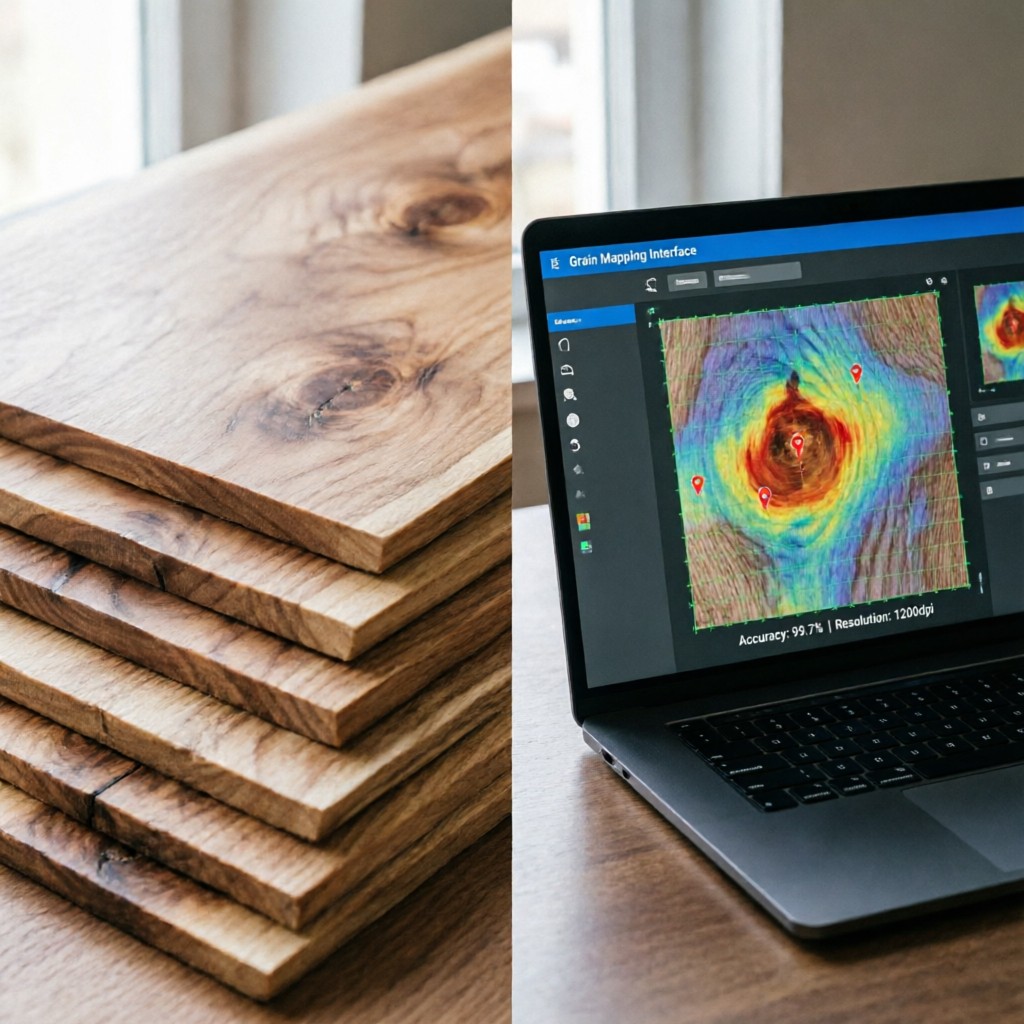
Most competitors rely on manual selection processes that lack reproducibility, whereas advanced suppliers utilize digital grain-mapping previews before production begins. This technological shift allows buyers to visualize the final outcome and approve grain patterns digitally, reducing the risk of surprise inconsistencies upon delivery.
| Feature | Traditional Manual Selection | Digital Grain-Mapping Protocol |
|---|---|---|
| Preview Availability | Post-production only | Pre-production digital preview |
| Grain Continuity Accuracy | Variable, dependent on operator skill | High, algorithm-assisted matching |
| Rejection Rate | 15-20% due to mismatch | <2% due to pre-approval |
| Lead Time Impact | Adds 5-7 days for rework | Reduces rework time to near zero |
| Batch Consistency | Low, varies by lot | High, standardized across lots |
| Documentation | Minimal, no visual record | Full digital archive of grain maps |
| Cost of Error | High, includes shipping & labor | Low, corrected before cutting |
| Scalability | Poor for global rollouts | Excellent for multi-store projects |
The key takeaway is that digital grain-mapping transforms veneer selection from a gamble into a controlled engineering process. By approving the grain layout digitally, buyers eliminate the ambiguity that typically leads to costly disputes and delays.
Engineering Substrates for High-End Fixtures
Yicaiyigou supports these aesthetic requirements with high-performance substrates designed for precision machining and stability. For luxury store fixture aluminum enclosure customization and bespoke veneer options for display cases, the underlying panel must be flawless.
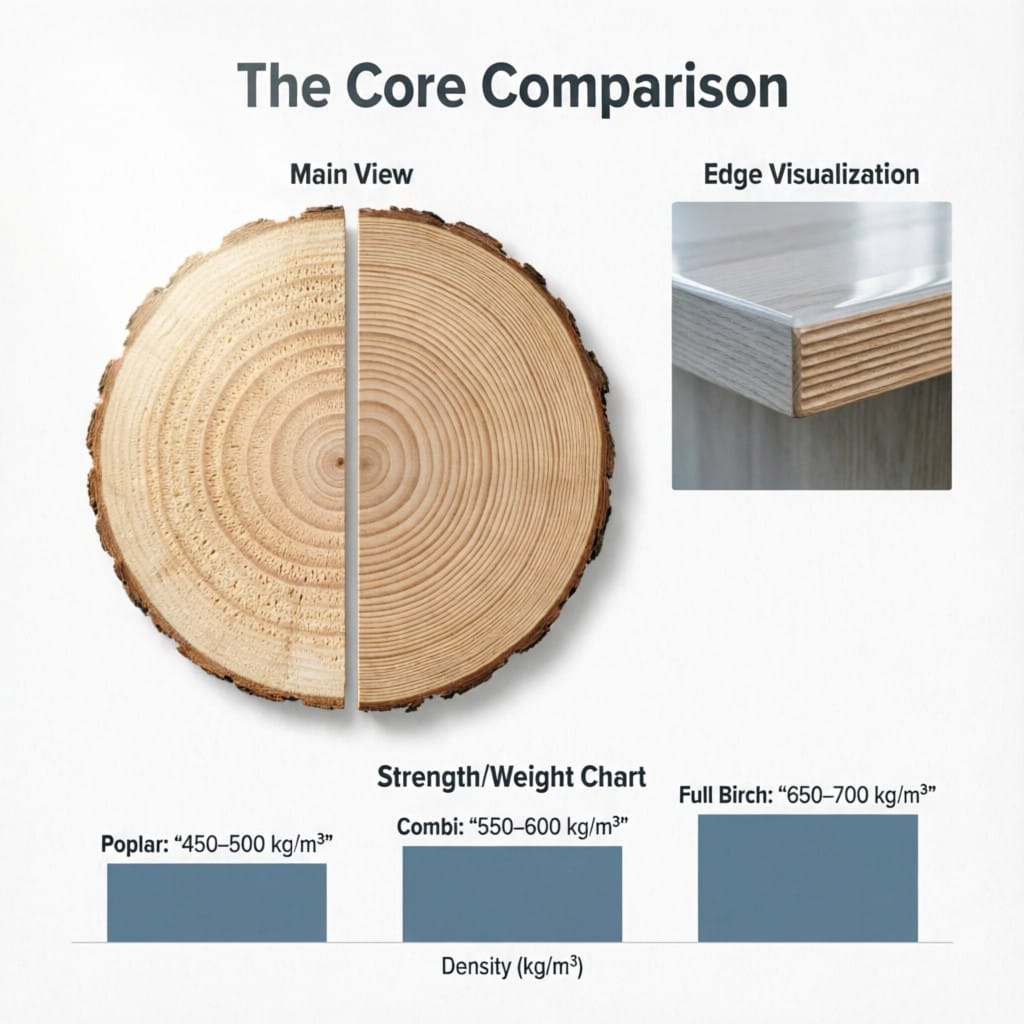
Our Precision MDF, with a density of 600-800 kg/m³, provides a smooth, uniform surface ideal for thin veneer applications. For areas requiring higher impact resistance, our High-Density Particleboard (550-750 kg/m³) and HDF (density >800 kg/m³ up to 1,000+ kg/m³) offer superior structural integrity. These materials are available in thicknesses from 3mm to 30mm and standard sizes of 2440x1220mm, ensuring compatibility with most CNC routing systems.
For buyers exporting to stringent markets, our materials meet CARB P2 (≤0.11 ppm) and ENF (≤0.05 mg/L) formaldehyde standards. This compliance is critical for indoor air quality in enclosed retail spaces. Additionally, our FSC certification ensures that all exotic species are sourced responsibly, aligning with the sustainability goals of major brands like IKEA and Amazon.
Why Exporters Choose Yicaiyigou for Compliance-Ready Panels
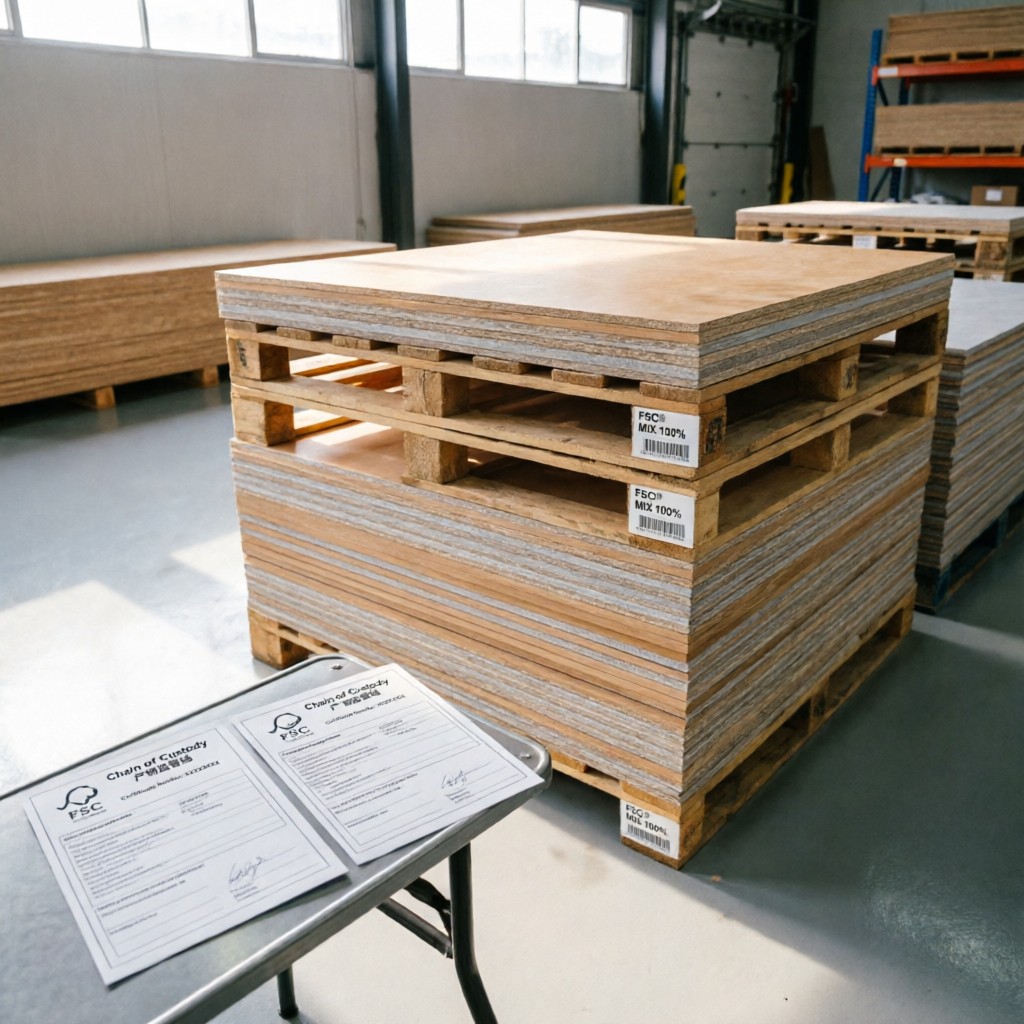
Yicaiyigou positions itself as a technical design partner rather than a simple manufacturer. We integrate CNC precision with artisanal wood selection to guarantee aesthetic consistency across global rollouts. Our Chain of Custody (CoC) documentation provides full traceability from forest to factory, satisfying EUDR requirements effective Dec 30, 2024.
We address a critical gap in the market: most suppliers lack documented protocols for matching new veneer lots to installations aged 6+ months. Yicaiyigou maintains digital archives of grain patterns and color profiles, allowing us to produce replacement panels that seamlessly integrate with existing fixtures. This capability is invaluable for brands with ongoing expansion or maintenance needs.
With a lead time of 15-25 days and MOQs starting at one 20ft container (holding 20-25 m³), we balance flexibility with efficiency. Our 40ft containers hold 45-50 m³, optimizing logistics costs for large-scale projects. Every shipment includes full test reports verifying density, moisture content, and formaldehyde emissions, ensuring hassle-free customs clearance.
FAQ
What is the minimum order quantity for custom veneer projects?
The MOQ is one 20ft container, which holds approximately 20-25 m³ of material, allowing for efficient logistics without excessive inventory burden.
How does Yicaiyigou ensure formaldehyde compliance for indoor retail use?
All composite panels meet ENF (≤0.05 mg/L) and CARB P2 (≤0.11 ppm) standards, ensuring safe indoor air quality for enclosed luxury retail environments.
Can you match veneer to existing installations older than six months?
Yes, we maintain digital archives of grain patterns and color profiles, enabling us to produce replacement panels that match aged installations with high accuracy.
What is the typical lead time for customized veneer orders?
Standard lead times range from 15 to 25 days, depending on the complexity of the grain-matching requirements and volume of the order.
Do you provide digital previews before production starts?
Yes, we offer digital grain-mapping previews for approval before cutting begins, ensuring the final product meets your exact aesthetic expectations.
Summary & Next Steps
Selecting the right veneer supplier for luxury retail displays requires a focus on technical precision, digital verification, and regulatory compliance. By specifying partners who offer digital grain-mapping, strict moisture control (8-10%), and documented CoC traceability, brands can mitigate the risk of aesthetic failure and ensure seamless global rollouts.
Request a compliant material sample with full CoC documentation from Yicaiyigou to verify grain matching and emission standards for your next project.
Frequently Asked Questions
What are the primary risks for luxury retailers when using standard veneer batches?
Luxury retailers risk brand dilution and costly rework because standard veneer batches often fail to match specific Pantone color codes or meet grain continuity requirements, leading to visible inconsistencies that threaten the brand’s premium image.
How do manufacturers ensure aesthetic consistency across large panels exceeding 2.4 meters?
Manufacturers ensure consistency by integrating CNC precision with artisanal wood selection and utilizing digital grain-mapping protocols, which allow for seamless global rollouts while maintaining strict environmental compliance.
What are the critical technical specifications for veneered substrates in luxury retail environments?
Critical specifications include seamless grain matching across lengths over 2.4 meters, veneer thickness tolerance within ±0.1mm for seamless edge banding, and moisture content stabilization at 8-10% to prevent warping or cracking.
Why is moisture content stabilization important for exotic wood species in retail displays?
Moisture content must be stabilized at 8-10% to prevent warping or cracking in the climate-controlled environments typical of high-end retail spaces, ensuring the material maintains its structural and aesthetic integrity.
What advantage does digital grain-mapping offer over traditional manual selection processes?
Digital grain-mapping allows buyers to visualize and approve grain patterns digitally before production begins, providing reproducibility and reducing the risk of surprise inconsistencies upon delivery, unlike manual processes which lack reproducibility.