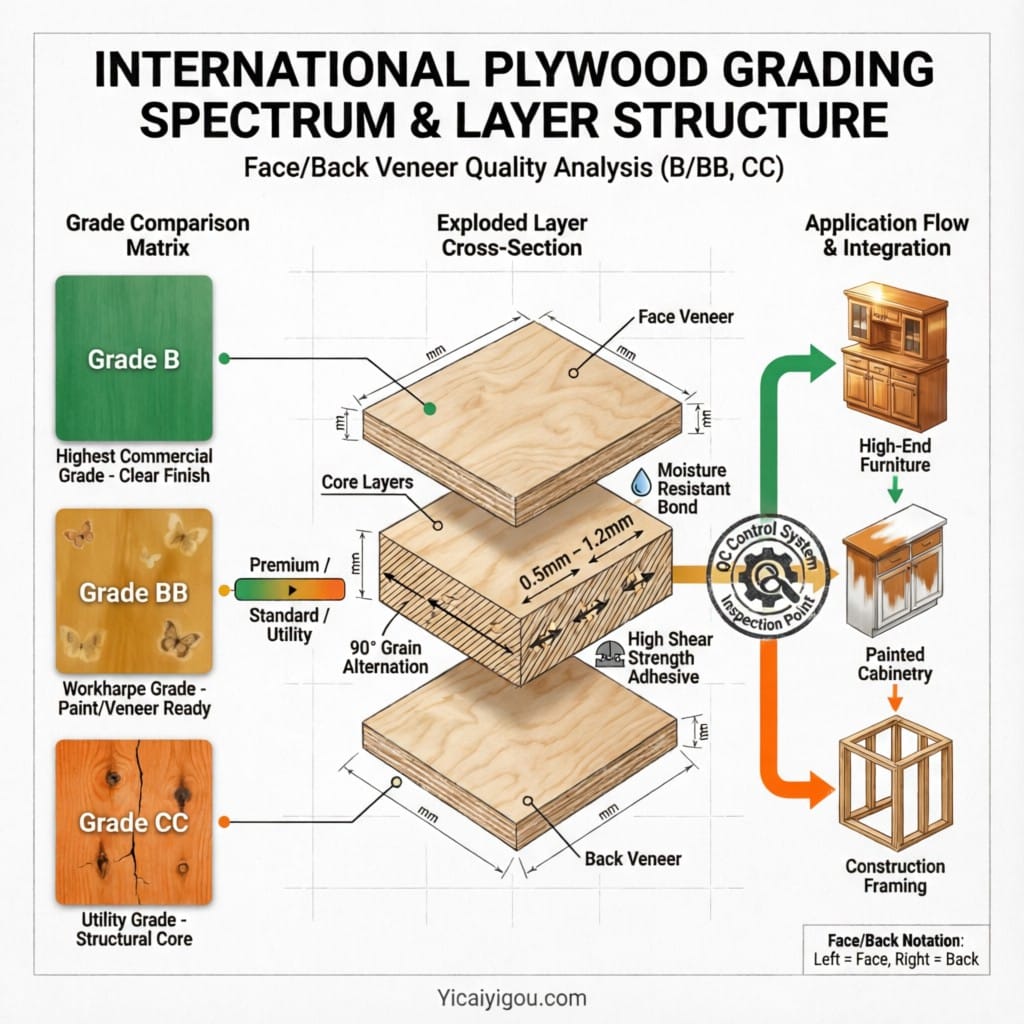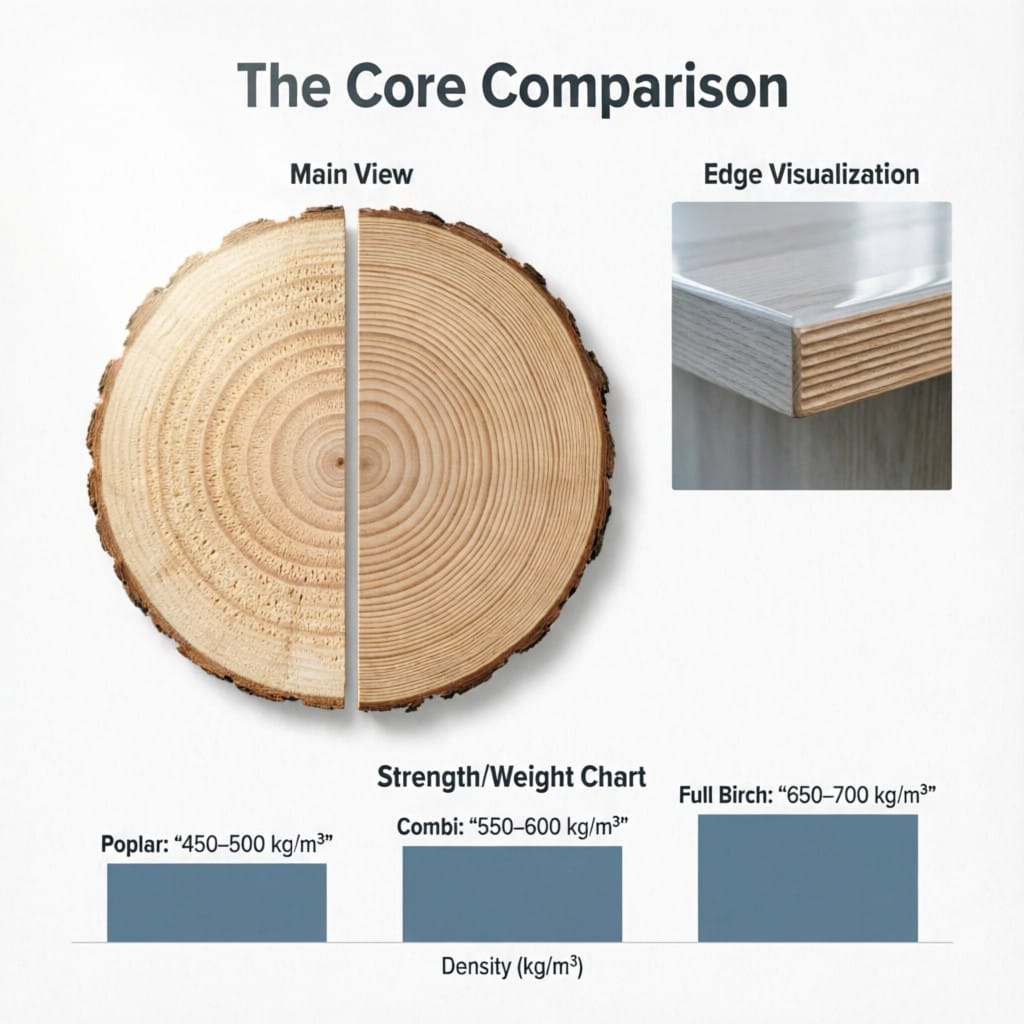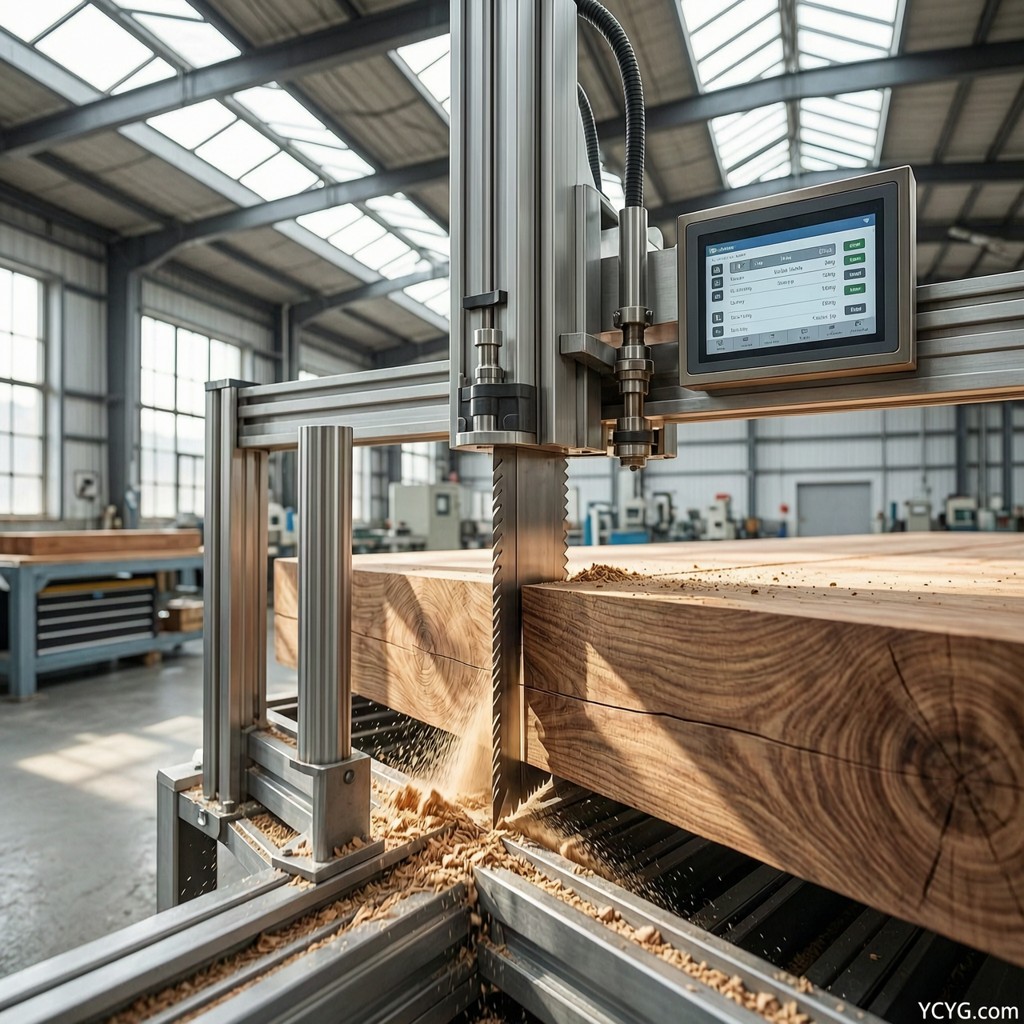
| Feature | Hardwood Veneer | Softwood Veneer |
|---|---|---|
| Primary Aesthetic Character | Complex grain patterns, rich textures, biophilic warmth | Uniform grain, lighter tones, subtle texture |
| Density & Structural Stability | Higher density; superior dimensional stability | Lower density; moderate stability |
| Compatible Substrates | Precision MDF (600-800 kg/m³), Structural Plywood | High-Density Particleboard (550-750 kg/m³), Standard Plywood |
| Finishing Behavior | Requires precise sanding; accepts stains deeply | Easier to sand; may require blotch control for even staining |
| Regulatory Compliance Focus | Strict adherence to CARB P2 and EUDR due to high-value sourcing | Standard compliance with CARB P2 and EUDR regulations |
| Supply Chain Impact | Longer lead times; higher cost per unit; lower waste rates if handled correctly | Shorter lead times; lower cost; potentially higher waste due to softness |
| Typical Applications | High-end furniture (e.g., Herman Miller), architectural panels | Mass-market furniture (e.g., IKEA), structural core layers |
Selecting the right face veneer determines not only the aesthetic character of furniture and architectural panels but also their structural stability and compliance with stringent global emissions standards. This guide provides a data-driven comparison of hardwood and softwood veneers, helping procurement managers and engineers optimize material selection for precision MDF, structural plywood, and high-density particleboard substrates while ensuring adherence to CARB P2 and EUDR regulations.
The interior design landscape is shifting toward biophilic elements that demand authentic wood textures without compromising on sustainability or dimensional stability. Major industry leaders like IKEA and Herman Miller are increasingly specifying engineered wood products that balance visual warmth with rigorous performance metrics, driving a need for precise material differentiation. Understanding the distinct grain patterns, density variations, and finishing behaviors of hardwood versus softwood veneers is no longer just a design choice—it is a critical supply chain decision that impacts lead times, waste rates, and regulatory compliance.
For procurement professionals sourcing from manufacturers like Yicaiyigou, the decision between hardwood and softwood face veneers involves more than just color preference; it requires evaluating how these veneers interact with core materials such as Precision MDF (density 600-800 kg/m³) and High-Density Particleboard (550-750 kg/m³). This article details the technical specifications, visual characteristics, and compliance frameworks necessary to make informed sourcing decisions, ultimately reducing risk and enhancing product value in competitive markets like North America and the EU.
Technical Specifications and Performance Metrics
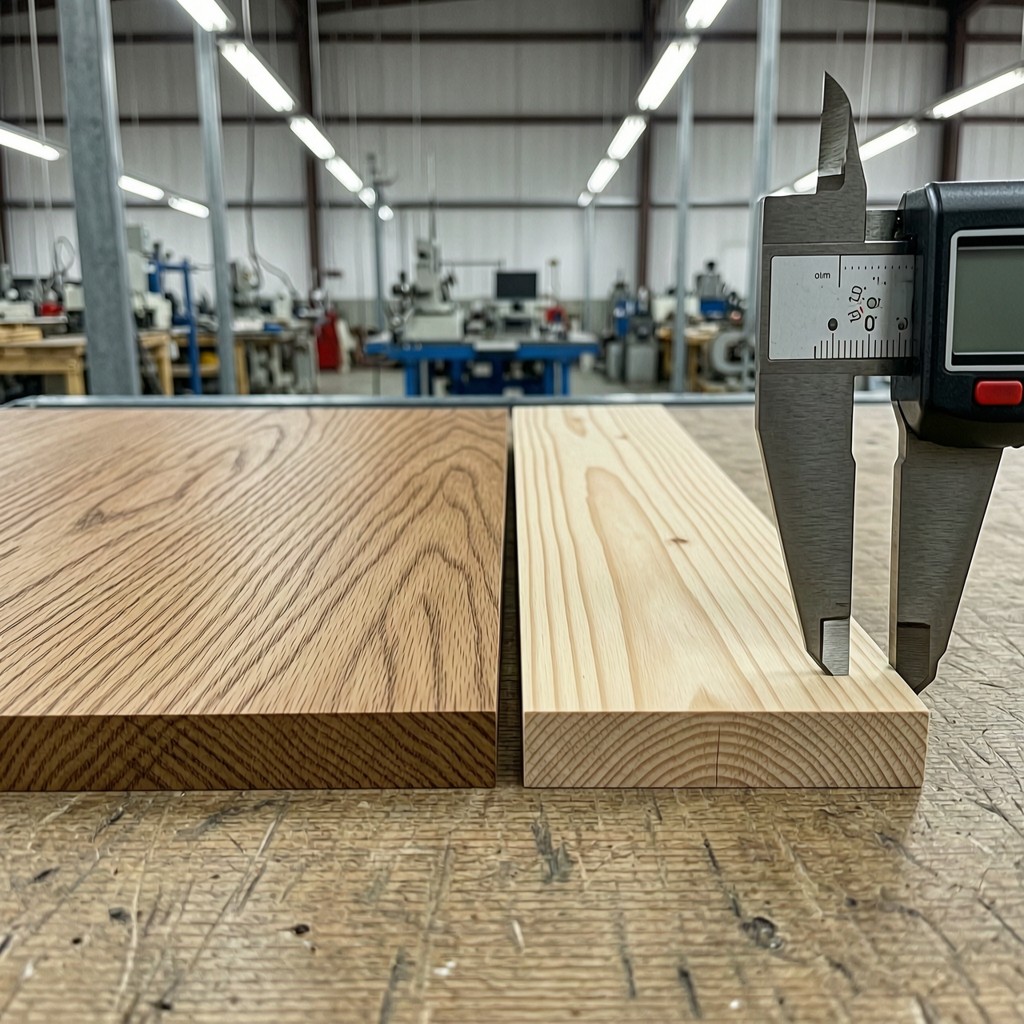
When evaluating face veneers, engineers must consider how the veneer species interacts with the substrate’s density and formaldehyde emission class. Hardwood veneers, typically sliced from deciduous trees like oak, maple, or walnut, offer higher Janka hardness ratings and tighter grain structures, making them ideal for high-wear surfaces. Softwood veneers, sourced from coniferous trees like pine, fir, or spruce, provide a lighter weight and more pronounced grain pattern but require careful handling during lamination to prevent telegraphing of substrate imperfections.
The choice of veneer also influences the final panel’s compliance with international standards. For instance, when laminating veneers onto Yicaiyigou’s Precision MDF, which maintains a strict density range of 600-800 kg/m³, the adhesive system must meet CARB P2 limits of ≤0.11 ppm for composites. Similarly, for projects requiring the highest air quality standards, such as healthcare or educational facilities, the entire assembly—including the veneer and adhesive—must align with ENF standards (≤0.05 mg/L) or E0 (≤0.07 ppm) thresholds.
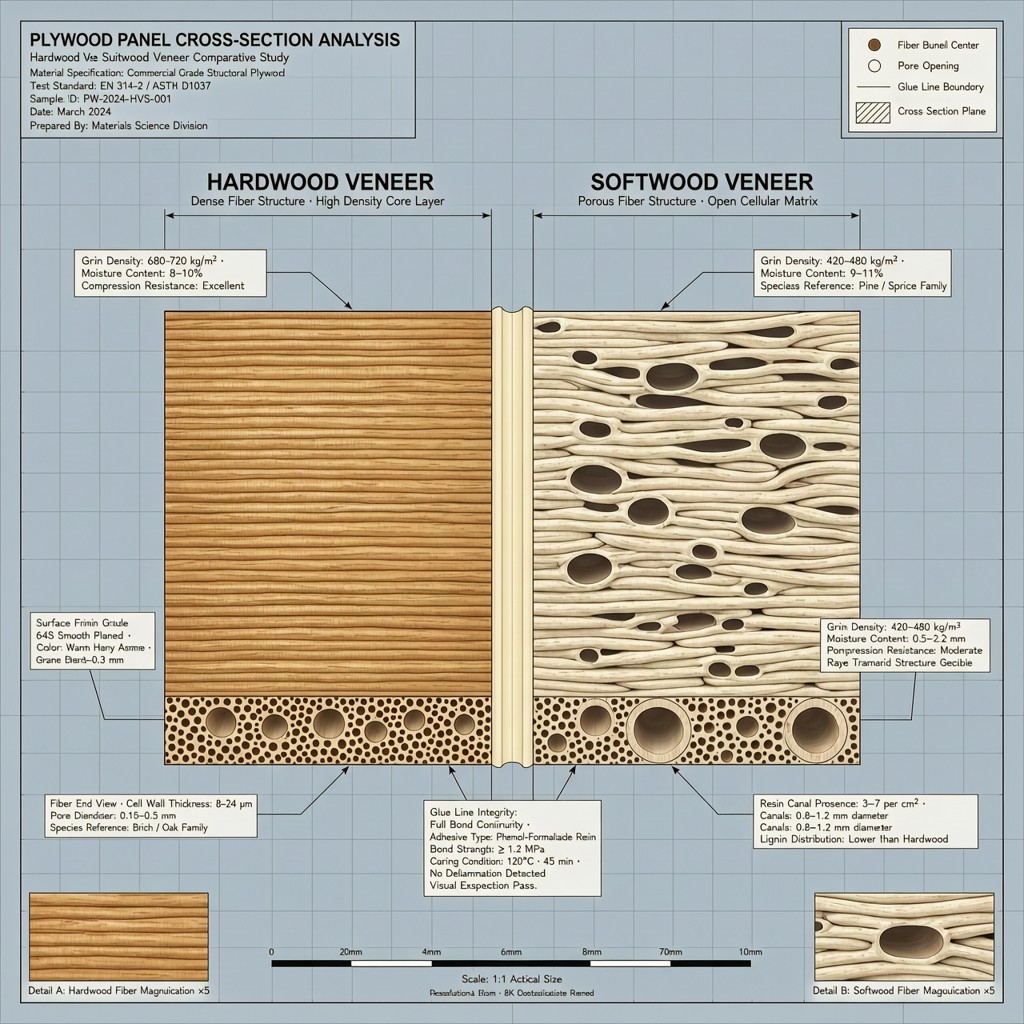
Hardwood vs. Softwood Veneer: Data-Driven Comparison
The following table outlines the key measurable differences between hardwood and softwood face veneers when applied to engineered wood substrates. These metrics are critical for predicting performance in manufacturing and end-use applications.
| Metric | Hardwood Face Veneer (e.g., Oak, Maple) | Softwood Face Veneer (e.g., Pine, Fir) |
|---|---|---|
| Typical Janka Hardness | 1,200 – 3,000+ lbf | 300 – 900 lbf |
| Grain Pattern Consistency | Tight, uniform, minimal variation | Wide, prominent, high variation |
| Staining Absorption Rate | Moderate to Low (requires pre-conditioner) | High (uneven absorption common) |
| Sanding Tolerance | High (withstands aggressive sanding) | Low (risk of sand-through due to softness) |
| Dimensional Stability | High (less expansion/contraction) | Moderate (more prone to movement) |
| Weight per m² (0.6mm) | ~0.45 – 0.55 kg | ~0.35 – 0.45 kg |
| Cost Premium vs. Core | +15% to +40% over softwood | Baseline cost |
| Defect Frequency (Knots) | Low (clear cuts available) | High (character marks common) |
This data indicates that hardwood veneers offer superior durability and consistency, making them suitable for high-visibility, high-traffic applications where surface integrity is paramount. Softwood veneers, while cost-effective and aesthetically rustic, require more rigorous quality control during the lamination and finishing processes to manage uneven staining and surface softness.
Industry Applications with Real Specifications
In the production of premium office furniture, Yicaiyigou supplies Structural Plywood faced with white oak veneer, adhering to FSC Chain of Custody documentation. For a recent project supplying components for a major tech campus, the specification required a surface finish capable of withstanding daily abrasion while maintaining an E0 formaldehyde emission level of ≤0.07 ppm. The use of hardwood veneer on a high-density core ensured that the panels met both the aesthetic requirements for a modern workspace and the strict indoor air quality standards mandated by the client.
Conversely, for residential shelving units distributed via Amazon, softwood pine veneer applied to High-Density Particleboard (density >800 kg/m³ for HDF cores or 550-750 kg/m³ for standard particleboard) offers a cost-efficient solution. These panels, sized at the standard 2440x1220mm, are optimized for container loading, with a 40ft container holding 45-50 m³ of material. The softer nature of the pine veneer allows for a “rustic” finish that hides minor handling marks, reducing rejection rates during last-mile delivery inspections.

Supplier Solution: Yicaiyigou’s Compliance and Capacity
Yicaiyigou distinguishes itself through rigorous adherence to global compliance standards, including FSC, CARB P2, CE, and ENF certifications. With the EU Deforestation Regulation (EUDR) effective December 30, 2024, supply chain transparency is non-negotiable. Yicaiyigou provides full Chain of Custody (CoC) documentation for all hardwood and softwood veneers, ensuring that every sheet of Precision MDF or Structural Plywood can be traced back to sustainable sources. This level of traceability mitigates customs delays and reputational risk for buyers exporting to Europe and North America.
Our manufacturing capabilities support high-volume orders with a minimum order quantity (MOQ) of one 20ft container (holding 20-25 m³) and a lead time of 15-25 days. Whether you require HDF with a density of >800 kg/m³ for heavy-duty flooring underlayment or standard MDF (600-800 kg/m³) for cabinet doors, our facilities maintain strict tolerance controls. We invite procurement managers to request a compliant material sample with full CoC documentation to verify our adherence to ENF (≤0.05 mg/L) and CARB P2 (≤0.11 ppm) standards before committing to large-scale production.
FAQ
What is the formaldehyde emission limit for CARB P2 certified panels?
CARB P2 certification requires composite wood products to emit no more than 0.11 ppm of formaldehyde, ensuring safer indoor air quality for residential and commercial spaces.
How does the density of Yicaiyigou’s MDF affect veneer lamination?
Yicaiyigou’s Precision MDF has a density of 600-800 kg/m³, providing a smooth, uniform surface that minimizes telegraphing and ensures strong adhesive bonding for both hardwood and softwood veneers.
What is the difference between E0 and ENF formaldehyde standards?
E0 standard limits formaldehyde emissions to ≤0.07 ppm, while the stricter ENF standard limits emissions to ≤0.05 mg/L, making ENF the preferred choice for sensitive environments like hospitals and schools.
How many square meters of panel fit in a 40ft container?
A 40ft container holds approximately 45-50 m³ of material. For standard 18mm thick panels (2440x1220mm), this translates to roughly 2,000–2,200 square meters, depending on packaging efficiency.
Is FSC certification required for EUDR compliance?
While FSC certification is not legally mandatory for EUDR, it provides robust Chain of Custody documentation that simplifies due diligence and proves deforestation-free sourcing, significantly reducing compliance burden.
Summary & Next Steps
Choosing between hardwood and softwood veneers requires balancing aesthetic goals with technical performance and regulatory compliance. Hardwood offers durability and consistency for premium applications, while softwood provides cost efficiency and rustic charm for residential markets. Both options must be paired with compliant substrates like Yicaiyigou’s CARB P2 and ENF-certified MDF or plywood to ensure market access in regulated regions.
Request a compliant material sample with full CoC documentation from Yicaiyigou to evaluate the grain quality and adhesive performance for your specific application.
Frequently Asked Questions
How does the choice between hardwood and softwood veneers impact regulatory compliance?
The choice of veneer influences the final panel’s compliance with international standards such as CARB P2, EUDR, ENF, and E0. The entire assembly, including the veneer and adhesive system, must meet specific formaldehyde emission limits (e.g., ≤0.11 ppm for CARB P2) to ensure adherence to stringent global emissions standards.
What are the key technical differences in hardness and grain pattern between hardwood and softwood veneers?
Hardwood veneers typically have higher Janka hardness ratings (1,200–3,000+ lbf) and tight, uniform grain structures, making them suitable for high-wear surfaces. In contrast, softwood veneers have lower hardness (300–900 lbf) and feature wide, prominent grain patterns with high variation, requiring careful handling to prevent telegraphing substrate imperfections.
Why is understanding veneer-substrate interaction critical for procurement managers?
Understanding how veneers interact with core materials like Precision MDF (600-800 kg/m³) and High-Density Particleboard (550-750 kg/m³) is essential for optimizing material selection. This knowledge helps reduce lead times and waste rates, ensures structural stability, and supports informed sourcing decisions that enhance product value and regulatory compliance.
What density ranges are specified for Precision MDF and High-Density Particleboard in the article?
Precision MDF maintains a strict density range of 600-800 kg/m³, while High-Density Particleboard has a density range of 550-750 kg/m³. These specifications are crucial when evaluating how face veneers interact with the substrate’s density and formaldehyde emission class.
How are industry trends influencing the demand for engineered wood products?
The interior design landscape is shifting toward biophilic elements that require authentic wood textures without compromising sustainability or dimensional stability. Major industry leaders like IKEA and Herman Miller are specifying engineered wood products that balance visual warmth with rigorous performance metrics, driving the need for precise material differentiation.