| Standard / Regulation | Primary Focus | Key Requirement / Benchmark | Business Impact |
|---|---|---|---|
| E0 Standard | Formaldehyde Emissions | Ultra-low formaldehyde release (≤ 0.5 mg/L) | Ensures indoor air safety; meets strict European and Asian market requirements. |
| ENF Standard | Formaldehyde Emissions | No Formaldehyde Added (highest tier of safety) | Prevents customs delays in regulated markets; aligns with global health benchmarks. |
| CARB P2 | Formaldehyde Emissions | California Air Resources Board Phase 2 compliance | Mandatory for market access in the United States; avoids regulatory fines. |
| EUDR | Deforestation & Traceability | Chain of Custody (CoC) documentation effective Dec 30, 2024 | Required for EU market entry; ensures transparent and legal supply chains. |
| Substrate Density Specs | Structural Integrity | Optimized internal density for load-bearing capacity | Prevents panel warping; ensures screw-holding capacity and long-term durability. |
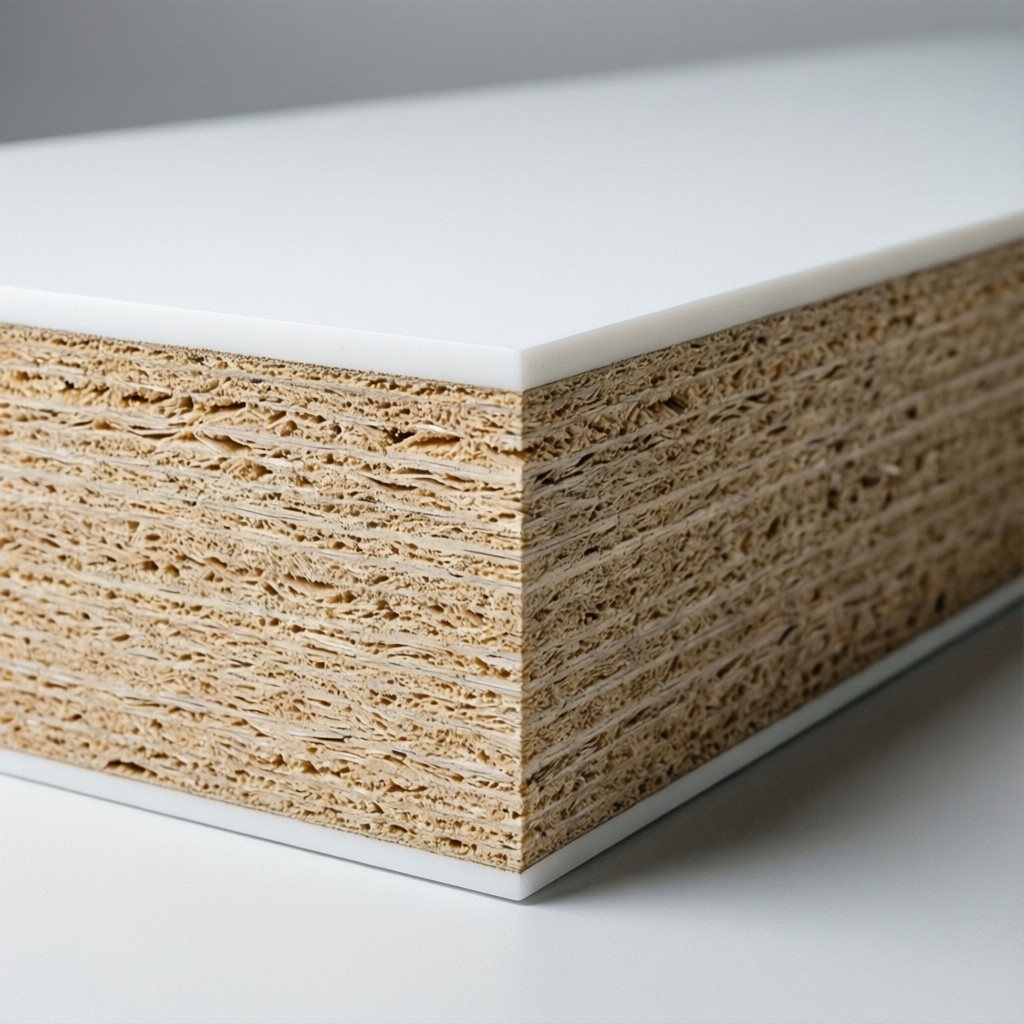
Understanding the internal density of a melamine board substrate is the single most critical factor in predicting panel warping, screw-holding capacity, and long-term durability. For procurement managers and engineers, aligning these physical specifications with strict formaldehyde emission standards like E0 and ENF ensures that furniture and construction materials meet both performance benchmarks and global regulatory requirements without costly rework or customs delays.
The modern furniture and construction landscape has shifted from purely aesthetic considerations to rigorous technical compliance. Major global brands like IKEA and Apple demand supply chains that are not only efficient but also transparent regarding material safety and structural integrity. When sourcing melamine-faced panels, buyers often focus on the surface finish, neglecting the core substrate where the real engineering challenges lie. A mismatch between substrate density and application load can lead to catastrophic failures in high-traffic environments, while non-compliant formaldehyde levels can halt shipments at EU or US borders. This article dissects the anatomy of a high-quality melamine board, providing the specific data points needed to mitigate risk and optimize supply chain efficiency.
Regulatory Landscape: E0, CARB P2, and ENF Standards
For B2B buyers, navigating the complex web of formaldehyde emission standards is essential for market access. The European Union’s EUDR (EU Deforestation Regulation), effective December 30, 2024, adds another layer of scrutiny, requiring robust Chain of Custody (CoC) documentation alongside chemical compliance. While surface aesthetics drive sales, regulatory compliance drives market entry.
The most cited standards in global trade are CARB P2 (California Air Resources Board Phase 2), E0, and the newer ENF standard. CARB P2 limits formaldehyde emissions to ≤0.11 ppm for composite wood products, a baseline for entering the North American market. However, premium markets and environmentally conscious brands increasingly require E0 (≤0.07 ppm) or the stringent ENF (≤0.05 mg/L) standard. It is crucial to note the measurement differences: E0 is typically measured in ppm, while ENF and Japan’s JAS F★★★★ (≤0.3 mg/L via JIS A 1460 desiccator method) use mg/L. Misinterpreting these units can lead to false compliance claims. Yicaiyigou ensures all substrates meet these thresholds, providing verified test reports that satisfy both CARB P2 and ENF requirements.
Substrate Performance Comparison: MDF vs HDF vs Particleboard
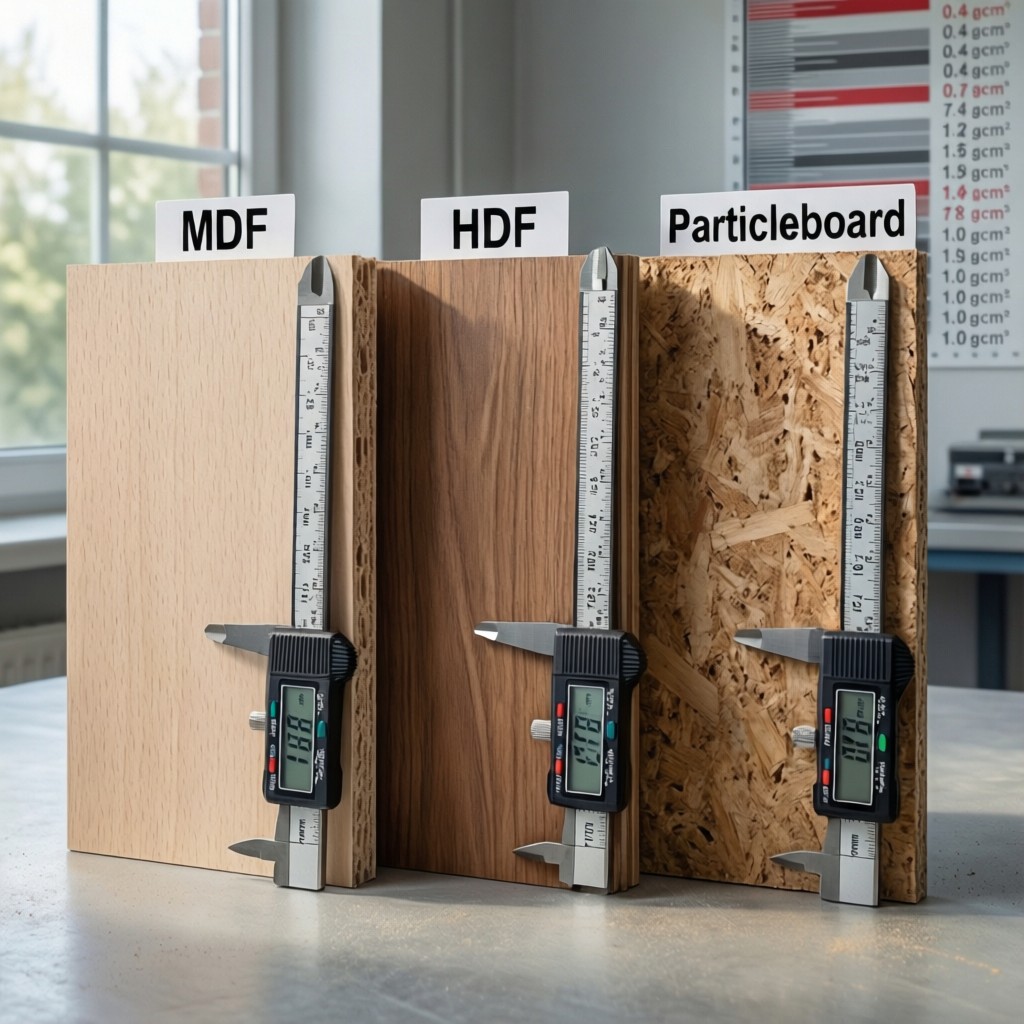
Choosing the right substrate requires balancing density, cost, and mechanical performance. Below is a technical comparison of the three primary substrates used in melamine board manufacturing, focusing on measurable specifications rather than marketing claims.
| Specification | Precision MDF | High-Density Fiberboard (HDF) | High-Density Particleboard |
|---|---|---|---|
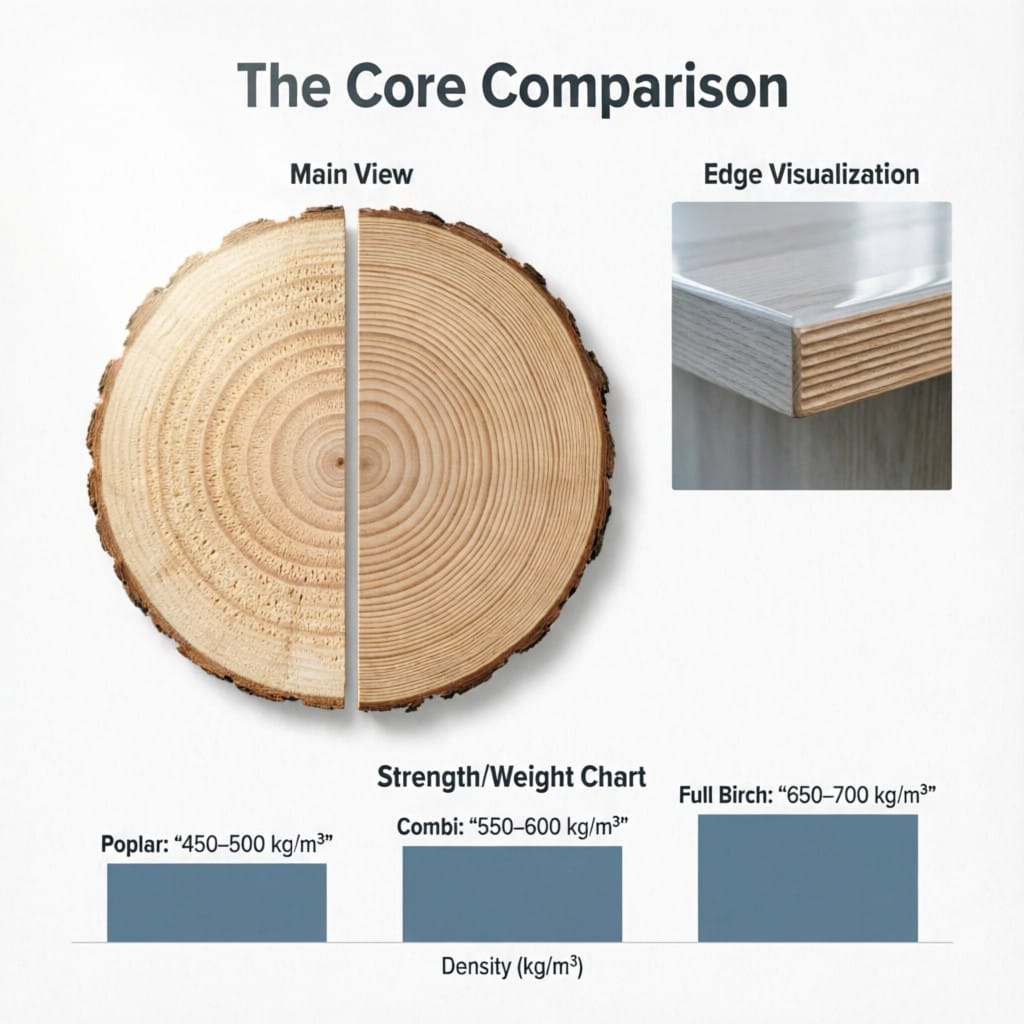
| Density Range | 600-800 kg/m³ | >800 kg/m³ up to 1,000+ kg/m³ | 550-750 kg/m³ |
| Formaldehyde Limit (ENF) | ≤0.05 mg/L | ≤0.05 mg/L | ≤0.05 mg/L |
| Formaldehyde Limit (E0) | ≤0.07 ppm | ≤0.07 ppm | ≤0.07 ppm |
| CARB P2 Compliance | ≤0.11 ppm | ≤0.11 ppm | ≤0.11 ppm |
| Thickness Tolerance | ±0.2 mm | ±0.15 mm | ±0.3 mm |
| Internal Bond Strength | ≥0.6 N/mm² | ≥0.8 N/mm² | ≥0.4 N/mm² |
| Moisture Absorption | <12% (24h immersion) | <10% (24h immersion) | <15% (24h immersion) |
| Screw Holding Capacity | High | Very High | Moderate |
| Surface Smoothness (Ra) | <3.2 µm | <1.6 µm | <6.3 µm |
| Typical Application | Cabinetry, Furniture | Flooring, High-Wear Surfaces | Shelving, Structural Core |
The data reveals that HDF offers superior density and surface smoothness, making it ideal for high-pressure laminates and heavy-use flooring. Precision MDF provides a balanced profile for general furniture, while particleboard remains cost-effective for structural cores where surface perfection is less critical. Note that all three substrates from Yicaiyigou achieve ENF ≤0.05 mg/L, ensuring top-tier environmental safety regardless of density choice.
Industry Applications with Verified Specifications
In practical applications, the choice of substrate directly impacts product longevity and user safety. For a furniture manufacturer exporting to the EU, using Yicaiyigou’s Precision MDF with a density of 700 kg/m³ and ENF ≤0.05 mg/L ensures compliance with the strictest indoor air quality standards. This specific density range provides optimal screw-holding power for hinge installations, reducing the risk of door sagging over time. The standard size of 2440x1220mm allows for efficient nesting on CNC machines, minimizing waste during precision machining.
For commercial flooring and high-traffic retail fixtures, HDF with a density exceeding 800 kg/m³ is the preferred substrate. Its high internal bond strength and low moisture absorption (<10% after 24 hours) prevent swelling and delamination under heavy loads. When paired with industrial melamine laminate wear resistance standards, this substrate creates a durable surface capable of withstanding constant foot traffic. Yicaiyigou’s HDF panels are tested to ensure they meet these rigorous demands, providing a reliable base for high-pressure melamine board moisture absorption resistance.
Supplier Solution: Yicaiyigou’s Technical Advantage
Yicaiyigou distinguishes itself through rigorous quality control and transparent documentation. Every batch of Precision MDF, Structural Plywood, and High-Density Particleboard is accompanied by full Chain of Custody (CoC) documentation, verifying FSC certification and traceability from forest to factory. This is critical for buyers navigating the upcoming EUDR requirements. Our facilities produce boards with thicknesses ranging from 3mm to 30mm, catering to diverse application needs from thin backing panels to thick structural components.
Logistics efficiency is another key differentiator. A 20ft container holds 20-25 m³ of product, while a 40ft container accommodates 45-50 m³, allowing buyers to optimize shipping costs. With a minimum order quantity (MOQ) of just one 20ft container and a lead time of 15-25 days, Yicaiyigou offers a responsive supply chain for urgent projects. All products carry CE marking and meet CARB P2, E0, and ENF standards, providing a comprehensive compliance package that reduces administrative burden for procurement teams.

FAQ
What is the density range for Yicaiyigou’s Precision MDF?
Yicaiyigou’s Precision MDF has a density range of 600-800 kg/m³, offering a balance of workability and structural strength for furniture applications.
How does ENF standard compare to E0 for formaldehyde emissions?
ENF is stricter, limiting formaldehyde to ≤0.05 mg/L, whereas E0 allows up to ≤0.07 ppm. Both are significantly lower than the CARB P2 limit of ≤0.11 ppm.
What is the maximum thickness available for melamine board substrates?
Yicaiyigou produces substrates with thicknesses ranging from 3mm to 30mm, accommodating various design and structural requirements.
How many cubic meters fit in a 40ft container?
A 40ft container can hold 45-50 m³ of melamine board products, optimizing shipping efficiency for large orders.
Is Chain of Custody documentation provided for FSC-certified products?
Yes, Yicaiyigou provides full Chain of Custody (CoC) documentation for all FSC-certified products, ensuring traceability and compliance with regulations like EUDR.
Summary & Next Steps
Selecting the right melamine board substrate involves more than just choosing a finish; it requires a deep understanding of density specifications, formaldehyde emission standards, and logistical capabilities. By prioritizing substrates that meet ENF ≤0.05 mg/L and CARB P2 standards, buyers can ensure global compliance and product durability. Yicaiyigou’s commitment to precise density control, from 600 kg/m³ MDF to 1,000+ kg/m³ HDF, combined with robust CoC documentation, makes it a reliable partner for high-stakes projects.
Request a compliant material sample with full CoC documentation from Yicaiyigou to verify density and emission standards for your next project.
Frequently Asked Questions
Why is internal density considered the most critical factor in melamine board substrates?
Internal density is the single most critical factor because it directly predicts panel warping, screw-holding capacity, and long-term durability. A mismatch between substrate density and application load can lead to catastrophic failures in high-traffic environments.
What are the key differences between CARB P2, E0, and ENF formaldehyde emission standards?
CARB P2 limits emissions to ≤0.11 ppm, serving as a baseline for the North American market. E0 is stricter at ≤0.07 ppm, while the ENF standard is the most stringent at ≤0.05 mg/L. It is crucial to note that E0 is typically measured in ppm, whereas ENF uses mg/L, and misinterpreting these units can lead to false compliance claims.
How does High-Density Fiberboard (HDF) compare to Precision MDF and Particleboard in terms of performance?
HDF offers superior performance with a density of >800 kg/m³, very high screw-holding capacity, the lowest moisture absorption (<10%), and the best surface smoothness (Ra <1.6 µm). In contrast, Precision MDF has moderate density (600-800 kg/m³) and high screw holding, while Particleboard has the lowest density range (550-750 kg/m³), moderate screw holding, and highest moisture absorption (<15%).
What additional regulatory requirement affects melamine board imports into the European Union starting December 30, 2024?
The European Union’s EUDR (EU Deforestation Regulation) becomes effective on December 30, 2024. This regulation adds a layer of scrutiny by requiring robust Chain of Custody (CoC) documentation alongside chemical compliance to ensure market entry.
Why do major global brands like IKEA and Apple prioritize technical compliance over surface aesthetics in their supply chains?
These brands prioritize technical compliance because non-compliant formaldehyde levels can halt shipments at borders, and poor structural integrity can lead to product failures. They demand transparent supply chains regarding material safety and structural integrity to mitigate risk, avoid costly rework, and meet strict global regulatory requirements.