| Substrate Type | Density Range (kg/m³) | Surface Characteristics | Adhesive Requirements | Primary Application Context |
|---|---|---|---|---|
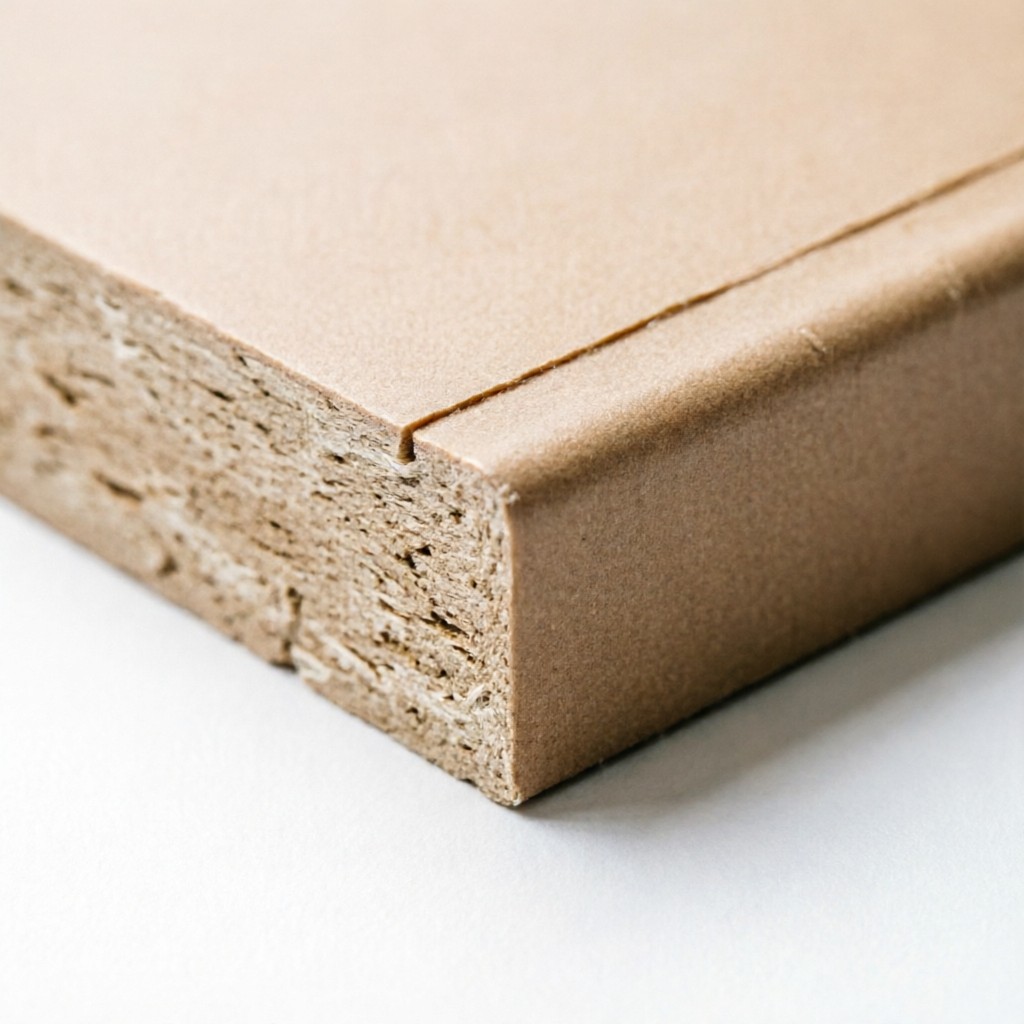
| Precision MDF | 600 – 800 | Uniform, non-porous | Standard hot-melt adhesives | High-aesthetic minimalist cabinetry |
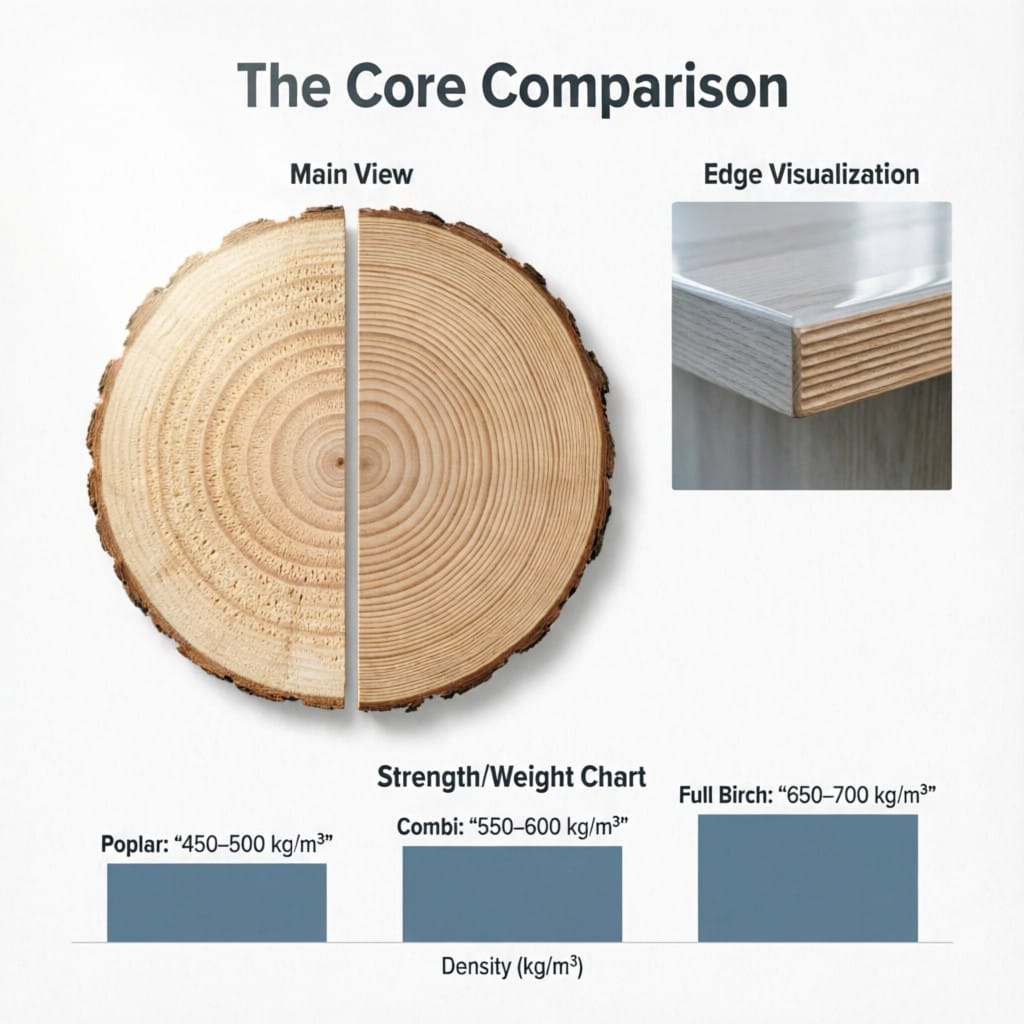
| High-Density Particleboard | 550 – 750 | Heterogeneous, contains voids | Higher viscosity adhesive for penetration | General furniture manufacturing |
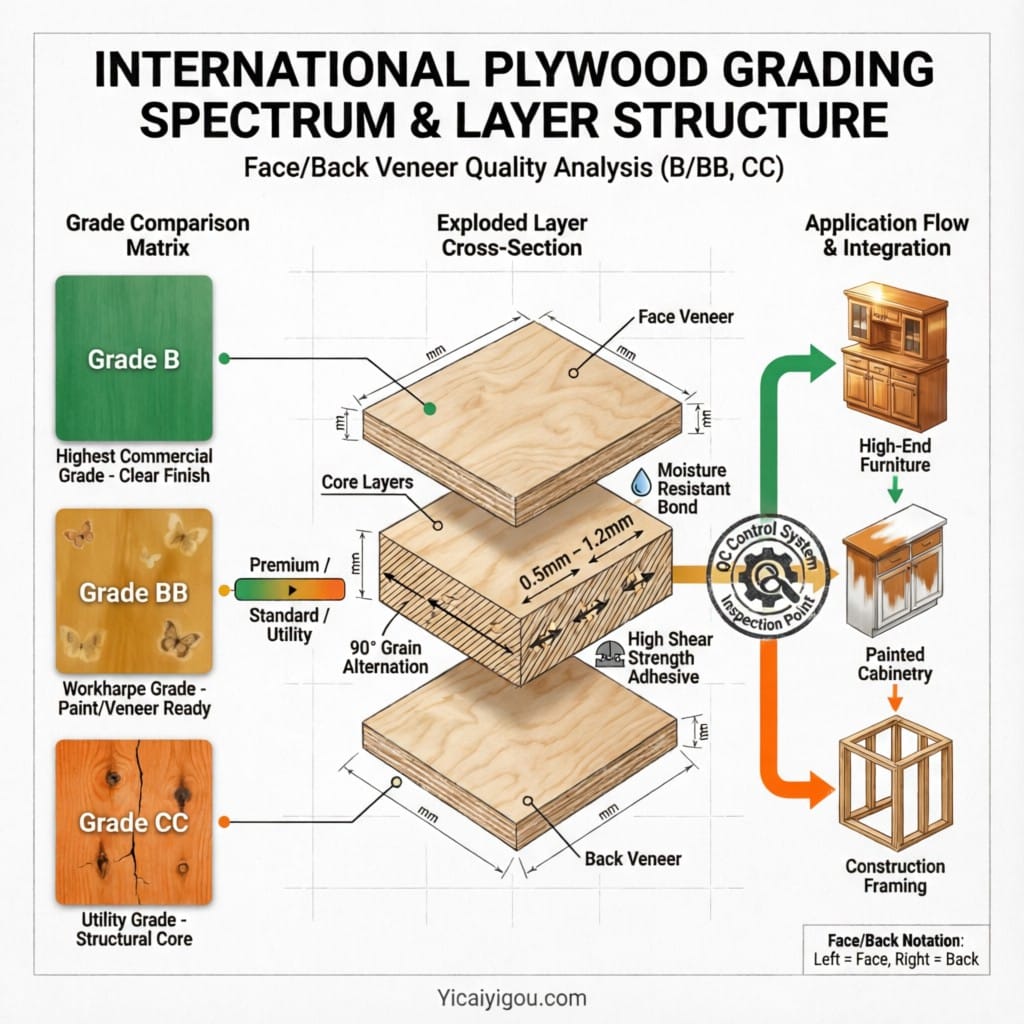
| Structural Plywood | N/A (Layered Veneers) | Layered structure, variable porosity | Specialized bonding for thermal/mechanical stress | Structural integrity and load-bearing units |
Engineered wood substrates dictate the longevity and aesthetic integrity of modern furniture, yet edge-banding failure remains a critical quality control bottleneck for manufacturers. Understanding the specific density thresholds and surface porosities of Precision MDF versus Structural Plywood allows procurement teams to select adhesives that prevent delamination under thermal and mechanical stress. This guide provides the technical data necessary to optimize adhesion strategies, ensuring compliance with stringent international standards while reducing waste in high-volume production lines.
The shift toward minimalist, handle-less cabinetry in retail environments driven by brands like IKEA and Apple has placed unprecedented demand on edge quality. When edges are the primary visual feature, any lifting or glue-line visibility constitutes a reject. For supply chain managers at major distributors, understanding the material science behind edge banding adhesion engineered wood is no longer optional—it is a prerequisite for maintaining brand reputation and minimizing returns. By aligning substrate specifications with adhesive chemistry, manufacturers can secure consistent bond strength across varying humidity conditions.
Substrate Density and Surface Porosity Standards
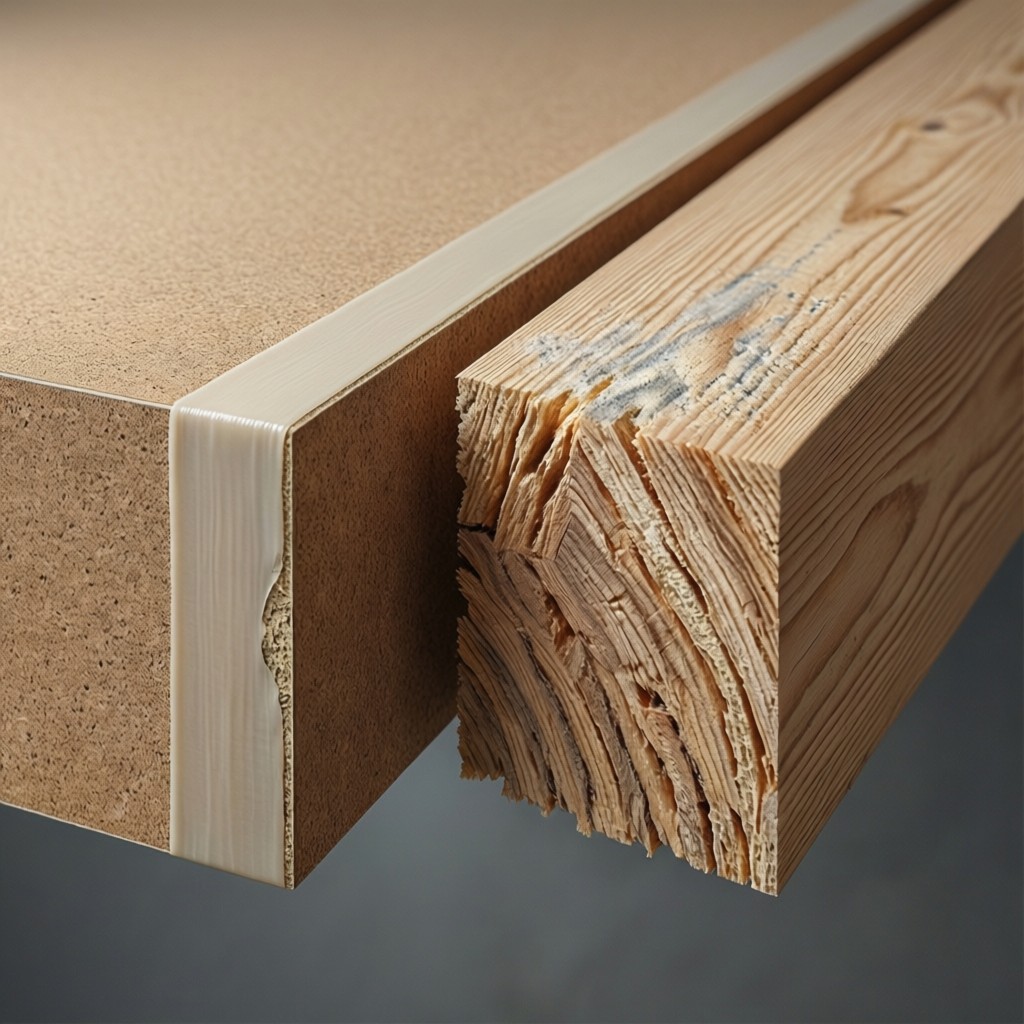
Adhesion performance is fundamentally governed by the substrate’s density and surface energy. Yicaiyigou’s Precision MDF offers a density range of 600-800 kg/m³, providing a uniform, non-porous surface ideal for hot-melt adhesives. In contrast, High-Density Particleboard ranges from 550-750 kg/m³, presenting a more heterogeneous surface that requires higher adhesive viscosity to penetrate voids. Structural Plywood, composed of layered veneers, introduces grain direction variability that can cause uneven adhesive absorption if not properly sanded or sealed.
For high-wear applications, HDF (High-Density Fiberboard) with densities exceeding 800 kg/m³ up to 1,000+ kg/m³ offers superior screw holding and edge stability. However, the extreme density of HDF can sometimes repel standard EVA adhesives if the surface temperature during application is not carefully controlled. Procurement specifications must account for these material differences; a one-size-fits-all adhesive strategy often leads to premature failure in either low-density particleboard or ultra-high-density HDF.
Comparative Analysis: MDF vs. Plywood for Edge Banding
Selecting the correct substrate requires balancing machinability with adhesive compatibility. The following table compares key technical metrics for Yicaiyigou’s core offerings, focusing on parameters that directly influence engineered wood edge compatibility guide decisions.
| Metric | Precision MDF | Structural Plywood | High-Density Particleboard | HDF (High-Density FB) |
|---|---|---|---|---|
| Density Range | 600-800 kg/m³ | Varies by veneer layer | 550-750 kg/m³ | >800 kg/m³ up to 1,000+ kg/m³ |
| Surface Porosity | Low (Uniform) | Medium (Grain dependent) | High (Void prone) | Very Low (Dense) |
| Edge Machinability | Excellent (Clean cut) | Good (Risk of splintering) | Fair (Requires sealing) | Excellent (Sharp edges) |
| Formaldehyde Standard | ENF ≤0.05 mg/L | E0 ≤0.07 ppm | E1 ≤0.124 ppm | ENF ≤0.05 mg/L |
| Adhesive Type Best Fit | EVA/POY Hot Melt | PUR Hot Melt | High-Viscosity EVA | PUR Hot Melt |
| Thickness Tolerance | ±0.1mm | ±0.2mm | ±0.2mm | ±0.1mm |
| Standard Size | 2440x1220mm | 2440x1220mm | 2440x1220mm | 2440x1220mm |
| Moisture Resistance | Low (Unless treated) | High (WBP grades) | Low | Medium |
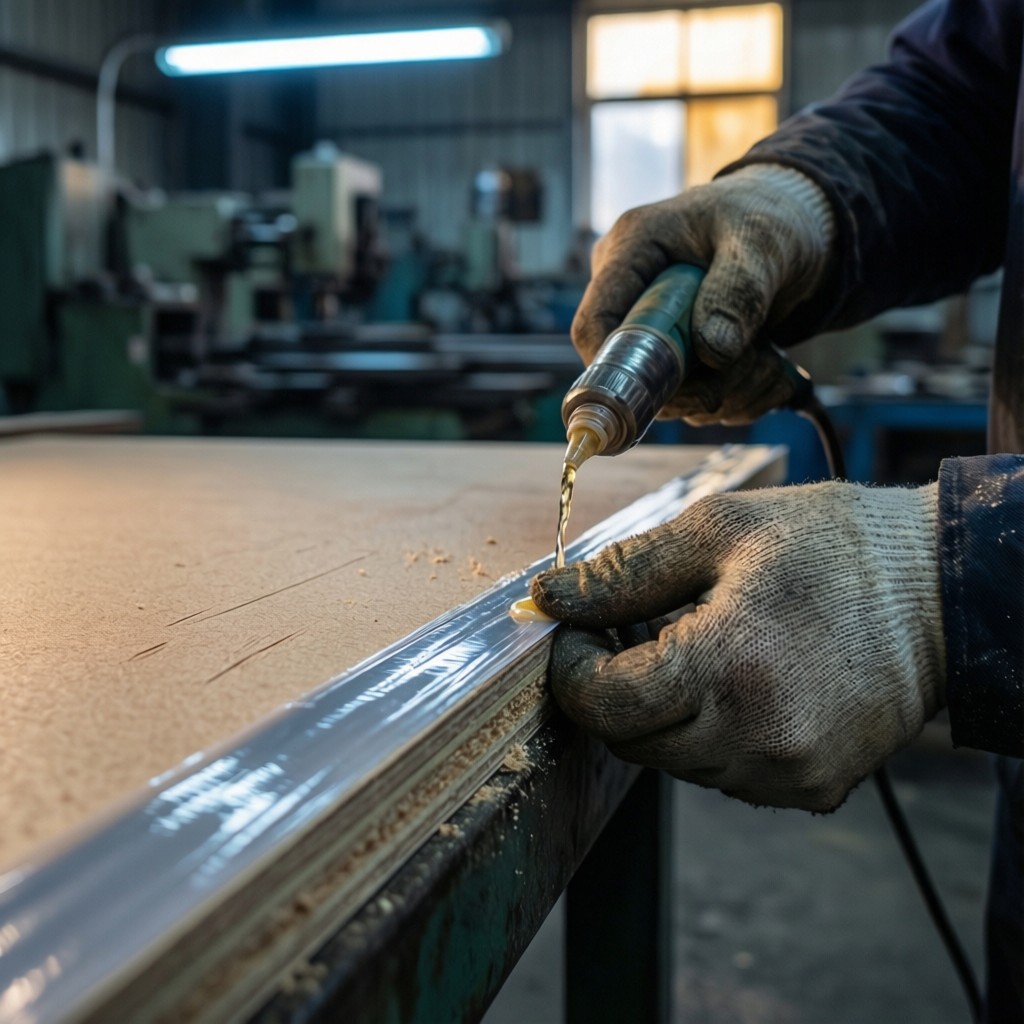
The data indicates that while MDF offers the most consistent surface for standard EVA adhesives, Plywood often requires Polyurethane Reactive (PUR) adhesives to bridge grain irregularities and ensure water-resistant bonds. Particleboard’s higher porosity demands adhesives with greater gap-filling capabilities, whereas HDF’s density necessitates rapid-setting adhesives to prevent “starved joints” where the adhesive fails to wet the surface before setting.
Industry Applications and Compliance Specifications
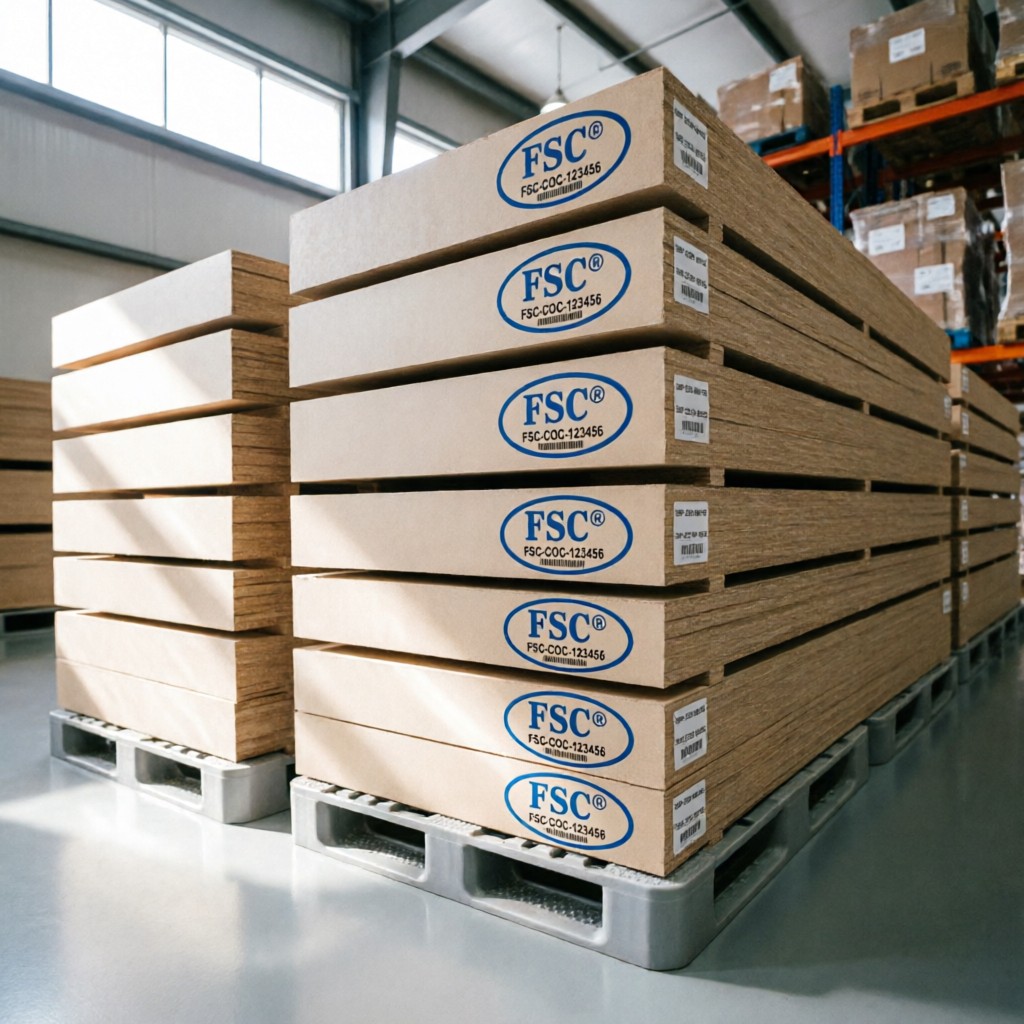
In the European market, compliance with the EU Deforestation Regulation (EUDR), effective December 30, 2024, mandates rigorous traceability. Yicaiyigou supports this with full Chain of Custody (CoC) documentation for FSC-certified materials. For furniture makers exporting to the EU, using FSC-certified MDF with ENF formaldehyde emissions ≤0.05 mg/L eliminates compliance risk at customs while ensuring the substrate meets the highest indoor air quality standards.
For commercial fit-outs requiring CARB P2 compliance, such as projects for Amazon fulfillment centers or retail displays, Yicaiyigou’s particleboard meets the ≤0.11 ppm formaldehyde limit for composites. This specification is critical for indoor environments where ventilation may be limited. Additionally, for markets adhering to Japan’s JIS A 1460 standard, our materials achieve the F★★★★ rating with ≤0.3 mg/L (desiccator method), ensuring global market access without reformulation.
Supplier Solution: Yicaiyigou Precision Manufacturing
Yicaiyigou distinguishes itself through strict adherence to dimensional tolerances and certified environmental standards. Our Precision MDF and HDF products are manufactured to thicknesses ranging from 3mm to 30mm, with standard sizes of 2440x1220mm optimized for container logistics. A 20ft container holds 20-25 m³, while a 40ft container accommodates 45-50 m³, allowing for efficient bulk sourcing with an MOQ of just 1x20ft container. Lead times of 15-25 days ensure responsive supply chain management.
We provide comprehensive certification packages, including FSC, CARB P2, CE, and ENF test reports. Our ENF-rated boards (≤0.05 mg/L) and E0-rated panels (≤0.07 ppm) are verified by third-party laboratories, providing procurement managers with the data needed to validate supplier claims. By requesting a compliant material sample with full CoC documentation, buyers can verify edge-banding performance on their specific machinery before committing to volume orders.
Which One To Choose
Specify Precision MDF (600-800 kg/m³) for painted finishes, printed laminates, and interior cabinetry where surface uniformity and ease of machining are paramount. Specify Structural Plywood for humid environments, structural components, or applications requiring high screw-holding capacity along the edge. Specify HDF (>800 kg/m³) for high-traffic flooring underlays, door skins, and premium furniture edges requiring extreme durability and a sharp, clean profile.
FAQ
What is the optimal density for edge banding adhesion on MDF?
Optimal adhesion is achieved with MDF densities between 600-800 kg/m³, as this range provides sufficient surface hardness for trimming while maintaining enough porosity for adhesive mechanical locking.
How does ENF certification impact edge banding choices?
ENF certification (≤0.05 mg/L) ensures low formaldehyde emission, which correlates with high-quality resin usage; this often results in a more stable substrate that reacts predictably to heat during hot-melt edge banding processes.
Can I use standard EVA adhesive on High-Density Particleboard?
Standard EVA may struggle with High-Density Particleboard (550-750 kg/m³) due to surface voids; high-viscosity EVA or PUR adhesives are recommended to ensure complete gap filling and strong bond lines.
What is the lead time for custom-sized engineered wood from Yicaiyigou?
Standard lead times are 15-25 days for orders meeting the MOQ of 1x20ft container, with custom thicknesses from 3mm to 30mm available within this timeframe.
Does Yicaiyigou provide Chain of Custody documentation for EUDR compliance?
Yes, Yicaiyigou provides full Chain of Custody (CoC) documentation for FSC-certified products, ensuring compliance with the EU Deforestation Regulation effective December 30, 2024.
Summary & Next Steps
Successful edge banding relies on matching adhesive chemistry to substrate density and porosity. By selecting Yicaiyigou’s Precision MDF or HDF, manufacturers gain access to materials with verified densities (600-1,000+ kg/m³) and ultra-low formaldehyde emissions (ENF ≤0.05 mg/L), ensuring both aesthetic quality and regulatory compliance. Request a compliant material sample with full CoC documentation from Yicaiyigou to validate adhesion performance on your production line.
Frequently Asked Questions
Why is edge-banding failure considered a critical issue for modern furniture manufacturers?
Edge-banding failure is a critical quality control bottleneck because the shift toward minimalist, handle-less cabinetry has made edges the primary visual feature. Any lifting or visible glue lines result in product rejection, damaging brand reputation and increasing returns.
How do the density and surface porosity of Precision MDF compare to High-Density Particleboard?
Precision MDF has a density range of 600-800 kg/m³ with low, uniform surface porosity, making it ideal for hot-melt adhesives. In contrast, High-Density Particleboard ranges from 550-750 kg/m³ and has high, heterogeneous porosity with voids, requiring higher viscosity adhesives to penetrate the surface effectively.
Which adhesive types are recommended for Structural Plywood and HDF according to the comparative analysis?
According to the technical data, PUR Hot Melt is the best-fit adhesive type for both Structural Plywood and HDF (High-Density Fiberboard) to ensure consistent bond strength and prevent delamination.
What challenges does HDF present when using standard EVA adhesives?
HDF has an extreme density exceeding 800 kg/m³ up to 1,000+ kg/m³, which can sometimes repel standard EVA adhesives. Successful application requires careful control of surface temperature during the bonding process to avoid premature failure.
How does grain direction variability in Structural Plywood affect edge banding adhesion?
Structural Plywood is composed of layered veneers, introducing grain direction variability that can cause uneven adhesive absorption. To mitigate this and ensure proper adhesion, the surface often needs to be properly sanded or sealed before applying the edge band.