| Feature | FOB (Free On Board) | CIF (Cost, Insurance, Freight) |
|---|---|---|
| Freight Control | Buyer selects carrier; full visibility | Supplier selects carrier; limited visibility |
| Insurance Coverage | Buyer arranges; customizable limits | Supplier arranges; typically minimum cover |
| Risk Transfer Point | When goods cross ship’s rail at origin | When goods arrive at destination port |
| Cost Transparency | High; separate freight and product costs | Low; bundled pricing hides freight margins |
| Demurrage Risk | Buyer manages; can negotiate free days | Supplier manages; often passes costs to buyer |
Navigating the complexities of international timber procurement requires more than just selecting the right material; it demands a precise understanding of shipping liabilities. This article dissects the financial and operational differences between Free On Board (FOB) and Cost, Insurance, and Freight (CIF) terms, providing procurement managers with the data needed to optimize landed costs for Precision MDF, Structural Plywood, and High-Density Particleboard.
A procurement manager at a major furniture distributor recently faced a 15% budget overrun when unexpected demurrage charges and insurance gaps emerged during a CIF shipment of structural plywood from Asia. By shifting to FOB terms and leveraging their own freight forwarder, they gained visibility into container loading efficiency and reduced total landed cost variability. The choice between FOB and CIF is not merely administrative; it determines who controls the risk, the insurance coverage limits, and the final cost structure of high-volume wood panel imports.
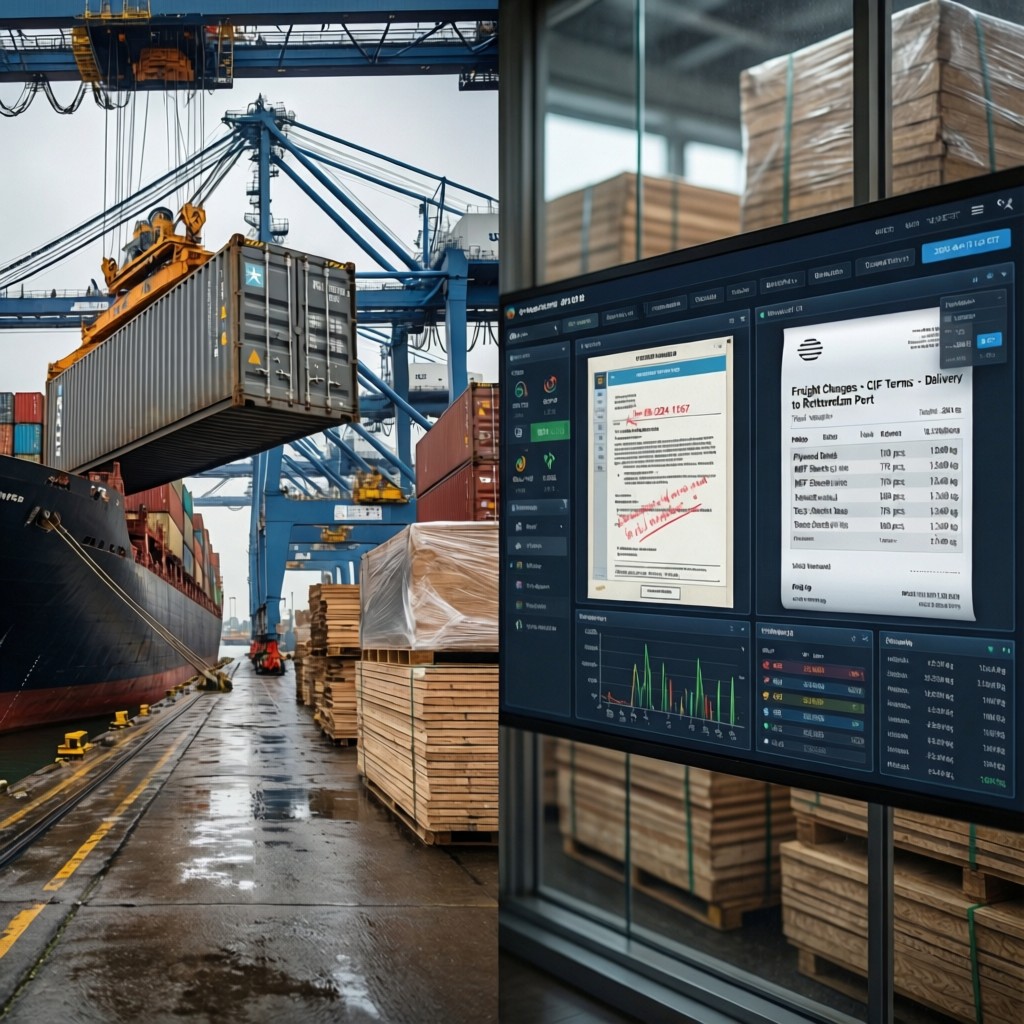
Comparison Table: FOB vs CIF for Wood Panel Imports
| Feature | FOB (Free On Board) | CIF (Cost, Insurance, Freight) |
|---|---|---|
| Freight Control | Buyer selects carrier; full visibility | Supplier selects carrier; limited visibility |
| Insurance Coverage | Buyer arranges; customizable limits | Supplier arranges; typically minimum cover |
| Risk Transfer Point | When goods cross ship’s rail at origin | When goods arrive at destination port |
| Cost Transparency | High; separate freight and product costs | Low; bundled pricing hides freight margins |
| Demurrage Risk | Buyer manages; can negotiate free days | Supplier manages; often passes costs to buyer |
| Container Utilization | Optimized for 45-50 m³ (40ft) loads | Standardized; may not maximize density |
| Lead Time Impact | Buyer coordinates; 15-25 days production | Supplier coordinates; potential delays |
| Customs Clearance | Buyer handles import docs fully | Supplier provides basic docs; buyer clears |
The key takeaway is that FOB offers greater control and potential cost savings for experienced buyers who can leverage volume freight rates, while CIF provides simplicity but often at a premium price with less transparency. For high-density materials like HDF (>800 kg/m³), where weight impacts freight costs significantly, FOB allows buyers to choose carriers with better heavy-cargo rates.
Which One To Choose
Specify FOB for high-volume imports where you have established freight forwarding relationships and require full visibility into supply chain risks, such as when importing 40ft containers holding 45-50 m³ of Precision MDF. Specify CIF for smaller, trial orders or when sourcing from new suppliers where minimizing administrative burden and initial logistics complexity is prioritized over long-term cost optimization.
Why It Matters: Technical Deep Dive
The decision between FOB and CIF directly impacts the landed cost of engineered wood products, which are sensitive to both volume and weight. Yicaiyigou’s Precision MDF, with a density range of 600-800 kg/m³, and High-Density Particleboard, ranging from 550-750 kg/m³, represent significant mass in transit. A 40ft container loaded to its maximum capacity of 45-50 m³ can weigh substantially more than standard cargo, making freight rate negotiation critical. Under FOB terms, a buyer can select a carrier specialized in heavy bulk commodities, potentially saving 10-15% on ocean freight compared to a supplier’s standard CIF rate.
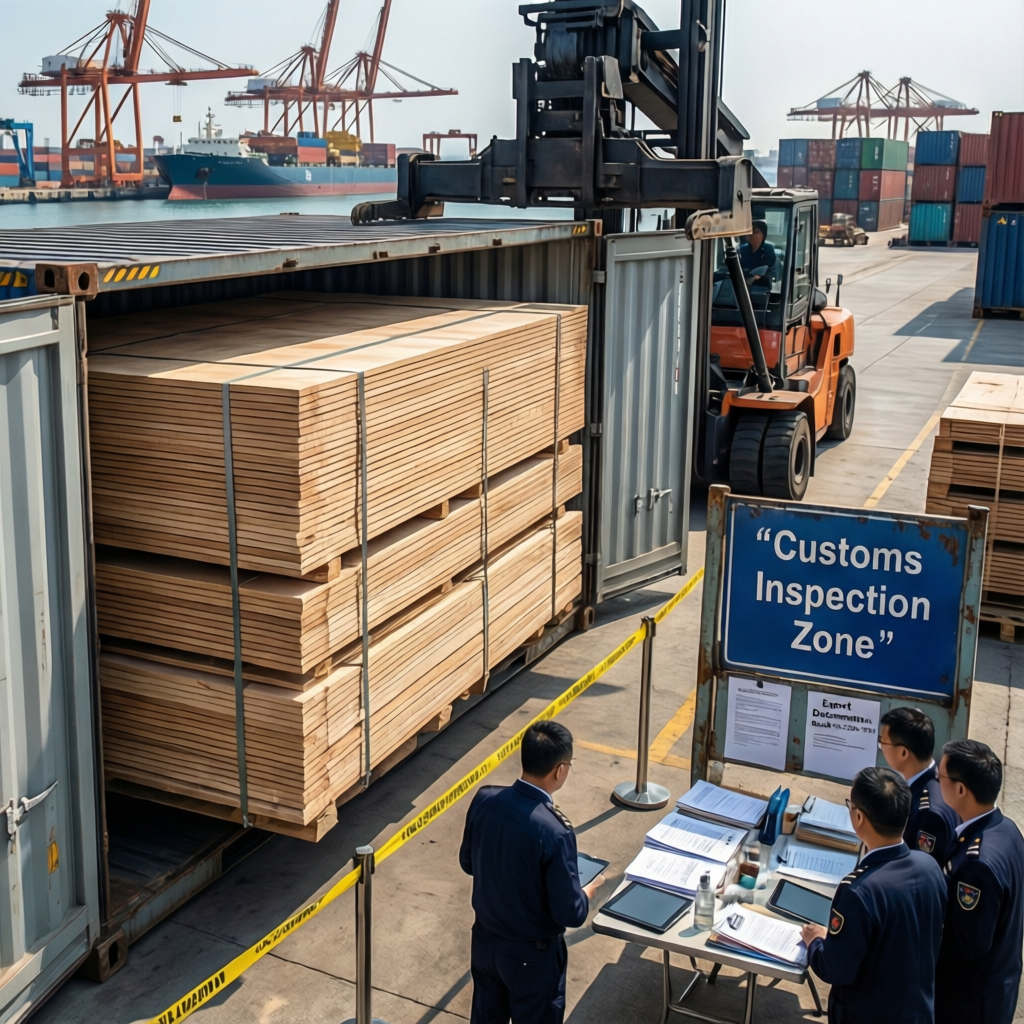
Furthermore, compliance with regulations like the EU Deforestation Regulation (EUDR), effective December 30, 2024, requires rigorous Chain of Custody (CoC) documentation. When operating under FOB, the buyer maintains direct communication with the freight forwarder, ensuring that all CoC documents from Yicaiyigou—such as FSC certification numbers and CARB P2 test reports—are correctly attached to the bill of lading and customs filings. This reduces the risk of customs delays, which can be costly given the 15-25 day lead time for production. In contrast, CIF shipments may suffer from document handling errors if the supplier’s forwarder is not well-versed in specific import requirements for E0 (≤0.07 ppm) or ENF (≤0.05 mg/L) certified materials.

Relevant Standards or Specifications
When negotiating terms, ensure that the chosen Incoterm aligns with your compliance strategy. For buyers importing into North America, CARB P2 compliance (≤0.11 ppm for composites) is non-negotiable. Under FOB, you can request that Yicaiyigou provides original CARB P2 test reports directly to your customs broker before the vessel departs, ensuring smooth clearance. For European markets, the transition from EUTR to EUDR requires precise geolocation data of the harvest origin, which is best managed when the buyer has direct control over the logistics documentation flow inherent in FOB agreements.
Application Context
For large-scale construction firms sourcing Structural Plywood for formwork, the ability to control shipping schedules via FOB is crucial to match just-in-time delivery requirements. Conversely, for smaller furniture makers importing High-Density Particleboard for interior fixtures, CIF may offer a simpler entry point, allowing them to focus on design and manufacturing rather than logistics. However, as volumes grow, the lack of transparency in CIF pricing becomes a disadvantage, especially when freight rates fluctuate.
Supplier Solution
Yicaiyigou supports both FOB and CIF terms, providing the flexibility needed by global supply chains. As a manufacturer of Precision MDF, Structural Plywood, and High-Density Particleboard, we maintain strict adherence to international standards, including FSC, CARB P2, CE, and ENF (≤0.05 mg/L) certifications. Our production facilities are optimized for efficient container loading, ensuring that a 20ft container holds 20-25 m³ and a 40ft container holds 45-50 m³, maximizing value for FOB buyers who pay for freight.
We provide complete Chain of Custody (CoC) documentation for all FSC-certified products, ensuring compliance with EUDR and other regional regulations. Whether you choose FOB for greater control or CIF for convenience, Yicaiyigou ensures that every panel meets the specified density and formaldehyde emission standards, such as E0 (≤0.07 ppm) and Japan JAS F★★★★ (≤0.3 mg/L). Request a compliant material sample with full CoC documentation to verify our quality and traceability capabilities before placing your first order.

FAQ
What is the minimum order quantity for FOB shipments from Yicaiyigou?
The MOQ is 1x20ft container, which holds approximately 20-25 m³ of product, allowing buyers to test FOB logistics with a manageable volume.
How does formaldehyde emission class affect shipping classification?
While formaldehyde classes like ENF (≤0.05 mg/L) or CARB P2 do not change HS codes, they require specific test reports for customs clearance, which are easier to manage under FOB where the buyer controls documentation.
Can Yicaiyigou provide FSC Chain of Custody numbers for FOB shipments?
Yes, all FSC-certified products come with valid Chain of Custody (CoC) documentation and certification numbers, ensuring compliance with EUDR and other sustainability regulations.
What is the typical lead time for production before FOB handover?
Production lead time is 15-25 days, after which the goods are delivered to the port of origin for loading onto the vessel selected by the buyer.
Is insurance included in FOB terms?
No, under FOB terms, the buyer is responsible for arranging insurance from the point the goods cross the ship’s rail at the origin port, allowing for customized coverage limits.
Summary & Next Steps
Choosing between FOB and CIF depends on your organization’s logistics maturity and volume requirements. FOB offers cost transparency and control, ideal for large imports of high-density materials, while CIF provides simplicity for smaller or initial orders. Yicaiyigou’s commitment to quality, evidenced by CARB P2, ENF, and FSC certifications, ensures that regardless of the shipping term, your material meets the highest standards.
Request a compliant material sample with full CoC documentation from Yicaiyigou to evaluate our Precision MDF and Structural Plywood before finalizing your logistics strategy.
Frequently Asked Questions
What are the primary financial and operational differences between FOB and CIF terms for wood panel imports?
FOB (Free On Board) gives the buyer control over freight selection, insurance, and risk transfer at the origin port, offering high cost transparency and optimized container utilization. In contrast, CIF (Cost, Insurance, and Freight) places these responsibilities on the supplier, resulting in bundled pricing with lower transparency, limited visibility into logistics, and risk transfer only upon arrival at the destination port.
Why might a procurement manager choose FOB over CIF when importing high-density wood products like Precision MDF or HDF?
High-density materials significantly impact freight costs due to their weight. Choosing FOB allows buyers to select carriers specialized in heavy bulk commodities and negotiate better rates, potentially saving 10-15% on ocean freight compared to standard CIF rates. It also enables optimization of container loading efficiency for heavy cargo.
How did shifting from CIF to FOB help a furniture distributor avoid budget overruns in the article’s case study?
The distributor faced a 15% budget overrun under CIF due to unexpected demurrage charges and insurance gaps. By switching to FOB and using their own freight forwarder, they gained visibility into container loading efficiency, managed demurrage risks directly by negotiating free days, and reduced total landed cost variability.
When is it recommended to use CIF terms instead of FOB for timber procurement?
CIF is recommended for smaller, trial orders or when sourcing from new suppliers. It minimizes administrative burden and initial logistics complexity, making it suitable when prioritizing simplicity over long-term cost optimization and full supply chain visibility.
How do international shipping terms relate to compliance with regulations like the EU Deforestation Regulation (EUDR)?
Compliance with regulations such as the EUDR requires rigorous Chain of Custody (CoC) documentation. The choice of shipping terms impacts who manages the documentation flow; under FOB, the buyer handles import docs fully, ensuring they can maintain the necessary CoC records for regulatory compliance.