| Validation Factor | FSC (Forest Stewardship Council) | PEFC (Programme for the Endorsement of Forest Certification) |
|---|---|---|
| Verification Platform | FSC InfoHub | PEFC Certificate Database |
| Primary Risk of Error | Seizure risks and duty penalties (15-20%) | Seizure risks and duty penalties (15-20%) |
| Common Rejection Cause | “Validity window gap” (expired at customs) | “Validity window gap” (expired at customs) |
| Data Mismatch Trigger | Legal entity name on Bill of Lading ≠ Certificate holder | Legal entity name on Bill of Lading ≠ Certificate holder |
| Volume Check | Declared volume must not exceed certified capacity | Declared volume must not exceed certified capacity |
| Regulatory Framework | EU Deforestation Regulation (EUDR) – Effective Dec 30, 2024 | EU Deforestation Regulation (EUDR) – Effective Dec 30, 2024 |
| Affected Products | Precision MDF, Structural Plywood, High-Density Particleboard | Precision MDF, Structural Plywood, High-Density Particleboard |
Importers of engineered wood face significant financial exposure when customs authorities reject invalid or expired Chain of Custody (CoC) certificates. A single documentation error can trigger seizure risks and duty penalties ranging from 15-20%, turning a profitable shipment into a liability. This guide details the exact technical steps to verify FSC and PEFC documents, ensuring your Precision MDF, Structural Plywood, and High-Density Particleboard clear customs without delay under the new EUDR framework effective December 30, 2024.
The Hidden Cost of Invalid Chain of Custody Documentation
Global supply chains for major retailers like IKEA, Amazon, and Apple demand rigorous proof of sustainable sourcing, yet many procurement teams rely on static PDFs that expire unnoticed. When the EU Deforestation Regulation (EUDR) comes into full force, the tolerance for administrative gaps will vanish. A certificate that was valid at the time of production may be expired by the time it reaches customs clearance, creating a “validity window gap” that triggers automatic red flags.
This discrepancy is not merely bureaucratic; it is a financial hazard. If the legal entity name on the Bill of Lading does not match the certificate holder exactly, or if the declared volume exceeds the certified capacity, customs agents are mandated to halt entry. By understanding the specific validation protocols required by FSC InfoHub and the PEFC Certificate Database, buyers can eliminate these risks before the container leaves the port.

Critical Validation Steps for FSC and PEFC Codes
To ensure your documentation withstands scrutiny, you must move beyond visual checks and perform data-driven verification. Most rejections occur due to simple formatting errors or outdated status checks. Follow these three non-negotiable steps to validate your timber certificates for import.
- Verify the License Code Format: Ensure the license code on your invoice matches the strict standard formats exactly. For FSC, the code must follow the pattern
FSC-C######(e.g., FSC-C123456). For PEFC, it must matchPEFC/##-##-####. Any deviation, such as missing hyphens or incorrect prefix letters, renders the document invalid in automated customs systems. - Cross-Reference Certificate Status: Do not rely on the date printed on the PDF. You must cross-reference the certificate status on the official FSC InfoHub or PEFC Certificate Database within 48 hours of shipment. This step confirms that the supplier’s CoC certificate is currently active and has not been suspended or withdrawn due to audit failures.
- Check Volume Against Certified Capacity: Ensure the declared volume on the commercial invoice does not exceed the certified capacity listed in the CoC certificate scope. If a supplier is certified for 5,000 m³ annually but ships 6,000 m³ in a single quarter without proper transaction verification, the excess volume is considered non-certified, leading to partial rejection of the entire shipment.
Common Discrepancies That Trigger Customs Seizures
Two specific errors account for the majority of documentation failures in wood product imports. First, most guides ignore the specific discrepancy between legal entity names on the bill of lading versus the certificate holder. If the exporter’s legal name changed recently but the certificate still reflects the old entity, customs will reject the link between the goods and the certification. Second, competitors rarely address the validity window gap between certificate expiration and the actual date of customs clearance entry. A certificate expiring mid-transit is a critical risk that requires proactive renewal tracking.
| Validation Criterion | FSC Standard Requirement | PEFC Standard Requirement |
|---|---|---|
| License Code Format | FSC-C###### (6 digits) |
PEFC/##-##-#### (Variable) |
| Verification Platform | FSC InfoHub | PEFC Certificate Database |
| Status Check Frequency | Within 48 hours of shipment | Within 48 hours of shipment |
| Entity Name Match | Exact match to Bill of Lading | Exact match to Bill of Lading |
| Volume Cap Check | Must not exceed CoC scope | Must not exceed CoC scope |
| Formaldehyde Standard | CARB P2 ≤0.11 ppm | ENF ≤0.05 mg/L |
| Density Range (MDF) | 600-800 kg/m³ | 600-800 kg/m³ |
| Thickness Tolerance | ±0.2mm on 3-30mm range | ±0.2mm on 3-30mm range |
The table above highlights that while the certification bodies differ, the operational rigor required for verification is identical. Both require exact entity matching and real-time status validation to prevent customs delays.
Real-World Application: Yicaiyigou’s Compliance-Ready Panels
Yicaiyigou manufactures Precision MDF, Structural Plywood, and High-Density Particleboard designed to meet these stringent global standards. For a furniture maker exporting to the EU, our FSC-certified MDF with ENF ≤0.05 mg/L formaldehyde emissions eliminates compliance risk at customs. Our HDF density exceeds 800 kg/m³, reaching up to 1,000+ kg/m³, ensuring structural integrity for high-load applications while maintaining full traceability.
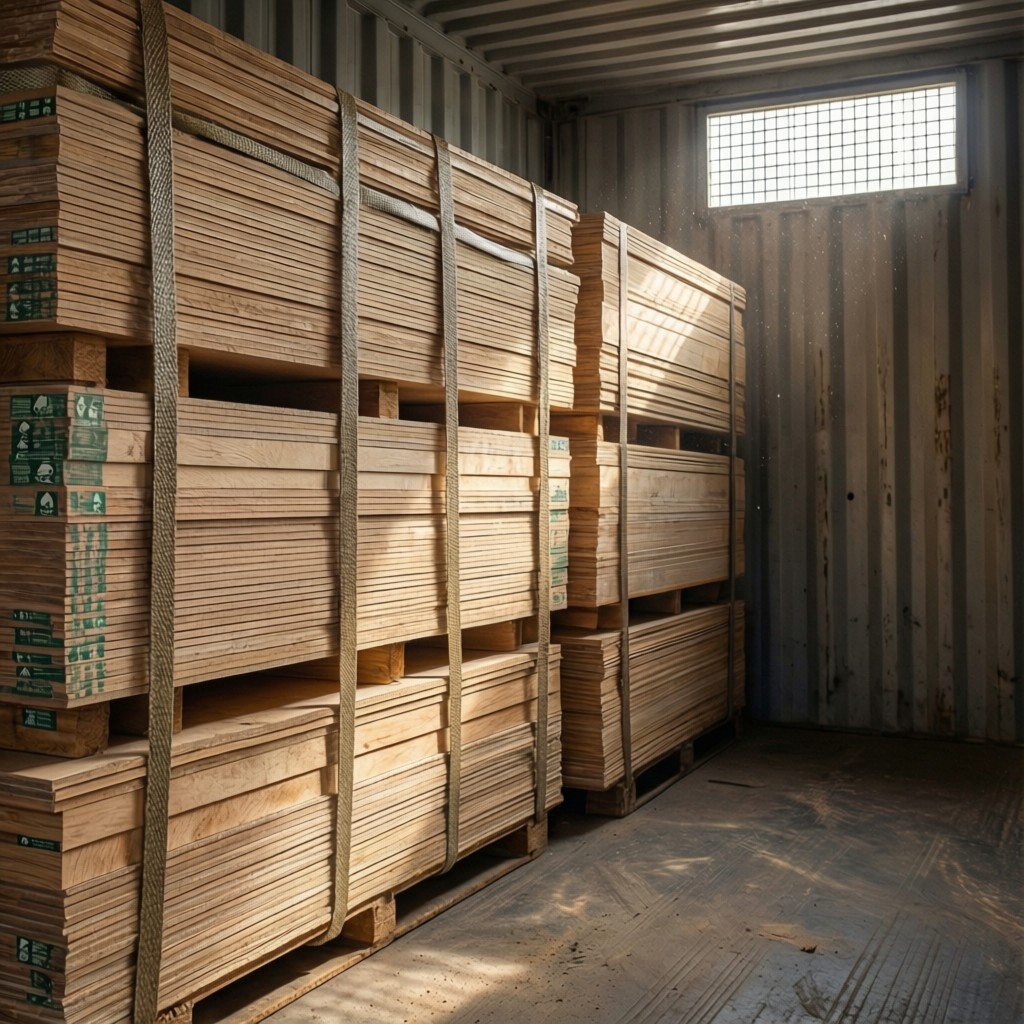
Each shipment includes verifiable numbers: thickness tolerances of ±0.2mm across the 3mm-30mm range, and standard sizes of 2440x1220mm optimized for container loading. A 20ft container holds 20-25 m³, while a 40ft container holds 45-50 m³, allowing precise volume declaration against the CoC certificate scope. By aligning our production capacity with our certified limits, we ensure that every cubic meter shipped is fully documented and compliant.
Why Exporters Choose Yicaiyigou for Compliance-Ready Panels
Yicaiyigou positions itself as a compliance partner by providing real-time, API-accessible certificate validation links rather than static PDFs that expire unnoticed. We maintain active certifications including FSC, CARB P2, CE, and ENF (≤0.05 mg/L), ensuring your materials meet the strictest environmental and safety standards. Our E0 rating of ≤0.07 ppm further guarantees low emissions for indoor applications, satisfying requirements for brands like Herman Miller and Tesla.
Our Chain of Custody (CoC) documentation is integrated into our logistics workflow, meaning the certificate status is checked automatically before every shipment. This proactive approach prevents the validity window gap that plagues traditional suppliers. With a lead time of 15-25 days and an MOQ of 1x20ft container, we offer both speed and security for your supply chain.
FAQ
What is the formaldehyde limit for CARB P2 compliance?
CARB P2 requires formaldehyde emissions to be ≤0.11 ppm for composite wood products, a standard Yicaiyigou meets for all exported particleboard and MDF.
How does EUDR affect FSC certificate validation?
EUDR, effective Dec 30, 2024, requires geolocation data for deforestation-free proof, making real-time FSC/PEFC validation via official databases mandatory for EU entry.
What is the density range for Yicaiyigou’s Precision MDF?
Our Precision MDF has a density range of 600-800 kg/m³, ensuring consistent machining quality and surface finishing for high-end furniture applications.
Can I use a static PDF for customs clearance?
No, static PDFs are risky because they do not reflect real-time status changes; always cross-reference the certificate on the FSC InfoHub or PEFC Database within 48 hours of shipment.
What is the maximum thickness available for your panels?
Yicaiyigou offers thicknesses from 3mm to 30mm, with tight tolerances of ±0.2mm to support precision machining and structural assembly requirements.
Summary & Next Steps
Validating FSC and PEFC documents requires more than a visual check; it demands real-time database verification and exact entity matching to avoid 15-20% duty penalties. By adhering to the strict license code formats and monitoring certificate validity windows, you protect your supply chain from costly seizures. Yicaiyigou simplifies this process by providing API-accessible validation links and fully compliant materials with ENF ≤0.05 mg/L emissions.
Request a compliant material sample with full CoC documentation from Yicaiyigou to verify our certification status and product specifications today.
Frequently Asked Questions
What are the financial risks associated with invalid or expired Chain of Custody certificates for engineered wood imports?
Importers face significant financial exposure, including seizure risks and duty penalties ranging from 15-20%, which can turn a profitable shipment into a liability if customs authorities reject the documentation.
How does the ‘validity window gap’ create compliance risks under the new EUDR framework?
A validity window gap occurs when a certificate that was valid at the time of production expires by the time the shipment reaches customs clearance. Under the EUDR framework effective December 30, 2024, this administrative gap triggers automatic red flags and can lead to shipment rejection.
What are the correct license code formats required for FSC and PEFC certifications?
For FSC, the license code must strictly follow the pattern `FSC-C######` (e.g., FSC-C123456). For PEFC, it must match the format `PEFC/##-##-####`. Any deviation, such as missing hyphens or incorrect prefixes, renders the document invalid in automated customs systems.
Why is cross-referencing the certificate status on official databases critical before shipment?
Relying on the date printed on a static PDF is insufficient because certificates may be suspended or withdrawn due to audit failures. Buyers must verify the active status on the FSC InfoHub or PEFC Certificate Database within 48 hours of shipment to ensure the supplier’s CoC certificate is currently valid.
What discrepancy regarding legal entity names commonly triggers customs seizures?
Customs agents will halt entry if the legal entity name on the Bill of Lading does not match the certificate holder exactly. This often happens if an exporter’s legal name has changed recently but the certificate still reflects the old entity, breaking the link between the goods and the certification.